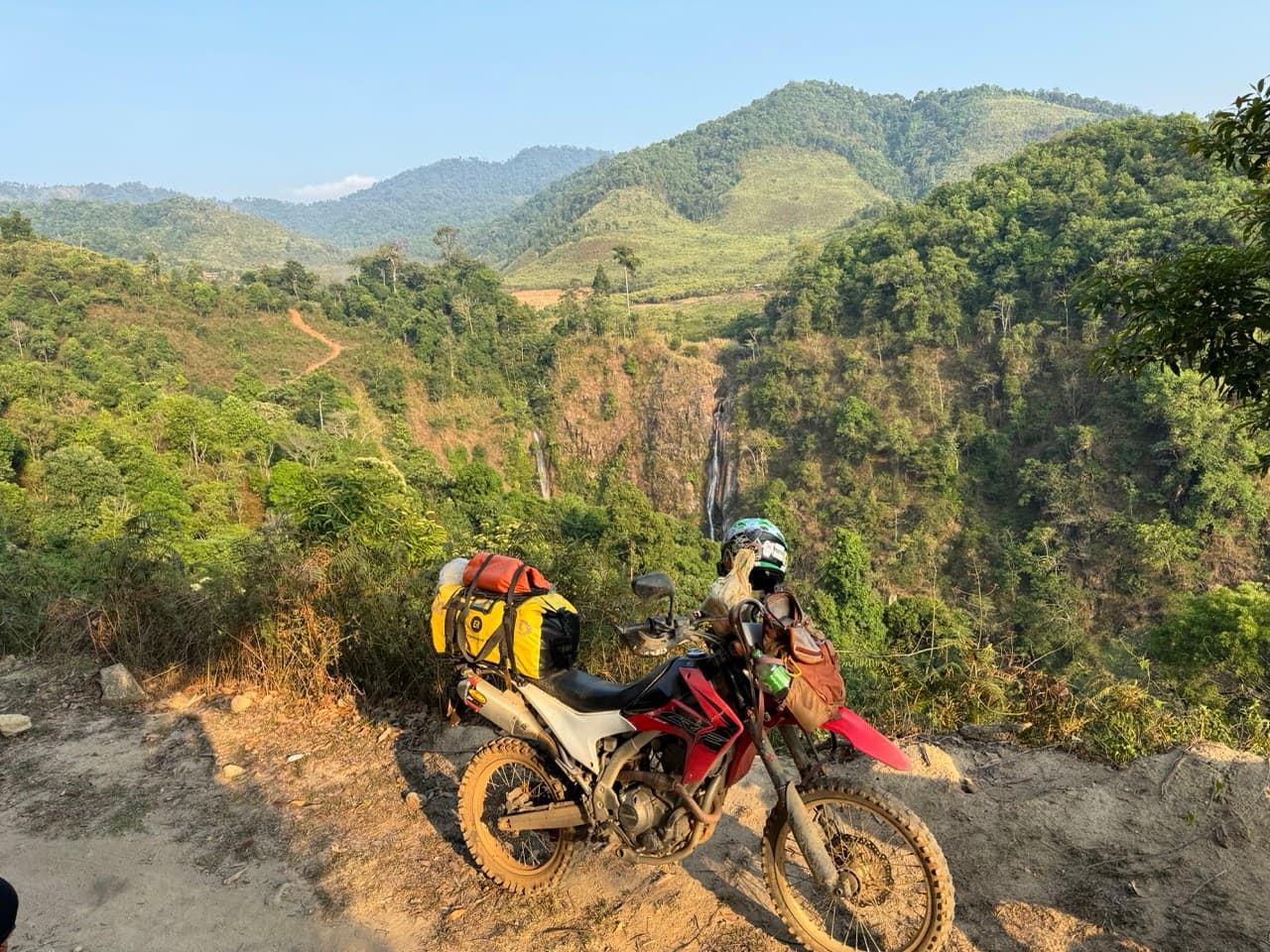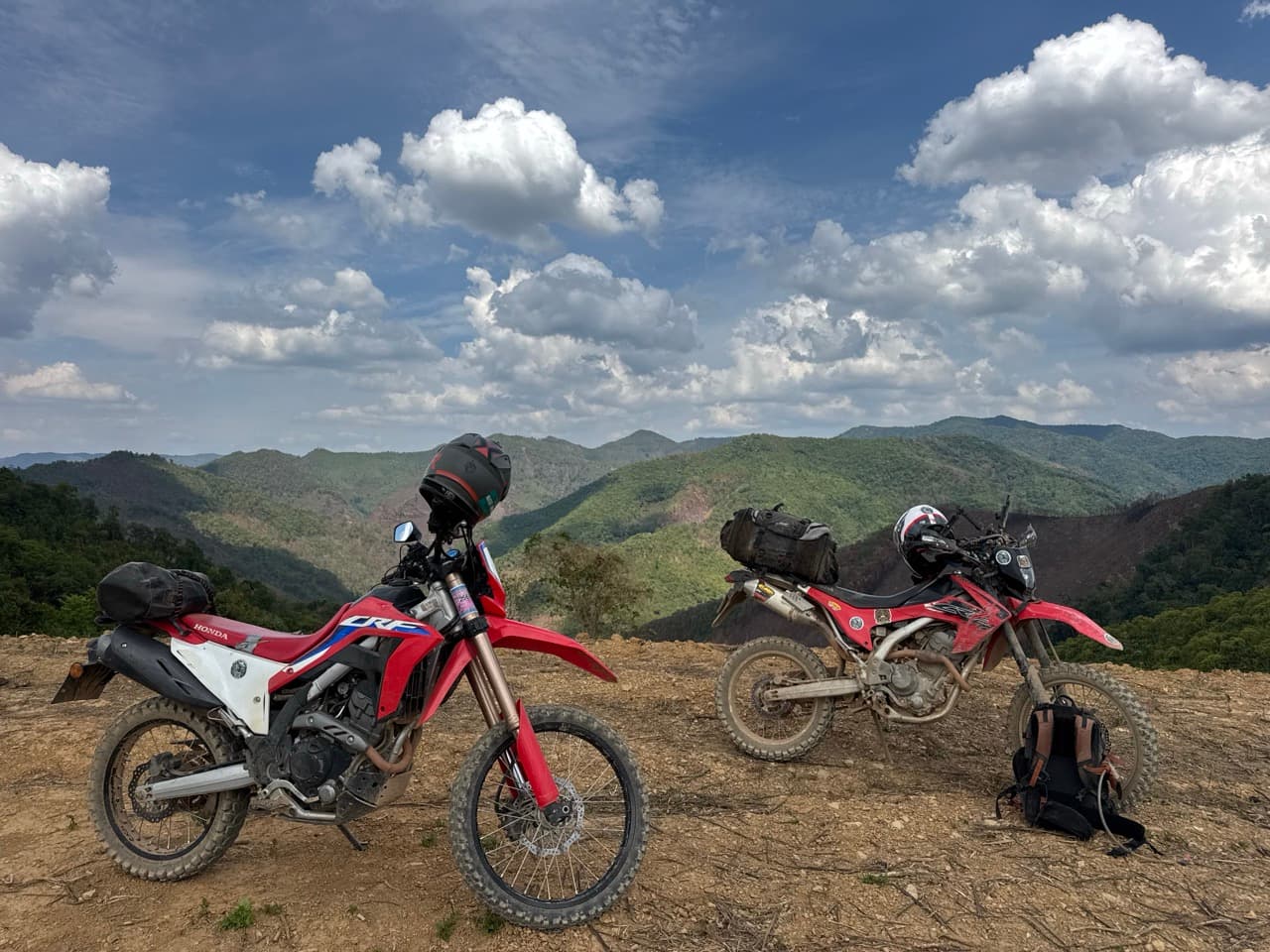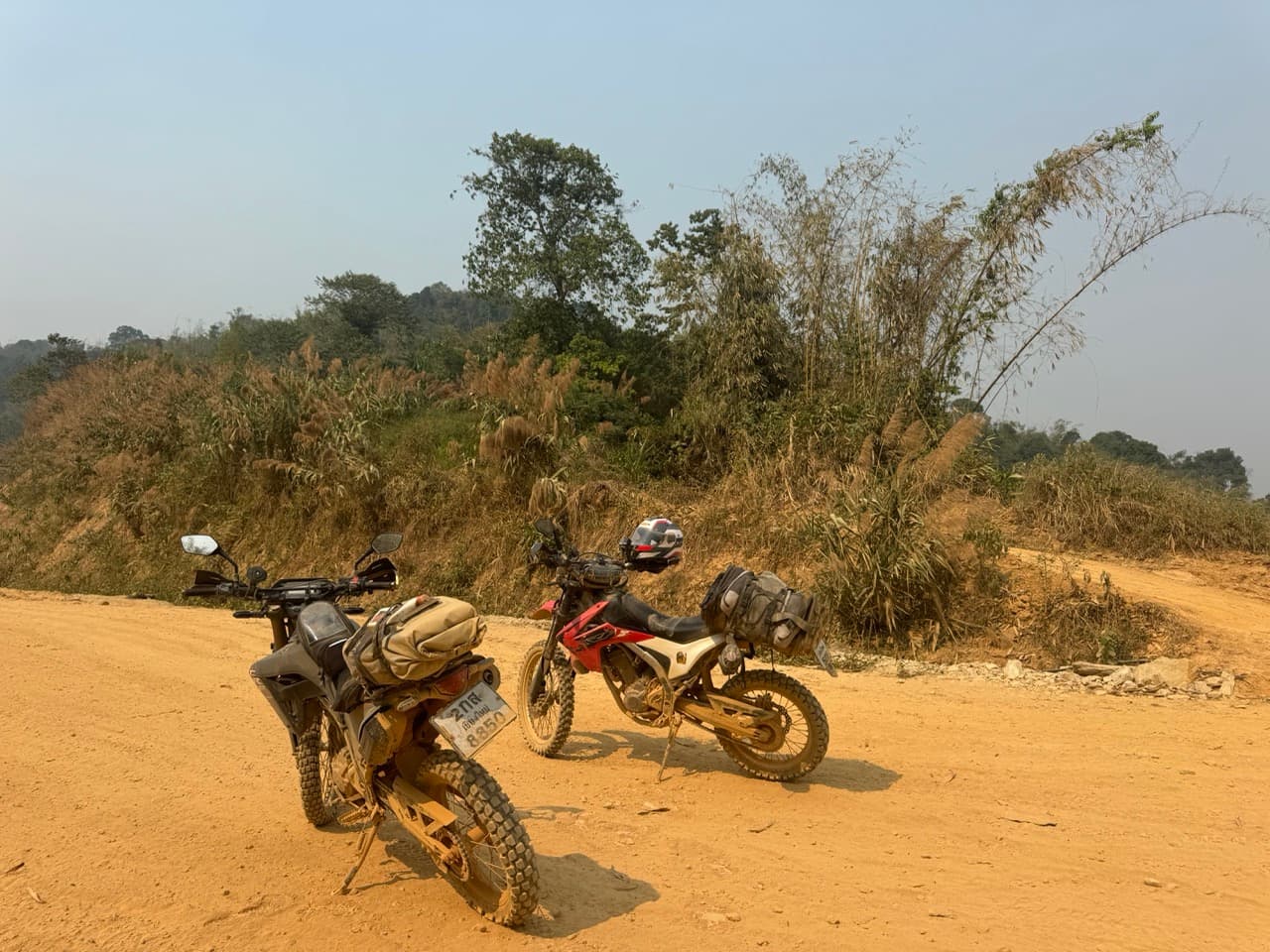
The Chiang Mai to Luang Prabang motorcycle trip is a classic. Cross at the Friendship Bridge, follow the Mekong, two or three days to Luang Prabang, a few days off the bike, then ride home. Most people do it in a week. This is not that trip. This is what happens when five riders take ten days, point the bikes at the furthest corner of the map, and ride through the part of northern Laos that nobody bothers with — up to Phongsali on the Chinese border, across the spine to Muang Khua, down the Nam Ou through Nong Khiaw, then a single 550 kilometre push back to Chiang Mai through the Nan border.
We were five Hondas: two CRF300s, a CRF250, a CRF250 Rally, and one road-biased CB500X riding the same dirt roads as everyone else. We had four flats, one tubeless tyre we had to overnight in from Vientiane, a ten-minute conversation with a plainclothes handler in the Kings Romans Special Economic Zone, and a roadside first-aid moment with a fallen scooter rider on the dirt descent to a Nam Ou ferry. Some of it was hard. Most of it was beautiful. None of it was the version of Laos that's in any guidebook.
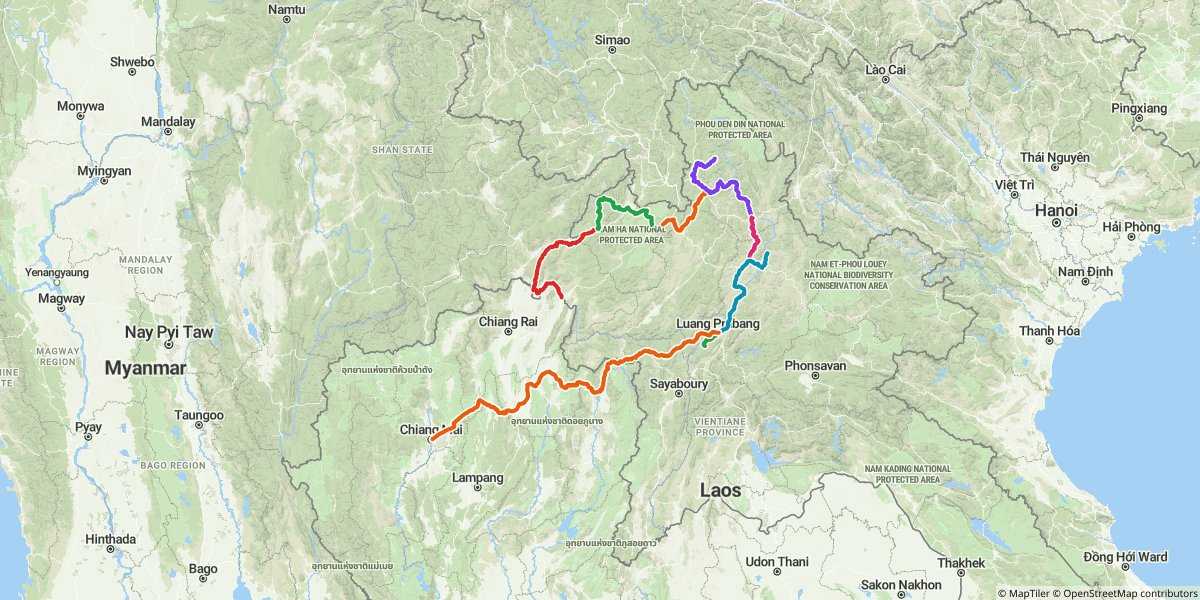
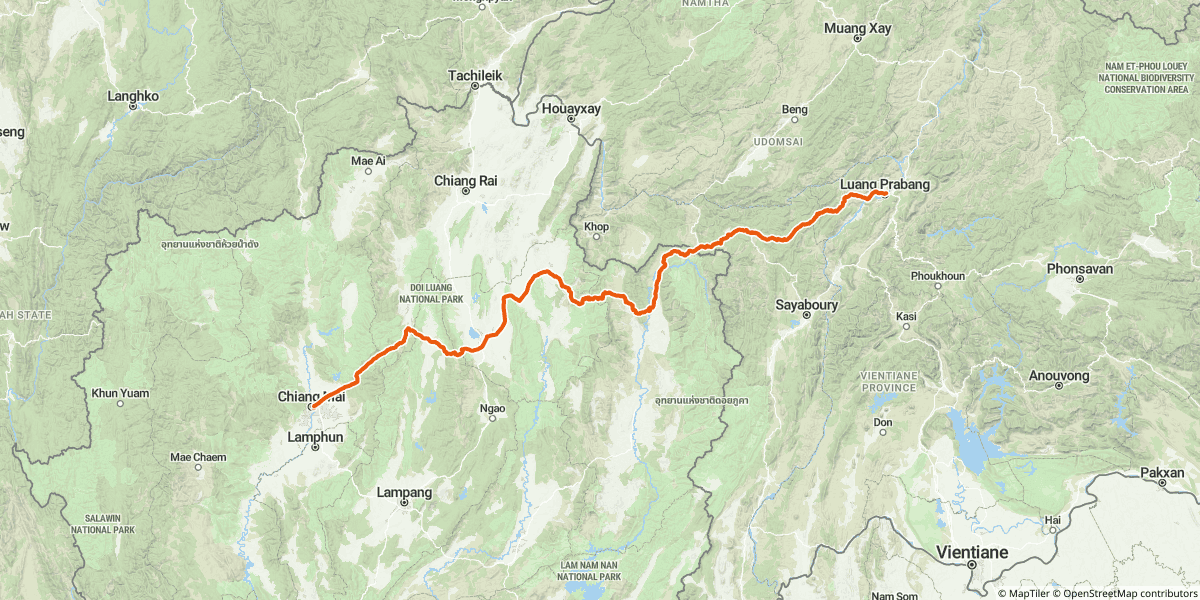
The Whole Loop, in One Map
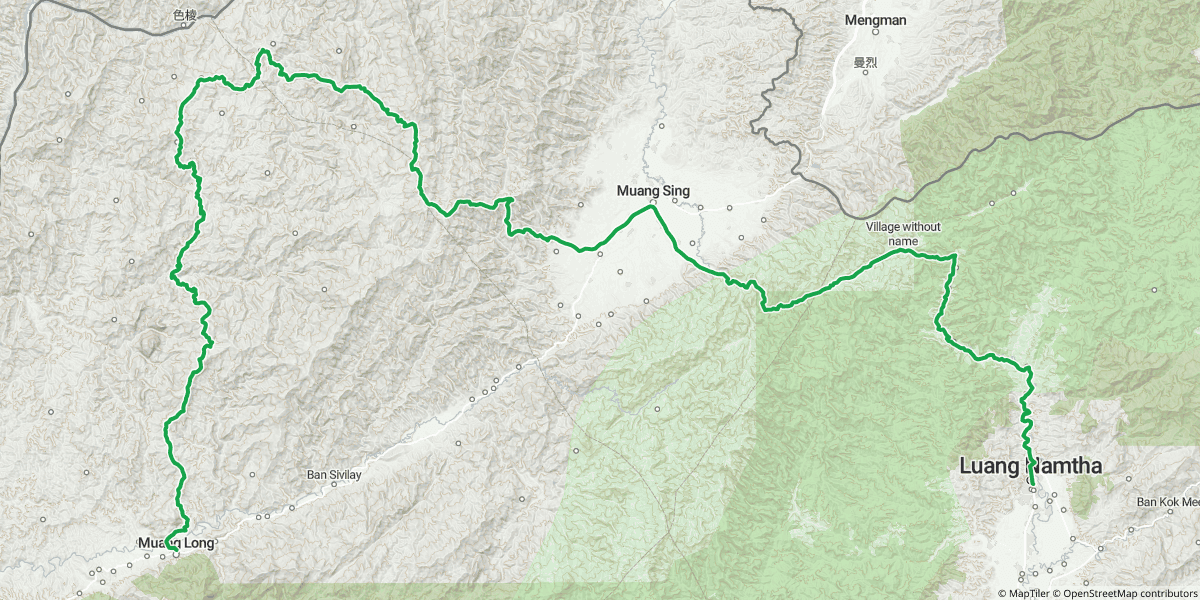
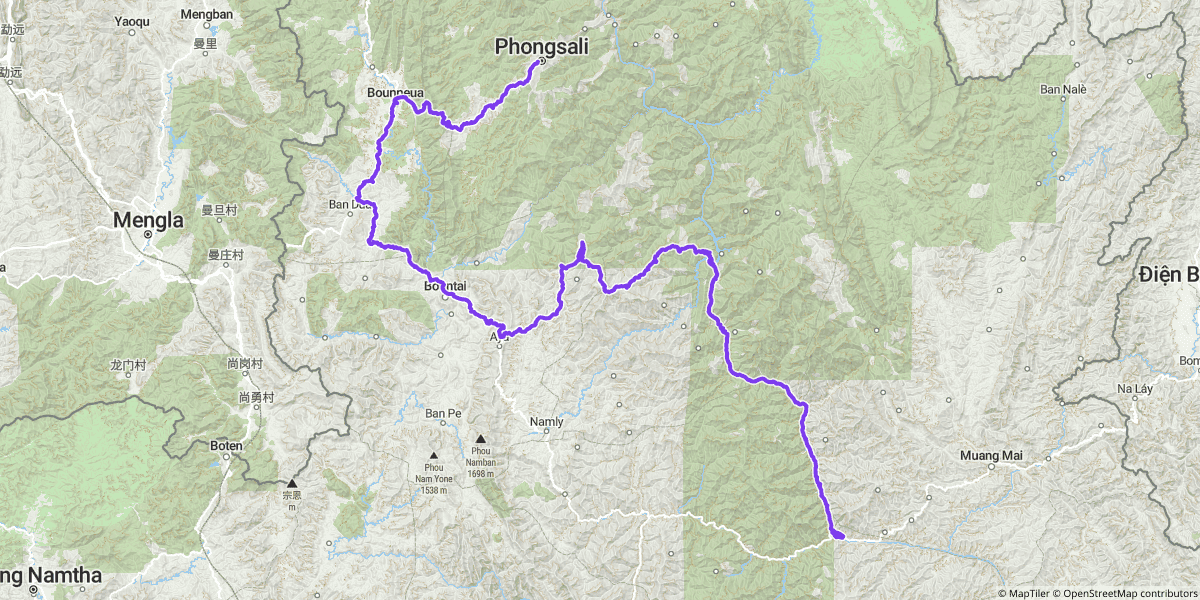
All the recorded days plotted together. The colours match the per-day maps further down. Two days have no track: Day 1 (Chiang Mai to the border) wasn't recorded, and Day 9 (a non-riding day around Luang Prabang) doesn't need one. What's on the map is the actual riding — about seventeen hundred and seventy-five kilometres on dirt, gravel, and the occasional stretch of fresh tarmac.
The Route at a Glance
| Day | Route | Distance | Sleep |
|---|---|---|---|
| Day 1 (Fri) | Chiang Mai → Chiang Khong → Friendship Bridge IV → Houai Xai | — | Wangview Hotel, Houai Xai |
| Day 2 (Sat) | Houai Xai → Tonpheung (Kings Romans SEZ) → Muang Long | ~250 km | ເຮືອນພັກແຮັບປີ໋ (Happy Guesthouse), Muang Long |
| Day 3 (Sun) | Muang Long → Luang Namtha | ~175 km | Lao-Asia Hotel, Luang Namtha |
| Day 4 (Mon) | Luang Namtha → Phongsali | ~215 km | Villa Amazing Maison Guesthouse, Phongsali |
| Day 5 (Tue) | Phongsali → Muang Khua (ferry across the Nam Ou) | ~245 km | Chaleunsouk Guesthouse, Muang Khua |
| Day 6 (Wed) | Muang Khua → Nong Khiaw | ~105 km | Nong Kiau Riverside, Nong Khiaw |
| Day 7 (Thu) | Nong Khiaw → Luang Prabang | ~205 km | Victoria Xiengthong Palace, Luang Prabang |
| Day 8 (Fri) | Luang Prabang → Kuang Si Falls → Luang Prabang | ~30 km | Victoria Xiengthong Palace, Luang Prabang |
| Day 9 (Sat) | Pak Ou caves excursion + Luang Prabang town | — | Victoria Xiengthong Palace, Luang Prabang |
| Day 10 (Sun) | Luang Prabang → Hongsa → Muang Ngeun → Huay Kon → Chiang Mai | ~550 km | Home |
Why Do This on a Dirt Bike?
Most of the popular Laos motorcycle routes are paved end to end — Vientiane, Vang Vieng, Luang Prabang, all linked by good tarmac. You can do that loop on a Honda Click. The reason to bring a real dirt bike to Laos is the north. Anything above Luang Namtha — and especially the loop from Phongsali down to Muang Khua and Nong Khiaw — is on roads that are partly unpaved, partly cratered by Chinese cargo trucks, and partly in the process of being rebuilt. Some of the most rewarding sections are sticky red clay through hill-tribe villages where the only other traffic is scooters carrying schoolchildren and the occasional pickup with a buffalo in the back.
Bike choice mattered more on this trip than on any other we've ridden. The two CRF300s and the CRF250 Rally were in their element — light enough to flick around on loose surfaces, enough range to skip the rougher fuel stops, and tube tyres we could (and did) patch roadside multiple times. The CRF250 was the same idea, slightly underpowered for the big push home but otherwise unbothered. The CB500X was the outlier — a road-biased adventure-tourer with a tubeless rear tyre — and it shaped two of the trip's bigger stories: a flat we couldn't fix roadside, and a tyre that had to be couriered overnight from Vientiane to Luang Prabang.
Season note: we rode in early December, the front end of the dry-cool season in northern Laos. The air was clear, the trails were dry, and there was no burning haze at all. The trade-off is that Phongsali at ~1,430 m is genuinely cold in the early morning — bring a real layer, not just a windbreaker. If you want a single window for this route, December through early February is the right one.
Day 1 — Chiang Mai to Houai Xai
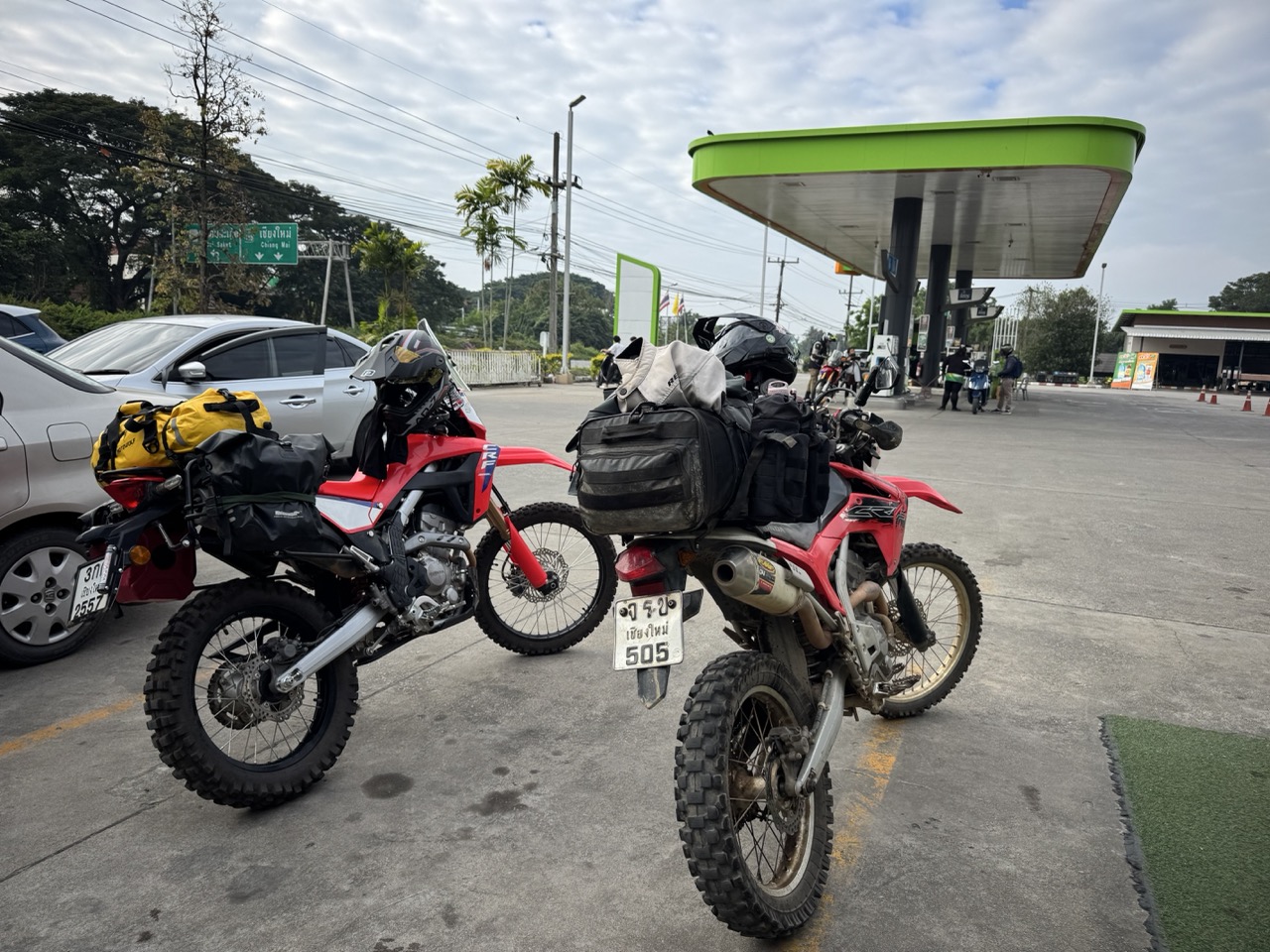
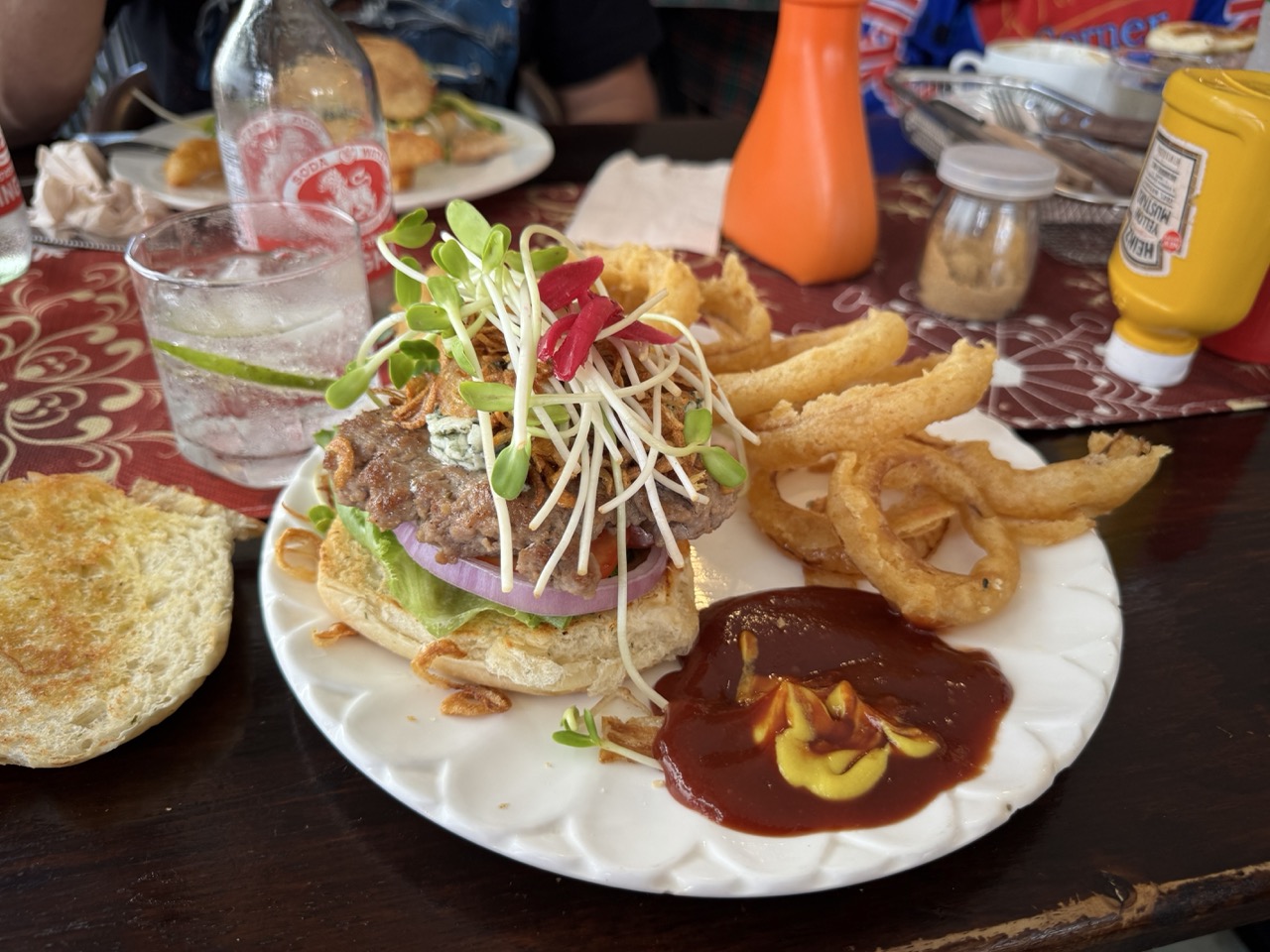
Day 1 was a transit day with one job: get to the border before it closes. We left Chiang Mai at sunrise, fuelled up at a Caltex on the way out of town, and pointed the bikes north on Route 118 toward Chiang Rai. The riding was uneventful highway with one detour for an unexpectedly good burger in Chiang Rai — microgreens, edible flowers, sun sprouts, onion rings, the works — at a place we found by chance and never got the name of.
By the time we rolled up to Chiangkhong Immigration in the late afternoon, I'd already used the patch kit on my CRF250 twice — a nail picked up somewhere on the highway and a pinched tube fifty kilometres later that I traced back to a too-low pressure after the first roadside fix. Both fixes were under fifteen minutes and the rest of the group was patient, but it was a strong hint about how the next ten days were going to go.
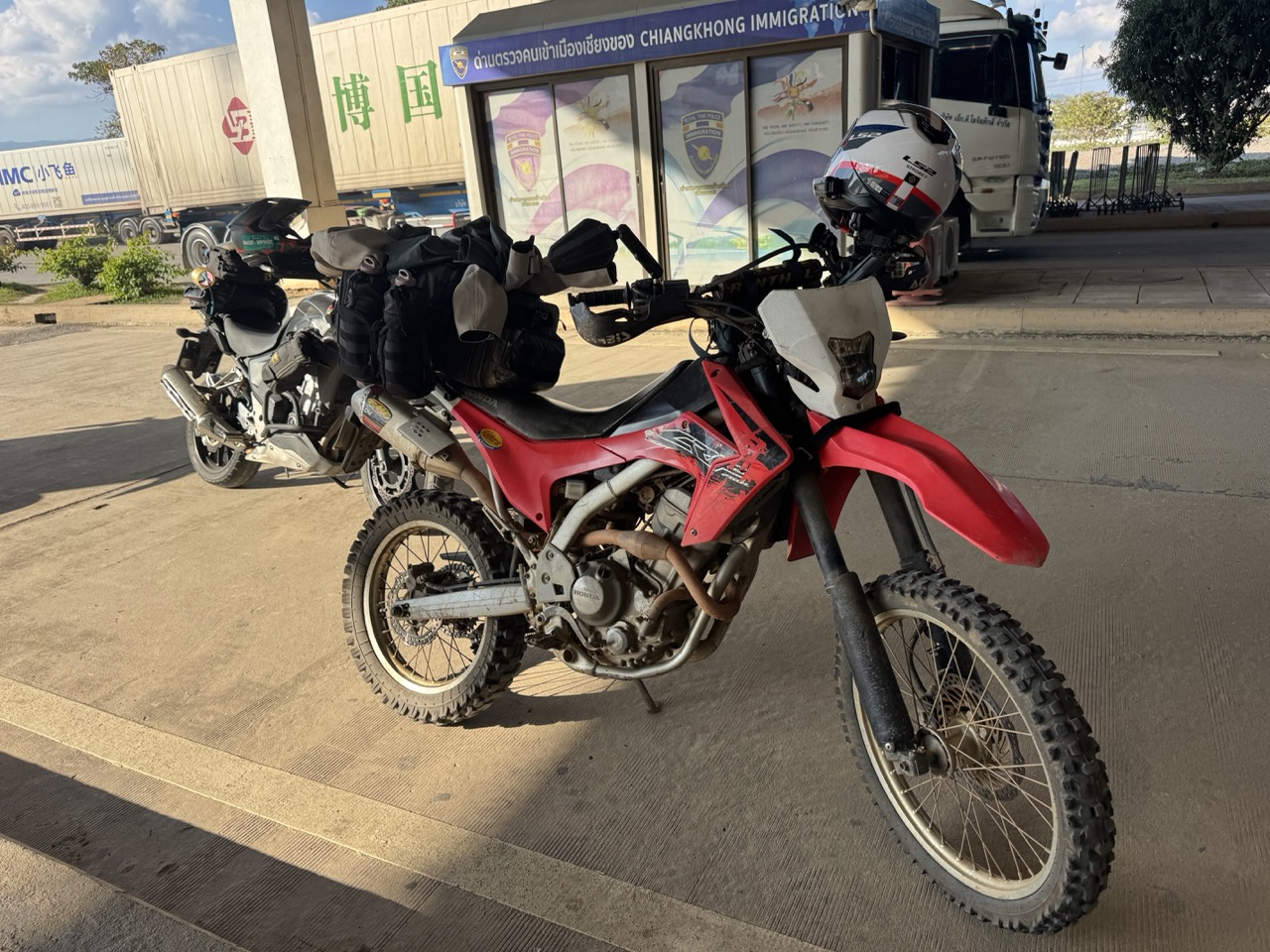
Friendship Bridge IV was smooth. We won't reproduce the paperwork here — the Riders Corner guide linked at the bottom of this article has the proper walkthrough — but the short version is that Chiang Khong is the easiest entry to Laos for foreign-registered motorcycles, the temporary import sticker took maybe forty minutes, and we were on the Laos side and looking back at Thailand across the Mekong well before sunset.
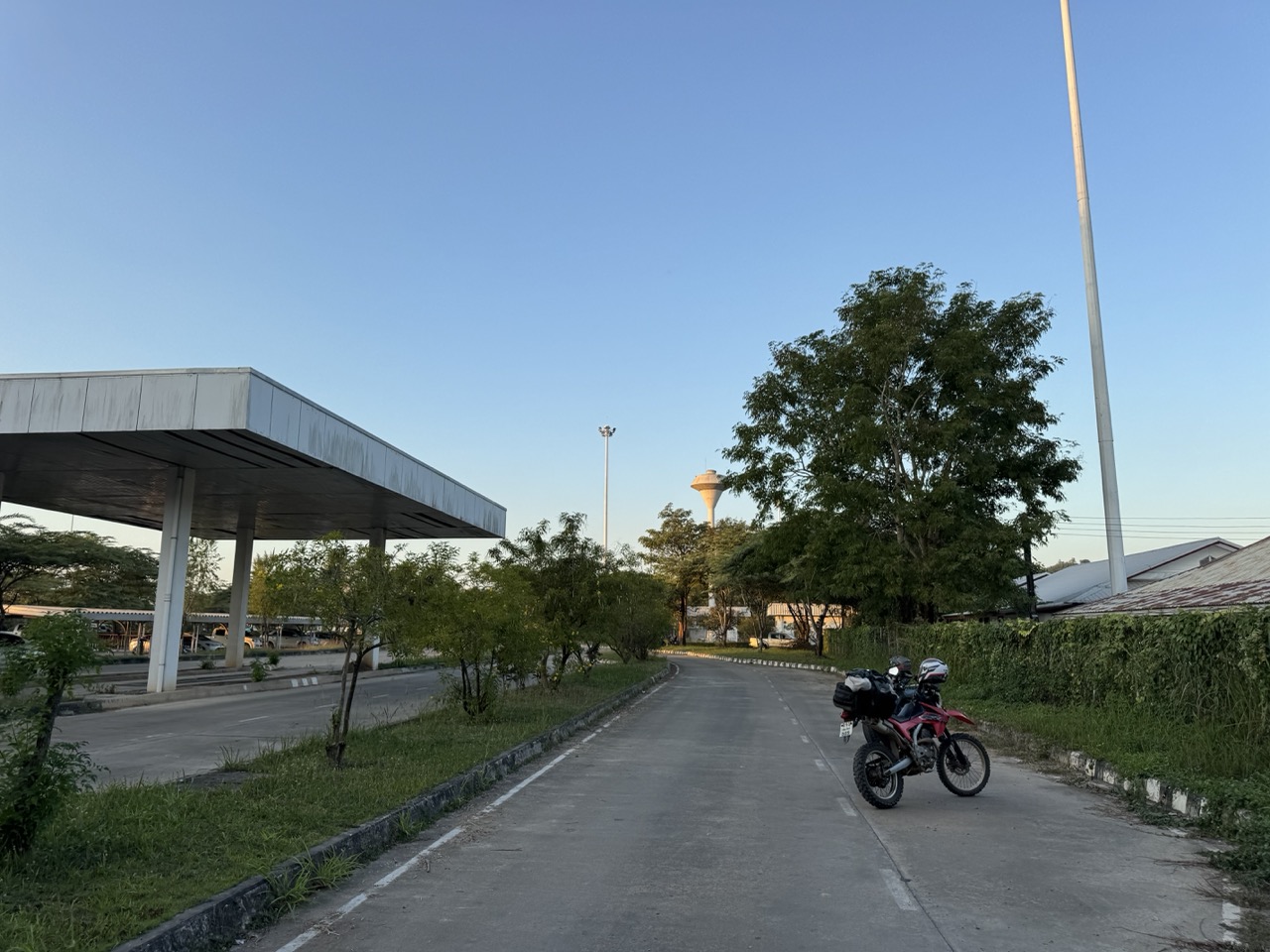
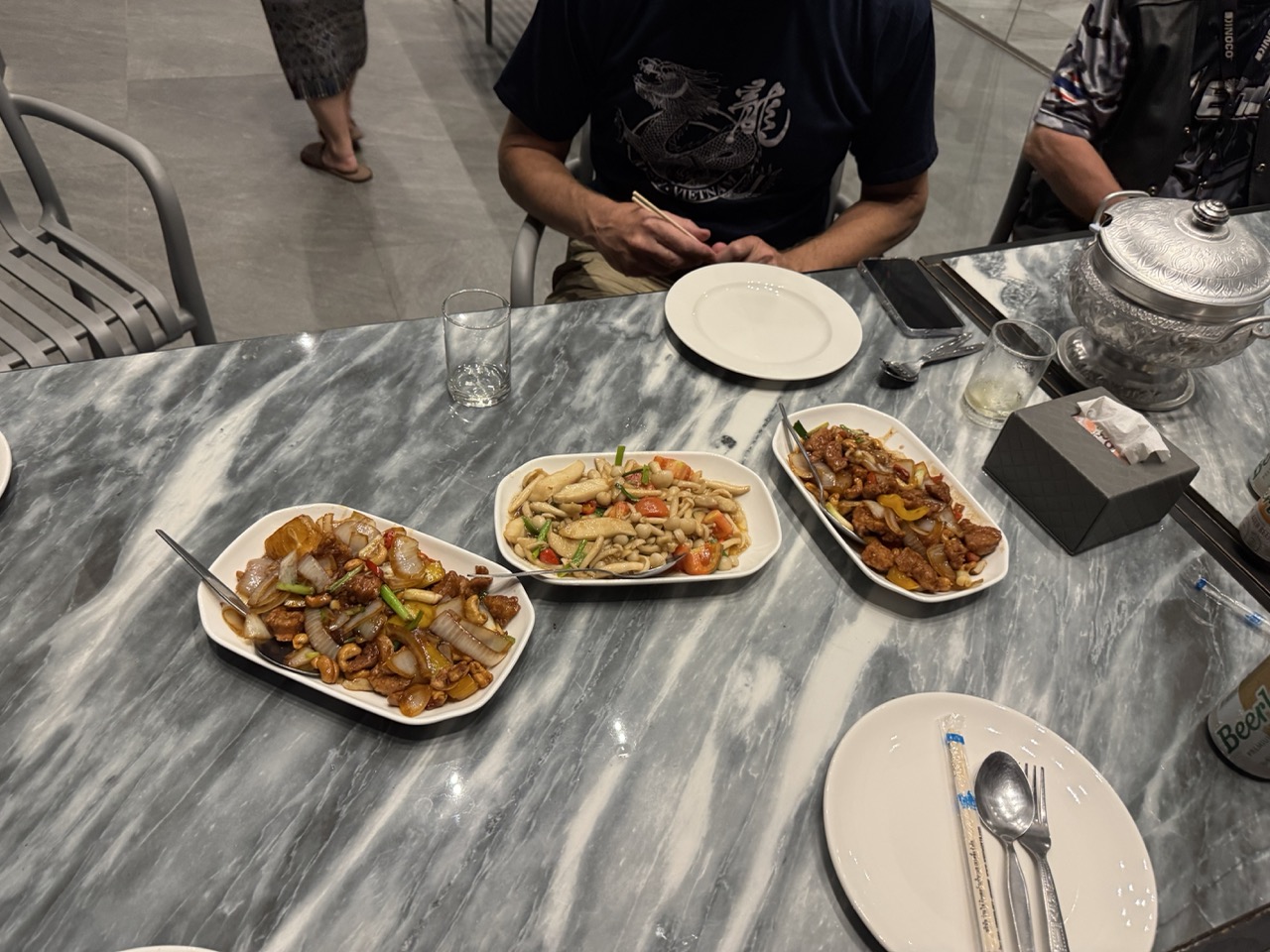
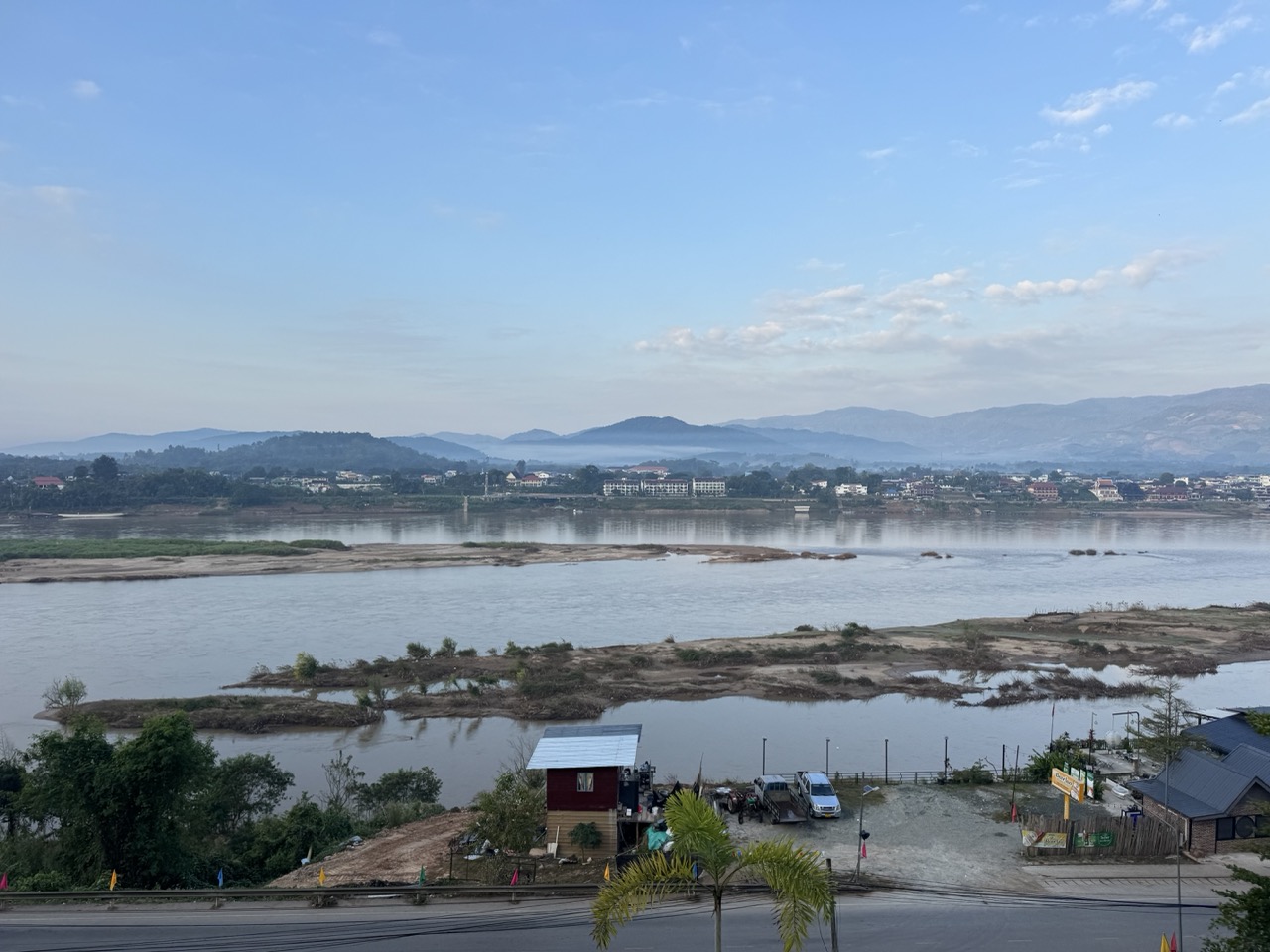
We checked into Wangview Hotel on the bluff above the Mekong, dropped the bags, and walked into town for dinner. Houai Xai's main strip is a few blocks of restaurants and a couple of guesthouses; we picked a place that did Lao-Chinese stir-fries and shared three dishes between us. First Beerlao of the trip. Tomorrow was Muang Long.
Day 2 — Houai Xai to Muang Long
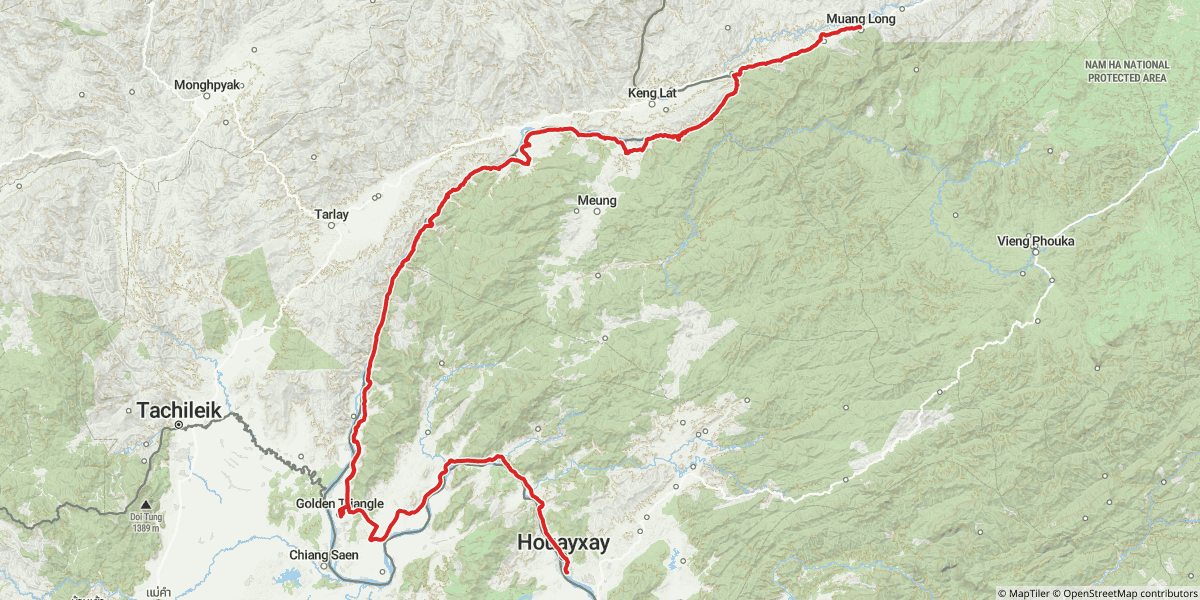
The plan for Day 2 was to ride north along the Mekong, cut east into the hills, and arrive at Muang Long by late afternoon. What it actually became was a half-day detour into the Bokeo Chinese Special Economic Zone, a long, slow, dusty afternoon on truck-rutted dirt, and a tire shop stop in a village we never got the name of. We were in Muang Long by dark.
About the SEZ: the road north from Houai Xai passes through Tonpheung district, which contains the Kings Romans Special Economic Zone — the controversial Chinese-administered casino city in the Golden Triangle. We rode in to see it. You have to show your passport at the gate; security will ask why you're going. We ordered coffee at a Café Amazon inside the zone, and the change came back in Chinese yuan, not Lao kip. A plainclothes 'handler' approached us outside the coffee shop and questioned us for about ten minutes about why we were there. Worth seeing once. We did not linger.
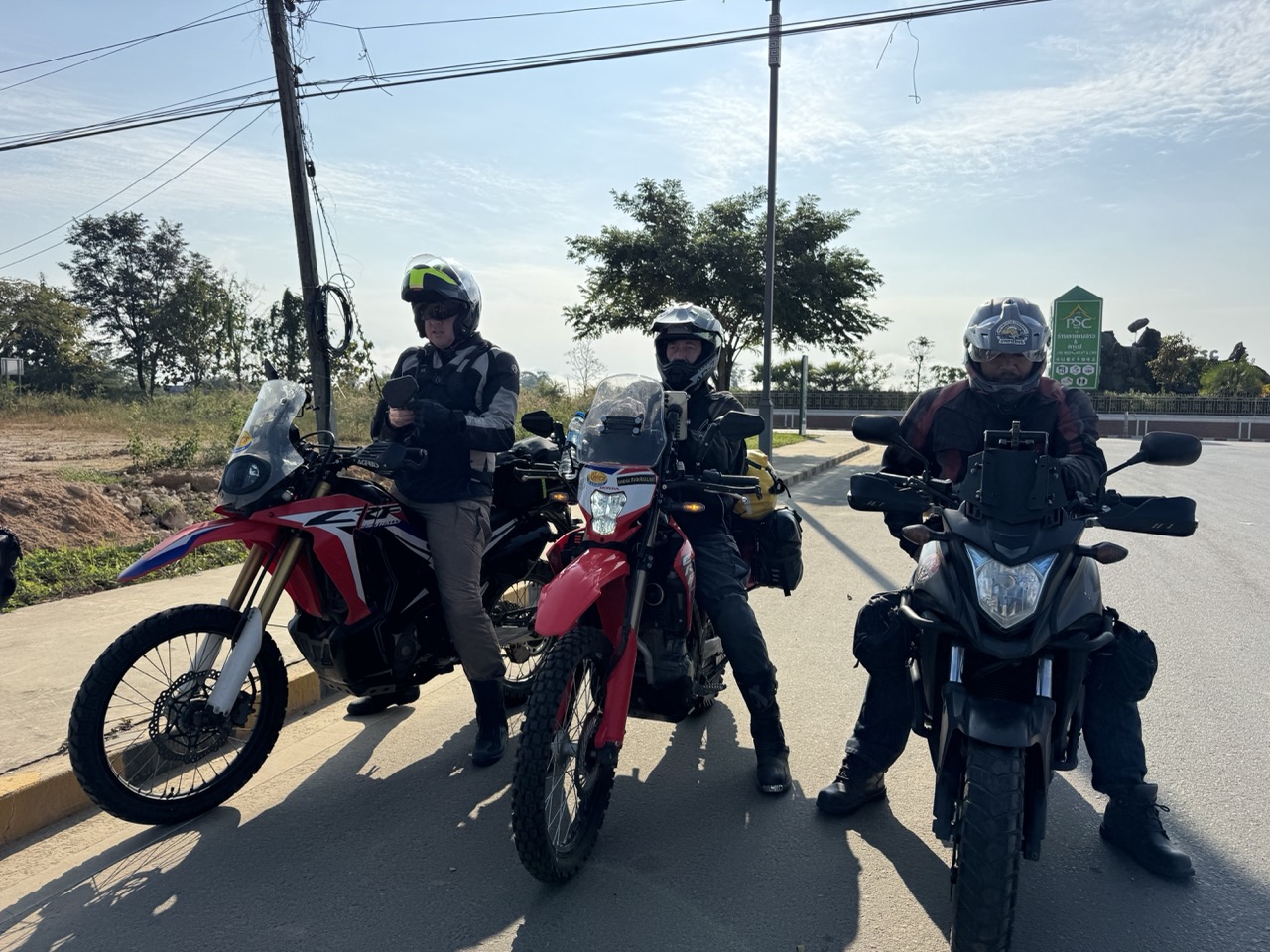
Group dynamics on this kind of trip sort themselves out fast. Five riders is too many to stay in a single line all day — by mid-morning we'd naturally split into two speed-based sub-groups that would catch each other at fuel stops and lunch. That worked fine for the SEZ detour: the fast group rolled through, the slower group did the coffee stop and the handler conversation. Same destination by sundown.
The road east from the SEZ back toward Muang Long is the part of the trip we underestimated. On paper it's a regional road shown as a thin line on the map. In practice it's a wide dirt track that runs along the northern border, used daily by heavy Chinese cargo trucks coming and going through the zone. The trucks chew the surface into deep ruts and rolling washboard; light vehicles do the rest. We averaged maybe thirty kilometres an hour for hours. Dusty, slow, and not what we'd expected from a route this far north.
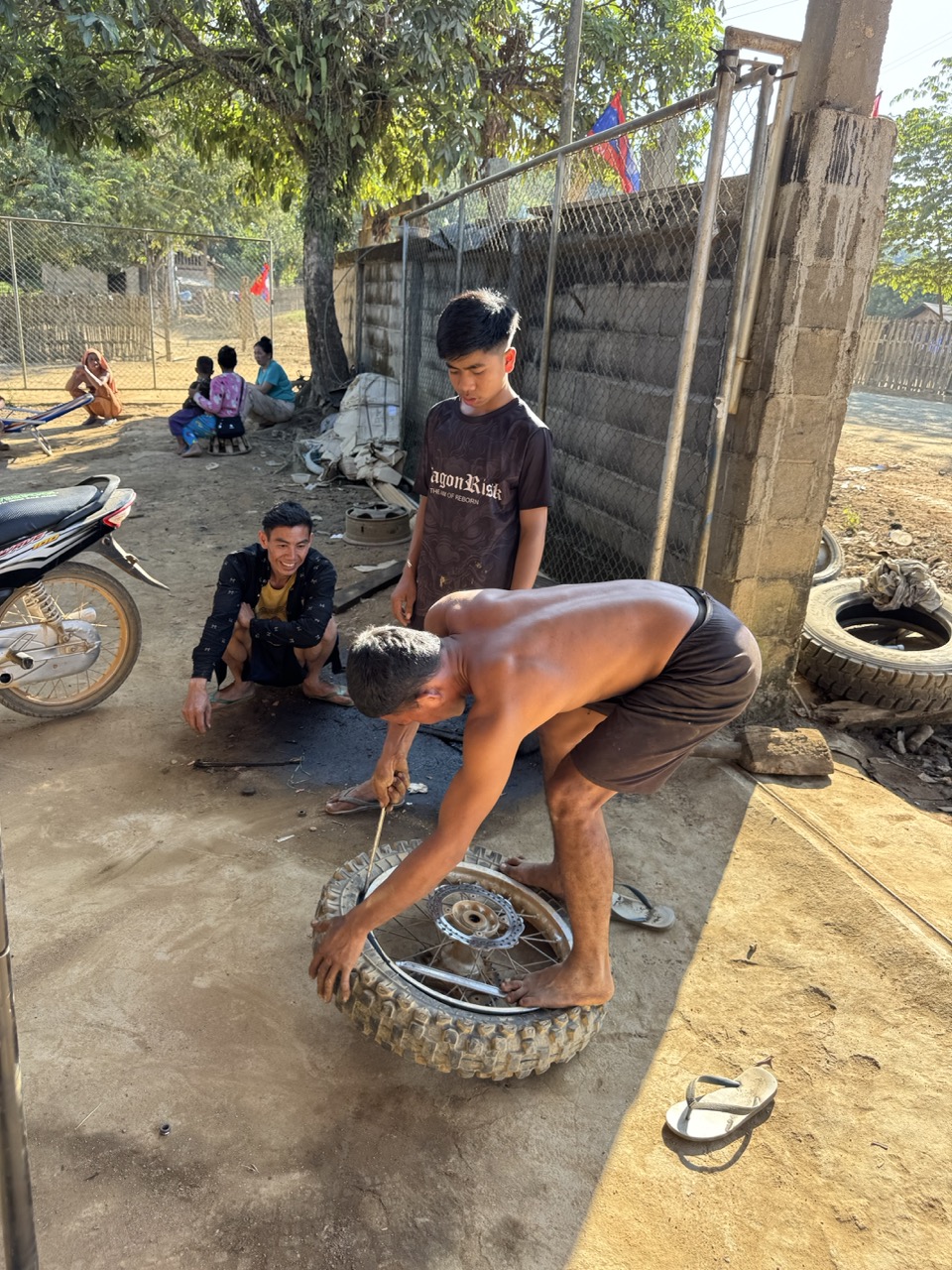
Somewhere in the last twenty kilometres before Muang Long we pulled into a small village shop to deal with another tire issue on the CRF250. The shop wasn't really set up for foreign motorcycles, but the older guy running it and his teenage helper figured it out fast. Tube out, tube patched, tube back in, paid in kip, kept going. Forty-five minutes maybe. The sun was already low when we rolled into Muang Long proper.
Bed for the night was ເຮືອນພັກແຮັບປີ໋ — Happy Guesthouse, written in Lao script over the front — a small family-run place tucked off the main road. Clean, basic, ceiling fan, hot water. Dinner was at a roadside spot a few hundred metres away, eaten outside in the dark by the light of a cooking fire.
Day 3 — Muang Long to Luang Namtha
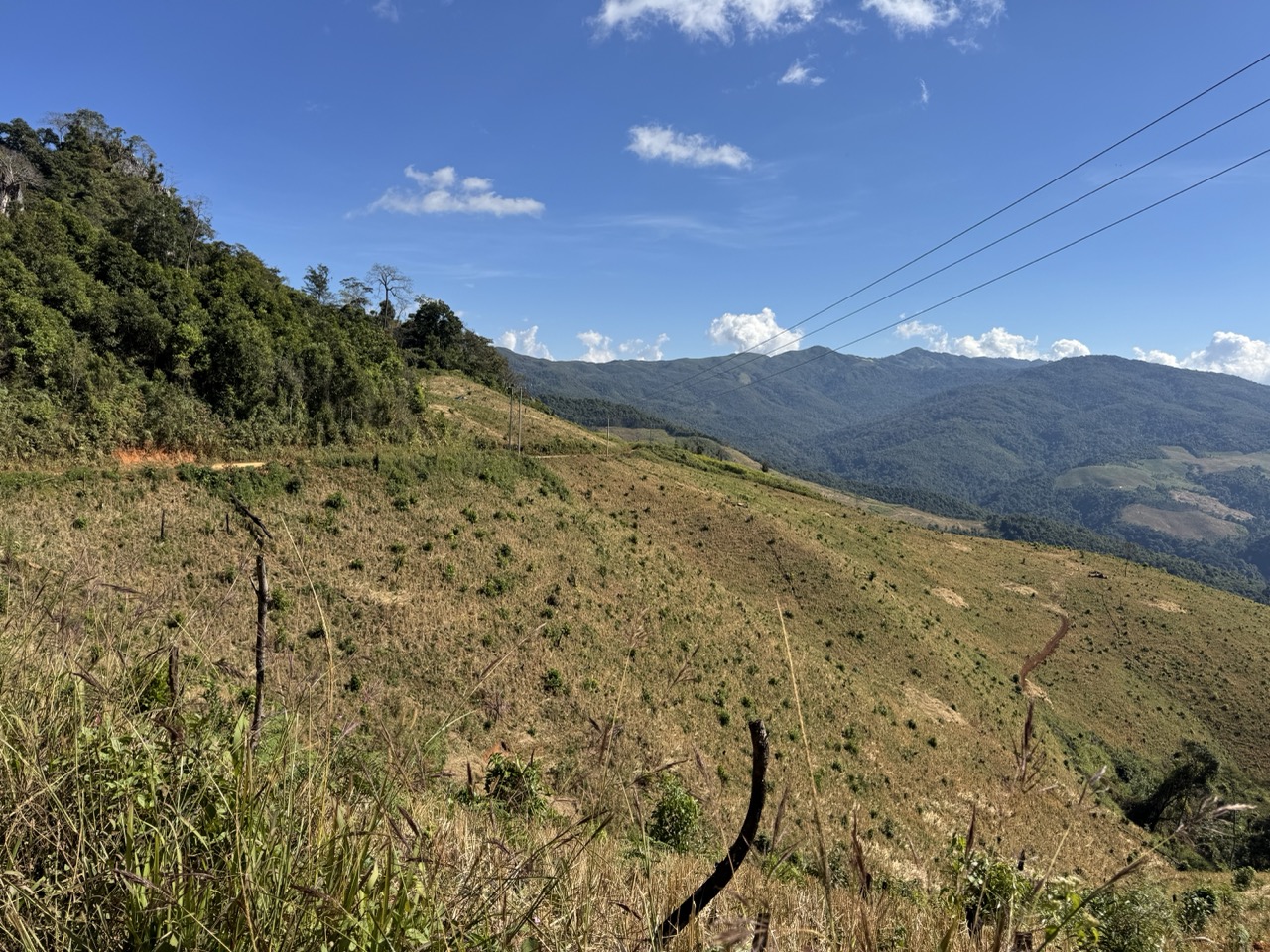
If we'd had to pick one day, it might have been this one. Short, fast, and on a road that bears no resemblance to whatever it was we rode the day before. The route from Muang Long down to Luang Namtha is genuinely good tarmac most of the way, climbing through low hills and dropping into broad valleys of paddies and hill-tribe villages. We didn't stop for anything memorable. We didn't need to.
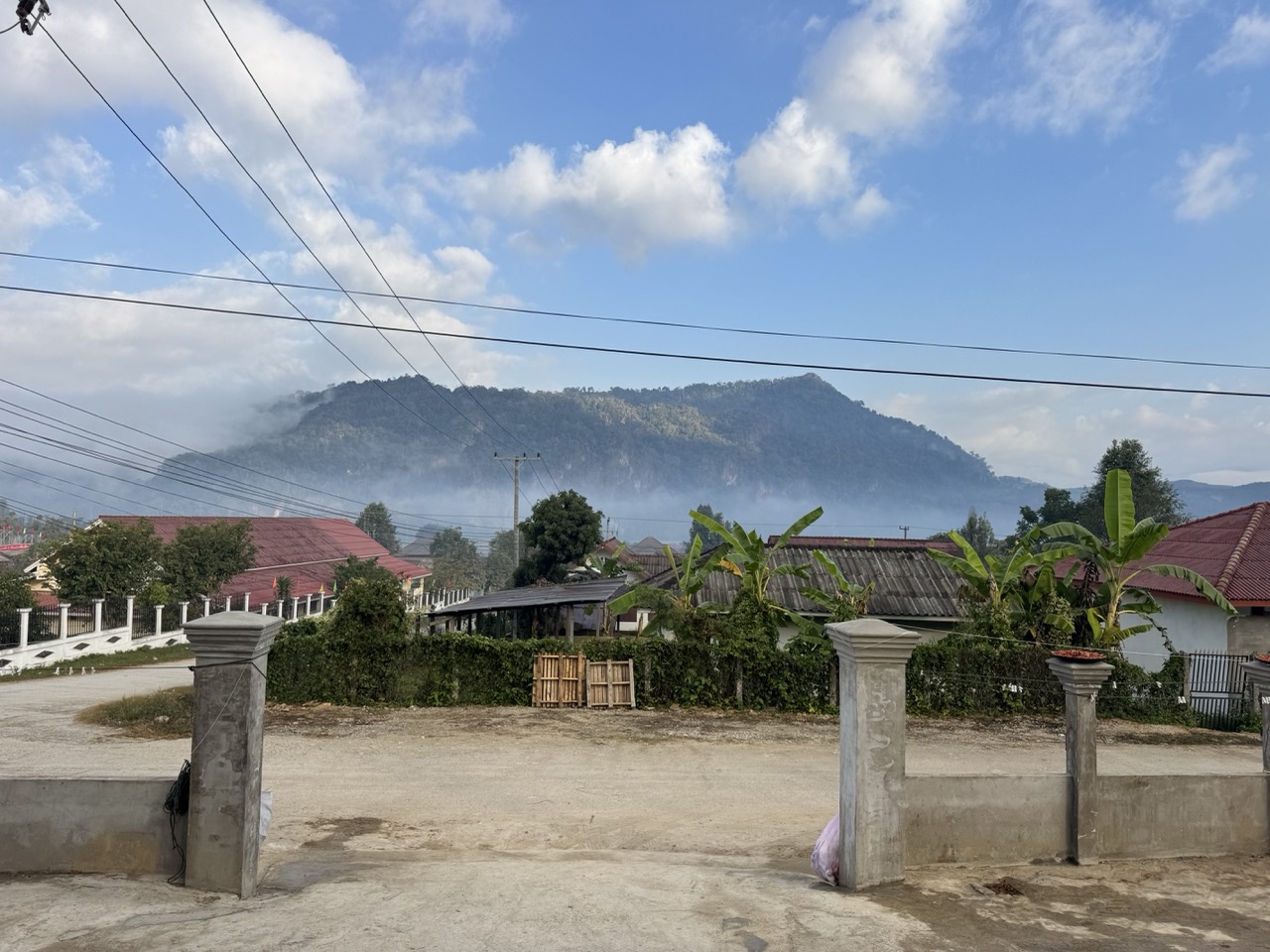
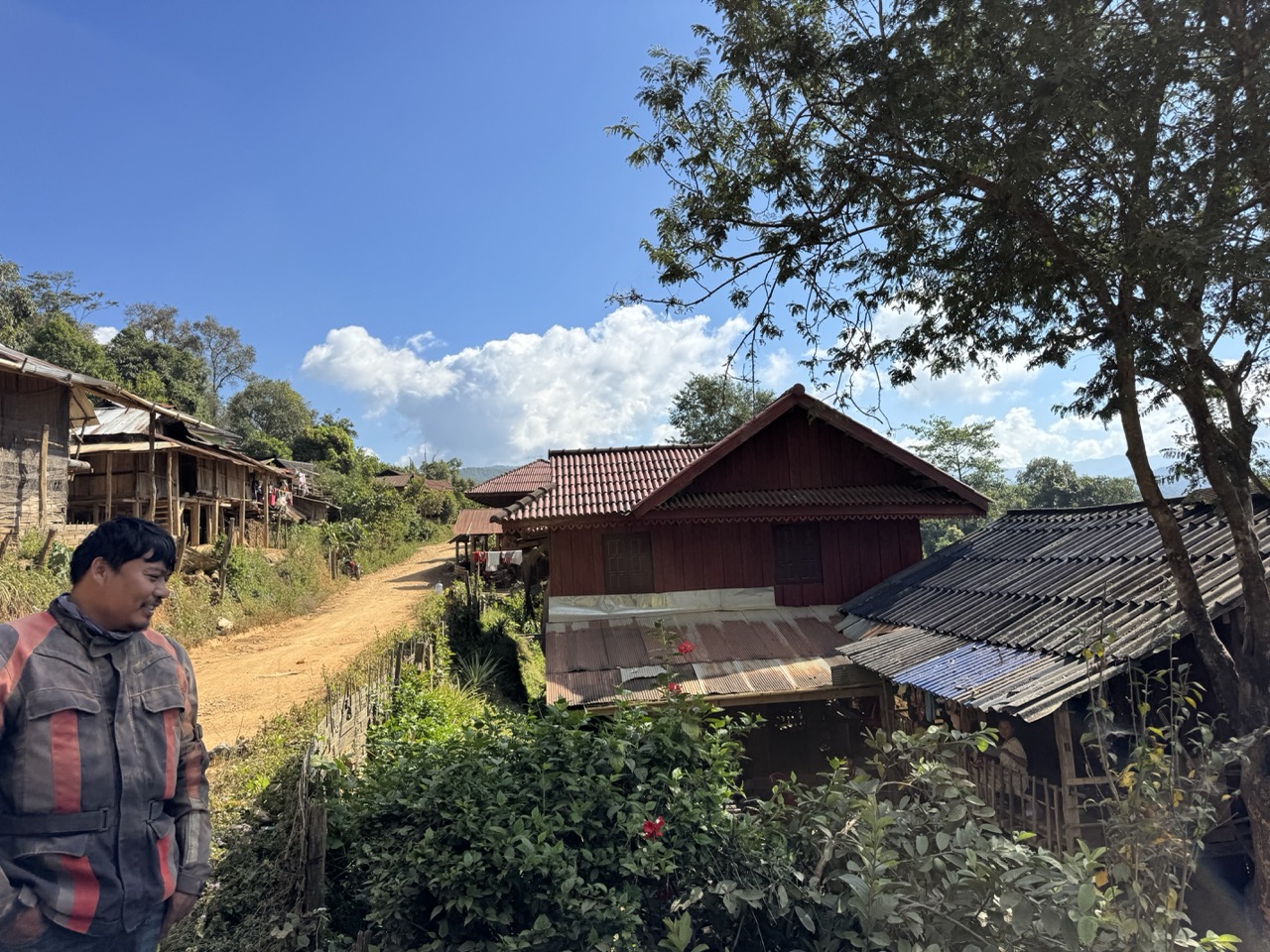
Most of the villages along this stretch are Akha and Hmong. Wooden houses, red-tile or corrugated roofs, banana trees in the front yards, satellite dishes on poles. Almost everyone you pass waves; older kids on scooters will tuck in behind you for a kilometre or two to see what the bikes are. It's the closest we got to the cliché 'remote Laos' experience — and we got it from inside a relaxed throttle on a smooth road.
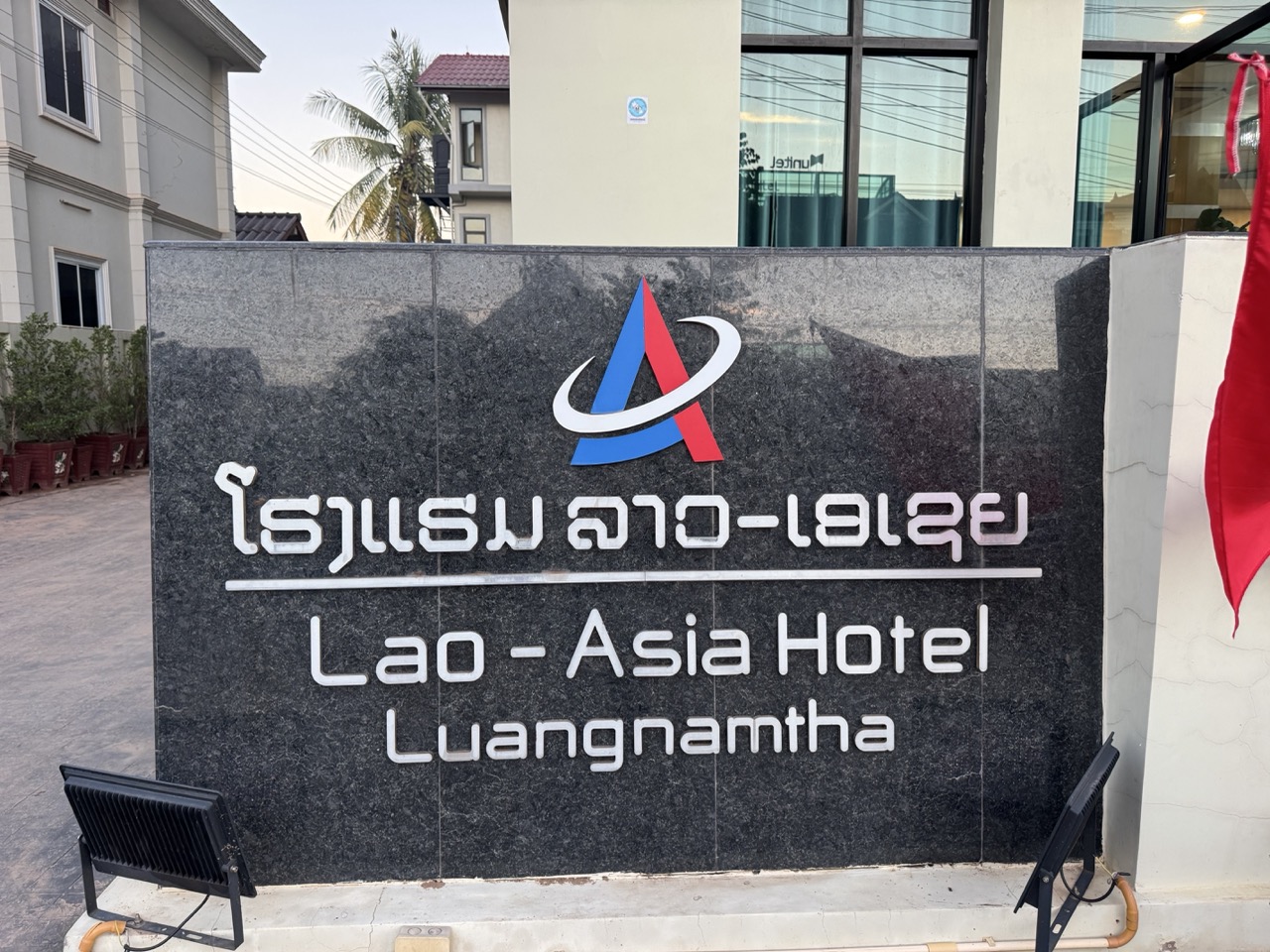
We rolled into Luang Namtha mid-afternoon and checked into Lao-Asia Hotel — a clean modern hotel on the main road with parking and a good restaurant downstairs. After two nights in family guesthouses it was nice to have a proper hot shower and a bed that wasn't a wooden plank. We grabbed dinner at one of the night-market stalls and were back at the hotel by nine.
Before bed we walked one of the bikes round to a small repair shop on a side street to deal with another tube issue ahead of the long climb to Phongsali. The mechanic worked under fluorescent strip lights with a handful of tools and a wall of half-used parts, and had us back on the road inside an hour. Same pattern, different town.
Day 4 — Luang Namtha to Phongsali
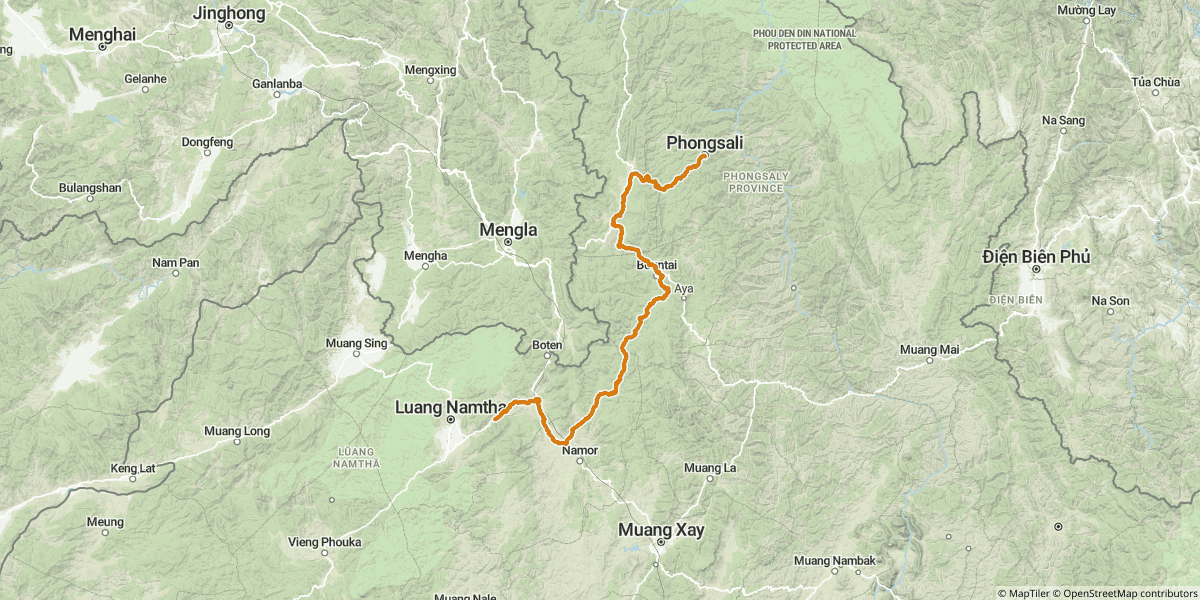
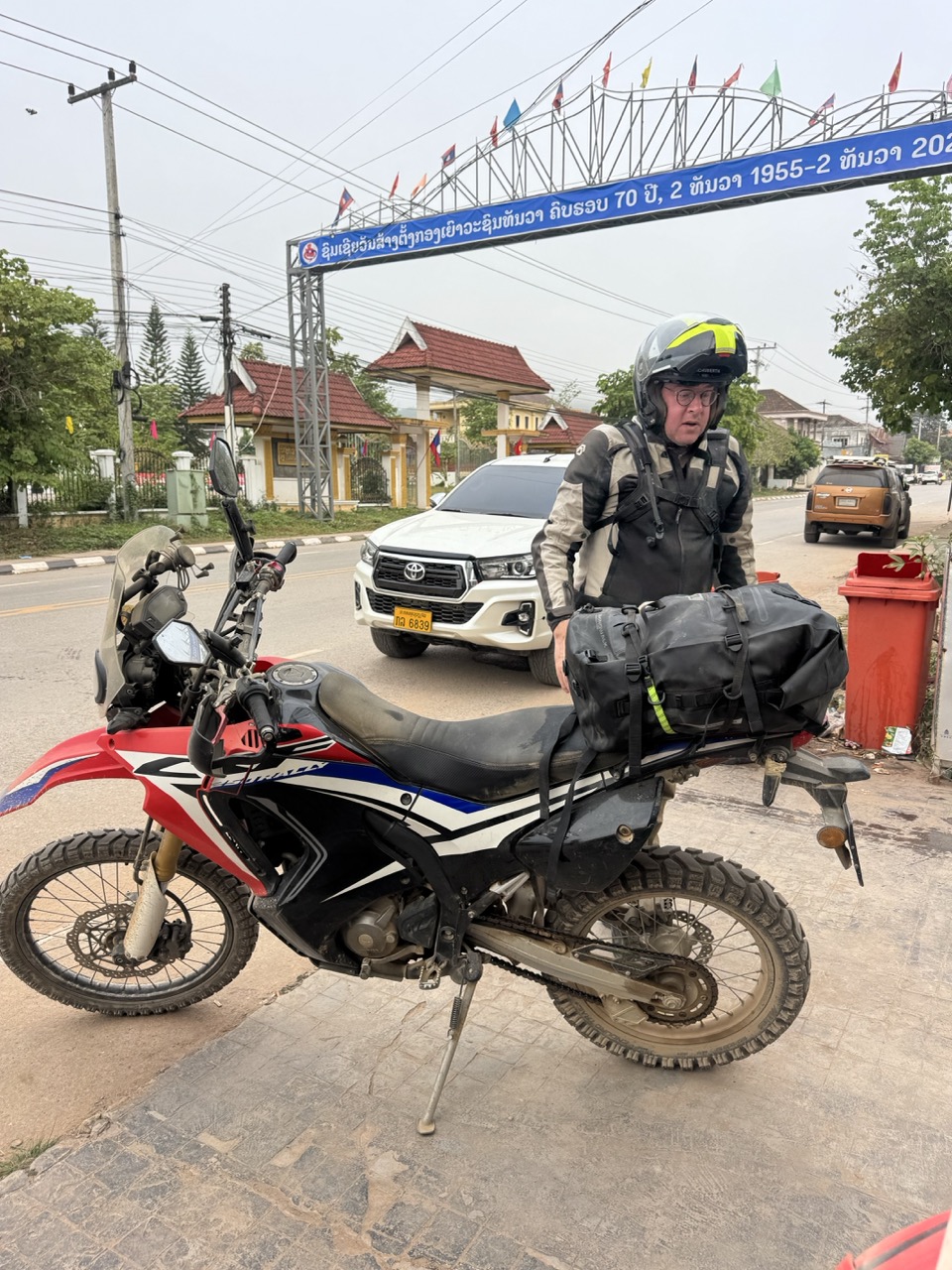
Phongsali is the northernmost provincial capital in Laos, sitting at about fourteen hundred and thirty metres of elevation against the Chinese border. The road up to it is the kind of climb the bikes were built for: tight, twisting, single-lane tarmac that switchbacks for hours through mixed deciduous forest, swapping fast sweeping bends for hairpins without much warning. The CB500X did well, the CRFs did better, and nobody had a mechanical to report.
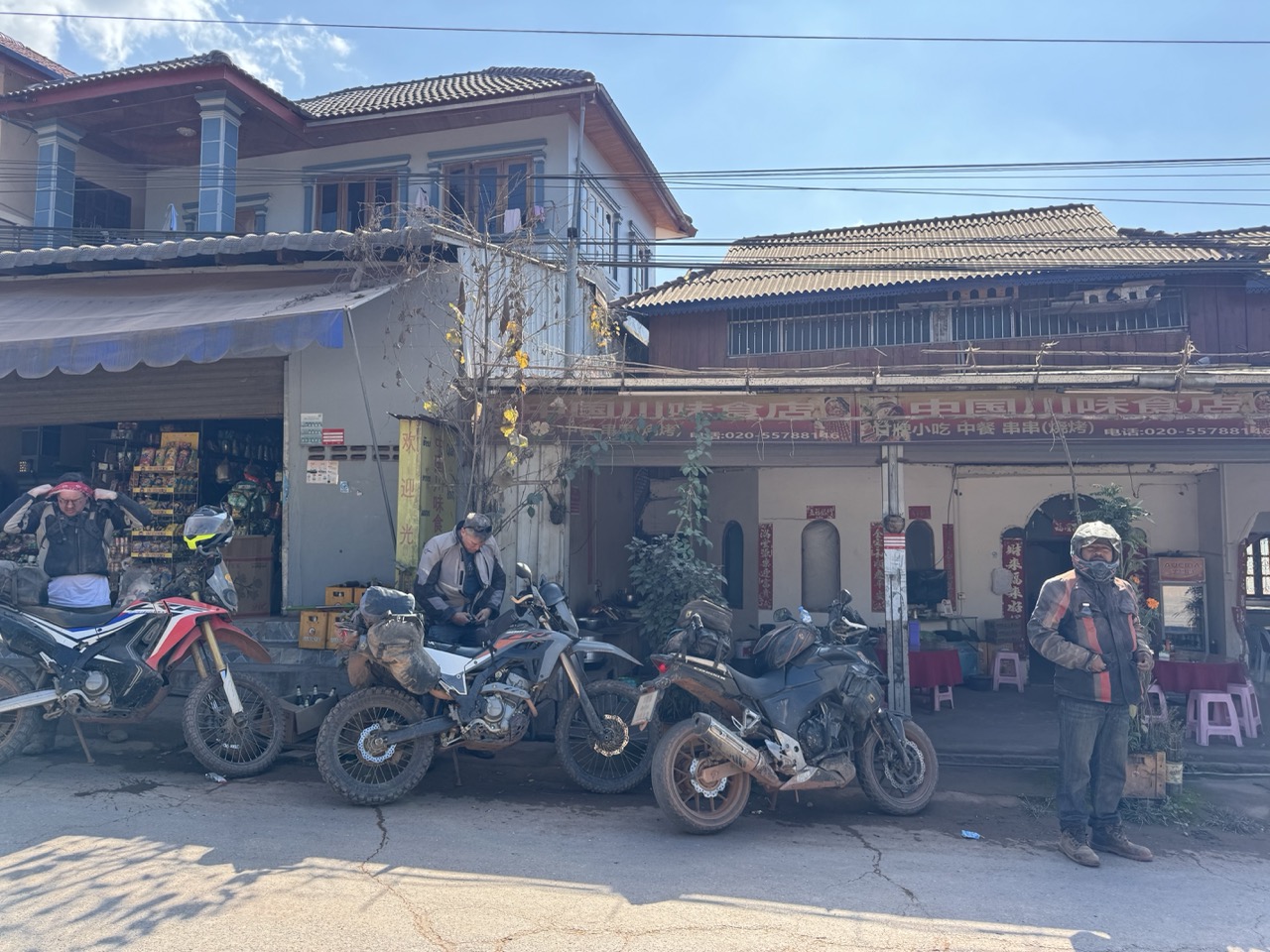
Lunch was unintentional. A few hours into the climb we pulled into a small town for fuel and food and walked into the only restaurant in sight — a Chinese-cuisine spot with a phone number painted on the storefront in Chinese characters. Mandarin menu, no Lao or English, helpful waitress, decent skewers and cold-noodle stir-fries. We later learned that Chinese-language signage and Chinese-only menus are the default in this part of Laos: most of the small businesses on the road up to Phongsali are run by Chinese expats, and the tourist trade isn't catering to Lao or Western customers. It's not a problem — point and gesture works fine — but it's a useful thing to know if you're planning your stops around food.
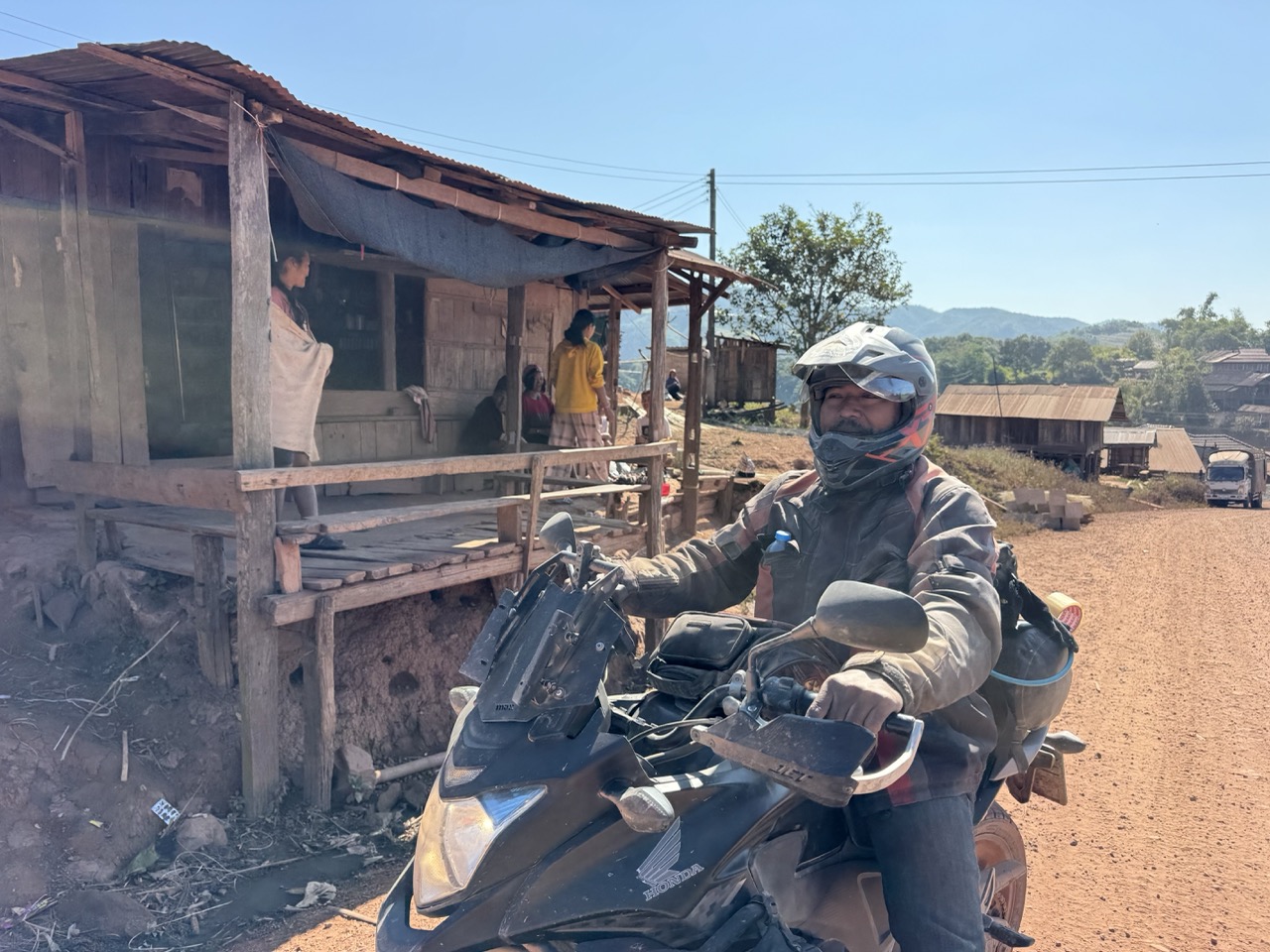
Phongsali itself is an old town, perched on a ridge with terraced streets and a Chinese architectural influence that you don't see anywhere else in Laos. Tile roofs, narrow alleys, painted shutters. We rolled in late afternoon and the temperature had already dropped — by the time we'd parked the bikes and walked to the guesthouse we were in jackets. The air at fourteen hundred metres in early December is genuinely cold. Bring a layer that isn't just a windbreaker.
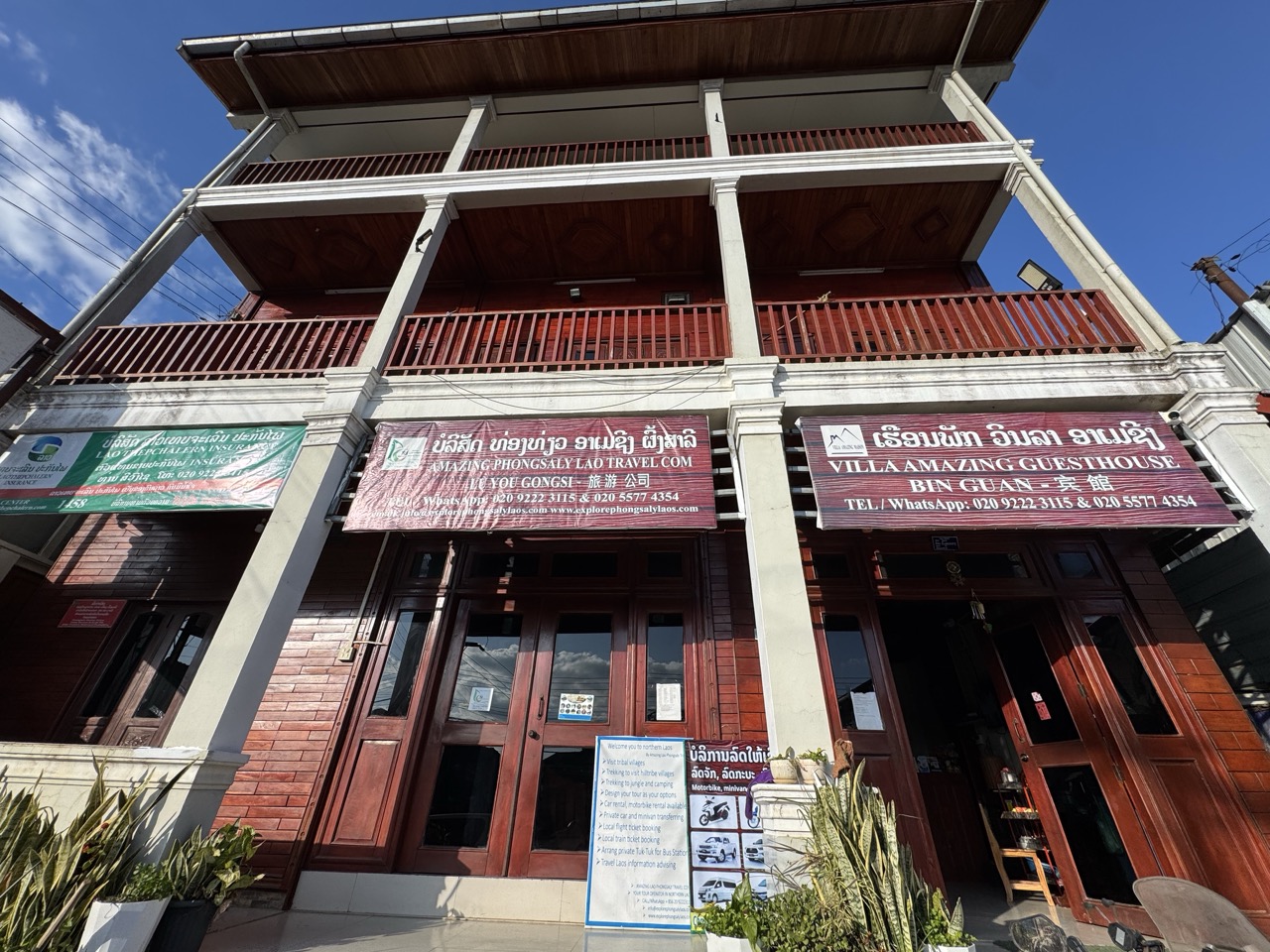
Villa Amazing Maison Guesthouse was warm, friendly, and felt like the right place to stop for the night. We ate Chinese food again (still the only option), drank Beerlao, and went to bed early. The next morning was misty enough that the whole town was wrapped in cloud before sunrise.
Day 5 — Phongsali to Muang Khua
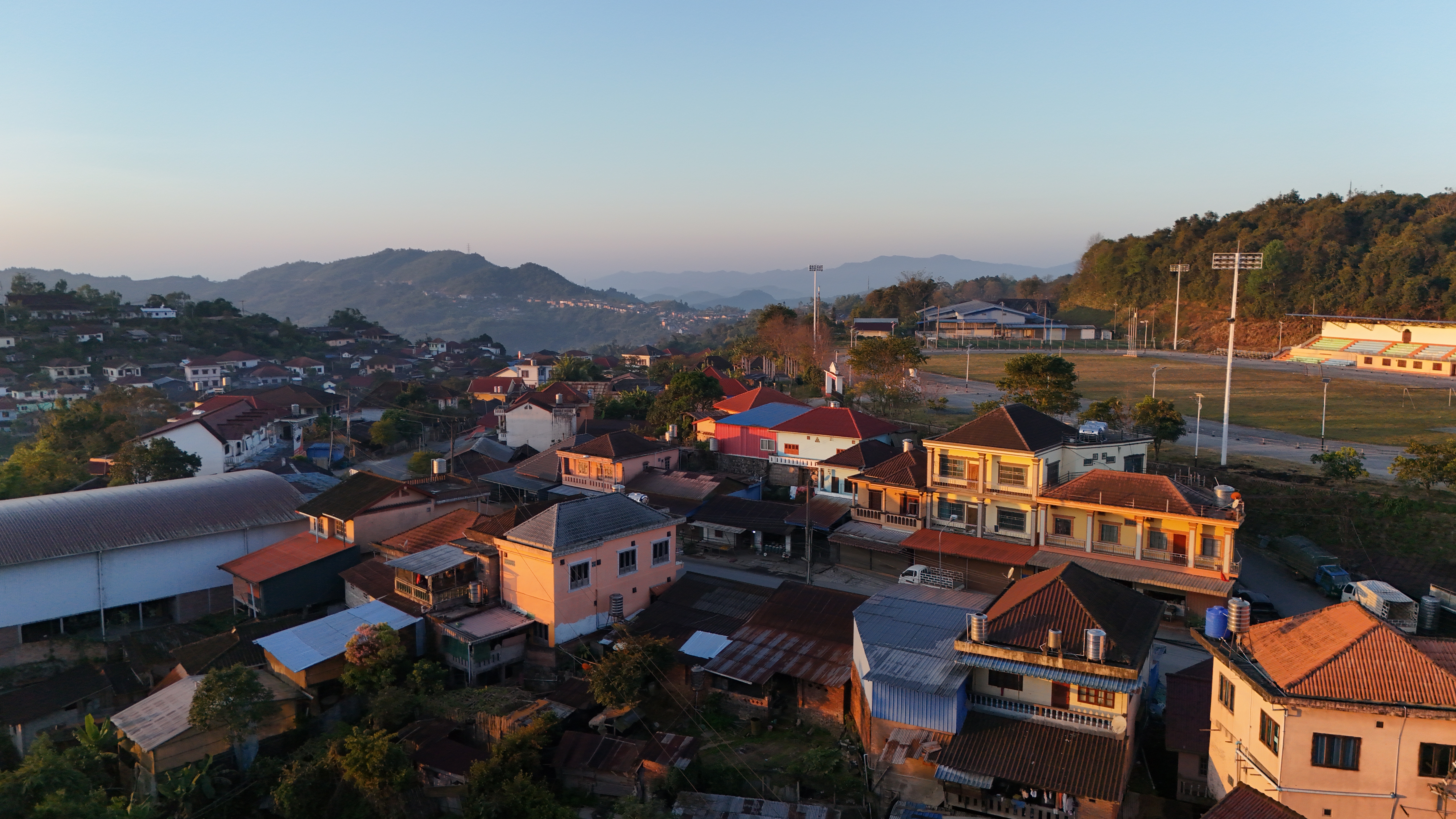
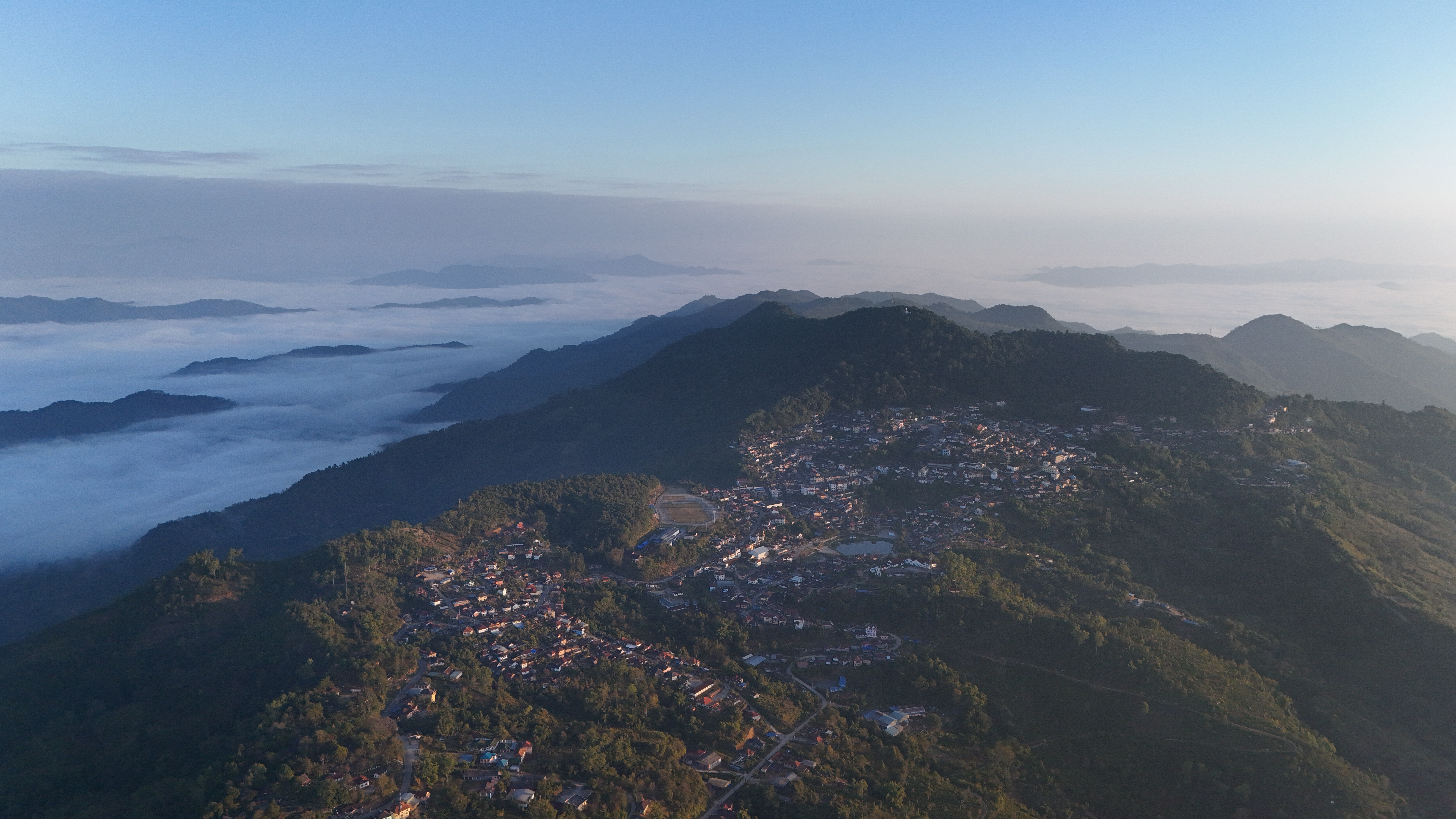
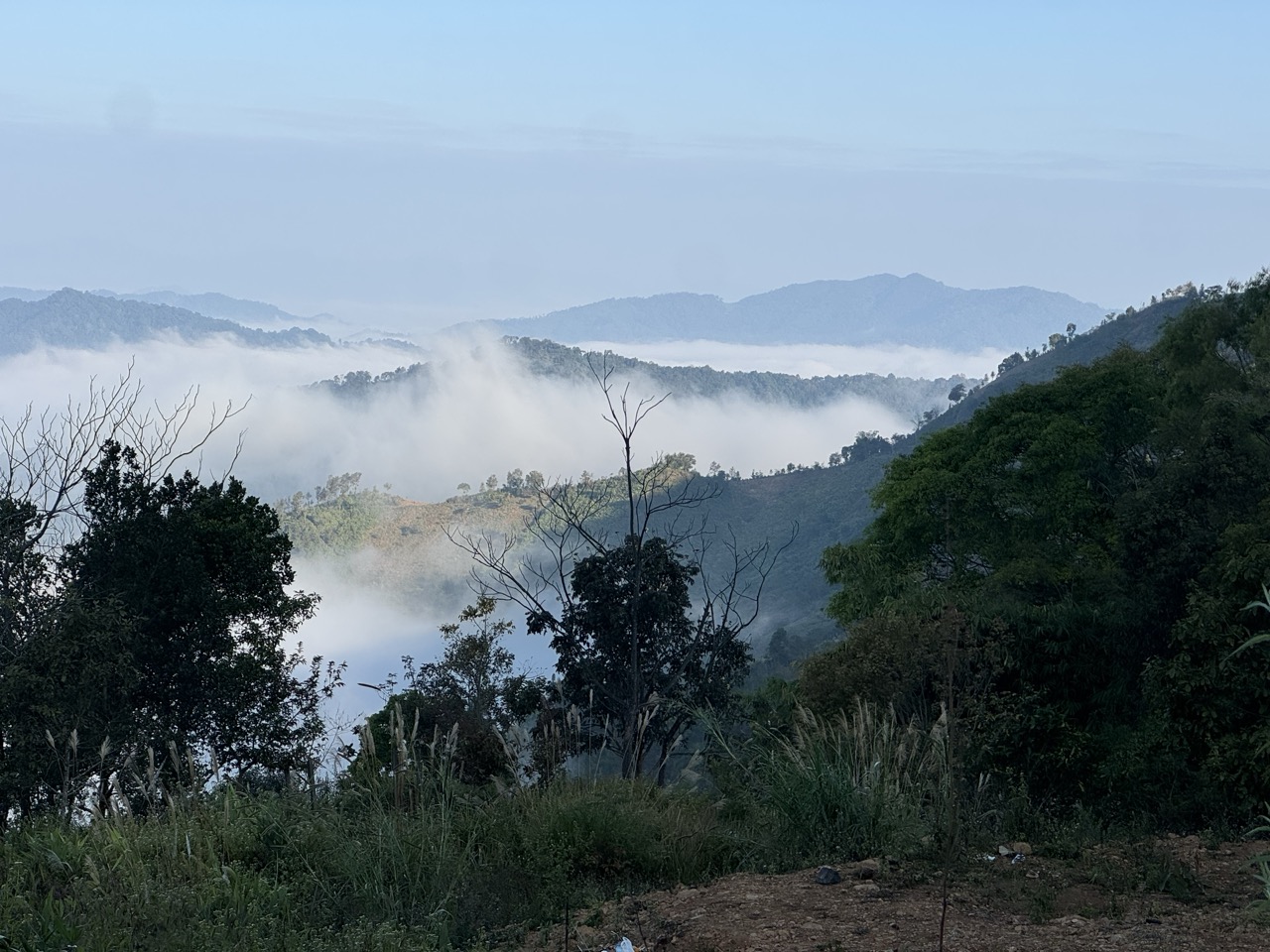
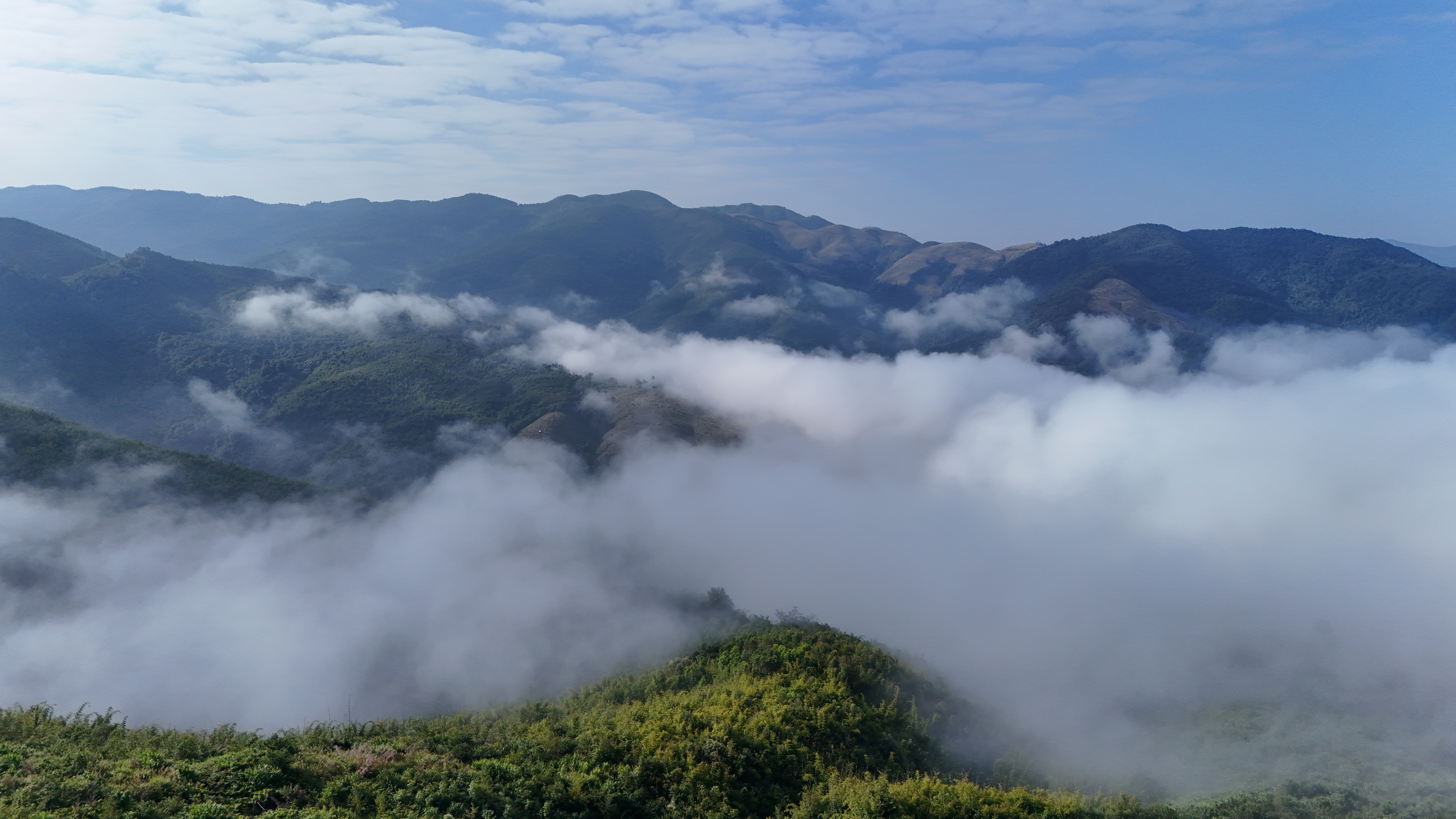
We left Phongsali at first light, half-frozen, and watched the mist burn off the ridgelines as the bikes warmed up. The road south is the kind of thing dirt bikes were invented for: a long, winding, mostly-paved mountain pass that you can ride at whatever pace you like, with the drone-eye view as the bonus reward when you stop at the right viewpoint. We made good time for the first two hours.
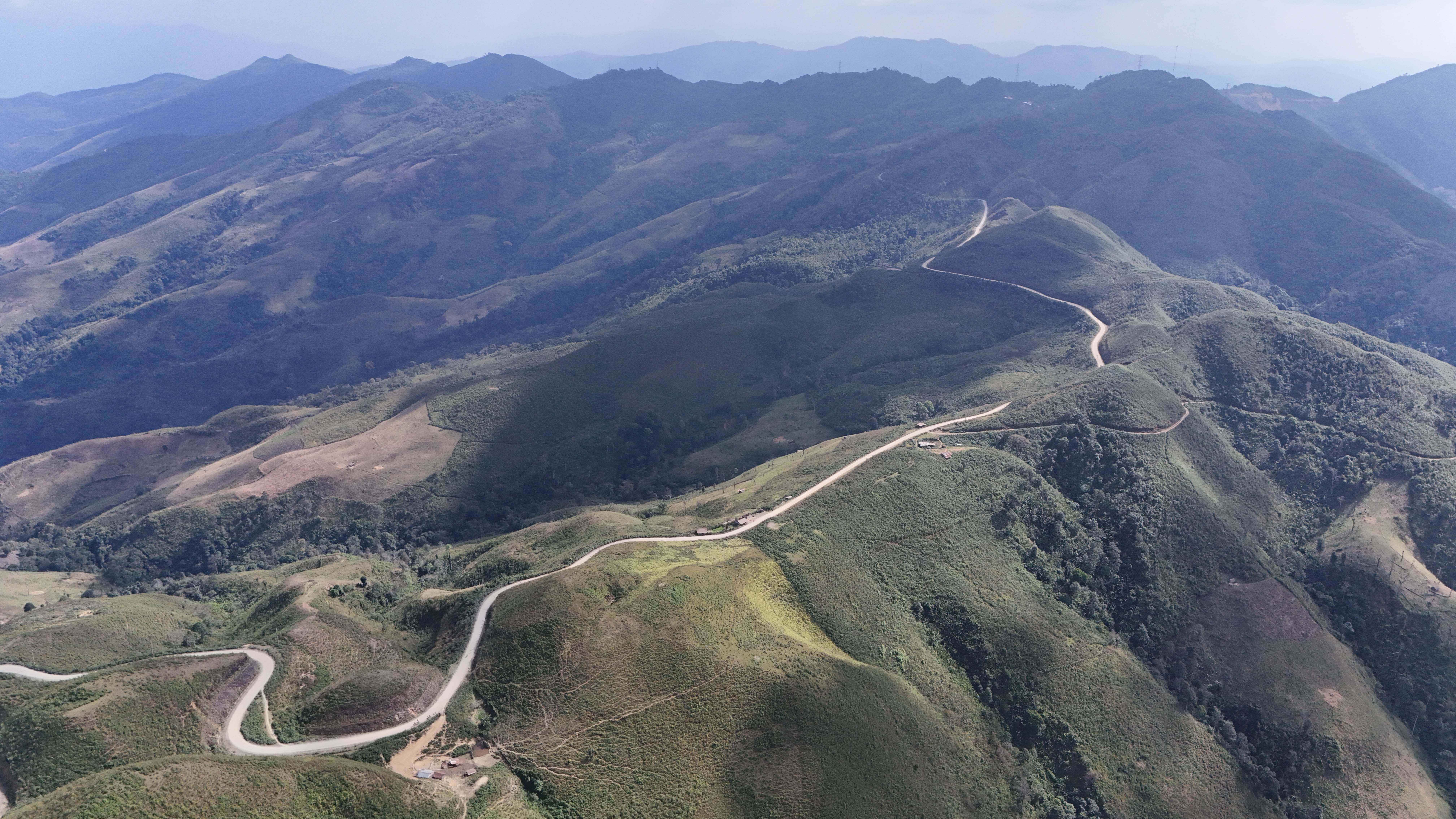
Then we got two flats within an hour of each other on the ridgeline above the ferry. The CRF250 pinched a tube on a rough section — same wheel as Day 1, again — and we patched it roadside in maybe twenty minutes. Twenty minutes later the CB500X went down on its rear: tubeless tyre, slow leak getting fast. We plugged it temporarily and limped on, but it was the start of a problem that would shape the rest of the week. The CB500X needed a new tyre and we were a long way from anywhere that sold one.
We dropped off the ridge on a steep dirt section that fed into the Nam Ou ferry. Halfway down we came across a young guy on a Honda Wave who'd come off his scooter — slid out on a loose corner, gravel-rashed his forearm pretty thoroughly, sitting on the verge looking dazed. We pulled over, dug into the first-aid kit, cleaned and dressed the worst of it, gave him water and waited until he'd shaken it off and was riding under his own steam again. Twenty minutes. Felt like the right thing to do.
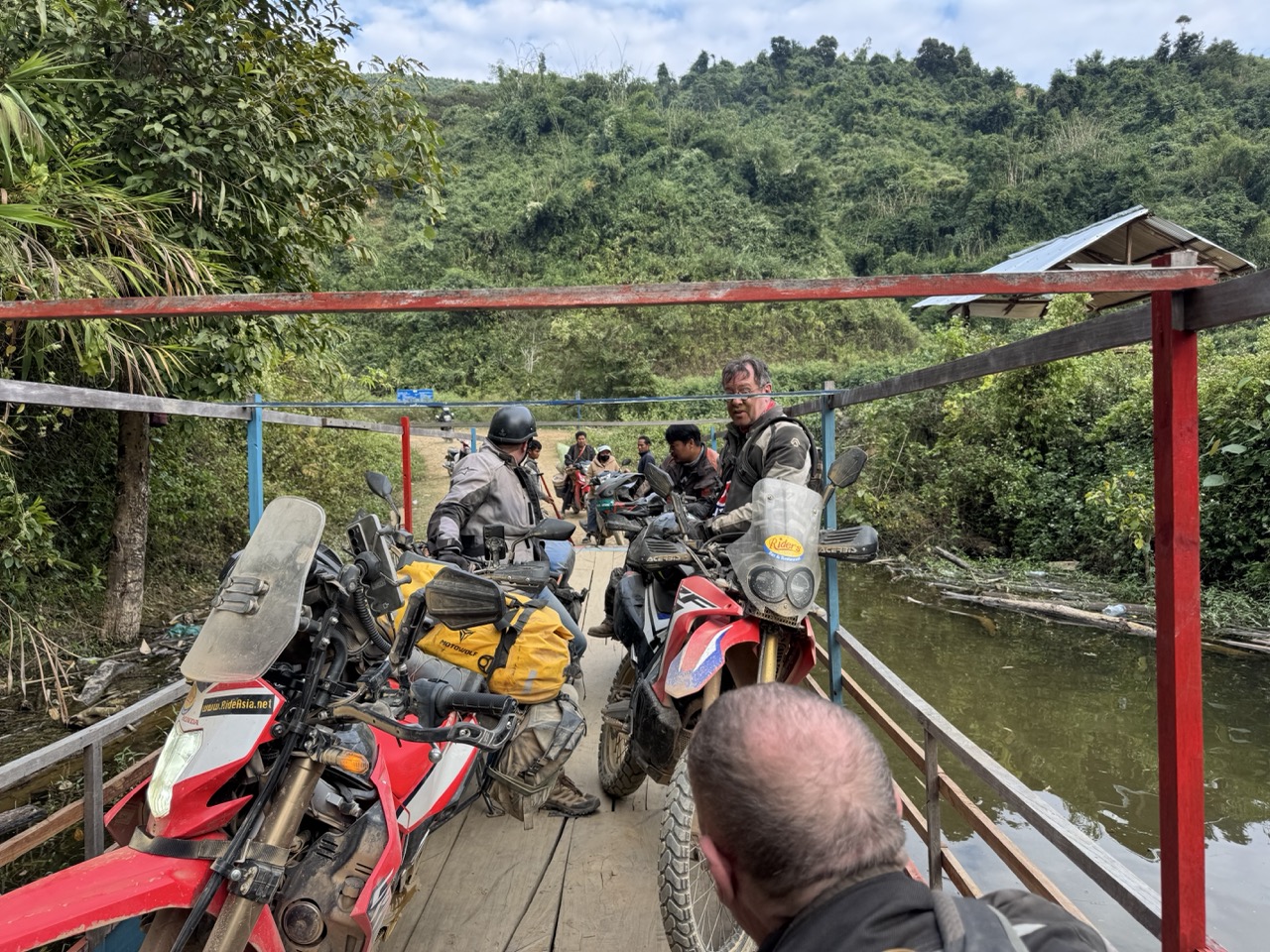
The ferry itself was a flat metal barge with painted red railings, run by a guy with a tiller-mounted long-tail engine on one corner. It was completely packed: our five bikes plus six or seven scooters plus a dozen foot passengers, all crammed onto a deck that felt about a foot above the waterline. The crossing takes maybe ten minutes. Watching the Nam Ou slide past from a barge that low to the water is one of those moments where you remember you're somewhere you couldn't be on a tour bus.
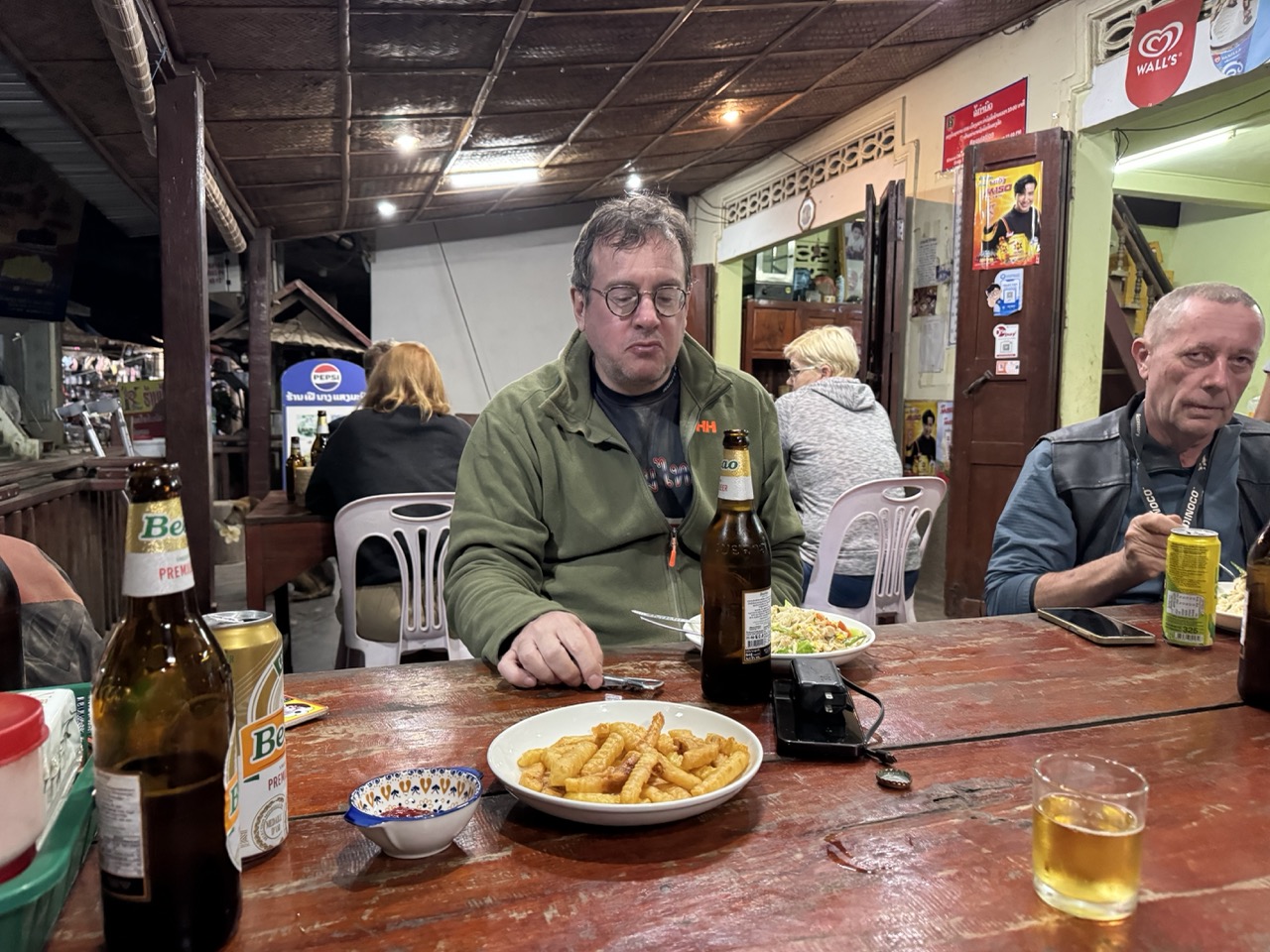
Muang Khua was on the other side. We checked into Chaleunsouk Guesthouse — a riverside place a few minutes from the ferry, basic but with a balcony view over the Nam Ou — and went looking for dinner. While the rest of the group ordered, the CB500X rider was on the phone to a tyre shop in Vientiane about overnighting a new rear out to Luang Prabang. We had a few more days of riding before that became urgent.
Day 6 — Muang Khua to Nong Khiaw
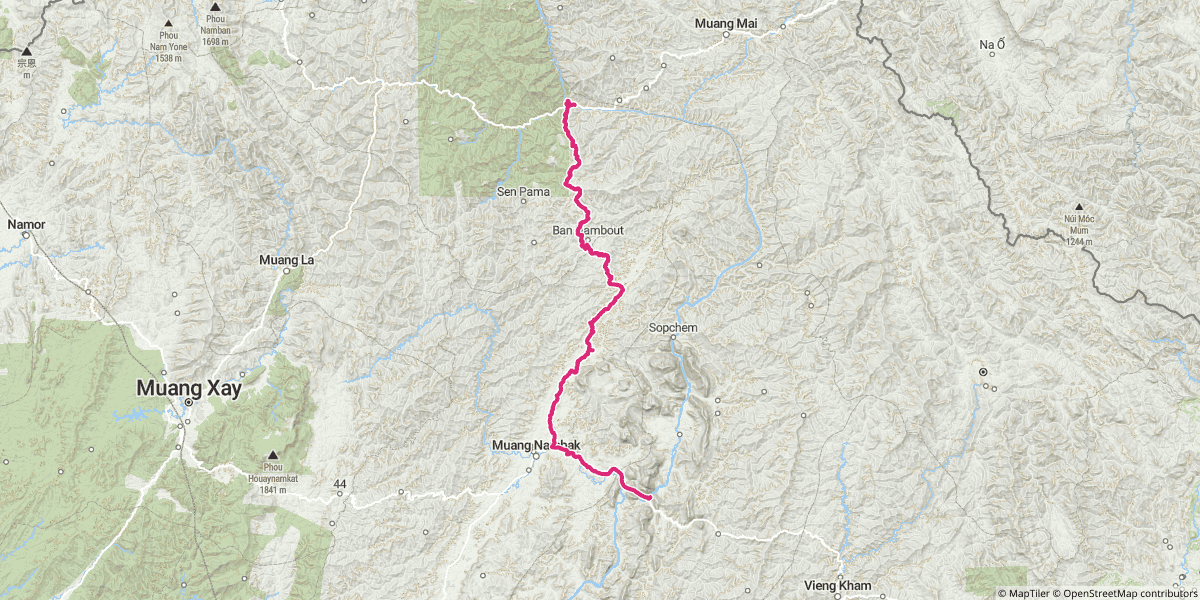
Day 6 was great riding, full stop. The route from Muang Khua down to Nong Khiaw mostly follows the Nam Ou — sometimes hugging the river, sometimes climbing over the ridges that separate one bend from the next. The surface is a mix of fresh tarmac and packed dirt, almost no traffic, and the kind of scenery where you keep forgetting you're trying to make Nong Khiaw before sunset because the view from every corner is a postcard.
About midday we hit another Nam Ou ferry crossing — this one even more packed than yesterday's. Same setup: metal barge, long-tail engine, bikes and scooters and people pressed into every inch of deck. Locals here use the ferries the way the rest of the world uses bridges, and it shows. We waited about twenty minutes for our turn, paid the very small fee in kip, and were back on the bikes inside an hour.
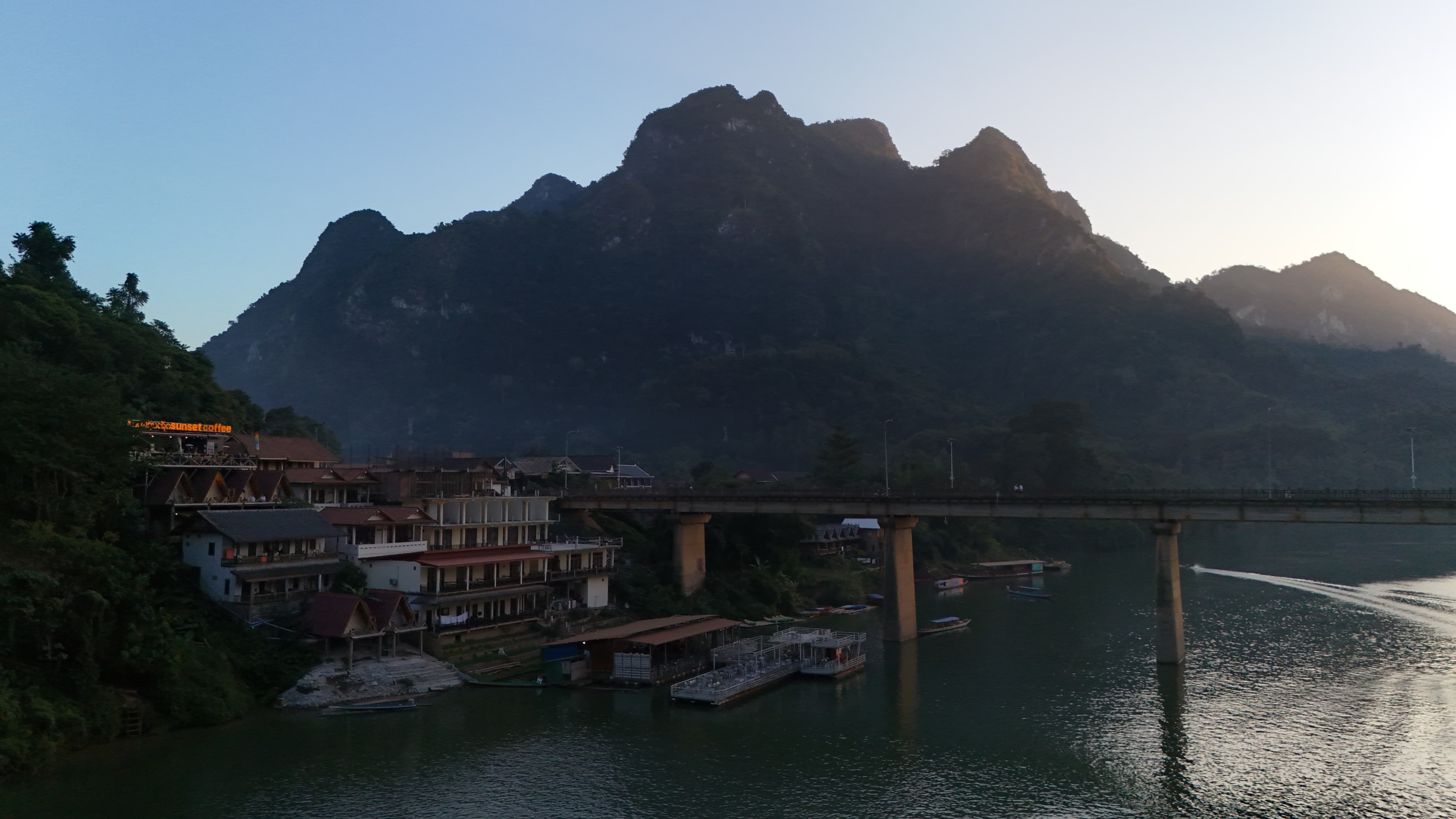
Nong Khiaw appears around a bend in the river: a karst peak rising vertically out of the jungle behind the town, the Nam Ou curving past the foot of it, a concrete bridge spanning the river at the centre of the village. There's a reason every Laos guidebook puts this view on the cover. We rolled in late afternoon, dropped the bikes at Nong Kiau Riverside, and were on the bridge with the drone up within the hour.
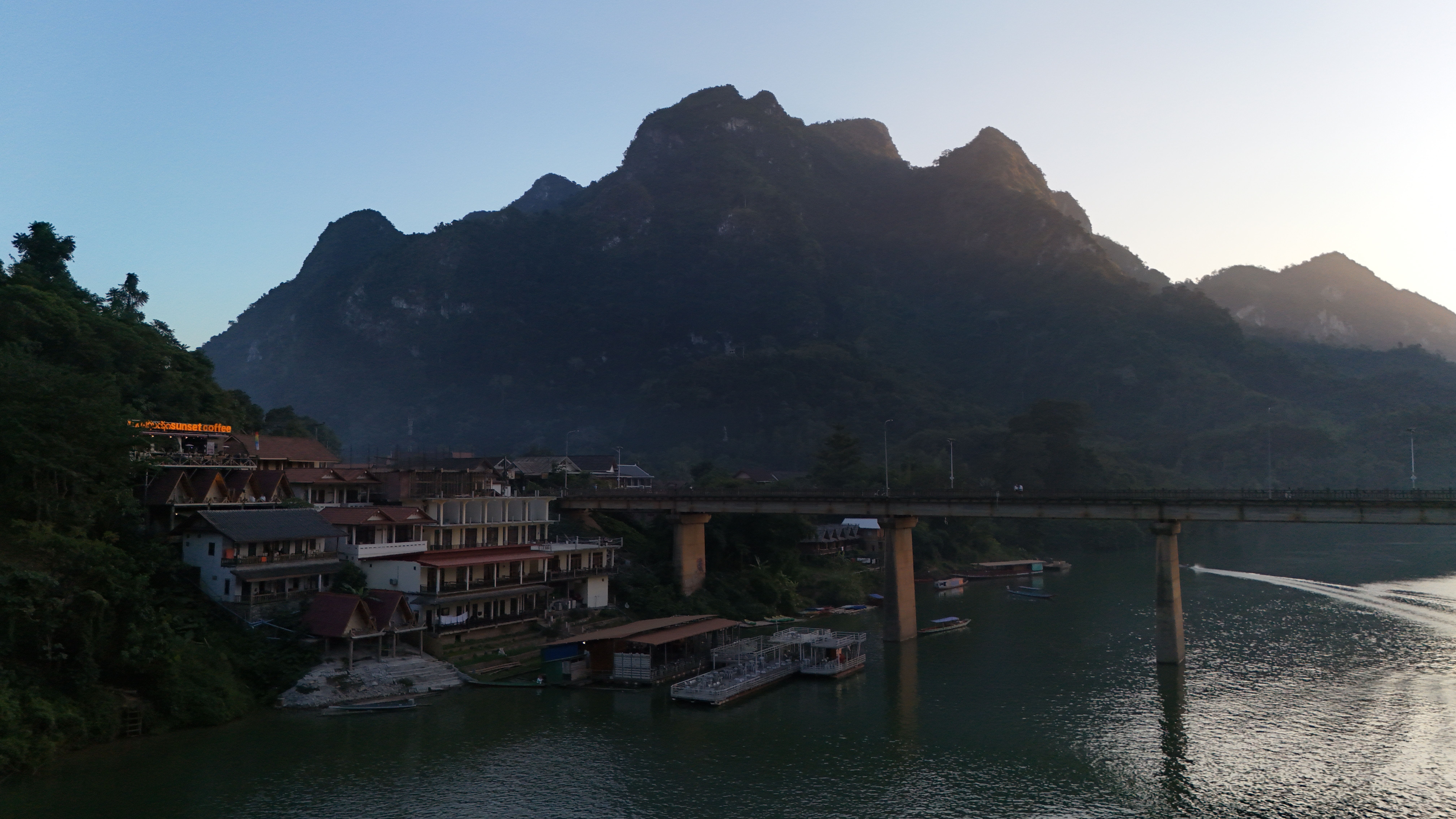
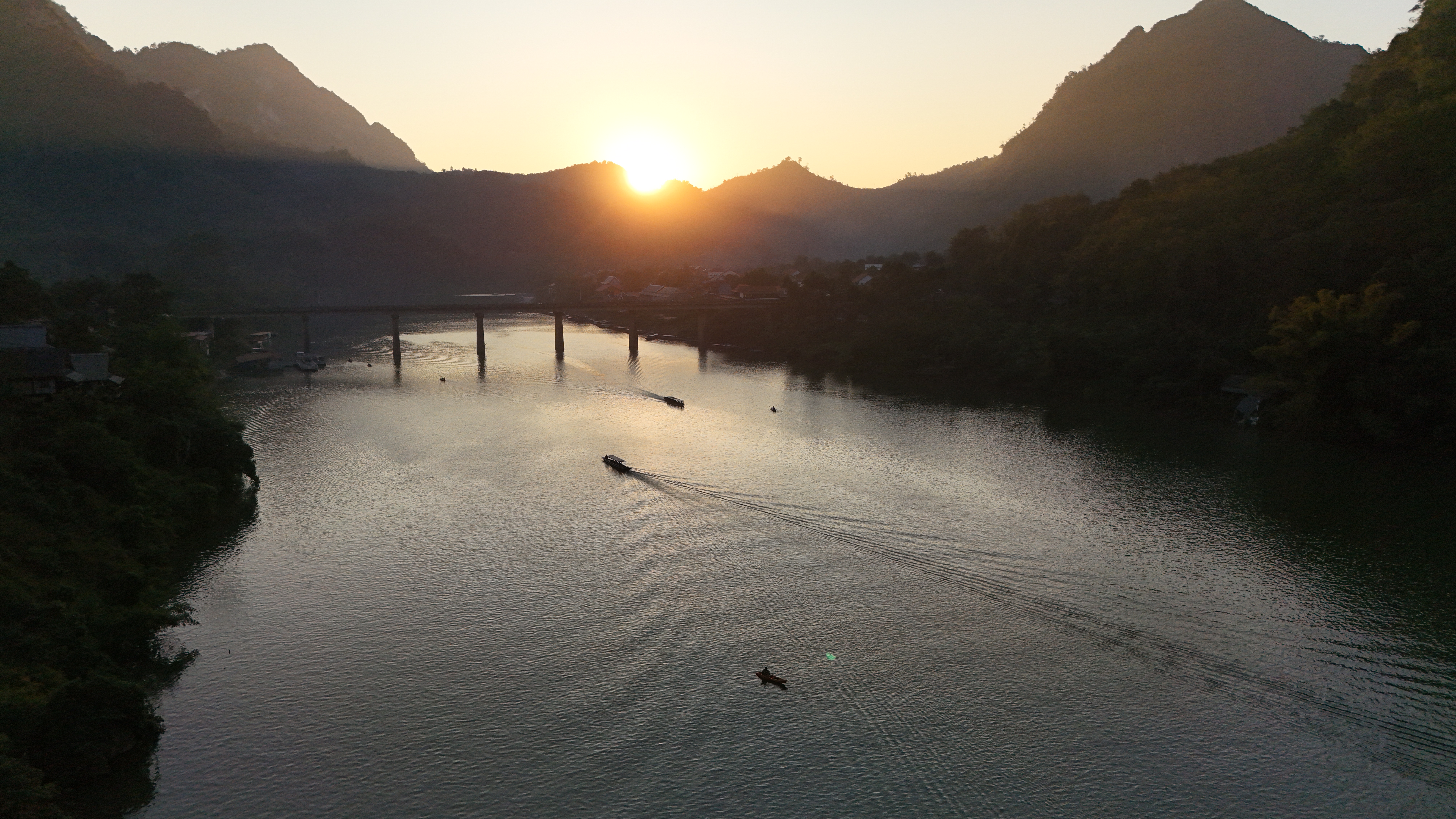
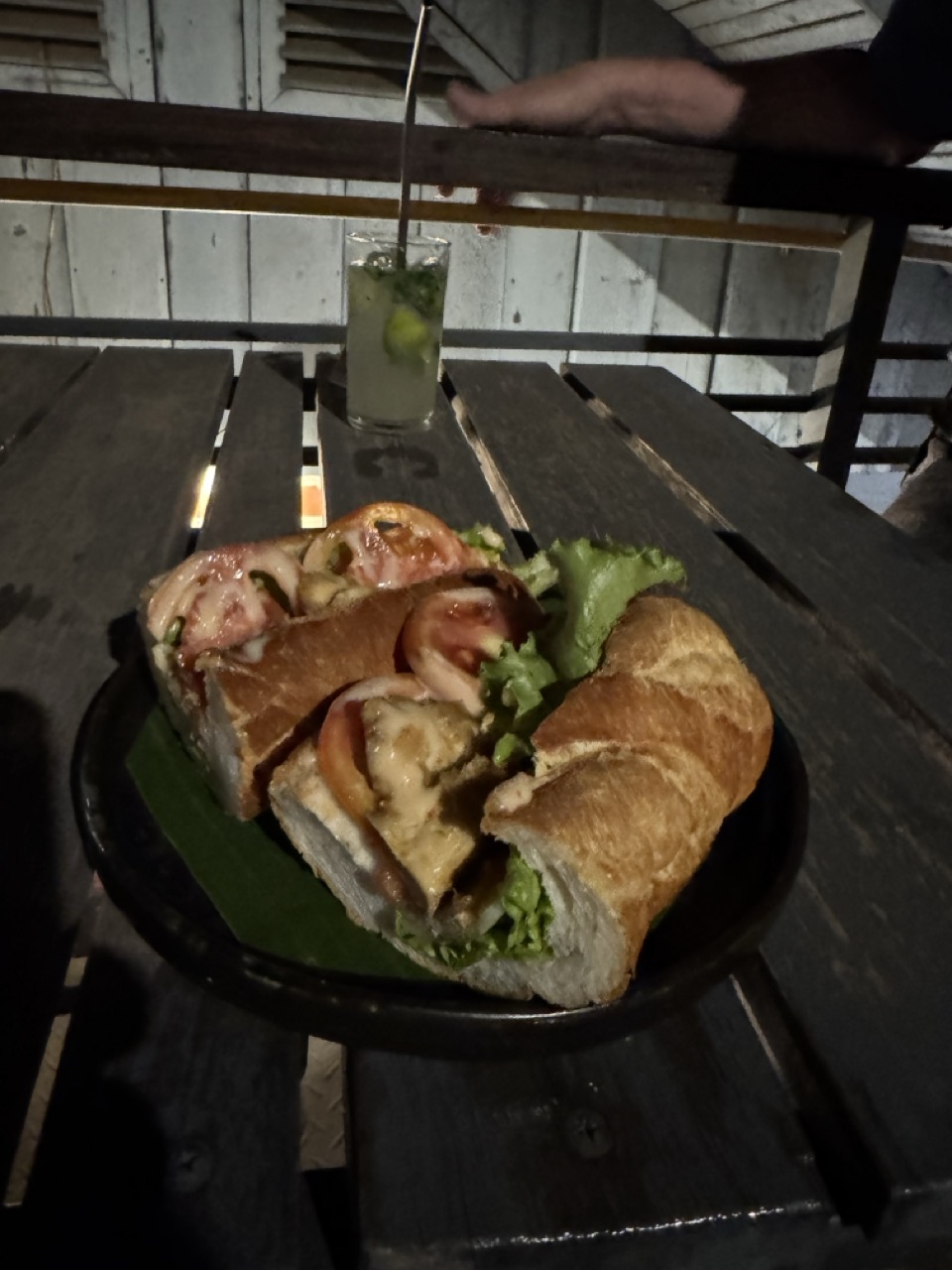
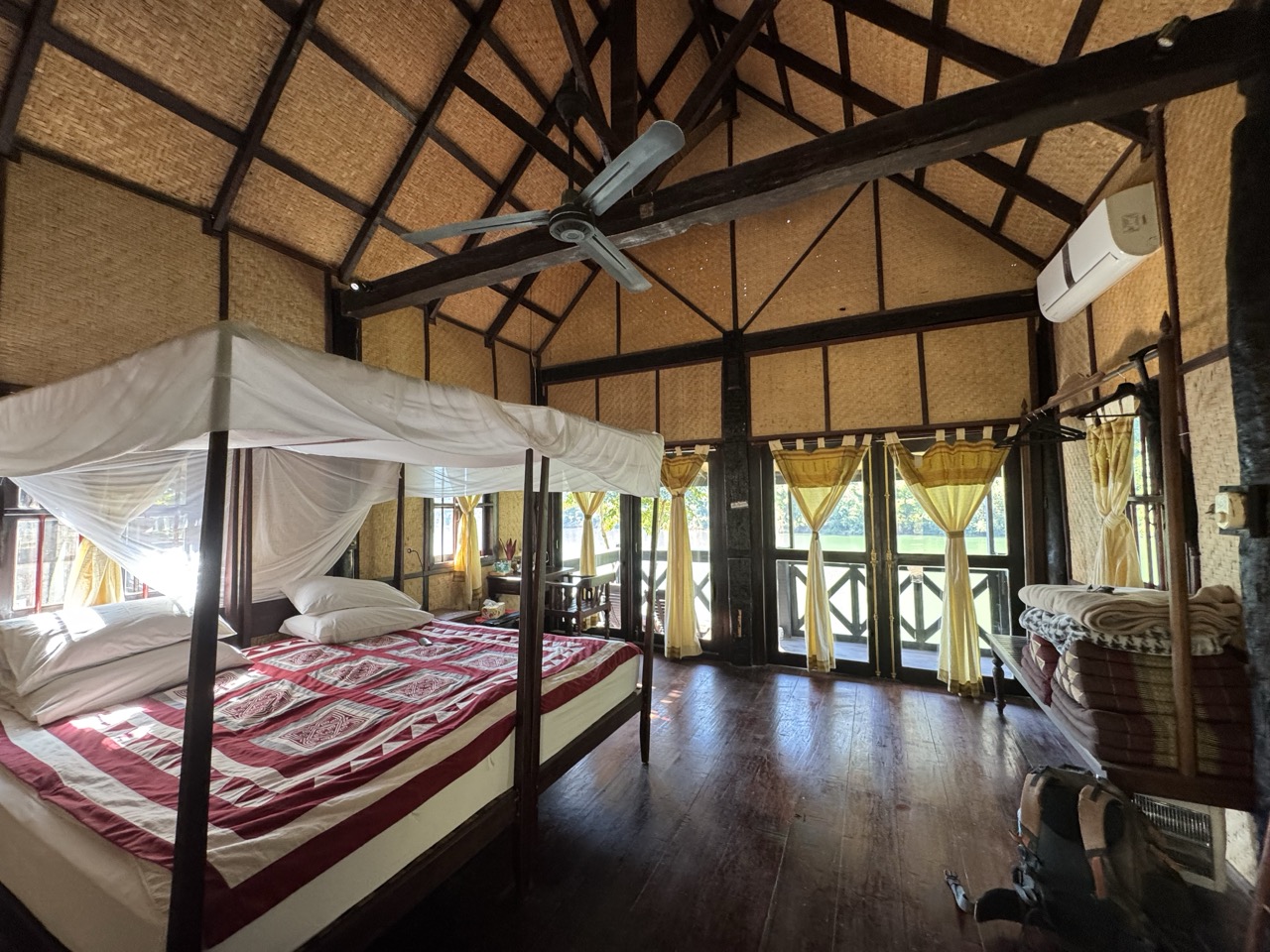
Nong Kiau Riverside is one of those places where the room is part of the experience. Traditional Lao bungalows on stilts, river-facing balconies, mosquito nets over four-poster beds, the river two metres below the deck. After five nights of mid-range guesthouses it felt like a real reward. We ate dinner on the deck and watched the karst go orange, then black, then disappear into the night.
Day 7 — Nong Khiaw to Luang Prabang
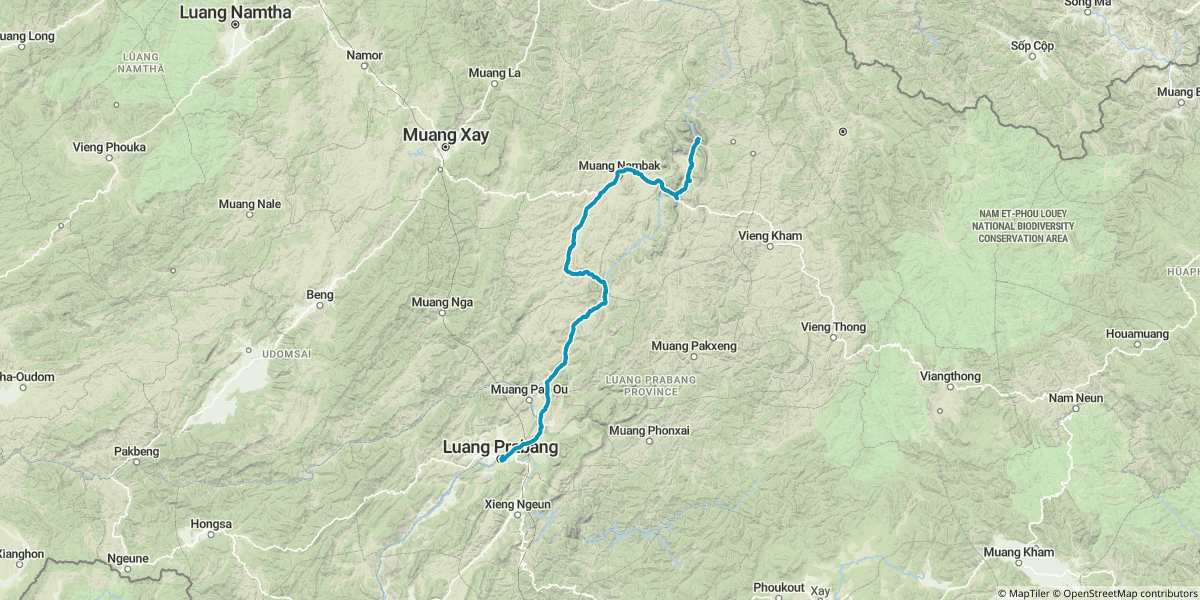
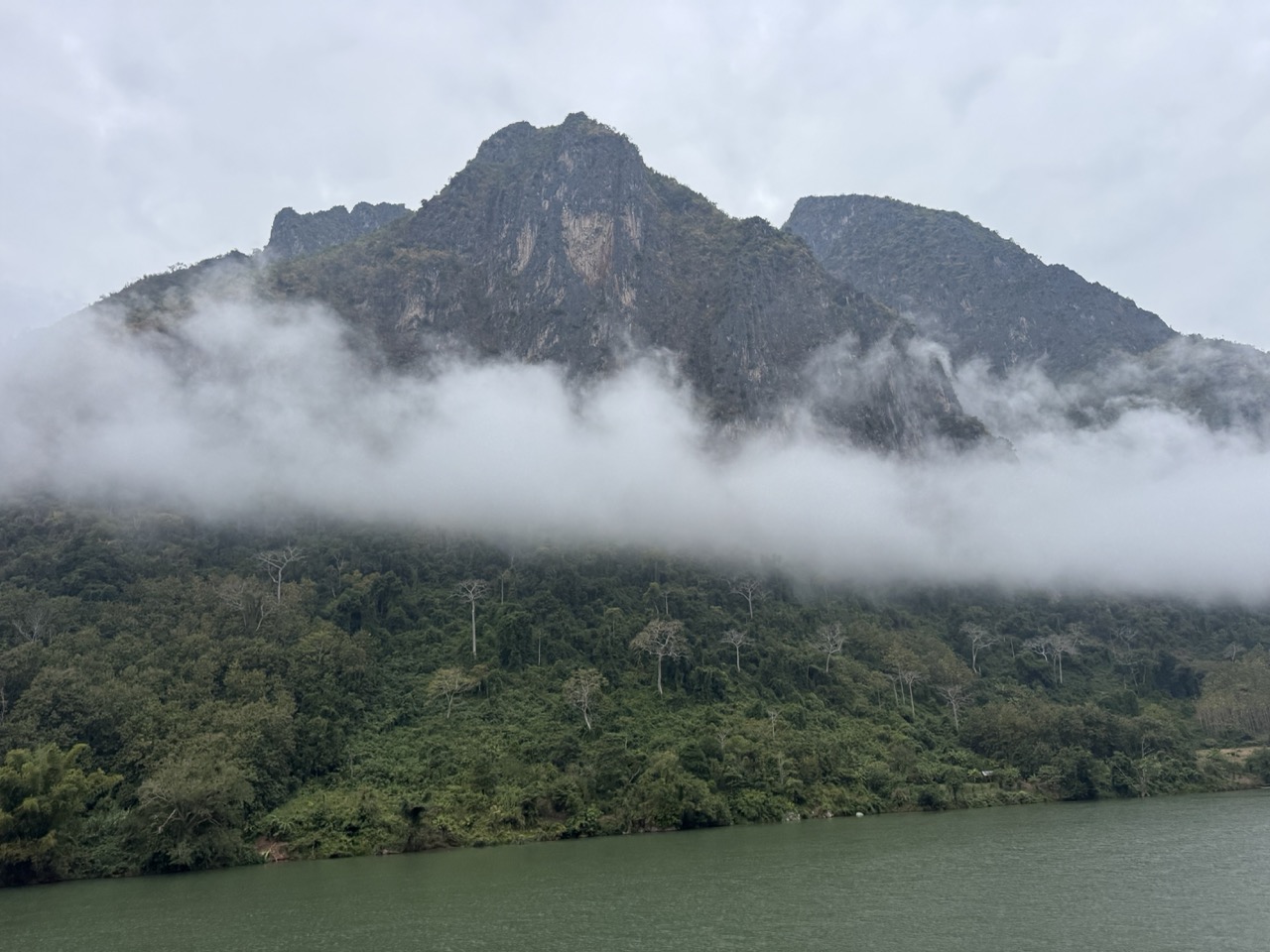
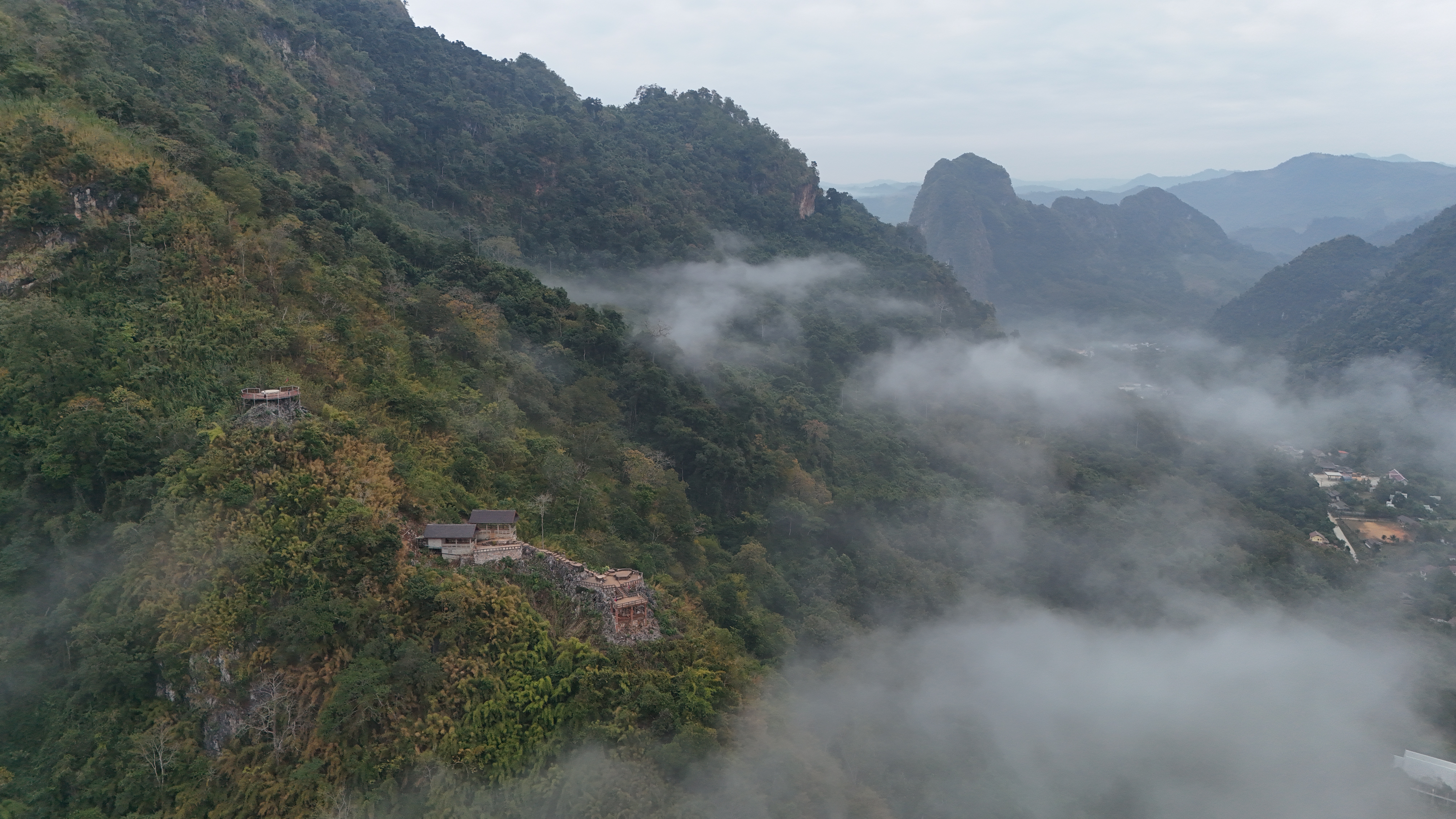
Day 7 was a half-day on purpose. Nong Khiaw to Luang Prabang is something like two hundred kilometres of well-paved road, downhill more than not, with the kind of sweeping bends you take at whatever speed feels right. We were on the bikes mid-morning and parked in Luang Prabang by early afternoon, which gave us most of the day to wander the old town.
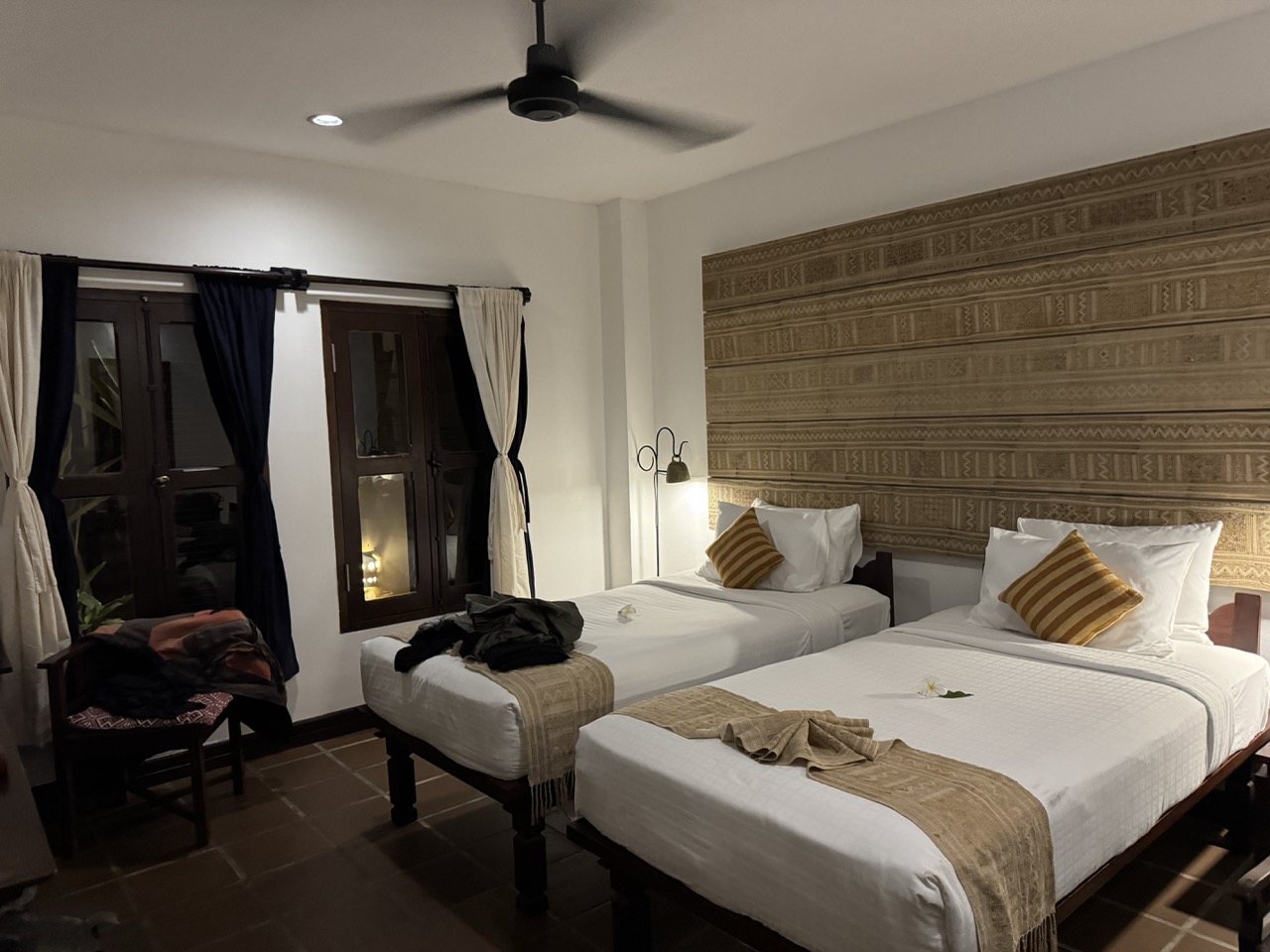
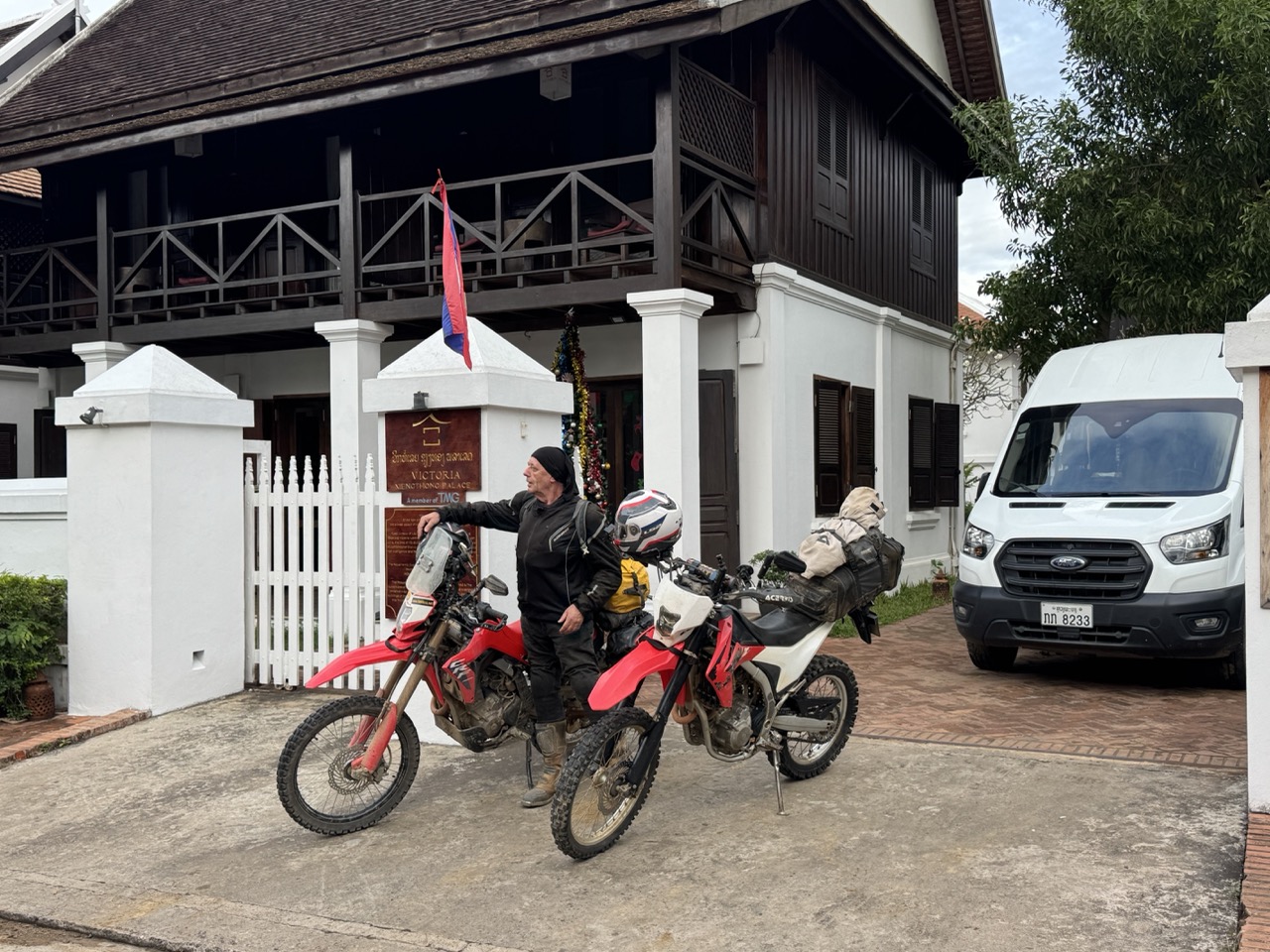
Victoria Xiengthong Palace is at the end of the peninsula, set back from the main street behind a teak gate. The location is excellent — a five-minute walk to the Mekong, ten minutes to the main temple complex, twelve to the night market — and the breakfast is the best we'd eaten in a week. Twin-bed rooms with tribal-textile headboard panels, dark wood floors, ceiling fans. We were settled in for three nights and it felt earned.
Day 8 — Luang Prabang to Kuang Si Falls and back
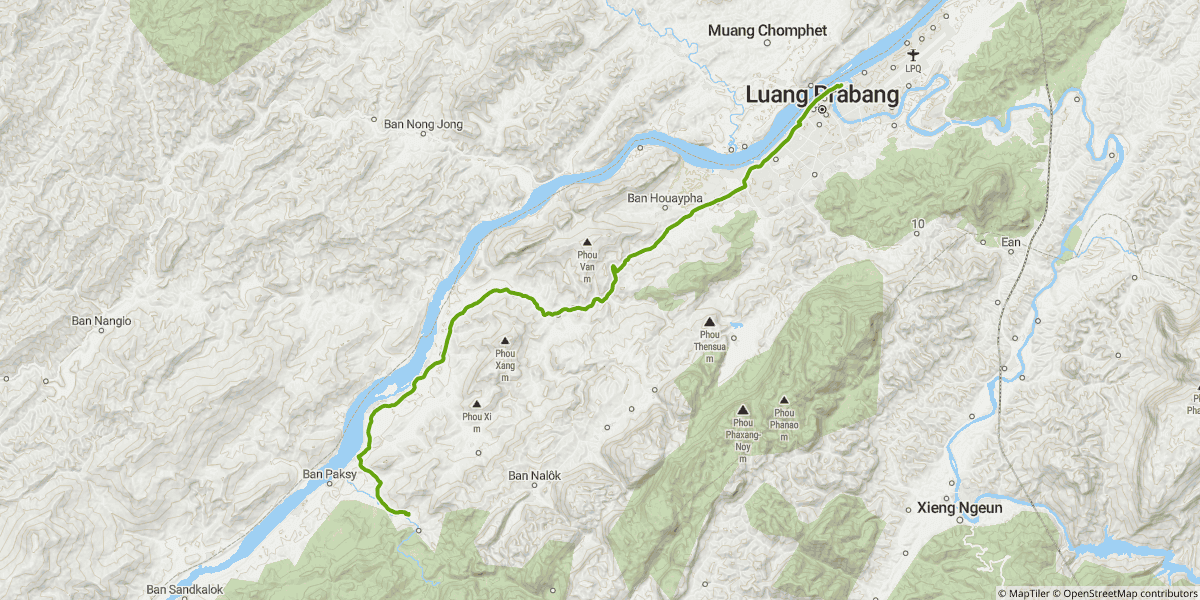
Kuang Si Falls is the tourist photo of Luang Prabang — the turquoise tiered pools that everyone calls a blue lagoon, the multi-level waterfall above them, the bear sanctuary at the entrance. We rode out mid-morning expecting an easy hour each way. We did not get an easy hour each way.
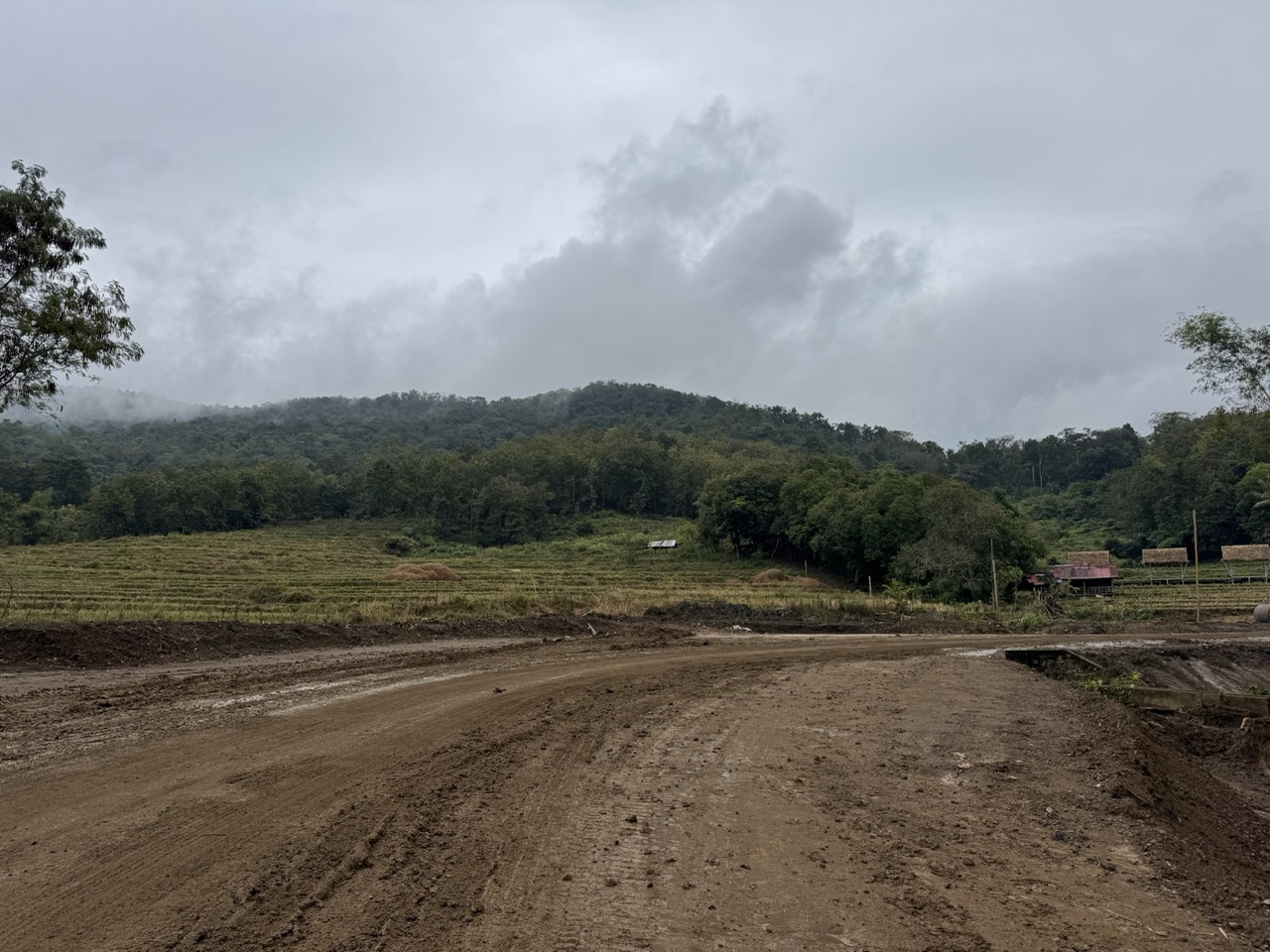
The road south-west of Luang Prabang to Kuang Si was in the middle of a major reconstruction project. Long sections had been ripped up, the surface was wet red clay churned by trucks, and what should have been a paved ride for tourists in pickups had become a slow grind in low gears. It would have been a non-event on a real off-road tyre. With the CB500X still on its temporary plug, it was a slow morning.
Kuang Si itself was excellent, if crowded. The water is the colour it looks like in photos — actually that turquoise, not Photoshop. The multi-tier setup means you can keep climbing past the main pool and find quieter spots. We spent a couple of hours there, ate lunch at one of the stalls outside the gate, and rode the muddy road back to town. By that point the new rear tyre for the CB500X had landed in Luang Prabang on the overnight bus from Vientiane, and we headed straight to the shop.
The tyre mount was a small drama all by itself. A local shop took the wheel off, broke the bead, fitted the new rear, balanced it as best they could, and had it back on the bike in about ninety minutes. Total cost was a third of what we'd have paid in Thailand. The CB500X was good for the rest of the trip — including the five-hundred-and-fifty-kilometre push home — and the rider mostly stopped looking nervously at his rear wheel.
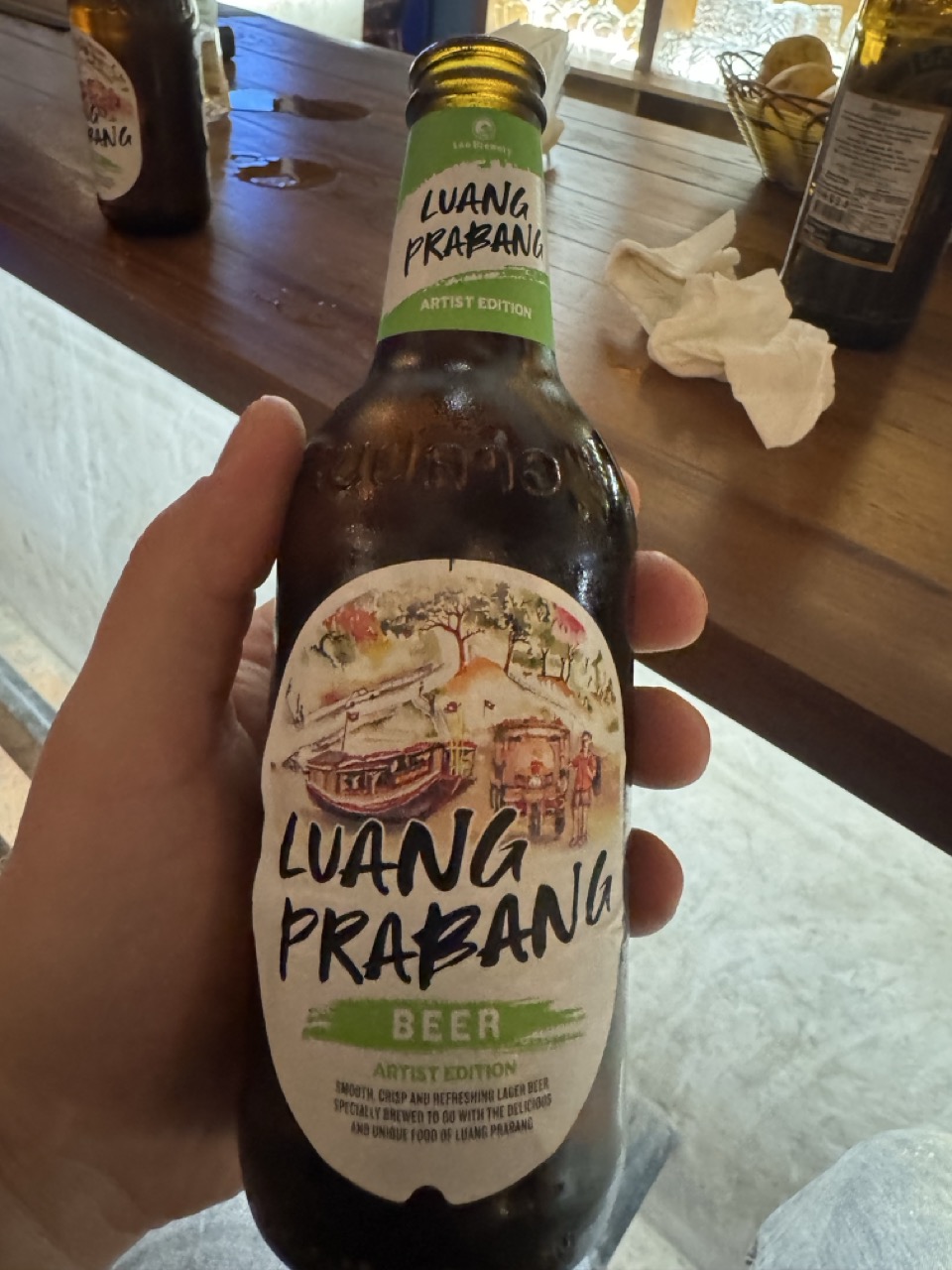
Dinner was wherever we could walk to from the hotel. Luang Prabang has a specialty beer of its own — Luang Prabang Beer, Artist Edition — that we'd never seen anywhere else and pretty much only drank that night. It's lager, it's fine, the label is genuinely beautiful. The night market was full and the streets smelled like grilled river fish. We were in bed by ten.
Day 9 — Pak Ou caves and Luang Prabang
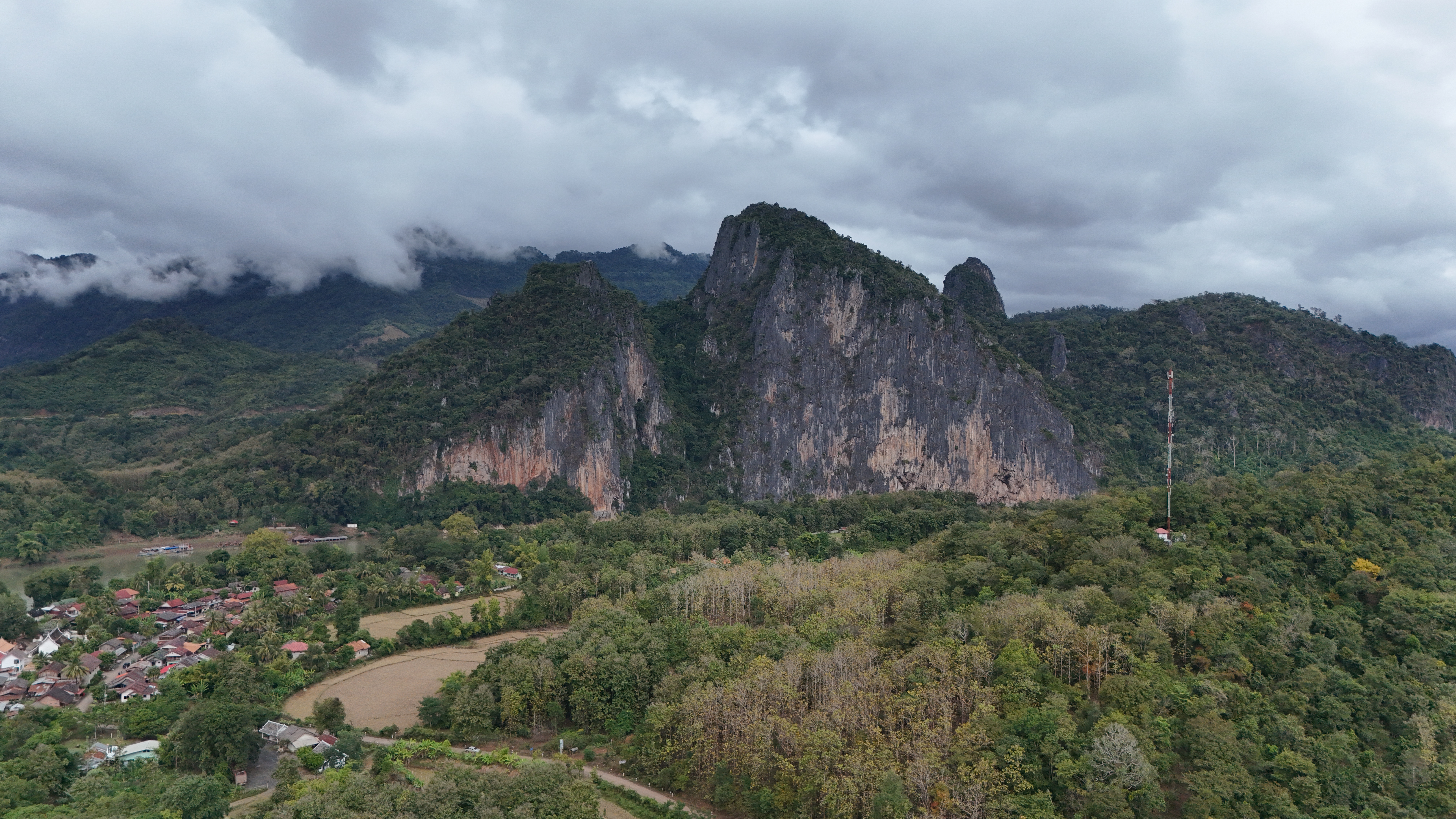
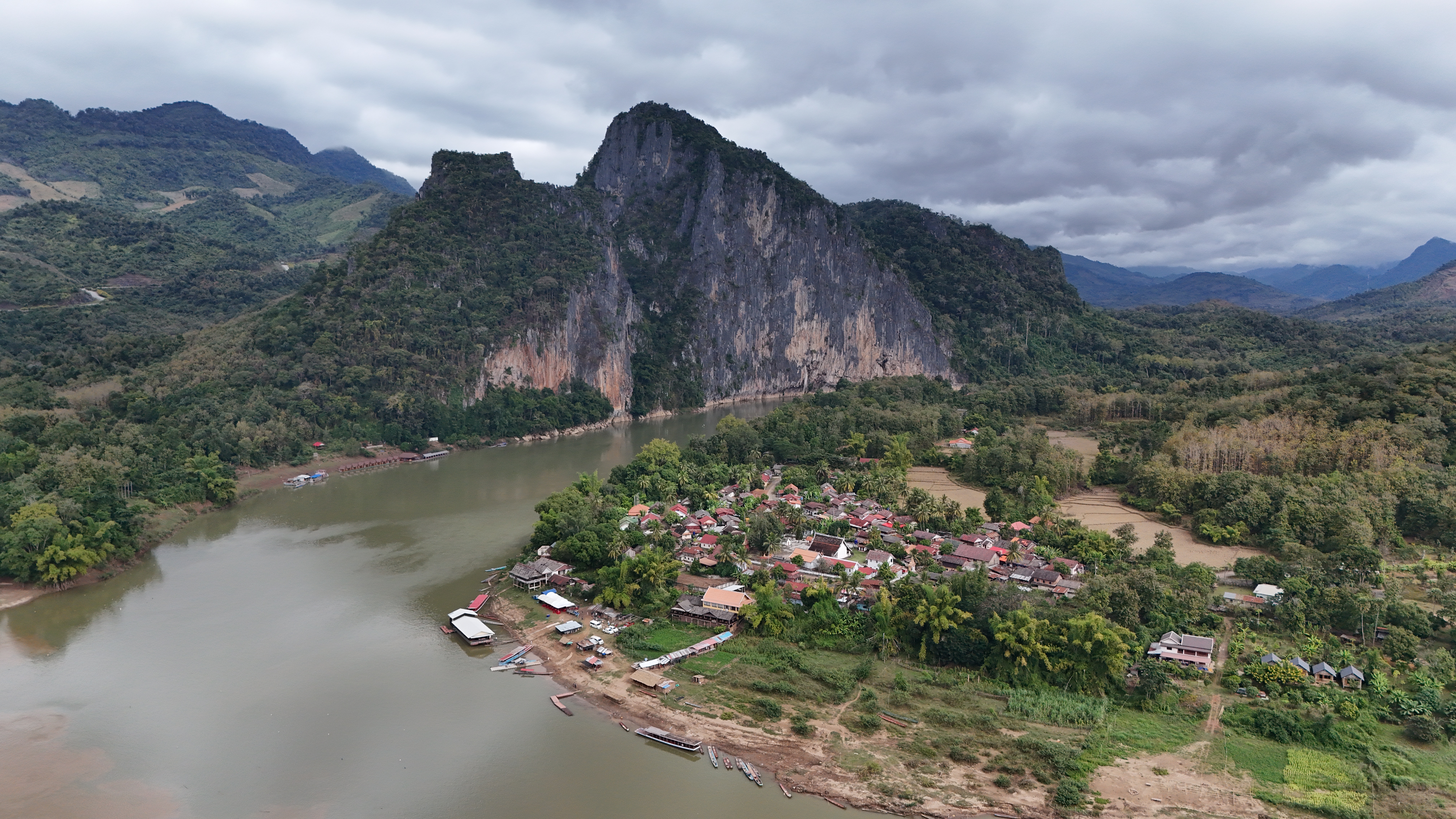
Day 9 was the closest thing we had to a rest day. It wasn't a riding day — the bikes stayed at the hotel — but we did spend the morning getting up the Mekong to the Pak Ou caves, the cliff-set shrine about twenty-five kilometres upstream from Luang Prabang where pilgrims have been leaving Buddha statues for hundreds of years. The cliffs themselves are dramatic enough to justify the trip without the caves.
Afternoon was textile shopping. Luang Prabang's hill-tribe textile and handicraft scene is genuinely good — Hmong applique, Tai Lue weaving, indigo and natural-dye pieces, sticky-rice baskets, silver. We picked things up for people back home and admired things we couldn't justify shipping. The night market is bigger and louder than the morning markets but the morning markets have the better stuff.
Dinner was at L'Elephant, the long-running French restaurant in the old town. We took two adjoining tables, ate confit duck and a proper steak and a tiramisu served in a martini glass, drank a bottle of red, and called it a holiday. There are a few restaurants in Luang Prabang that are worth a meal even at four times the price of a noodle stall. L'Elephant is one of them.
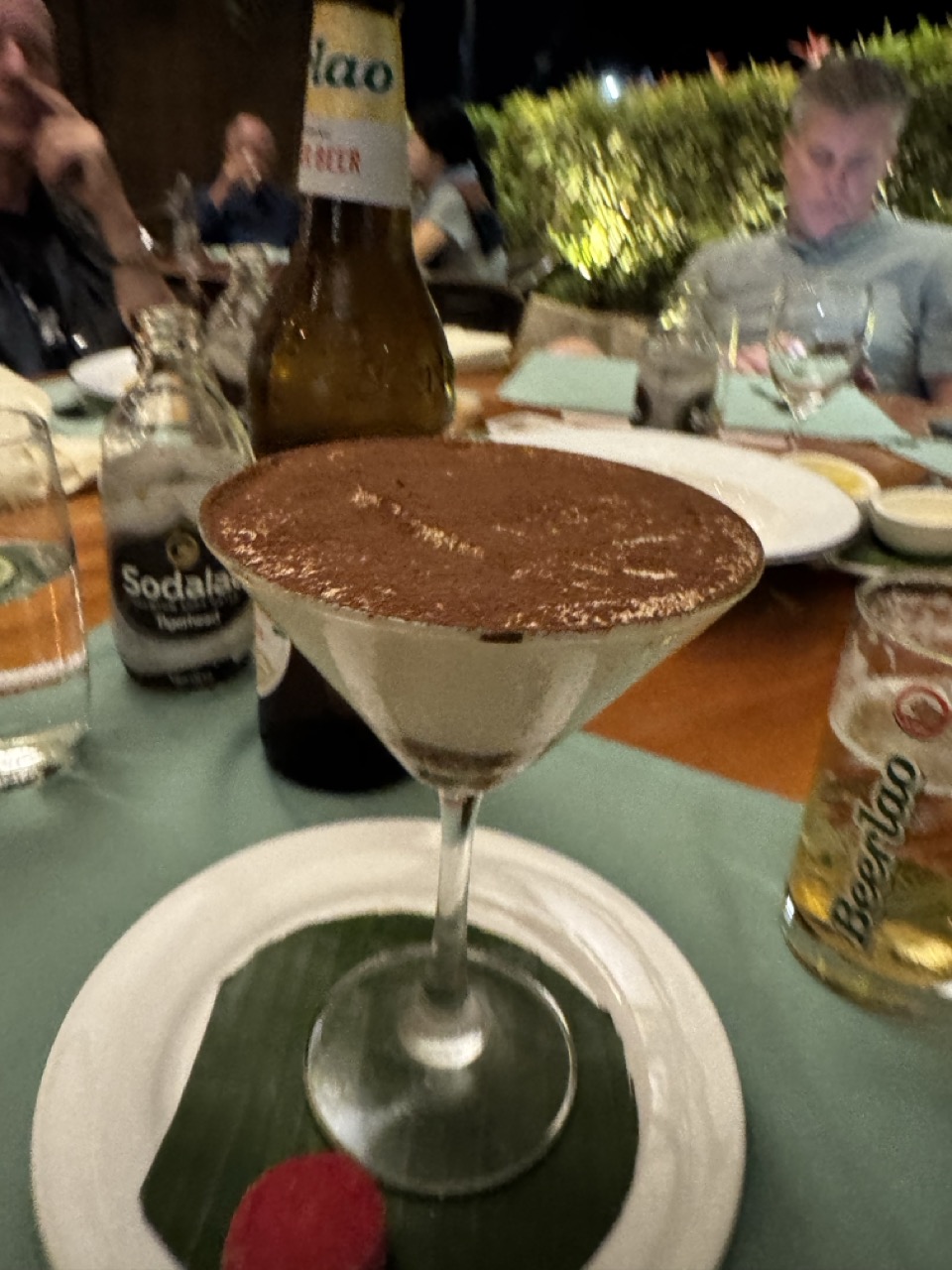
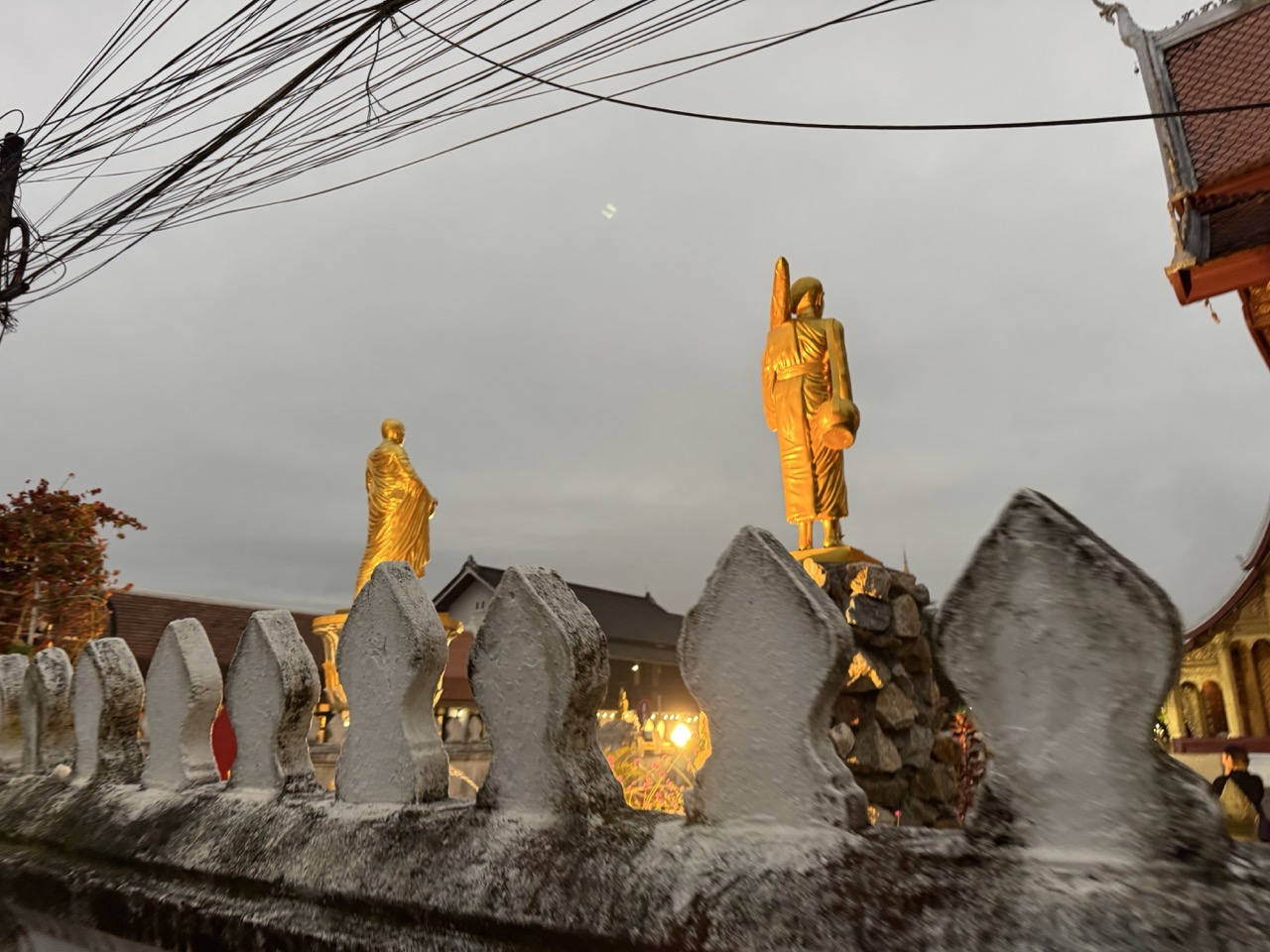
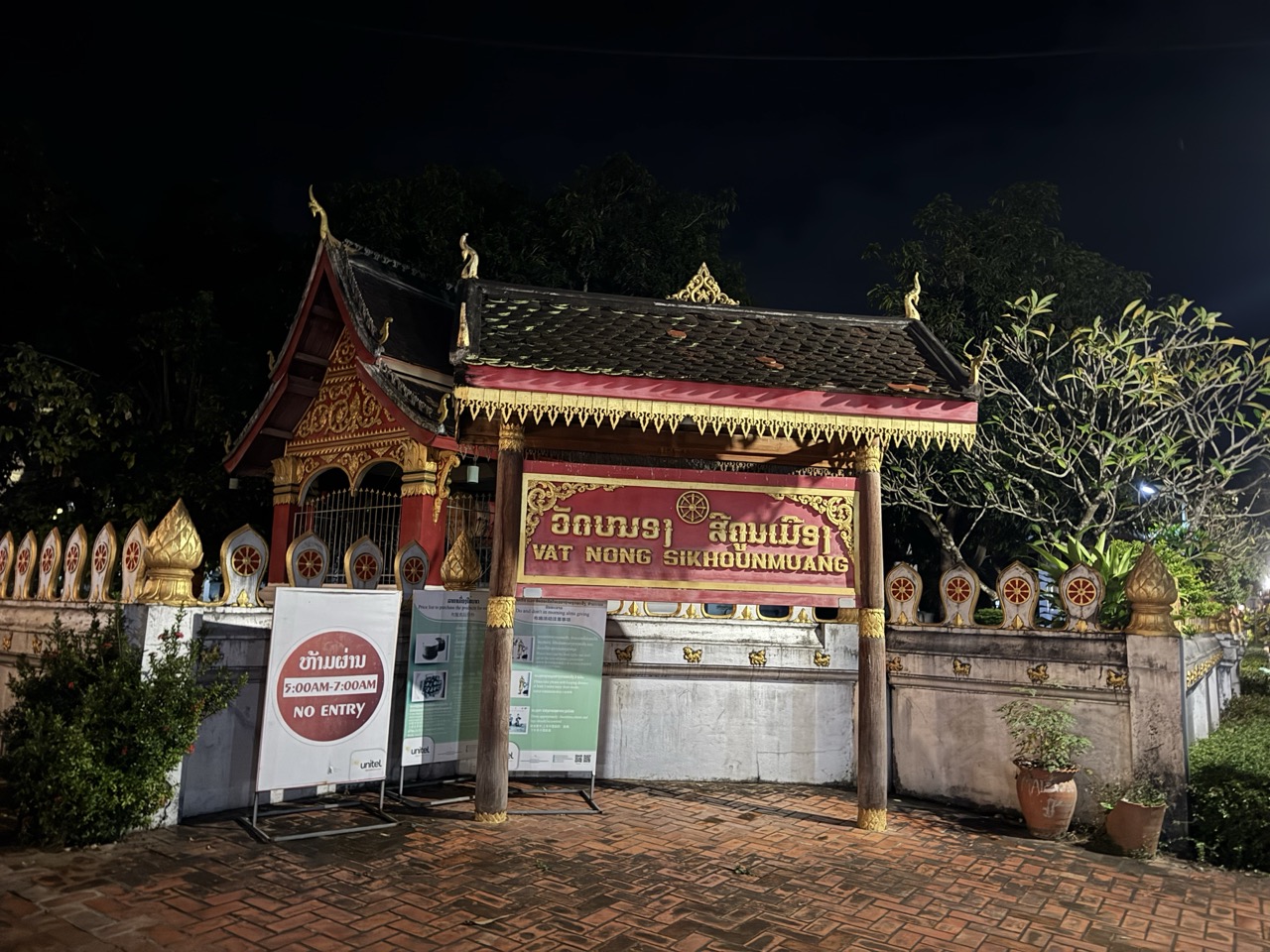
Late evening was a slow walk past the temples lit up after dark. Tomorrow was the long ride home, and everybody knew it.
Day 10 — Luang Prabang to Chiang Mai (~550 km)
Five hundred and fifty kilometres in one day, on a mix of dirt and tarmac, with a border crossing in the middle. On paper it sounds awful. In practice — and the group all agreed on this — it was the day that pulled the whole trip together. We left Luang Prabang at first light and rolled west toward Hongsa on a road that, after a week of slow remote riding, felt like it was made for us. Sweeping bends, good surface, almost no traffic.
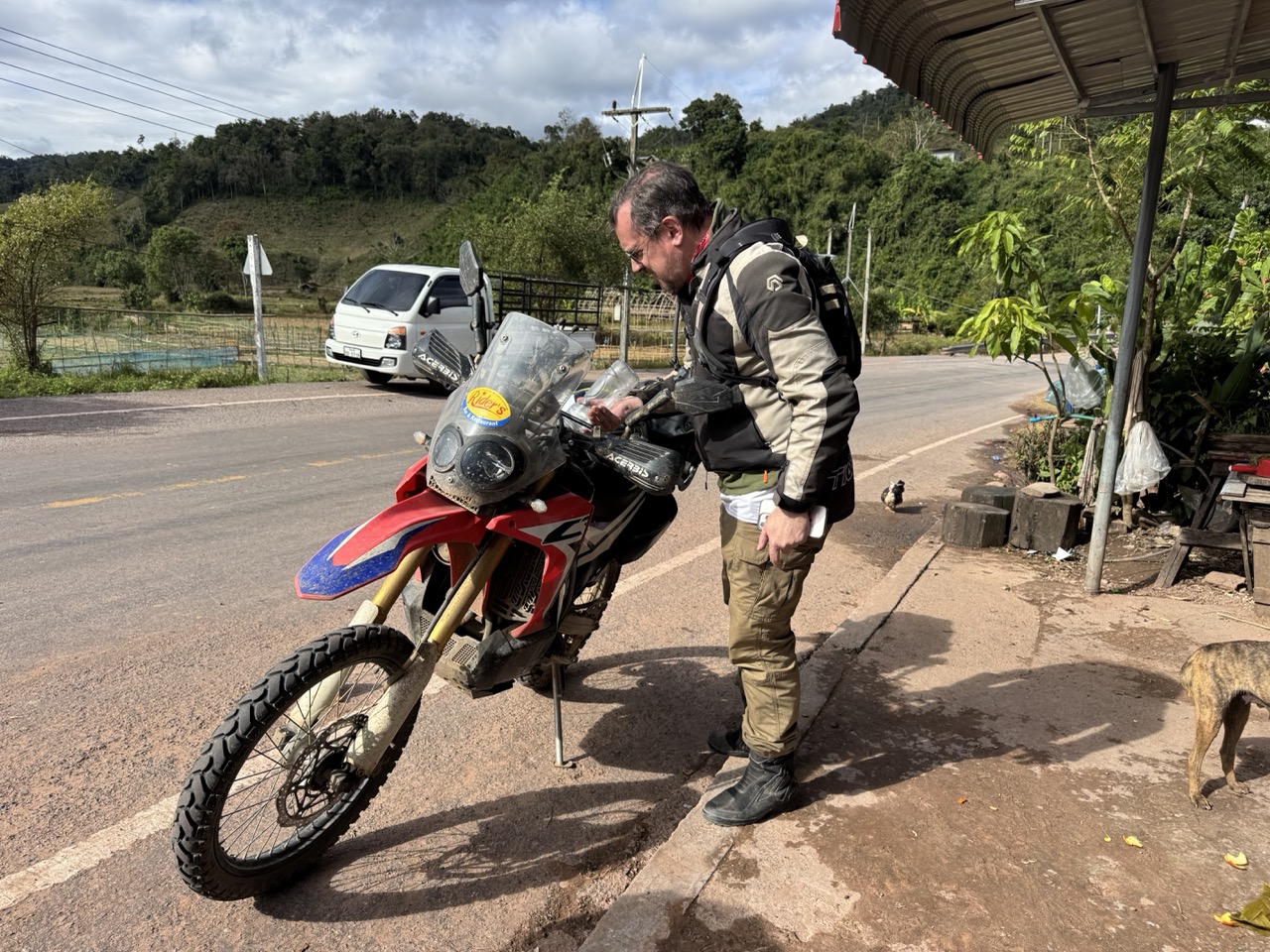
Hongsa was the natural refuel point — a small town about a third of the way home, surrounded by the kind of low hills that grow tobacco and cotton. We ate a quick lunch, topped up the tanks, checked the CB500X's new rear (still good), and pointed the bikes at the border. The border crossing back into Thailand is at Muang Ngeun on the Laos side and Huay Kon on the Thai side, in the very top of Nan province. It is, by a long margin, the lowest-traffic legal crossing for foreign-registered motorcycles in either direction, and we'd specifically planned the return around it.
Muang Ngeun was uneventful. A few minutes at the Lao exit window, a walk across to the Thai side, a few more minutes at Thai immigration, a customs stamp, done. Compared with the Friendship Bridge IV entry, which was busy and slow, Muang Ngeun was a country lane. If you're planning this loop in either direction, the Chiang Khong–Houai Xai pair for entry and Muang Ngeun–Huay Kon for exit is the easiest combination we've found.
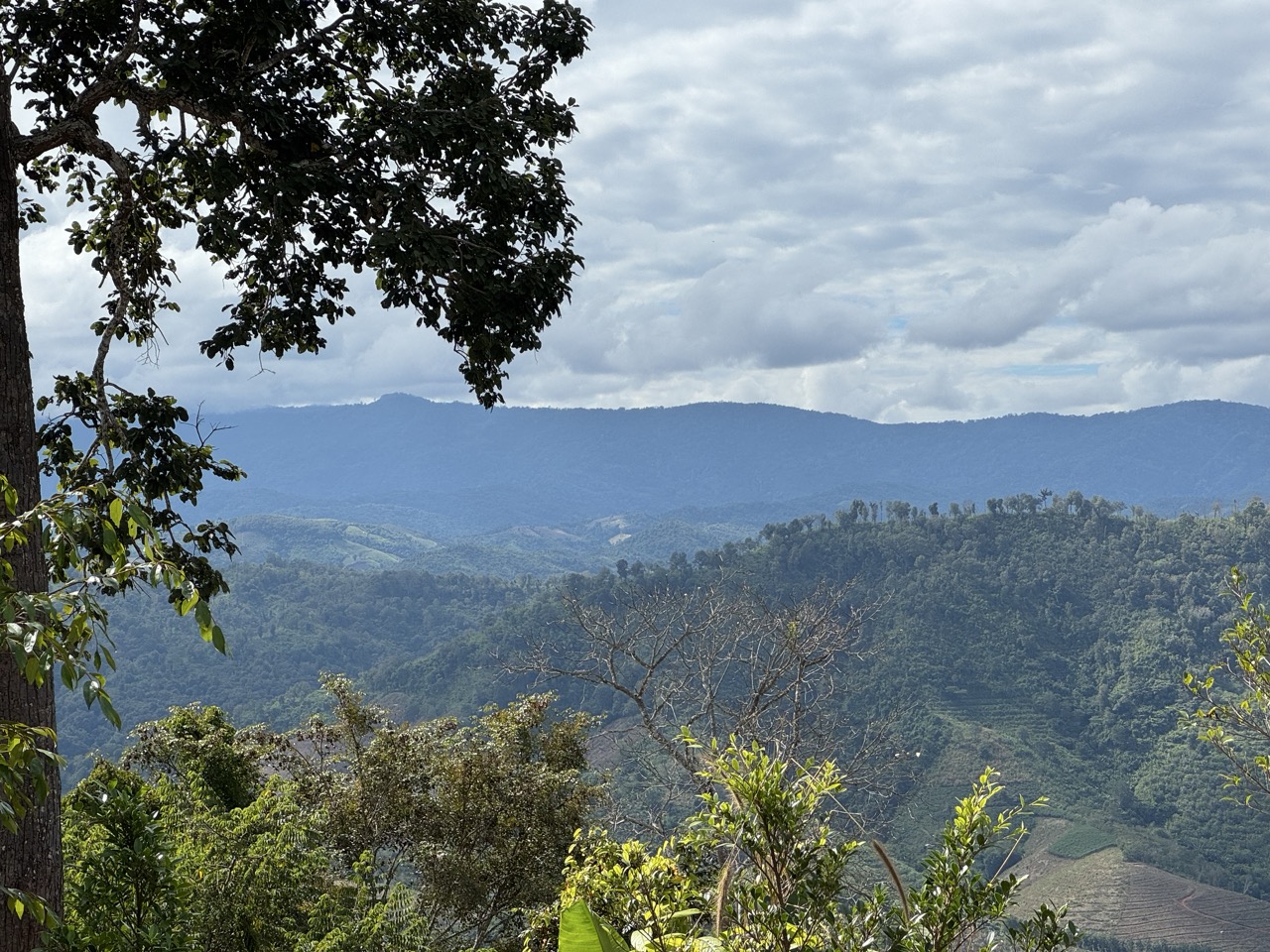
The road on the Thai side was immediately and noticeably better. Smooth tarmac, white-painted lines, real shoulders, signs you could read without thinking. We dropped down through Nan and onto the main road back to Chiang Mai with the kind of energy you don't expect five hundred kilometres into a day. By the time we were in Lampang we were chasing daylight; by Chiang Mai we'd ridden through it. It was one of those days where the last hundred kilometres feel easier than the first, because the bikes are warm, the route is familiar, and the trip's about to be over.
Home by sundown. Ten days, five riders, four flats, one overnighted tyre, one SEZ handler, one fallen scooter rider, two Mekong-tributary ferries the colour of milk tea, and Phongsali in the middle of all of it.
If You’re Thinking About Doing This
- ·Bring tube spares and a plug kit. We used both. If you ride this loop without them you will at some point be calling a tuk-tuk.
- ·Cash. Phongsali and Muang Khua have ATMs but they are not always reliable; Houai Xai has them but you might already be past it. Carry enough kip in small notes to cover hotel + fuel + dinner for three days.
- ·Cold mornings. Phongsali at fourteen hundred metres in December is genuinely cold before sunrise. Bring a real layer, not just a windbreaker. Same for the ridge above Muang Khua.
- ·Food in the far north. From Luang Namtha onward most of the small-town food is Chinese-cuisine, often with Chinese-only menus. Easy enough to navigate by pointing, just don’t plan your stops around Lao-Thai food until you’re back near Luang Prabang.
- ·Bike choice. CRF250 / 300 class bikes are the right tool. Heavier road-biased adventure bikes will get through but at a cost — the tubeless rear flat on the CB500X cost us a day and a half of stress and an overnight courier from Vientiane.
- ·Border crossings. Use Chiang Khong / Houai Xai (Friendship Bridge IV) for entry — it is well-staffed and the temporary import is routine. For the return, Muang Ngeun / Huay Kon (Nan province) is faster and quieter than Nong Khai or the Phu Doo crossing further south. Plan around it if you can.
- ·Pace. Ten days felt right for this route. Trying to compress it into eight would have meant skipping either the Phongsali leg or the Luang Prabang rest. Eleven days with a true rest day in Muang Khua or Nong Khiaw would also work.
This is the version of the Chiang Mai → Luang Prabang trip that you do once you’ve done the standard version, or that you do first if you’ve been riding northern Thailand for a while and you’re looking for something the guidebooks don’t cover. The roads are rougher, the food is more Chinese, the towns are smaller, and Phongsali sits in the corner of the map like a dare. Ten days, give or take. Five riders. Honda CRFs and one CB500X. We’d do it again.
Border-crossing reference: rather than reproduce the temporary-import paperwork here, point yourself at the Riders Corner guide — riderscorner.net/guides/crossing-into-laos-by-motorcycle — which has the proper walkthrough for visa, bike papers, the insurance you will or won’t be sold at the border, and what cash to carry. Short version from our trip: Chiang Khong / Houai Xai for entry, Muang Ngeun / Huay Kon for exit, no drama either way.