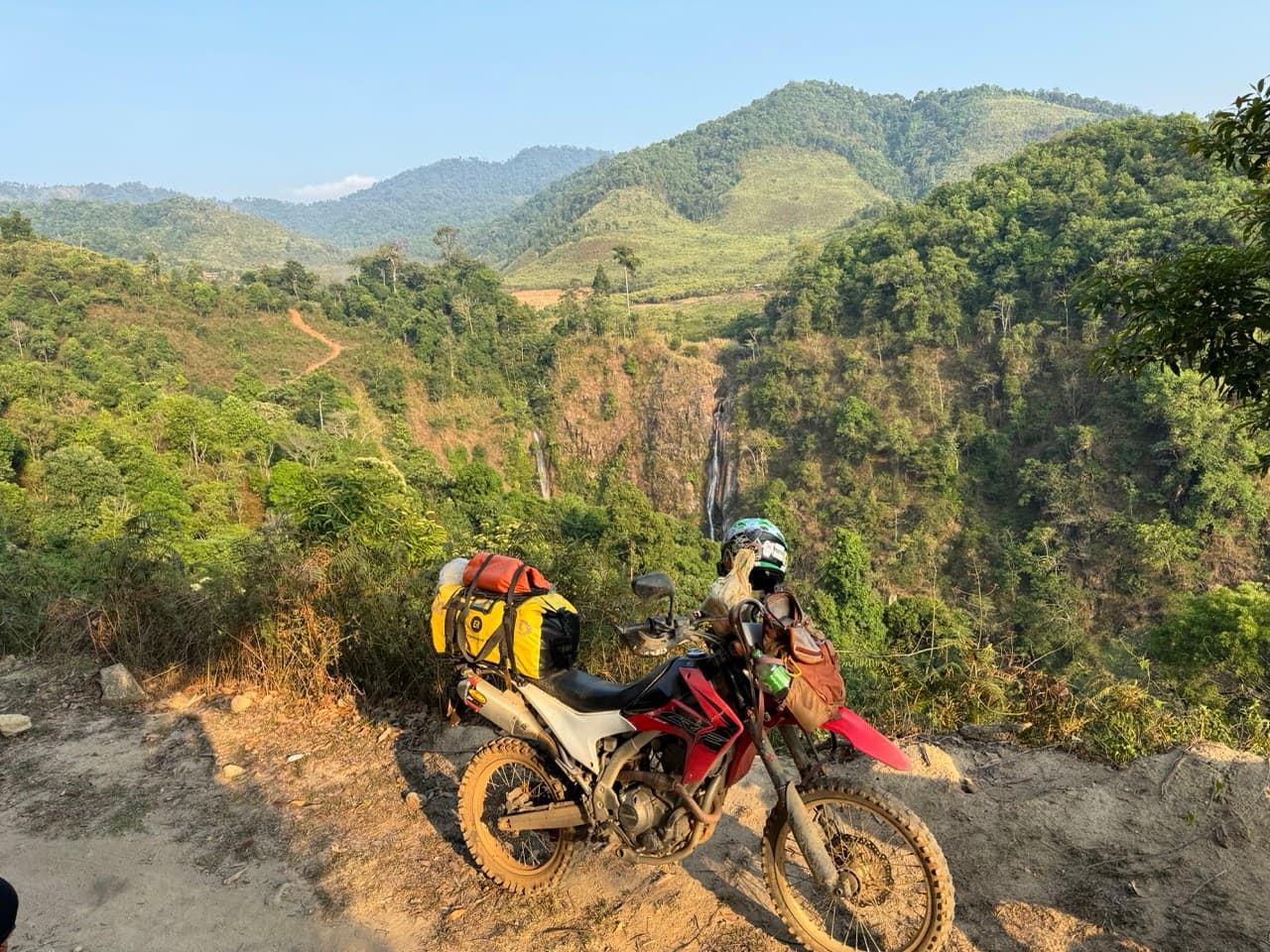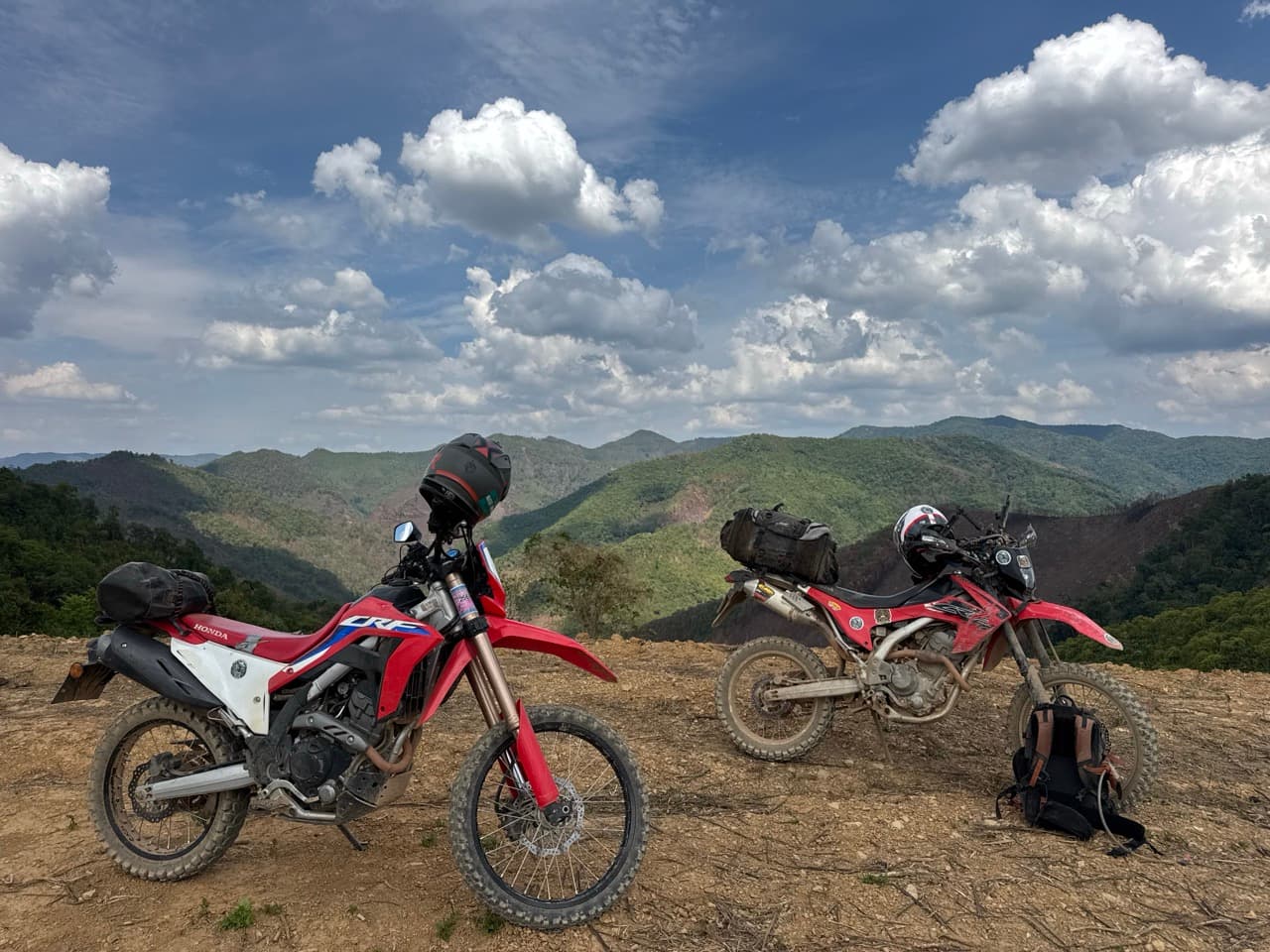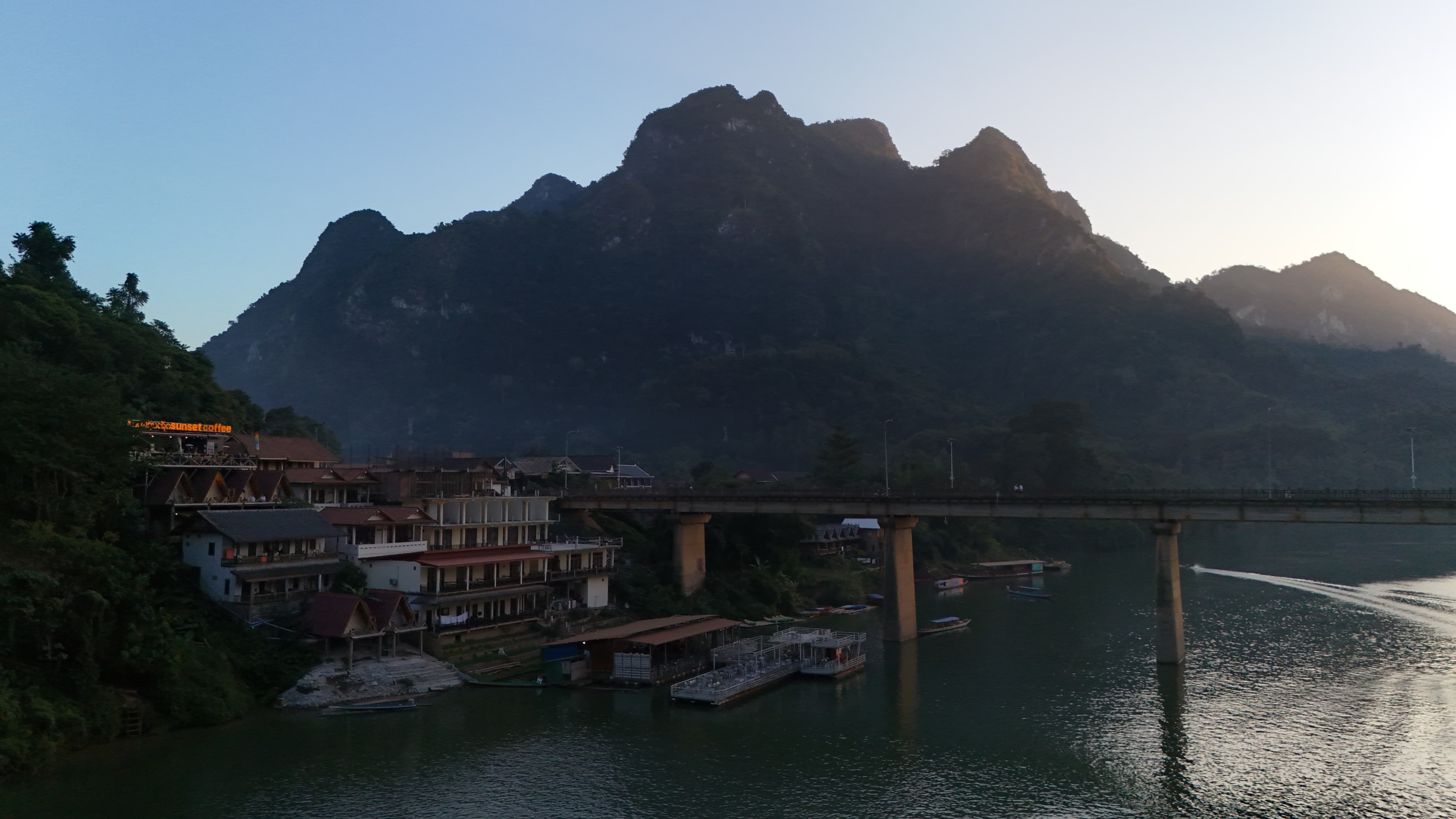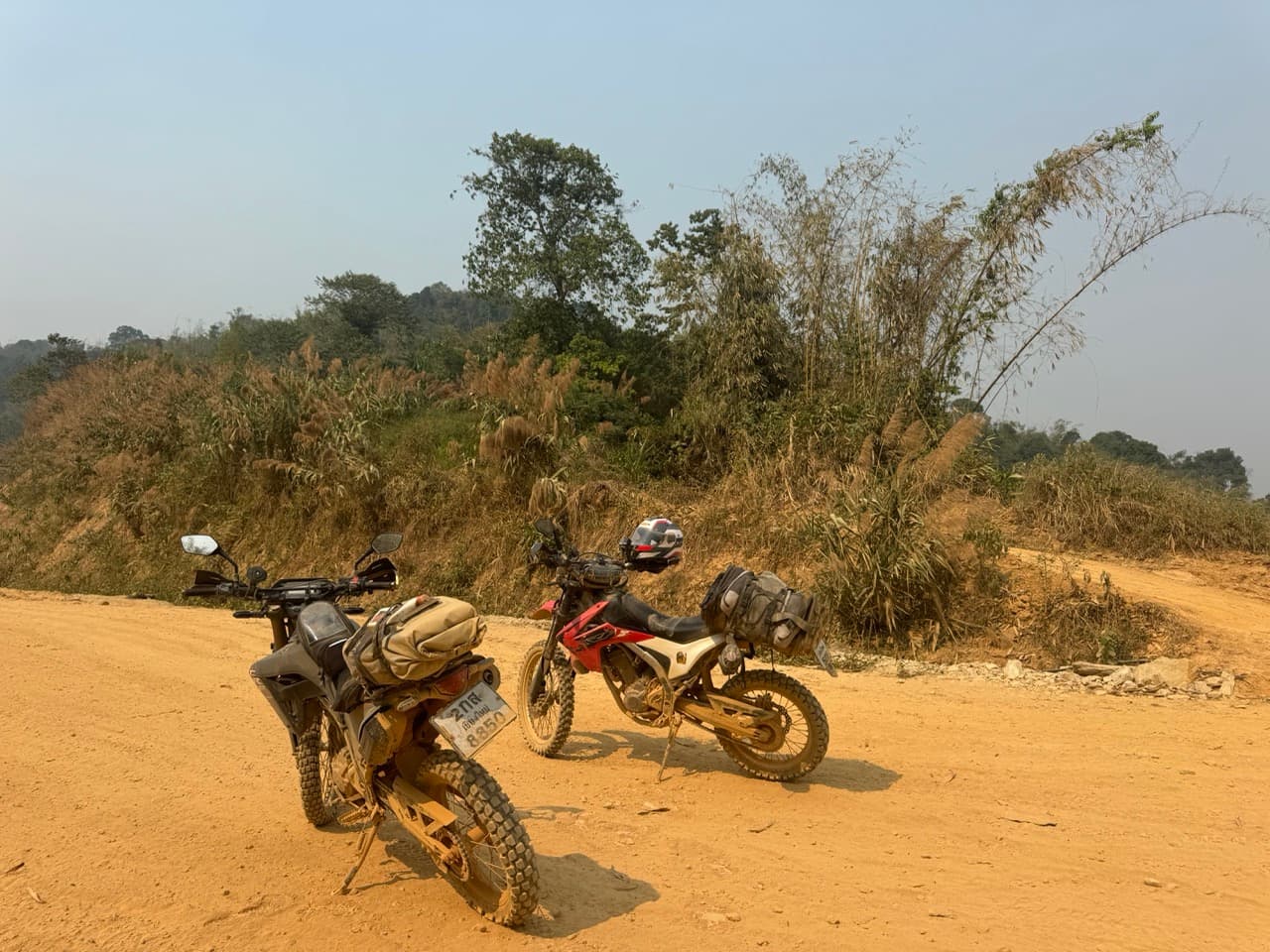
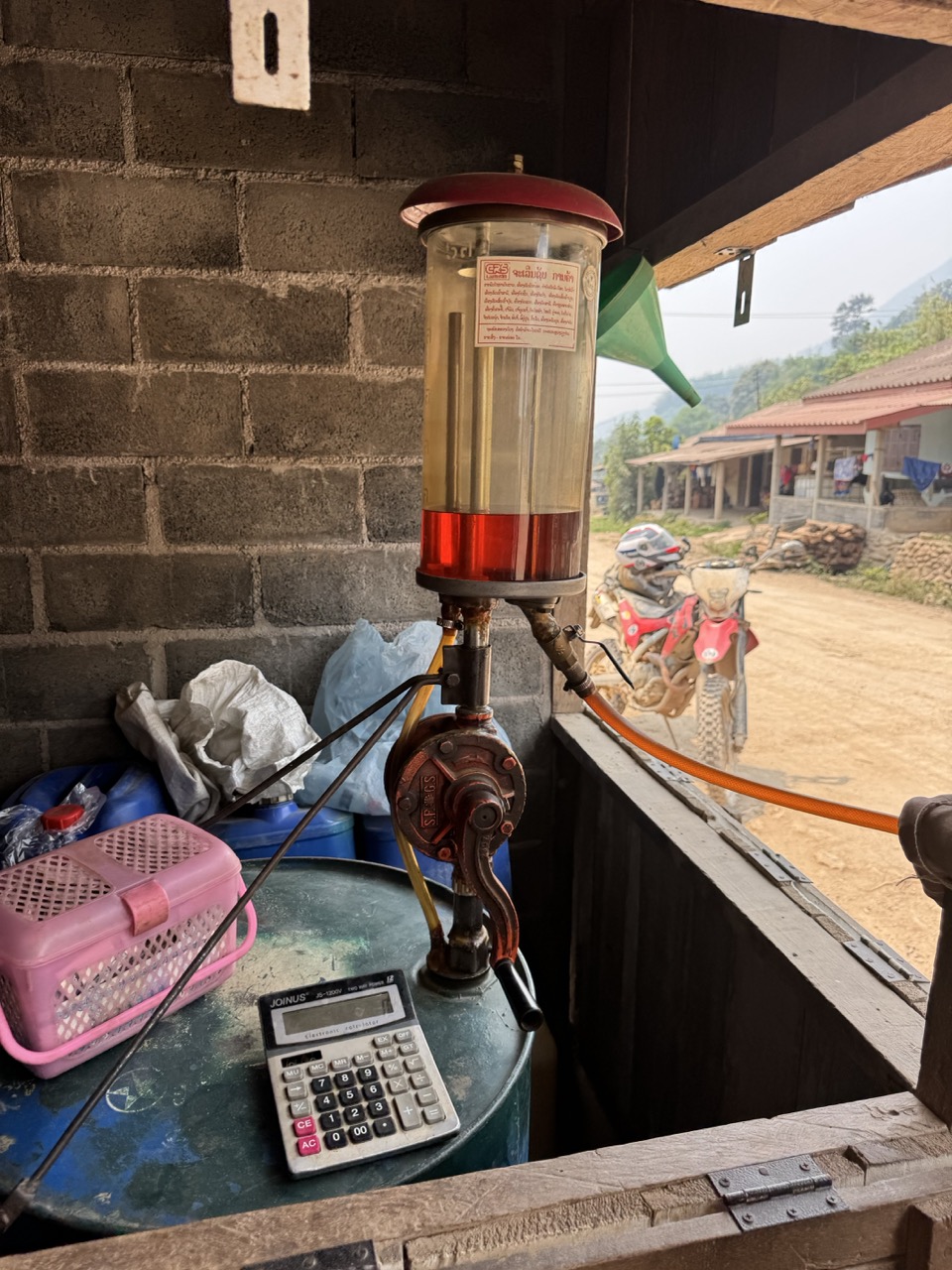
Northern Laos is one of those places that feels like a step back in time the moment you cross the border. The villages are wooden, the roads are dirt more often than they are paved, the petrol comes out of glass-bowled hand pumps in the smaller towns, and the rhythm of a riding day is set by what you find around the next ridge — not by anything you planned the night before. We rode it on two CRFs in mid-April: out of Chiang Mai, into Laos at Chiang Khong, up to Pak Beng on the Mekong, across to Luang Prabang, east to Phonsavan and the Plain of Jars, south through Vang Vieng's karst country to Vientiane, and back into Thailand at the Phu Doo crossing. Seven days, six nights, ~1,715 km on the GPS.
And we did it during Pi Mai — Lao New Year, the country's biggest annual water festival, which the calendar dropped right into the middle of our trip whether we'd planned for it or not.
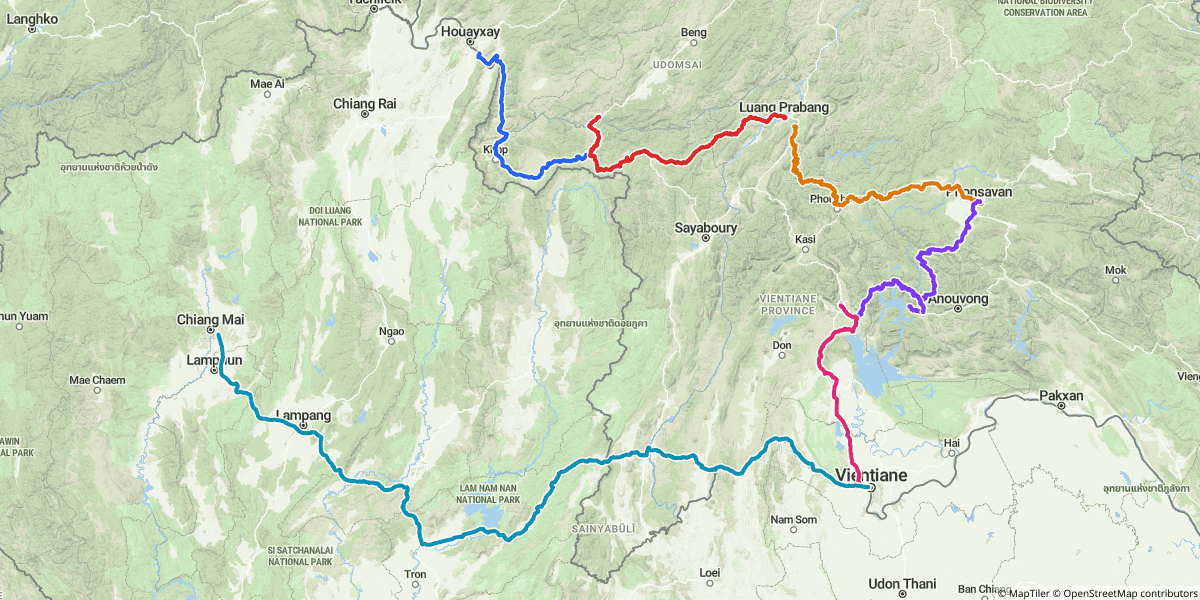
The Whole Loop, in One Map
Here's all six riding days plotted together — Day 3 was a forced rest day in Luang Prabang (more on that below) so it doesn't appear here. The colour coding follows the per-day maps further down.
The Route at a Glance
| Day | Route | Distance | Sleep |
|---|---|---|---|
| Day 1 (Sun) | Chiang Mai → Chiang Khong → Huay Xai → Pak Beng | ~216 km | Le Grand Pakbeng Resort |
| Day 2 (Mon) | Pak Beng → Oudomxay → Luang Prabang | ~218 km | Pha Nya Residence, Luang Prabang |
| Day 3 (Tue) | Luang Prabang — bike repair + Pi Mai | Rest day | Pha Nya Residence, Luang Prabang |
| Day 4 (Wed) | Luang Prabang → Xieng Khouang → Phonsavan | ~259 km | Vansana Plain of Jars Hotel, Phonsavan |
| Day 5 (Thu) | Phonsavan → Vang Vieng (the dirt road day) | ~292 km | Amari Vang Vieng |
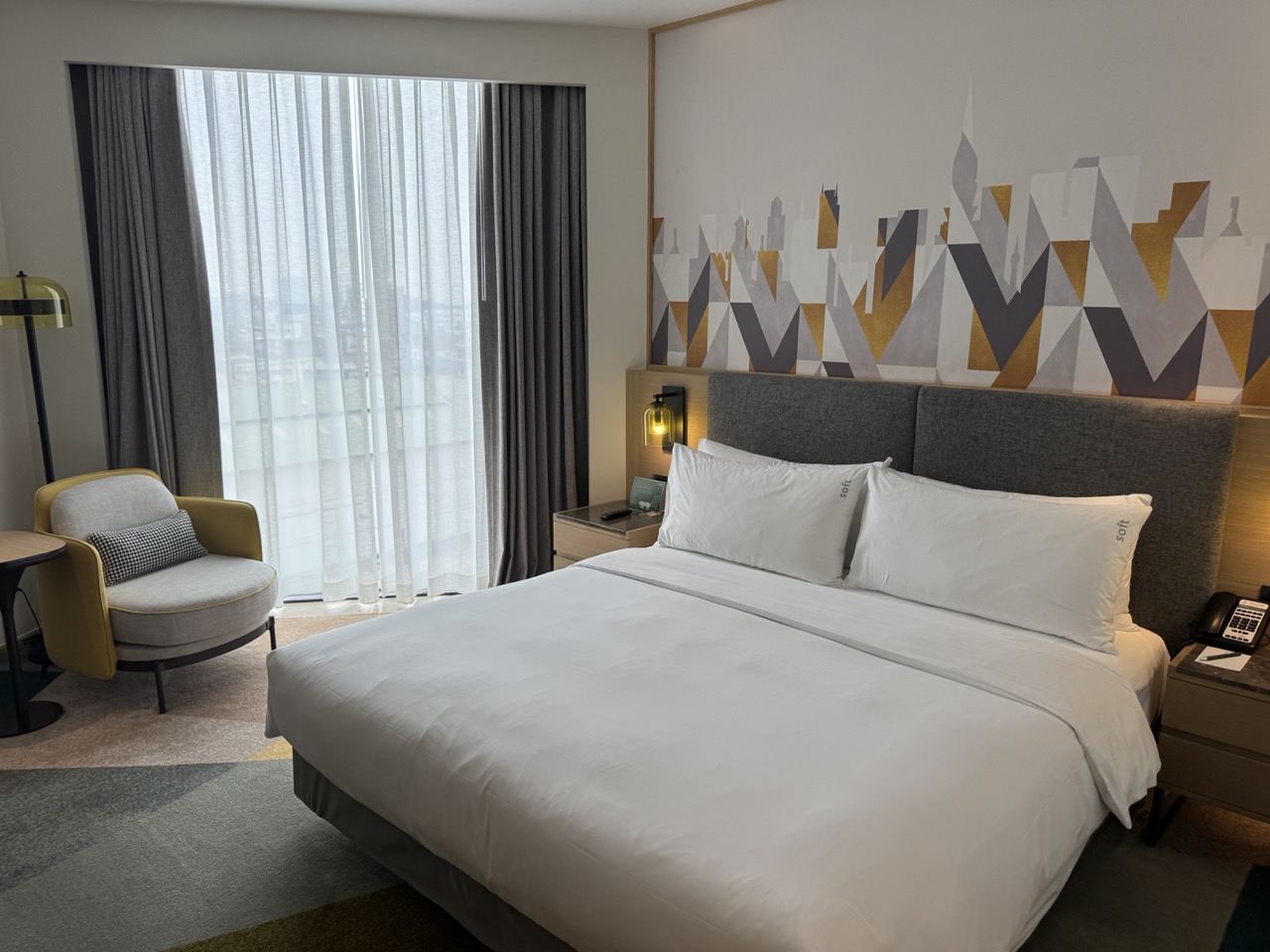
| Day 6 (Fri) | Vang Vieng → Vientiane | ~153 km | Holiday Inn Vientiane |
| Day 7 (Sat) | Vientiane → Phu Doo border → Chiang Mai | ~577 km | Home |
The Border Crossings (the Honest Bit)
Crossing into Laos by motorcycle is straightforward but it isn't trivial — there's paperwork for the bike, paperwork for you, and the Lao side moves at its own speed. We won't reproduce the full bureaucracy here because Riders Corner already wrote the definitive guide, and theirs is kept up to date.
Read this before you go: Crossing Into Laos by Motorcycle — riderscorner.net/guides/crossing-into-laos-by-motorcycle. It walks you through the visa, the temporary import for the bike, the insurance you'll be sold (or not) at the border, and what cash to carry.
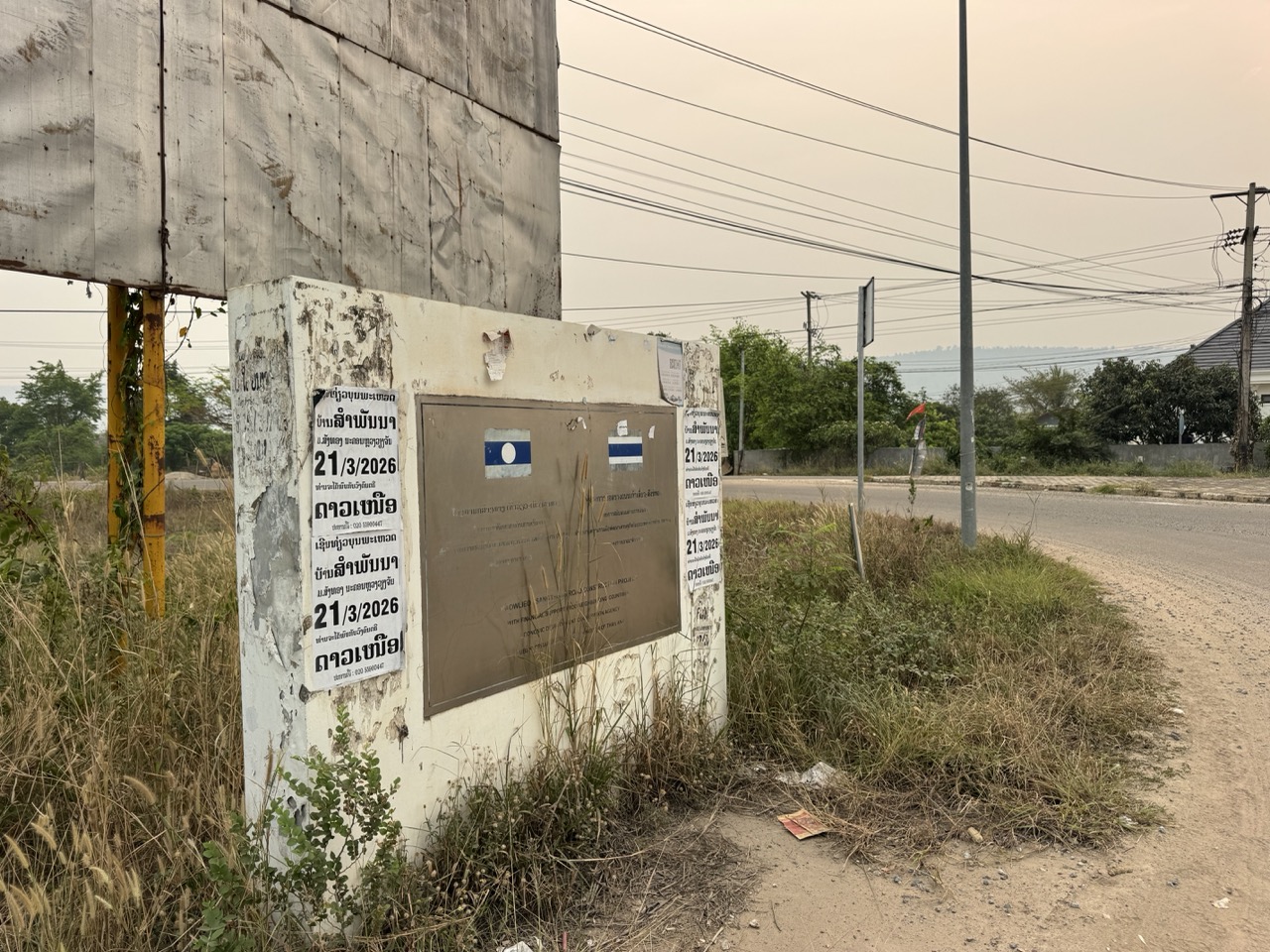
Two practical things from our trip that aren't always obvious in the guides: enter Laos at Chiang Khong (the Friendship Bridge IV crossing into Huay Xai). It's the most established crossing for foreign-registered bikes, the staff on both sides see motorcycles every day, and it's the most direct route to Pak Beng and the rest of the north. And come back via Phu Doo (ภูดู่) in Uttaradit — the smaller permanent border checkpoint south of the obvious Nong Khai option. We rolled across in under thirty minutes with almost no other traffic. If you're planning the loop in either direction, the Phu Doo end of the journey is the one to optimise around.
Why This Loop on a Dirt Bike?
Northern Laos can absolutely be done on a road bike — there's a paved spine running Huay Xai → Luang Prabang → Vang Vieng → Vientiane, and plenty of people ride it that way. But you give up most of the country if you do.
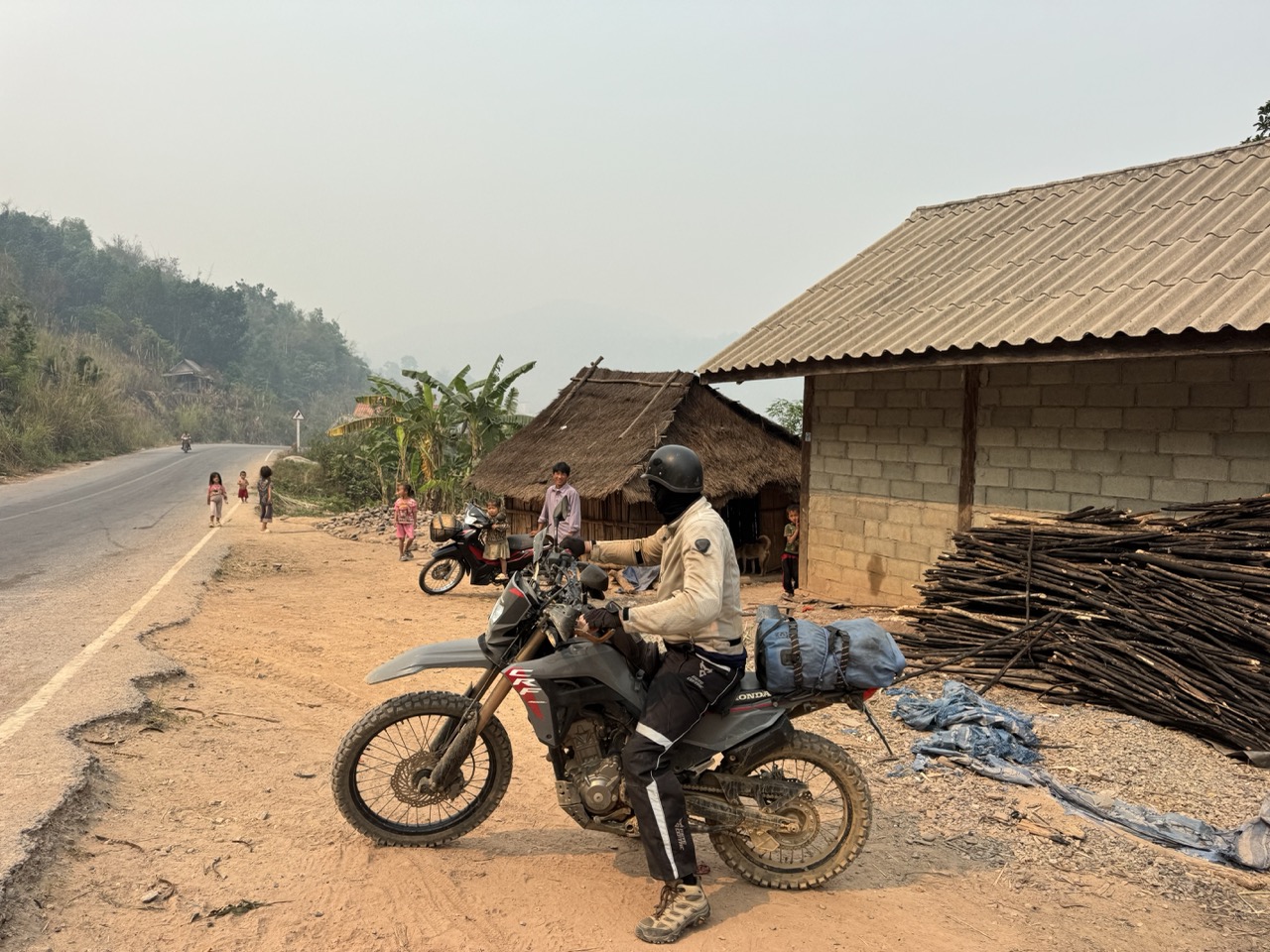
The interesting riding here lives off the spine: the dirt connector from Phonsavan down to Vang Vieng, the unpaved climbs in Oudomxay, the village tracks that branch off the main roads into Hmong and Khmu communities that sit kilometres off any tourist itinerary. A CRF250L or CRF300L (we ran two CRFs the whole way) is the right tool for this — light enough to handle the loose, dusty switchbacks, comfortable enough on the long sealed transits, and a tank range that gets you between the smaller fuel stations of central Laos without panic.
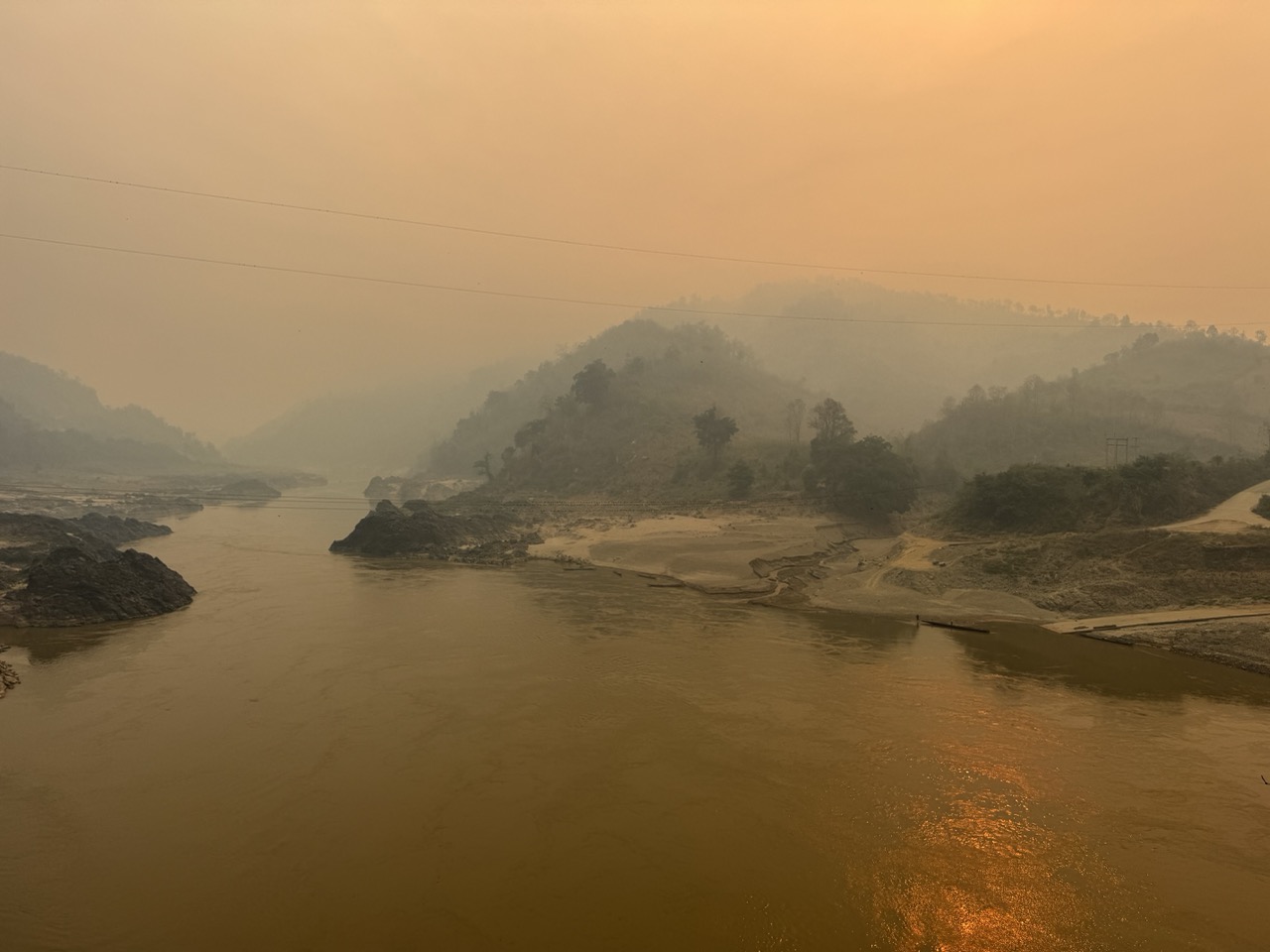
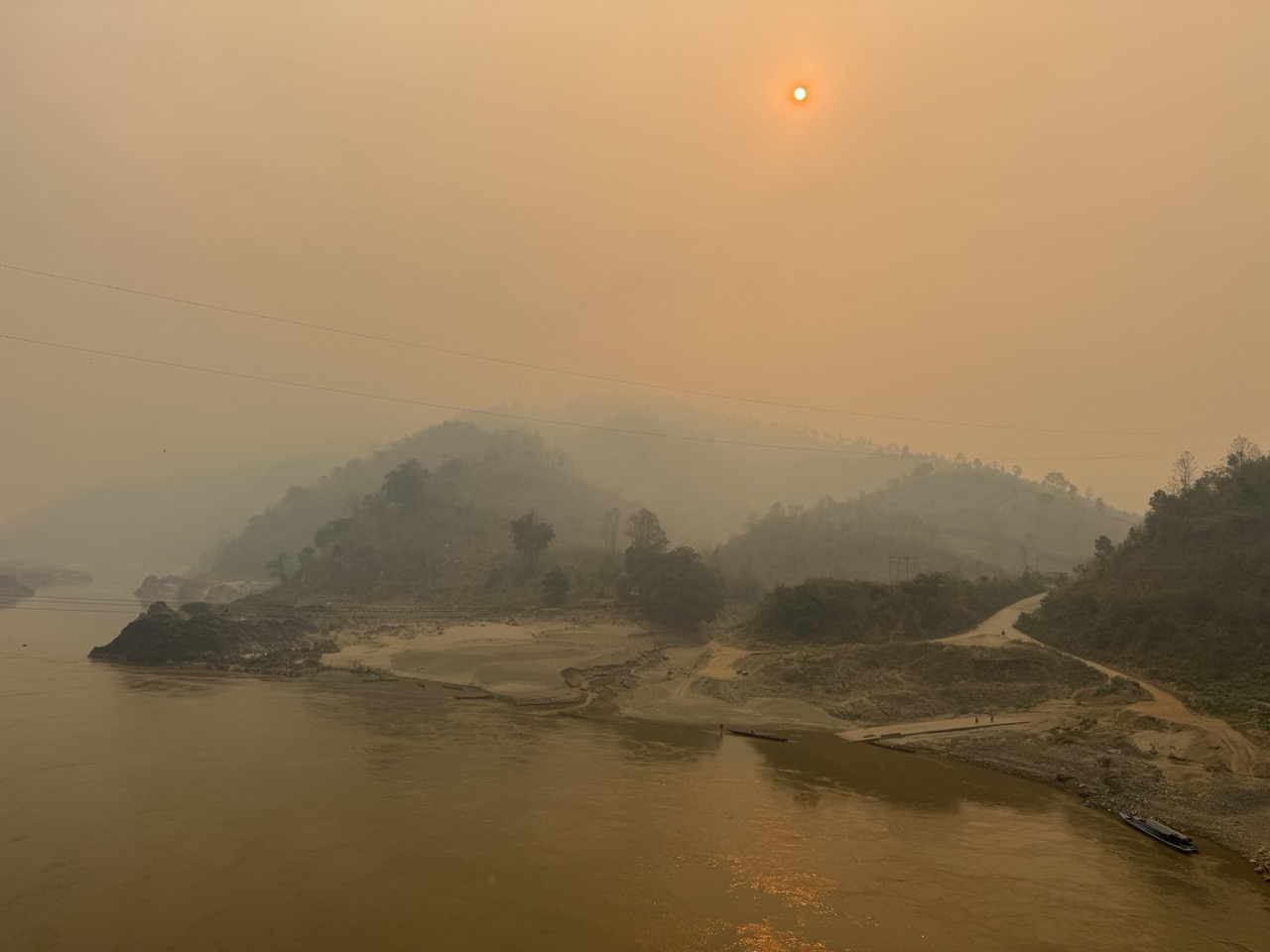
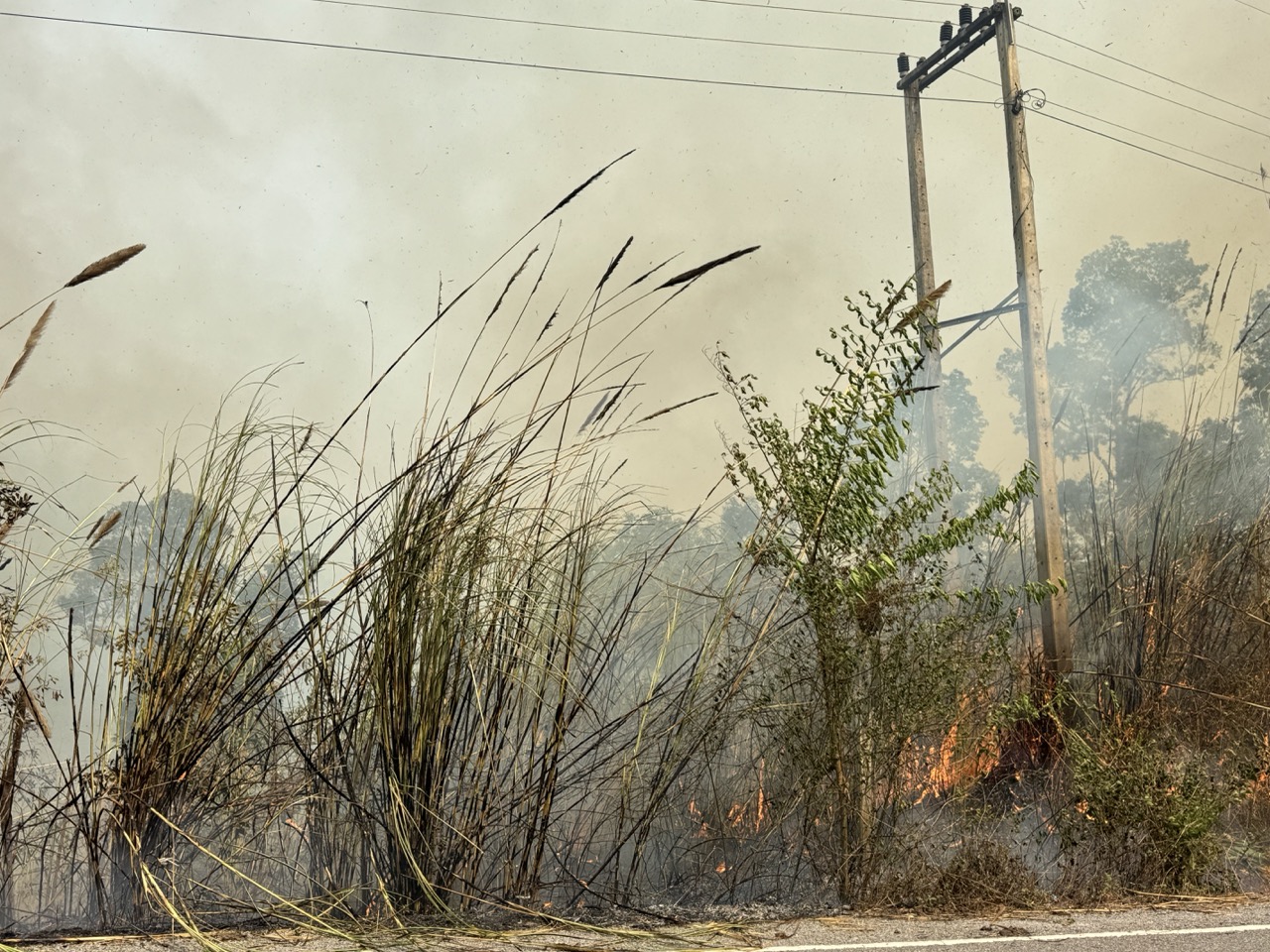
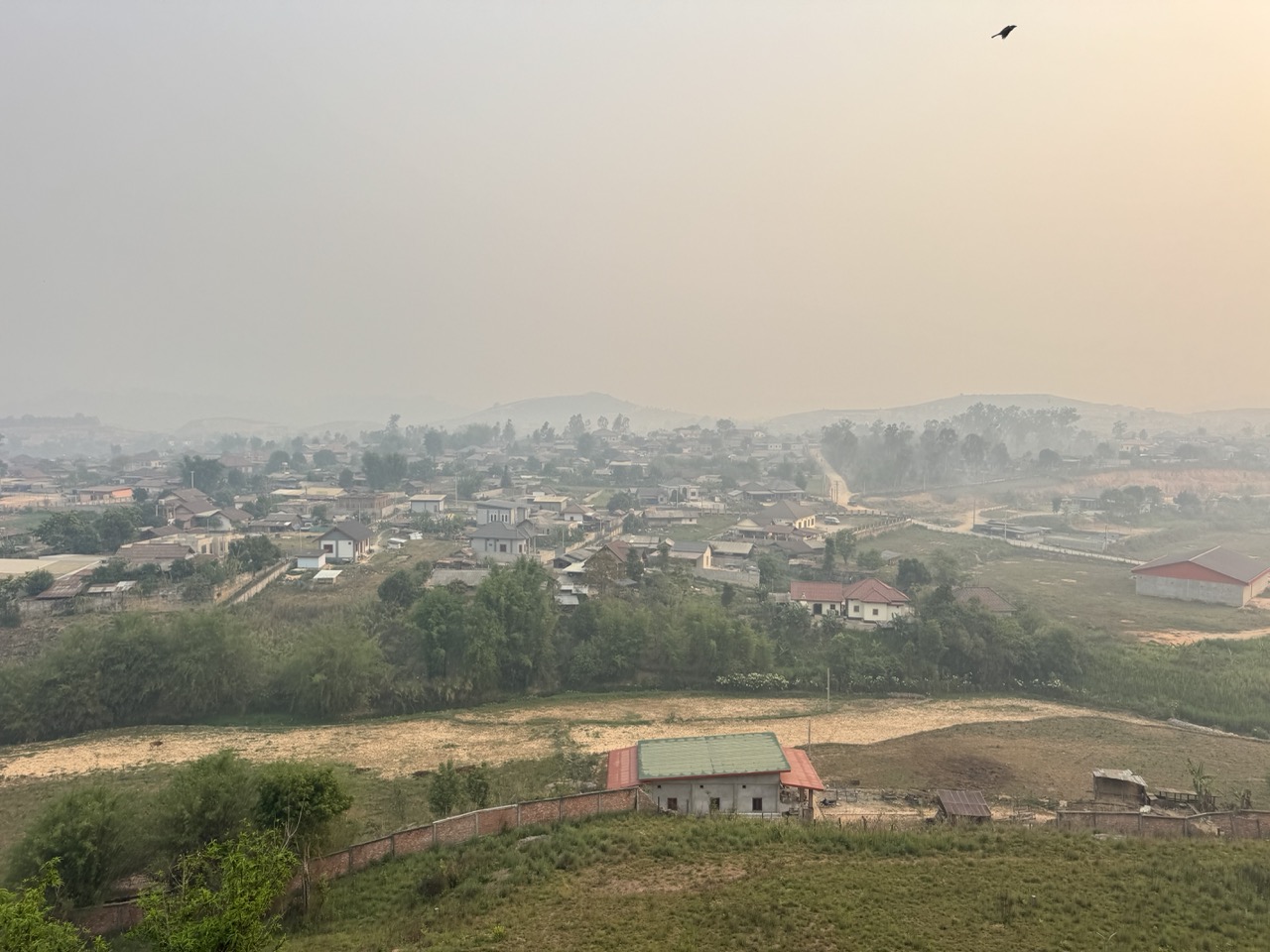
Heads up on the season: we rode in mid-April, which is the absolute peak of burning season across Northern Thailand and Laos. Visibility was poor on most ridge sections — the layered mountain shots in this article are all hazy because the air really was that hazy. The trade-off was bone-dry trails and almost no traffic. December through February is the textbook window if you want clean air and clear views.
Day 1 — Chiang Mai to Pak Beng (~216 km)
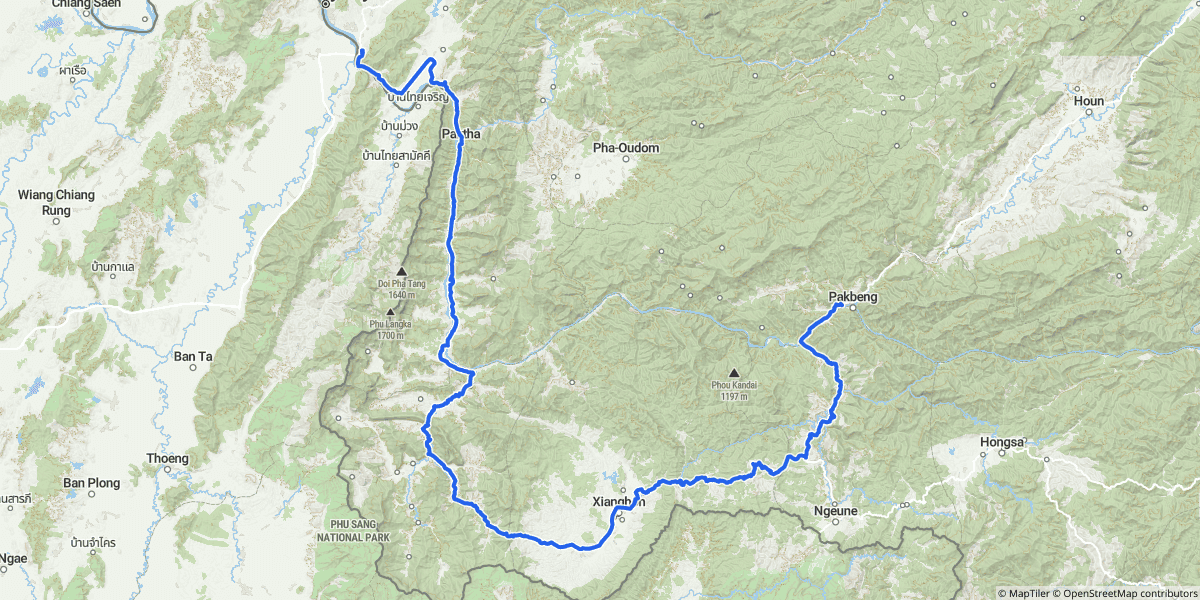
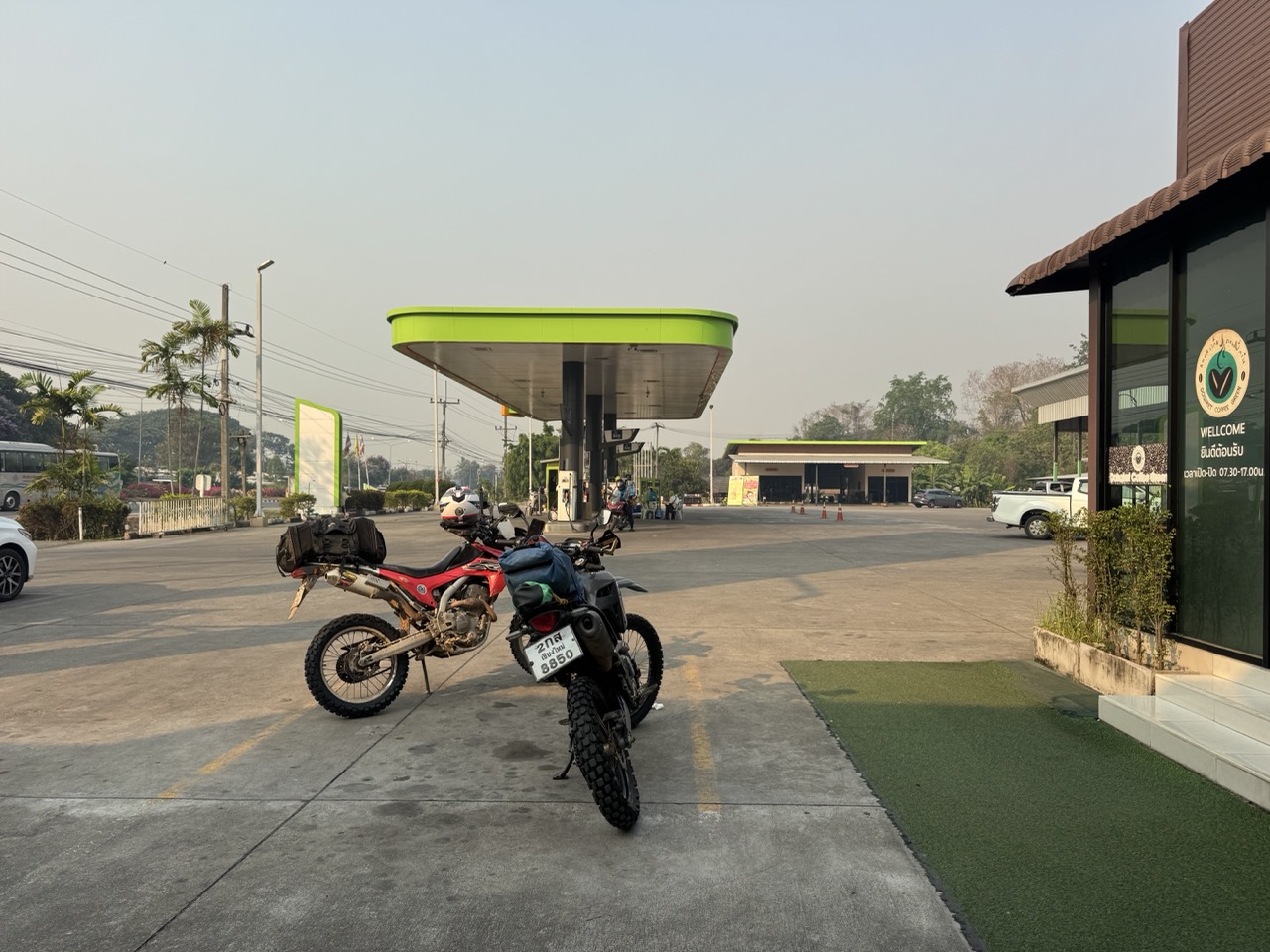
Day 1 is mostly logistics. You ride from Chiang Mai up to Chiang Khong on Route 118 — a few hours of well-known tarmac via Wiang Pa Pao and Mae Suai — and then everything stops while you do the border. Allow a couple of hours, including the queue at Lao immigration on the far side.
Once you're across the bridge into Huay Xai, the trip really starts. The road south to Pak Beng (Route 4) is part sealed, part very dusty. The villages get progressively more wooden, the cars get progressively rarer, and the Mekong is somewhere off to your right behind the ridges, occasionally appearing through a gap.
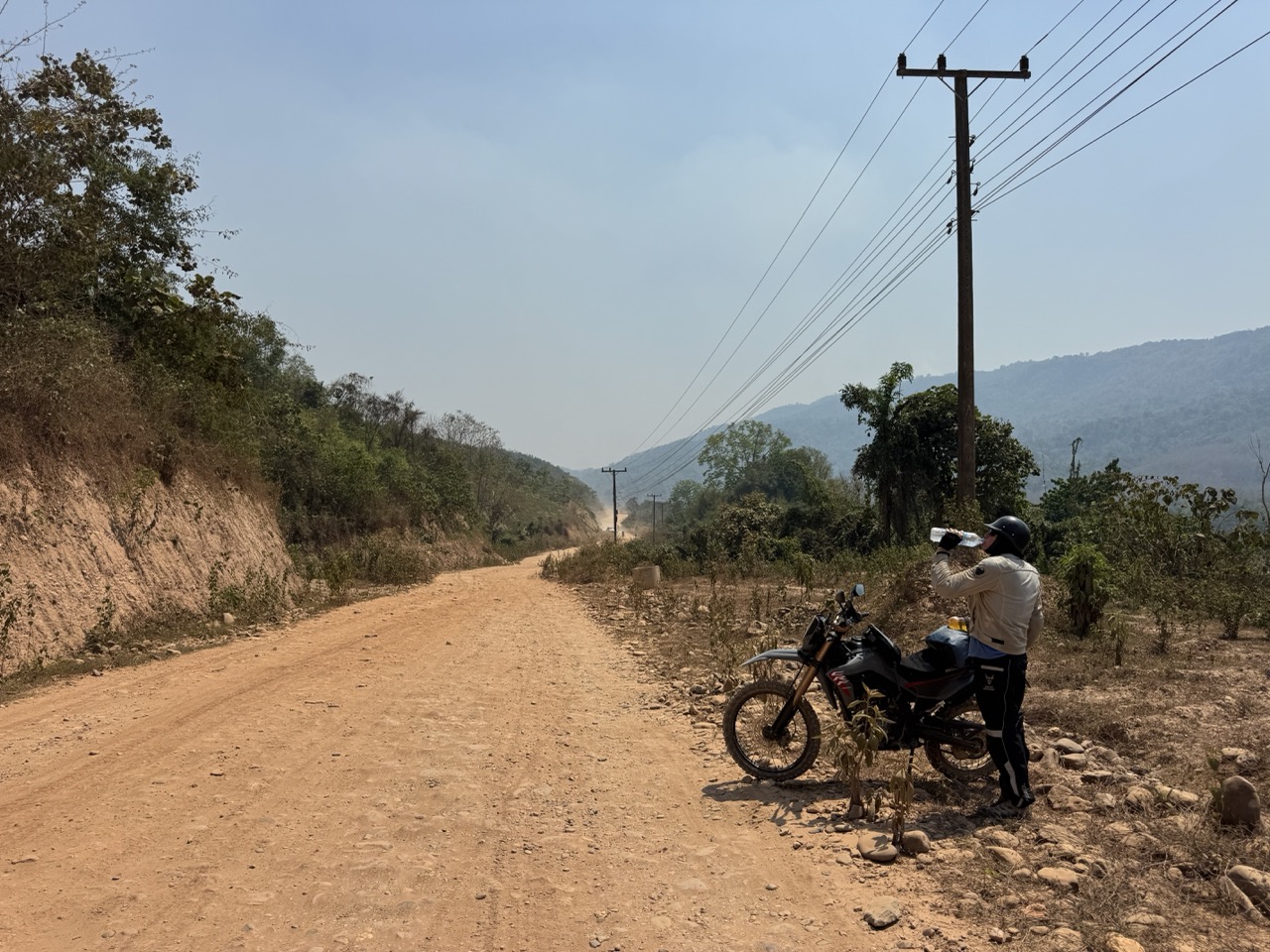
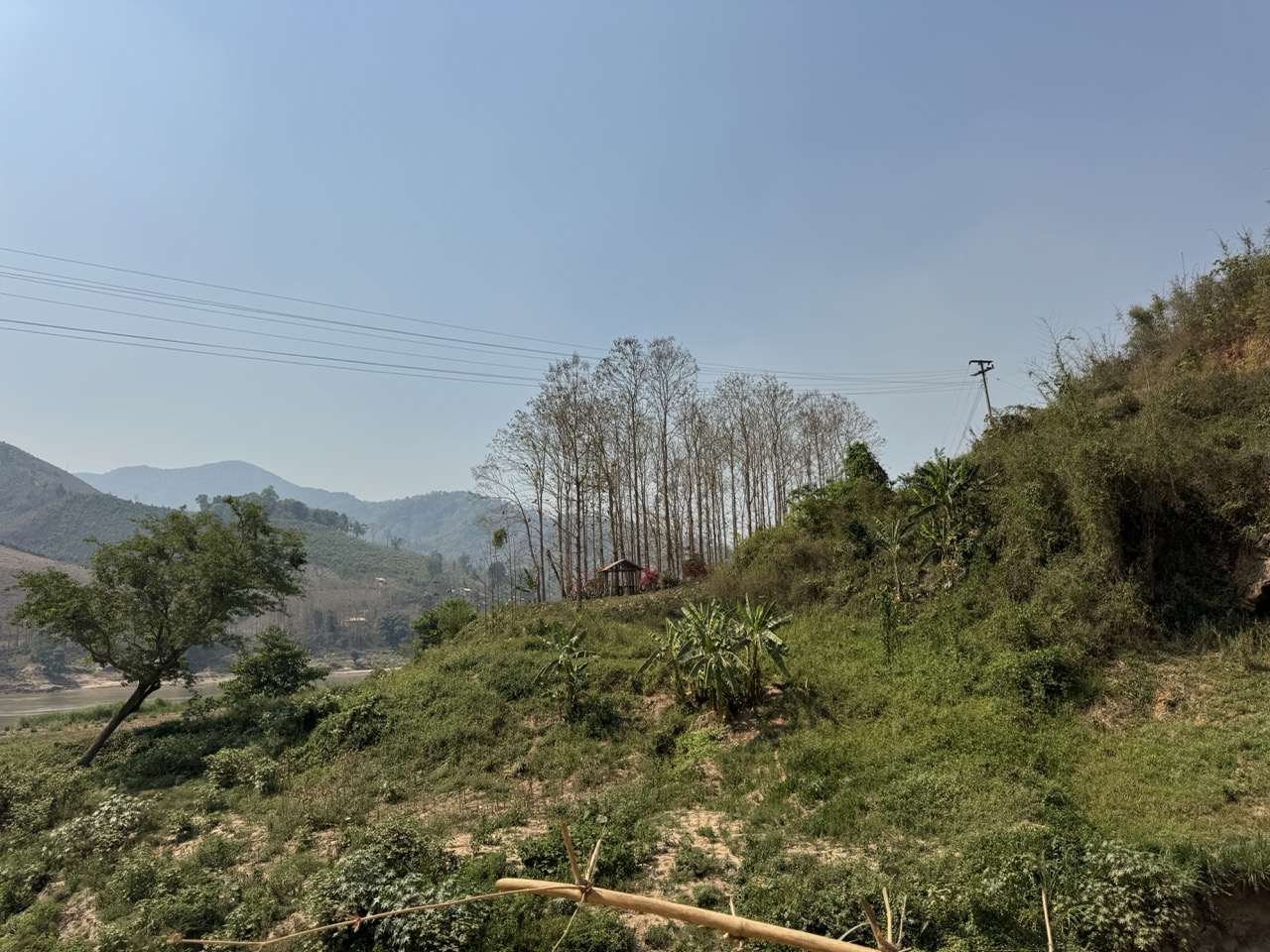
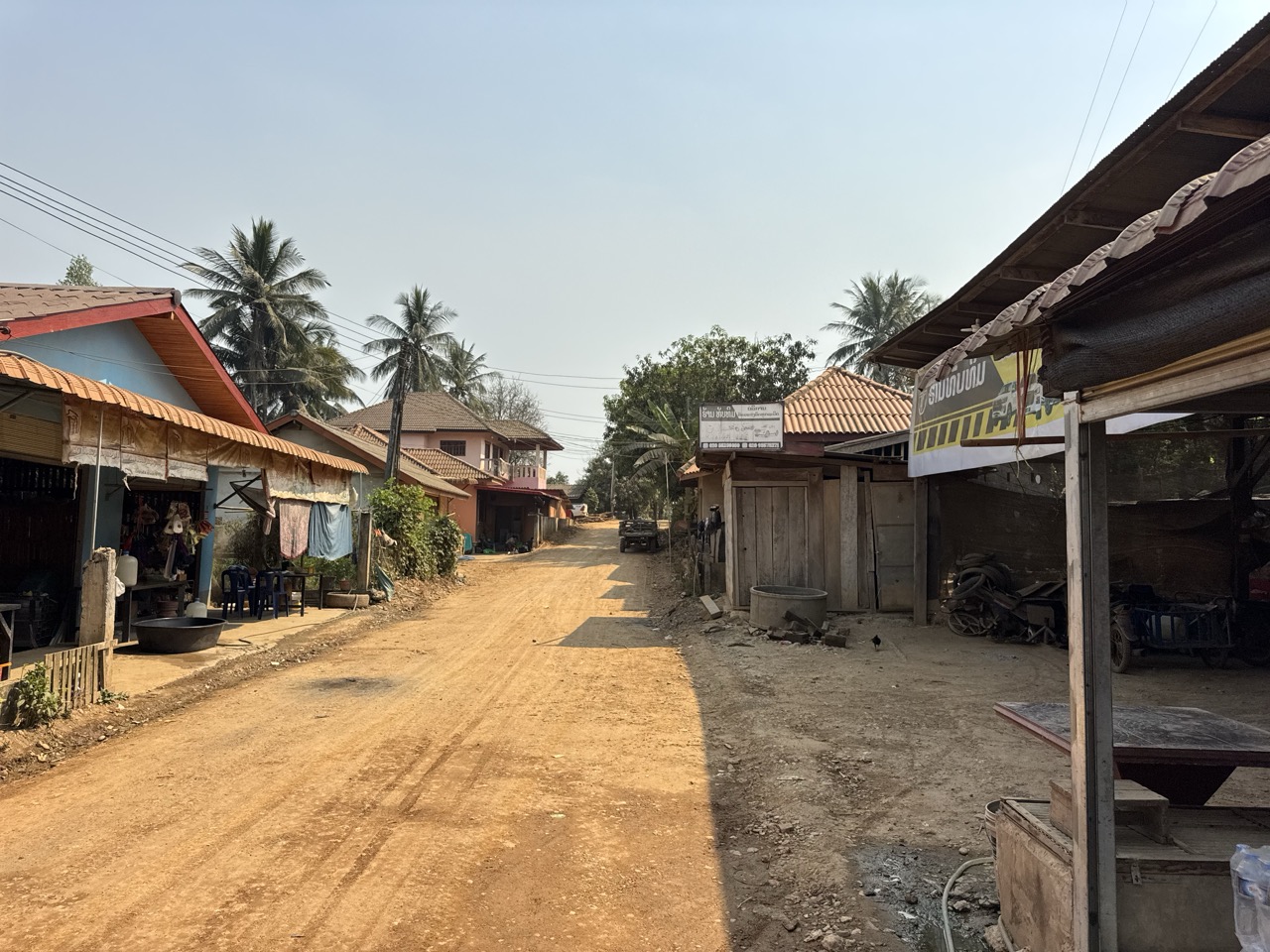
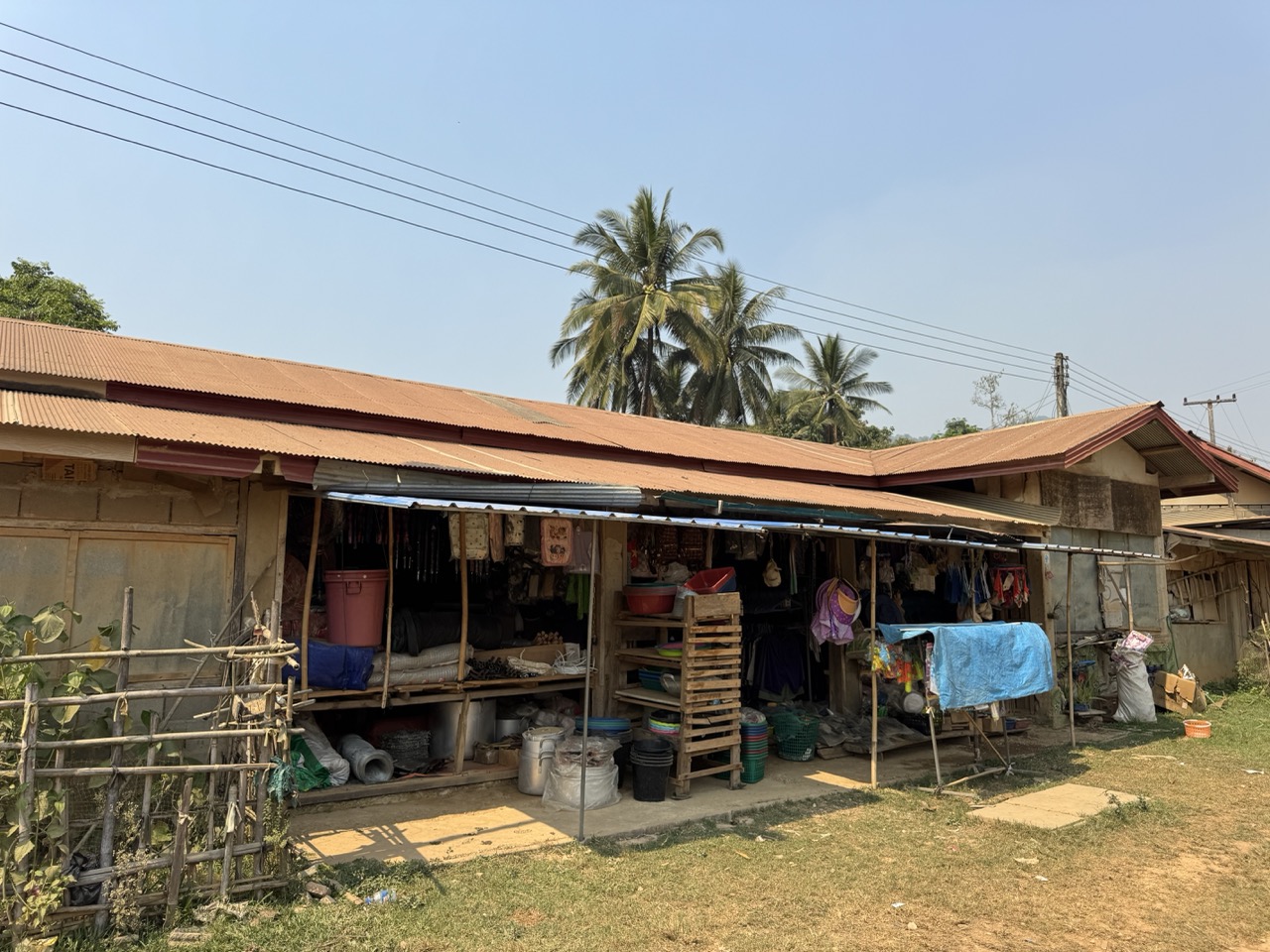
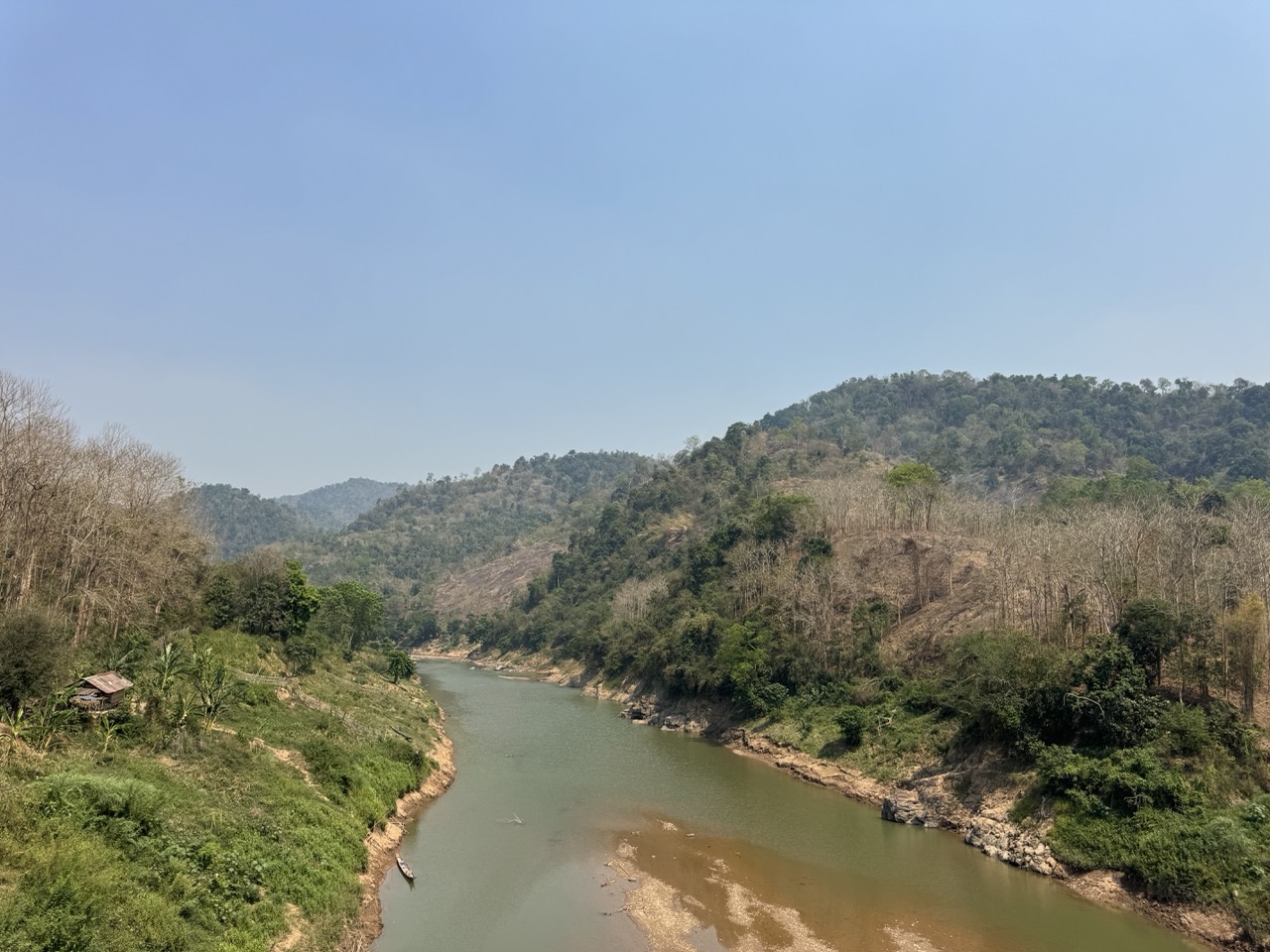
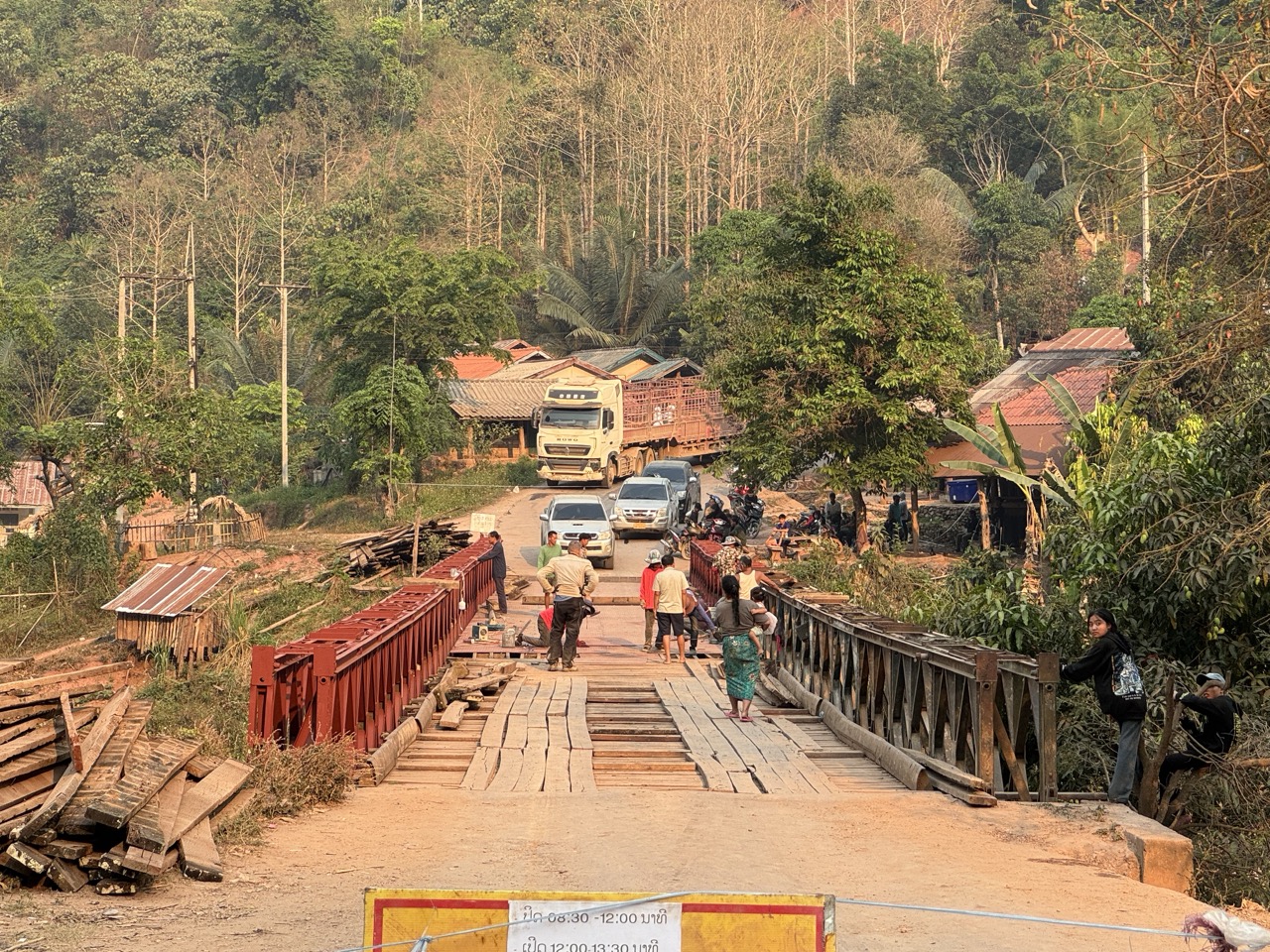
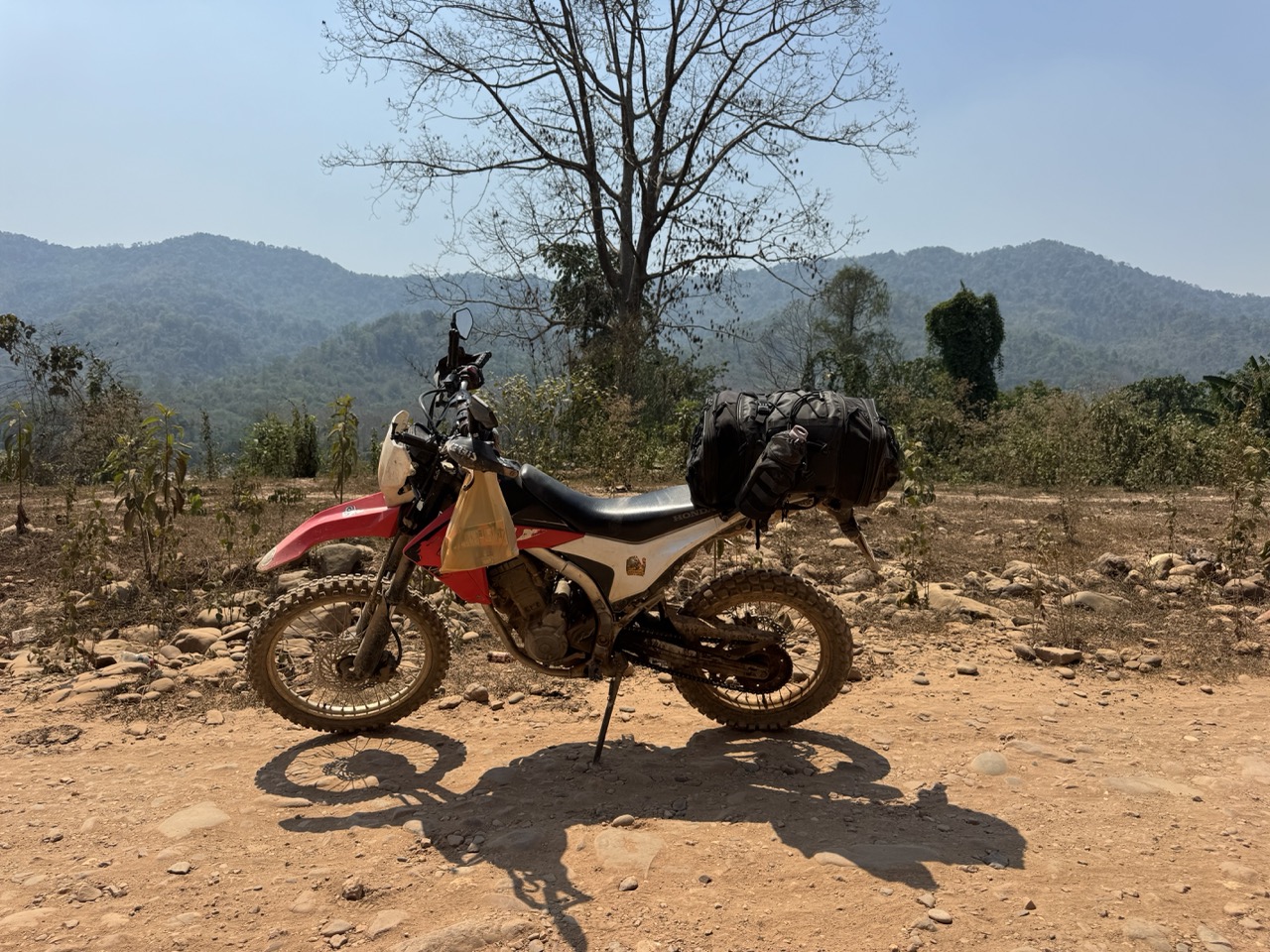
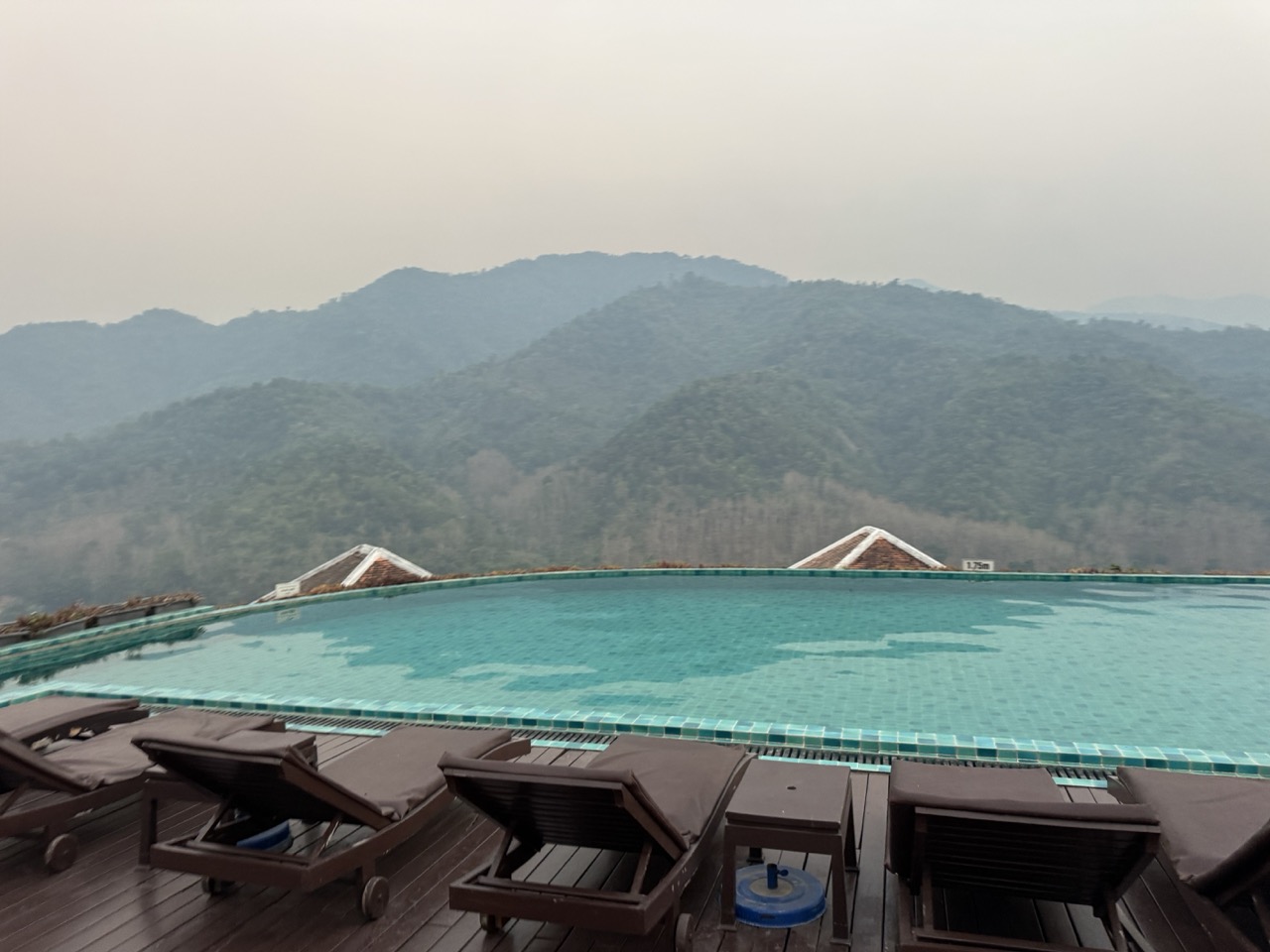
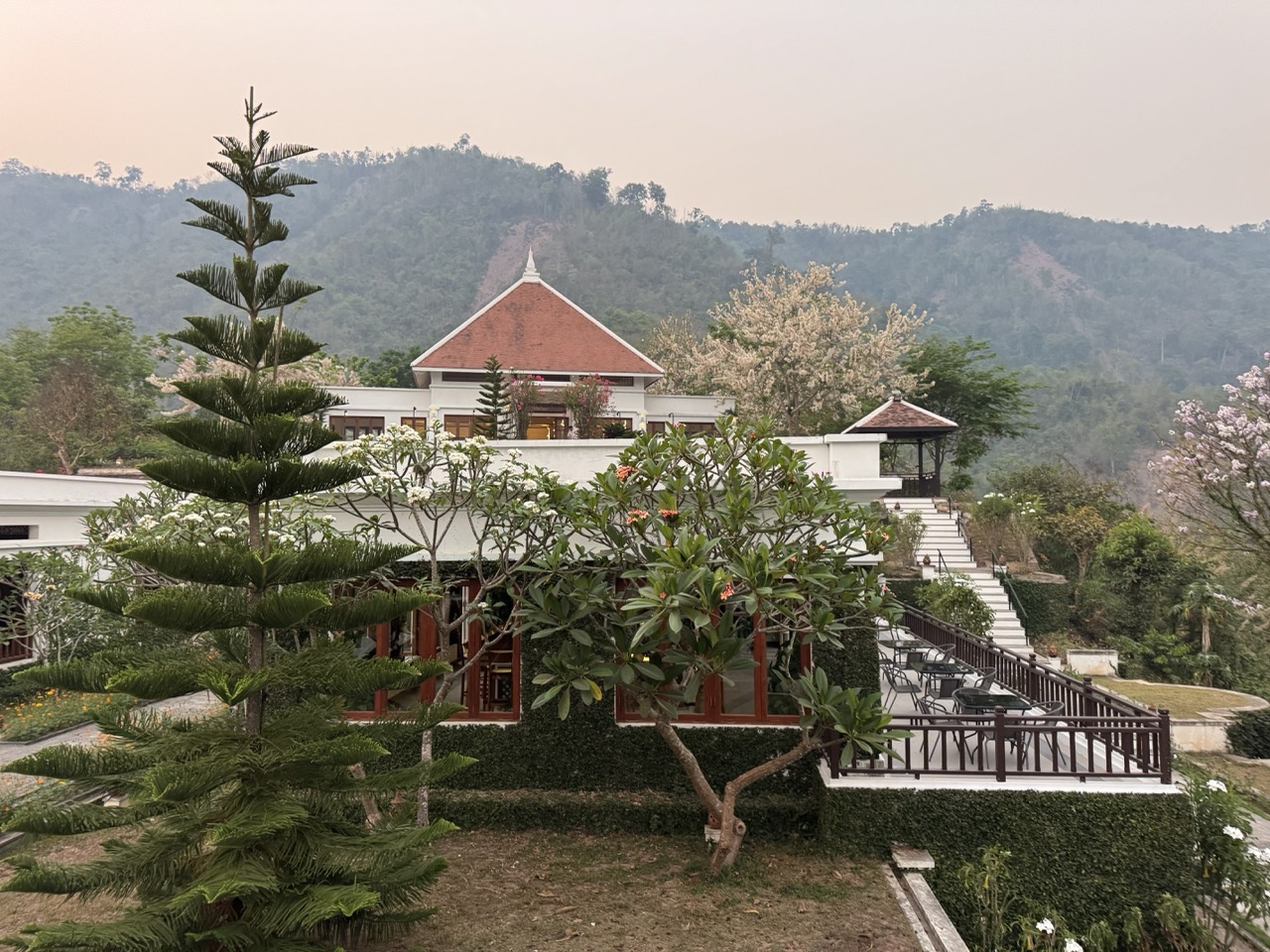
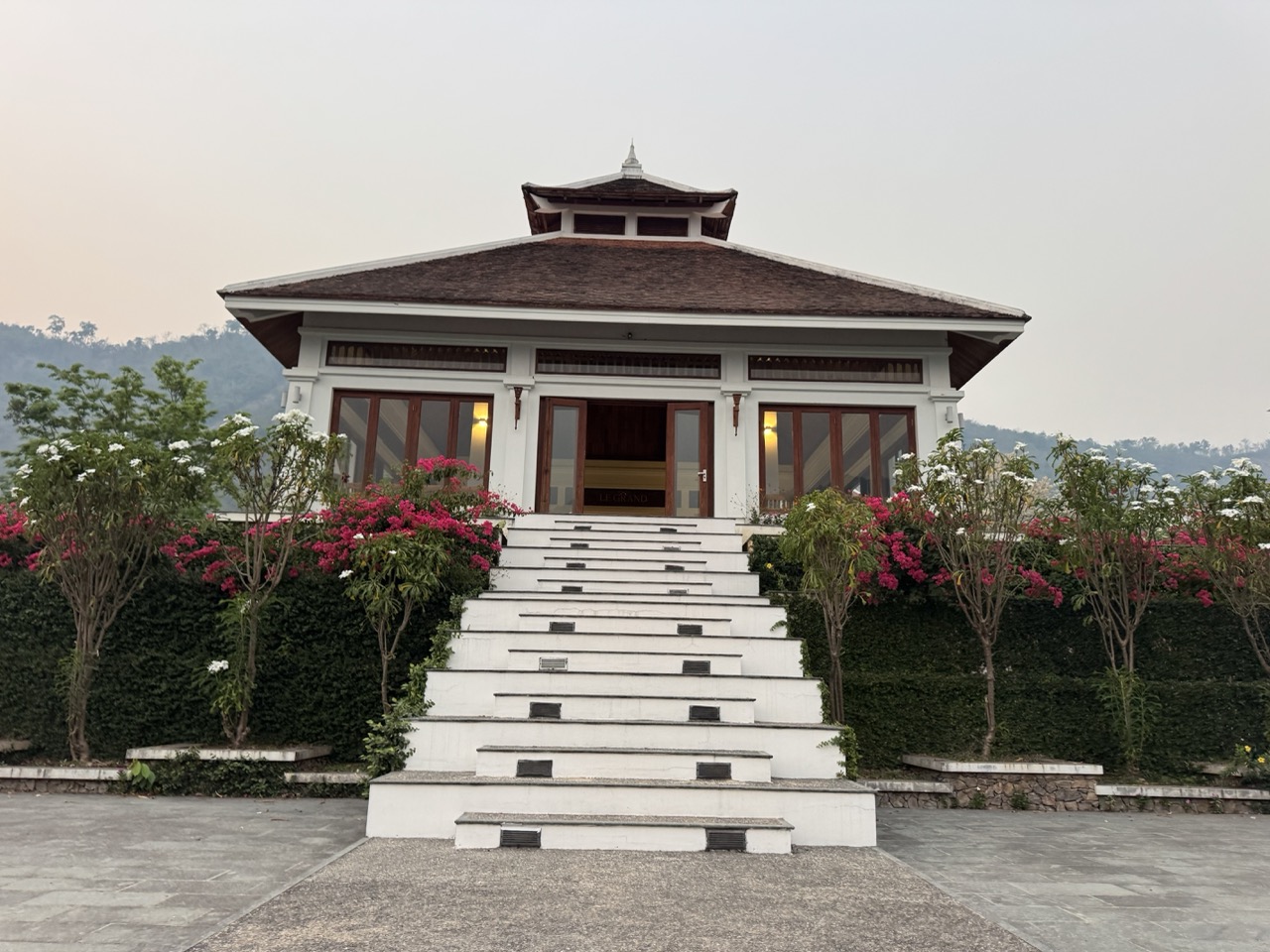
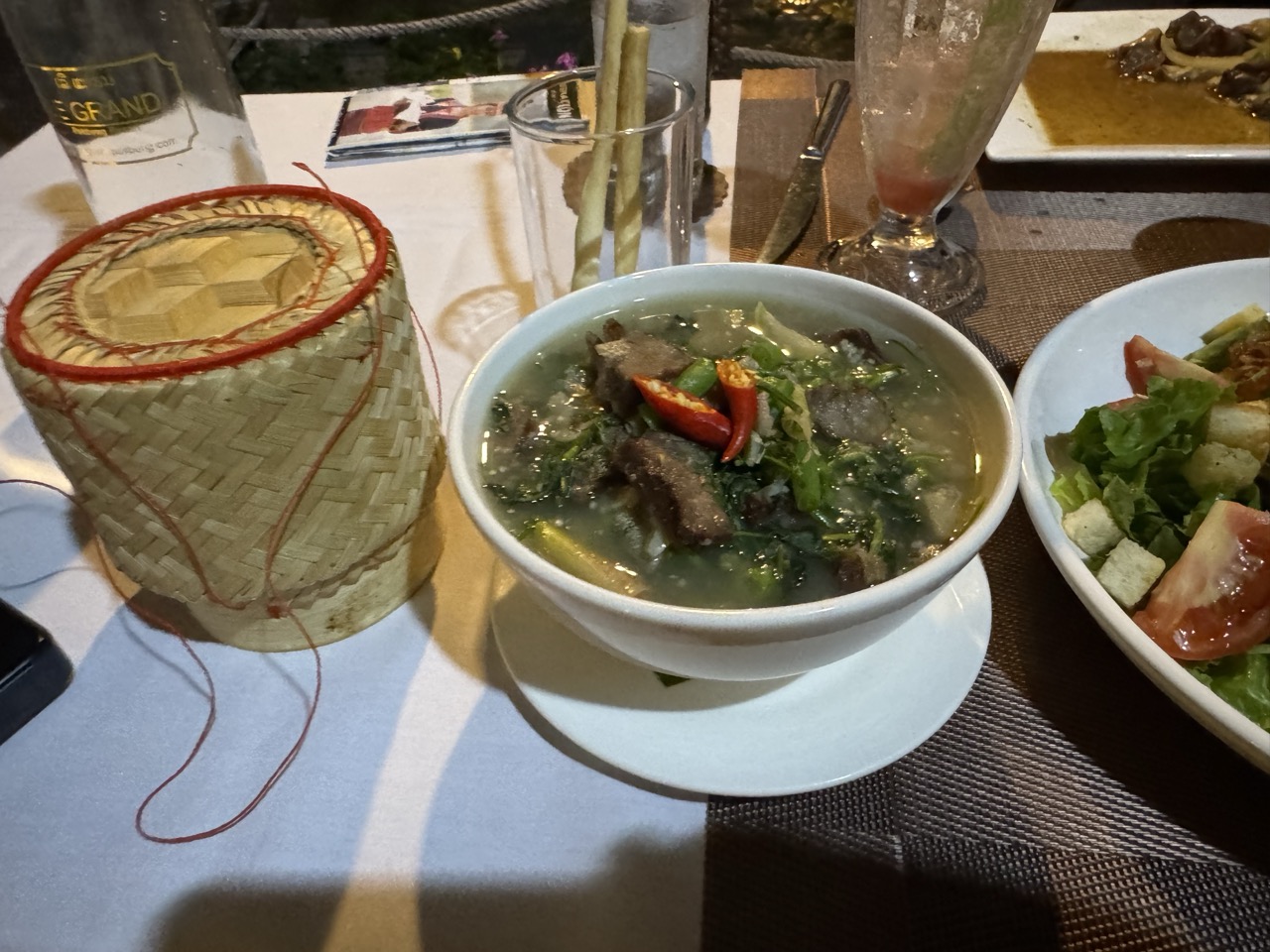
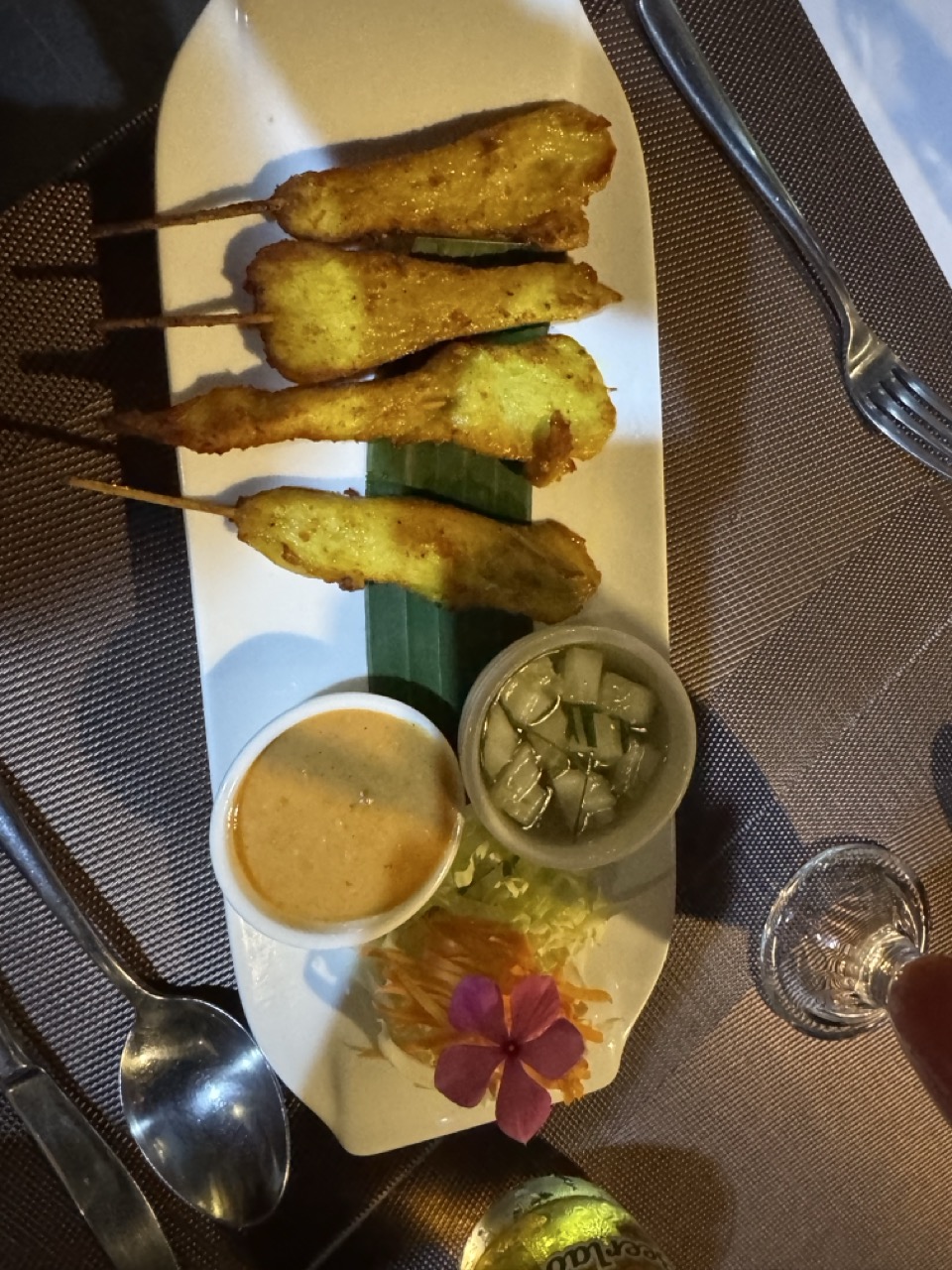
We rolled into Pak Beng tired, dusty, and ready to see the end of the day. Pak Beng is a small Mekong river town that exists mostly because the slow boats from Huay Xai stop here on their way to Luang Prabang — half of it is guesthouses for boat passengers, half of it is the actual life of the town. We checked into Le Grand Pakbeng Resort, which sits up on the slope above the river with an infinity pool that points across the Mekong toward the Thai bank. After a 200km dusty day this is exactly the kind of overcorrection your body wants.
Day 2 — Pak Beng to Luang Prabang (~218 km)
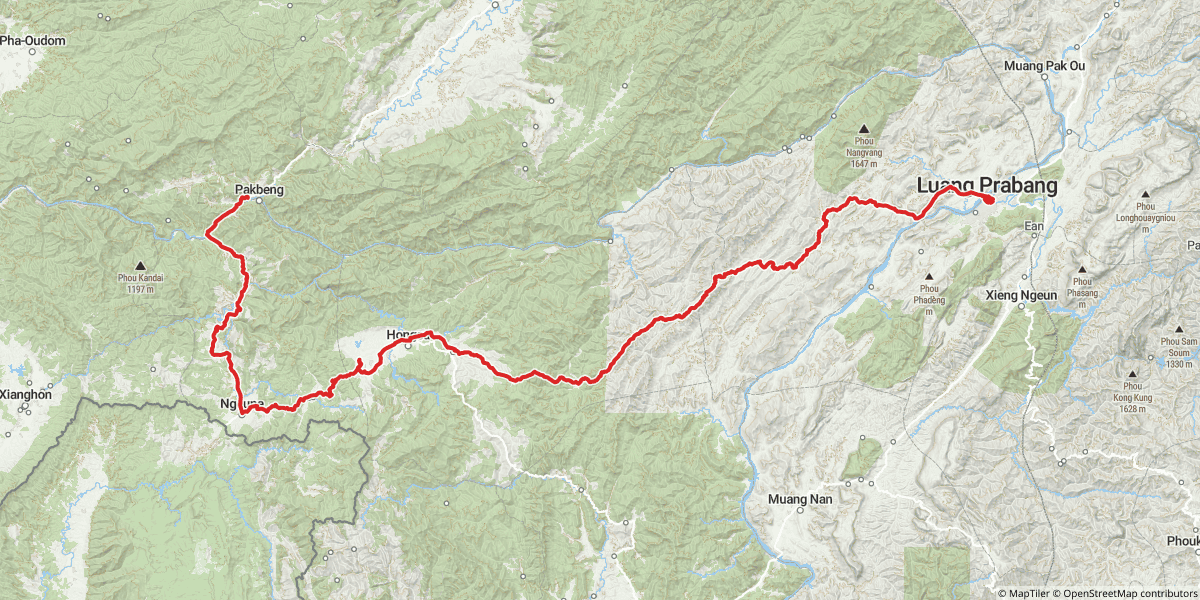
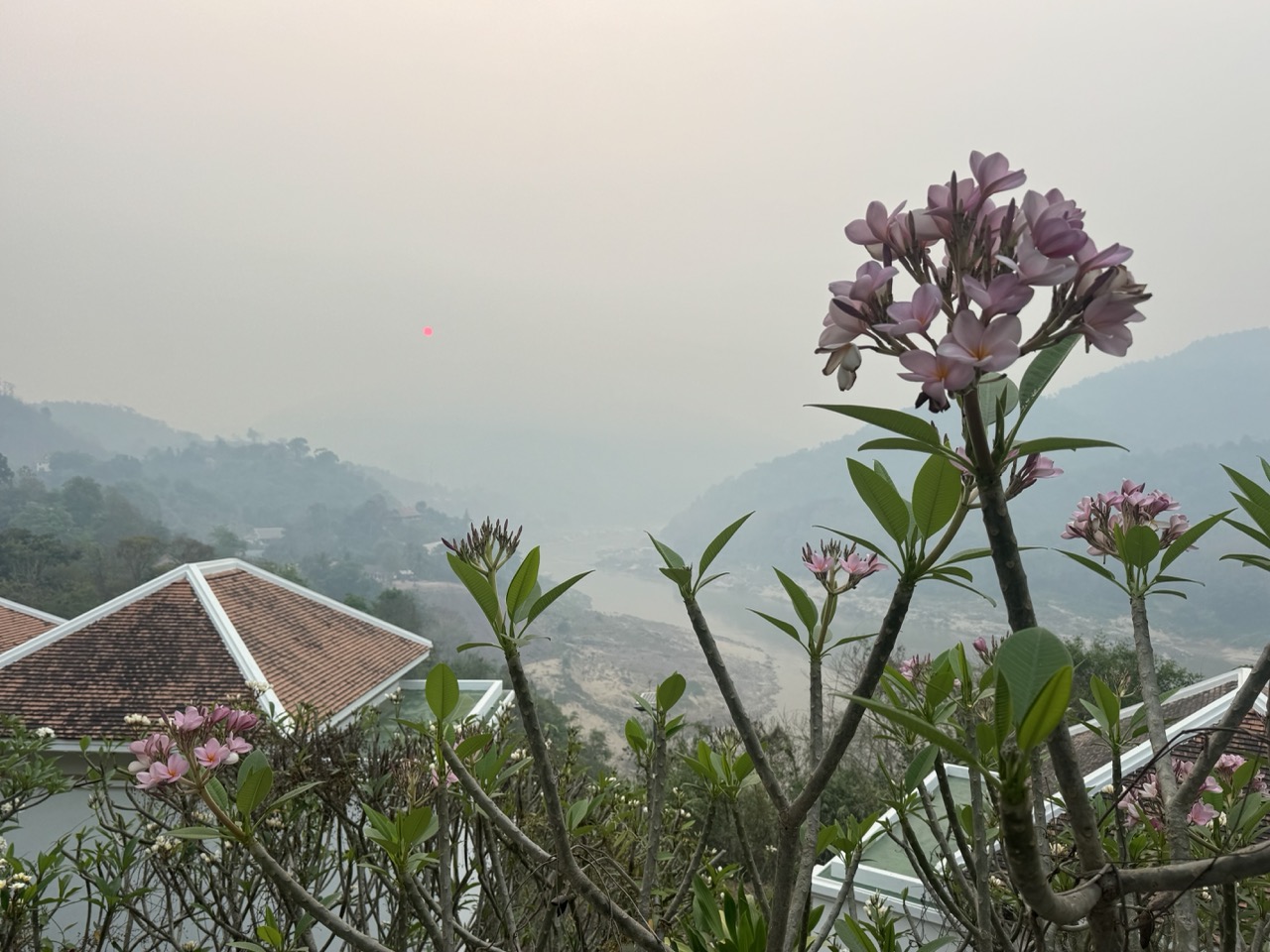
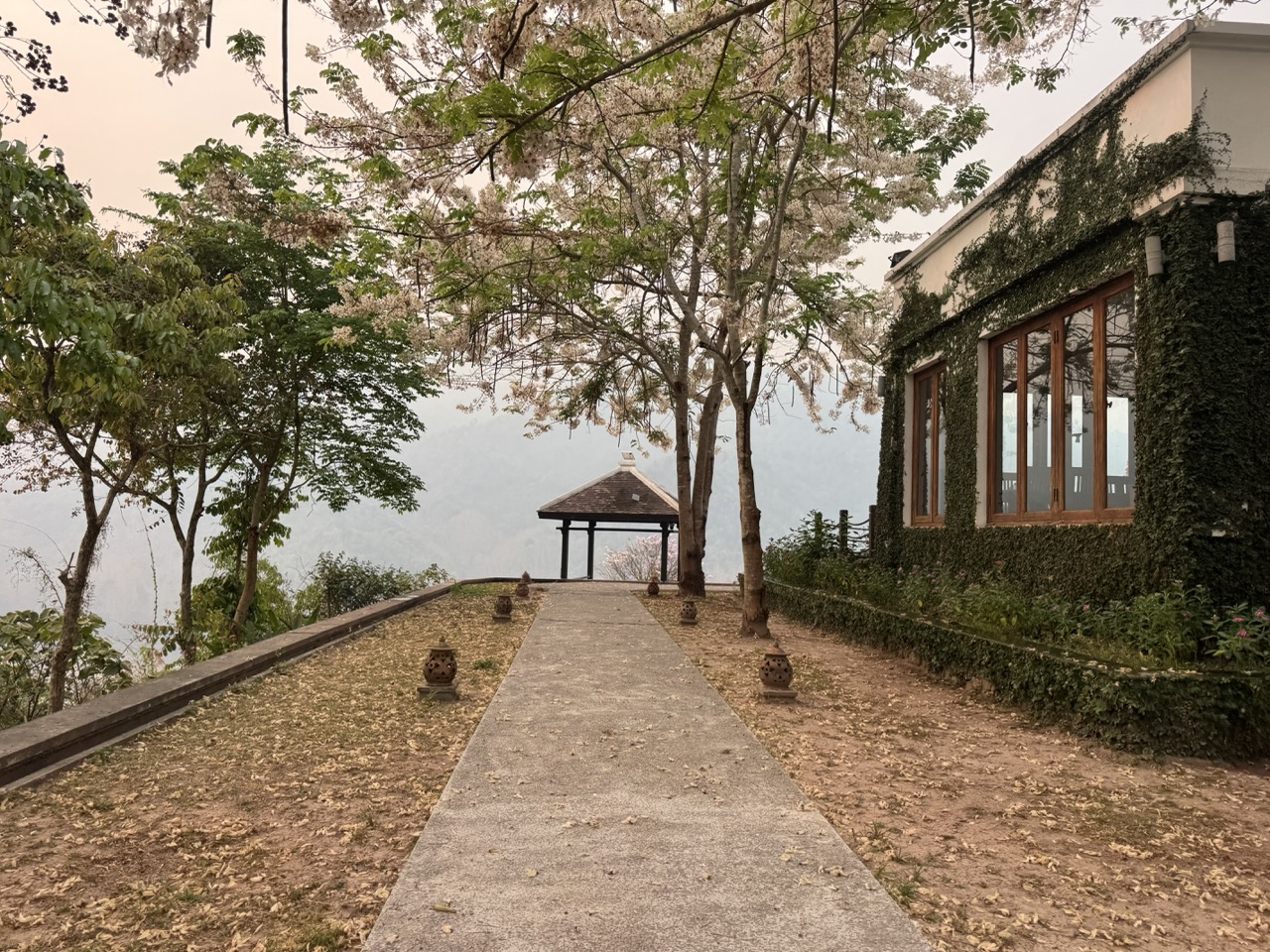
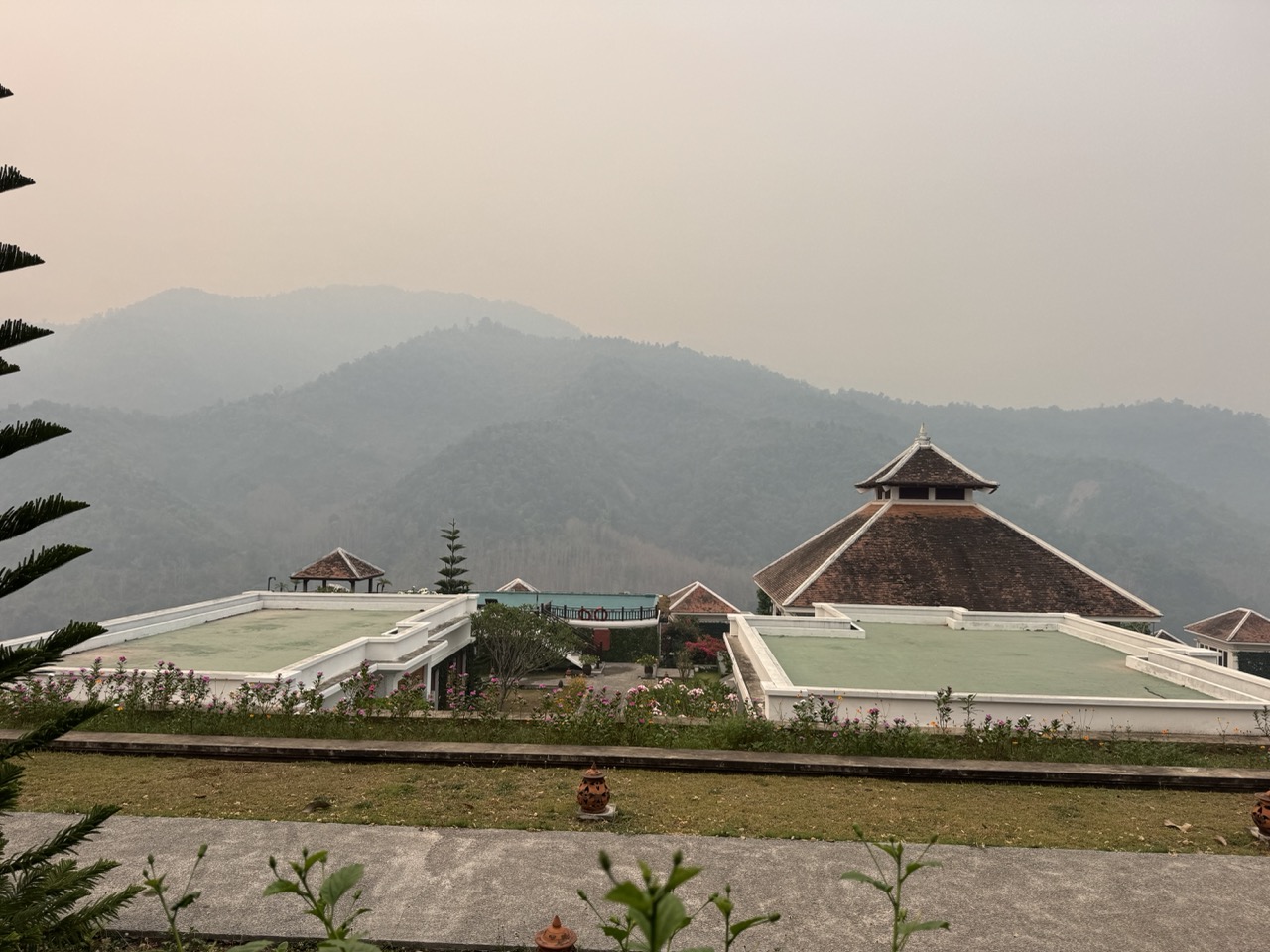
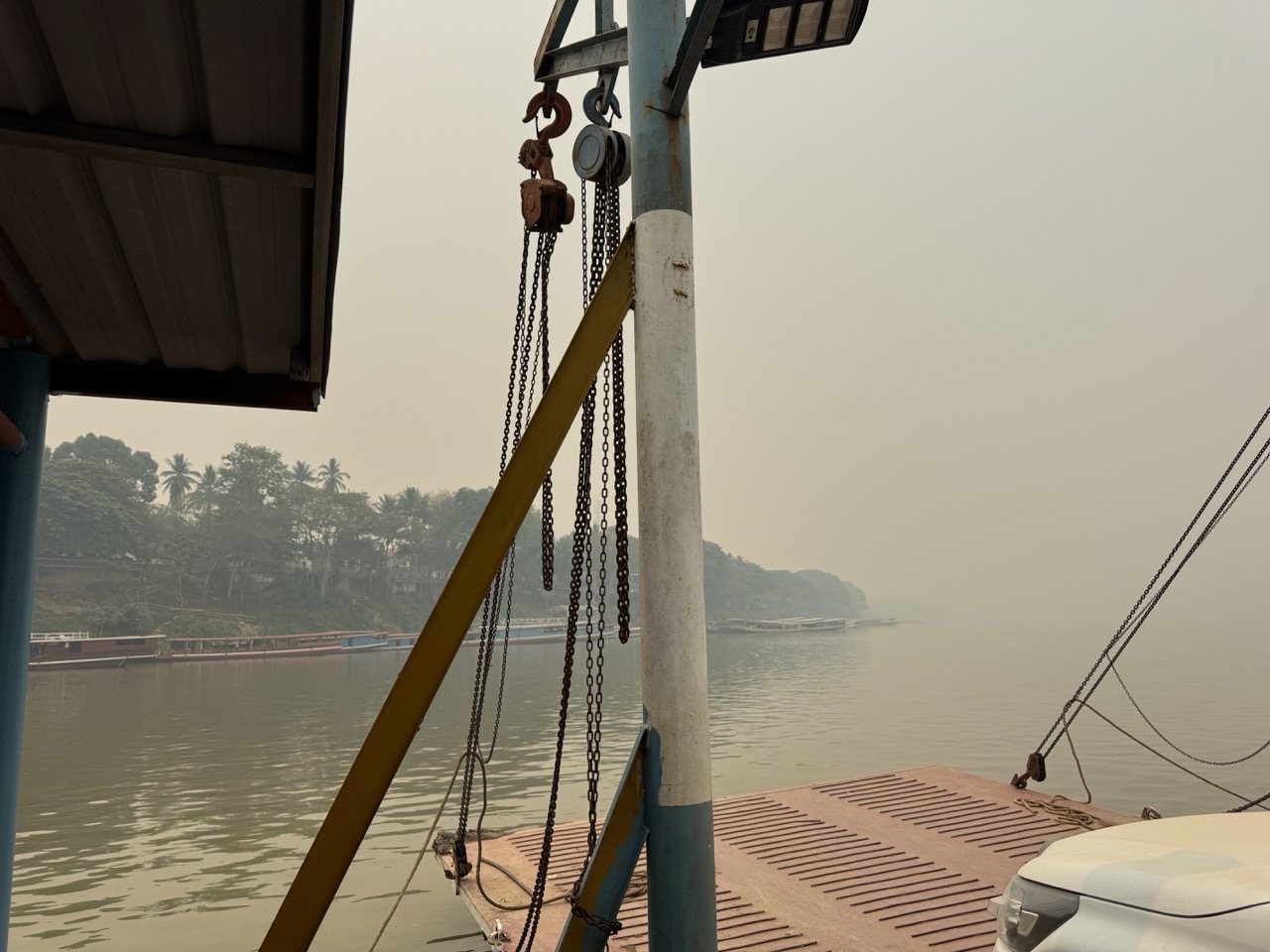
We left Pak Beng in the cool of the morning. The road climbs immediately out of the river valley, switchbacks up onto the ridge, and runs east through Oudomxay province with the Mekong dropping further and further behind you. The first hour or two is some of the best riding of the trip — empty road, low sun through smoke haze, mountain air that's still cool.
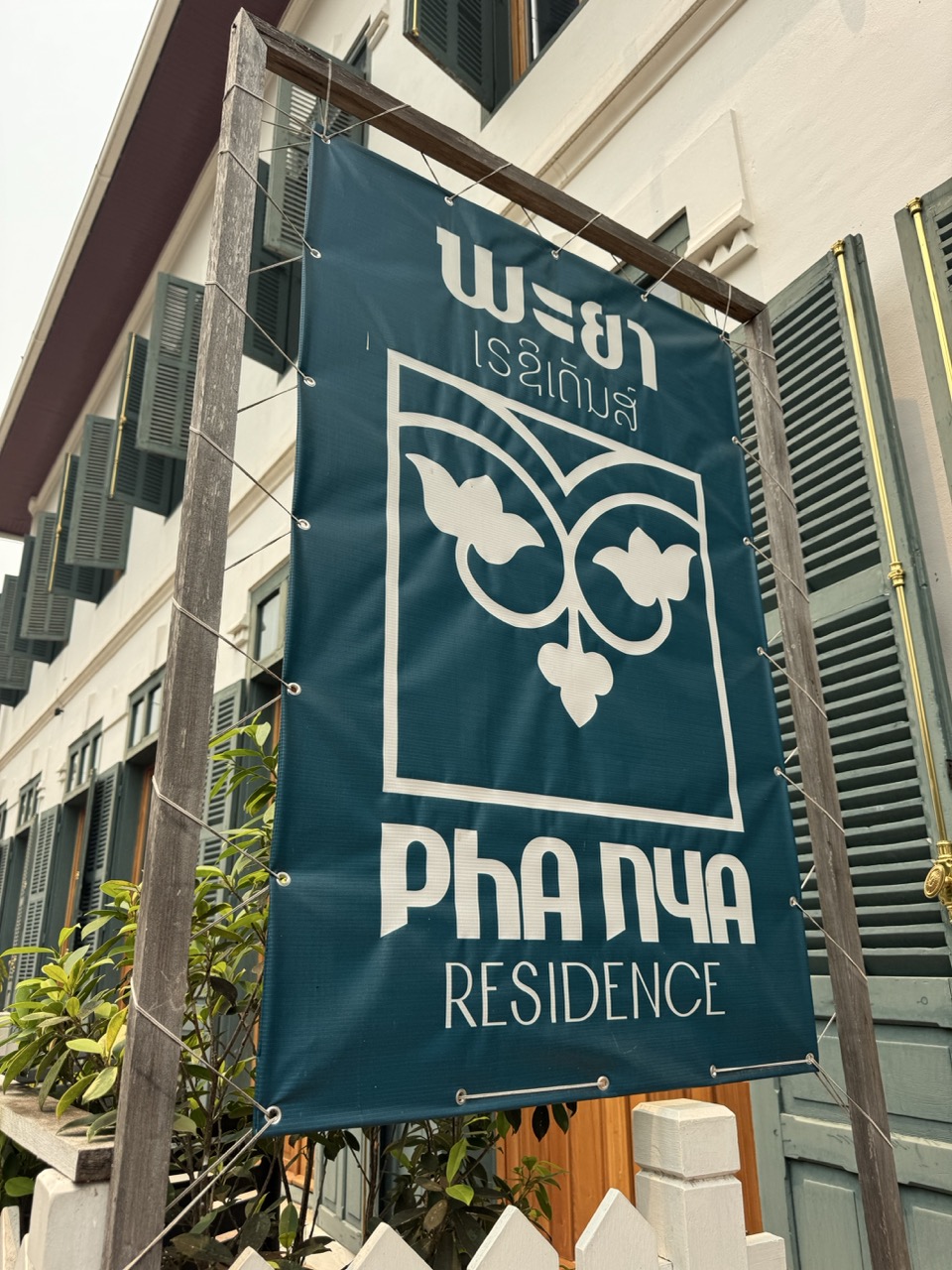
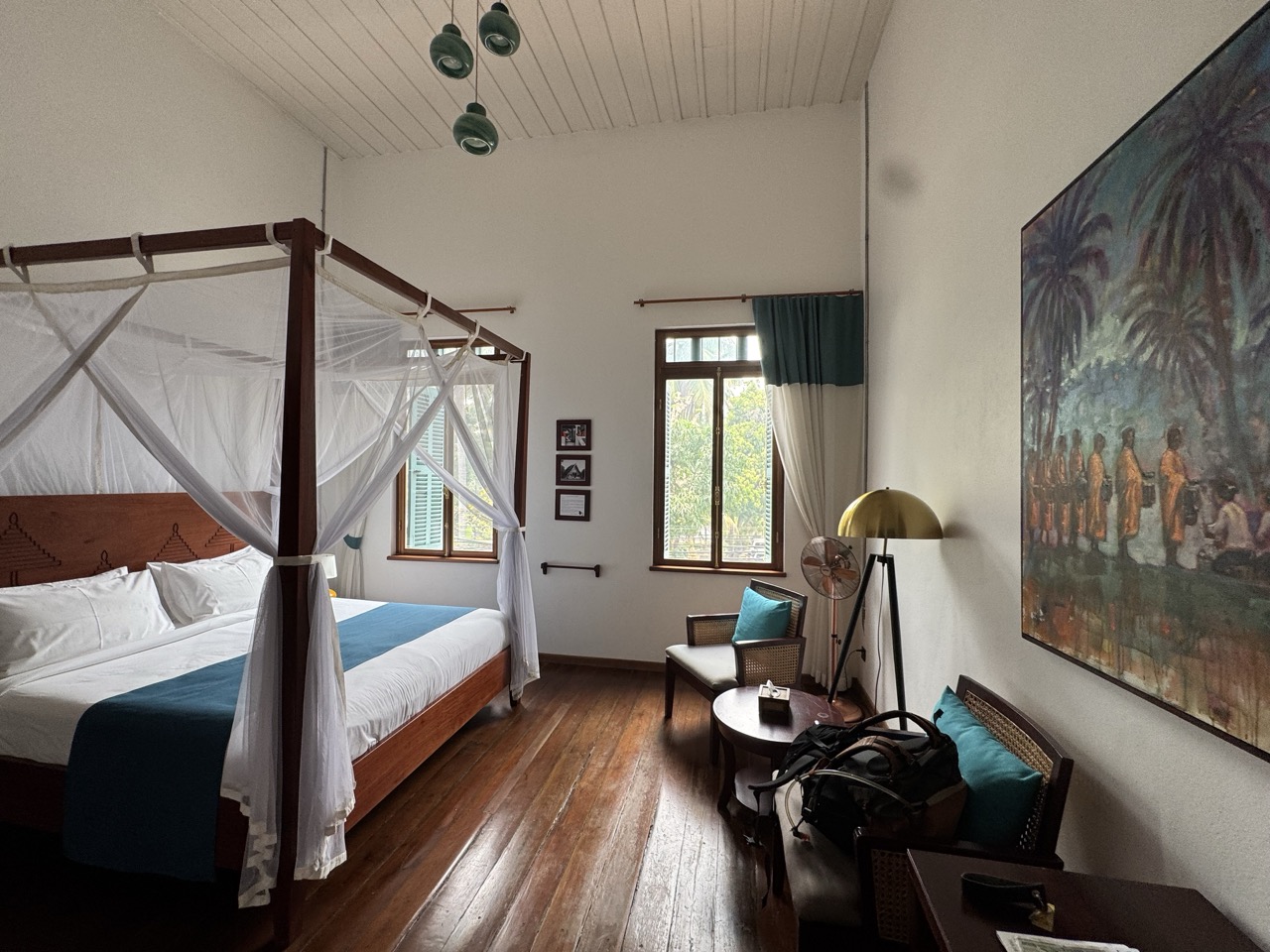
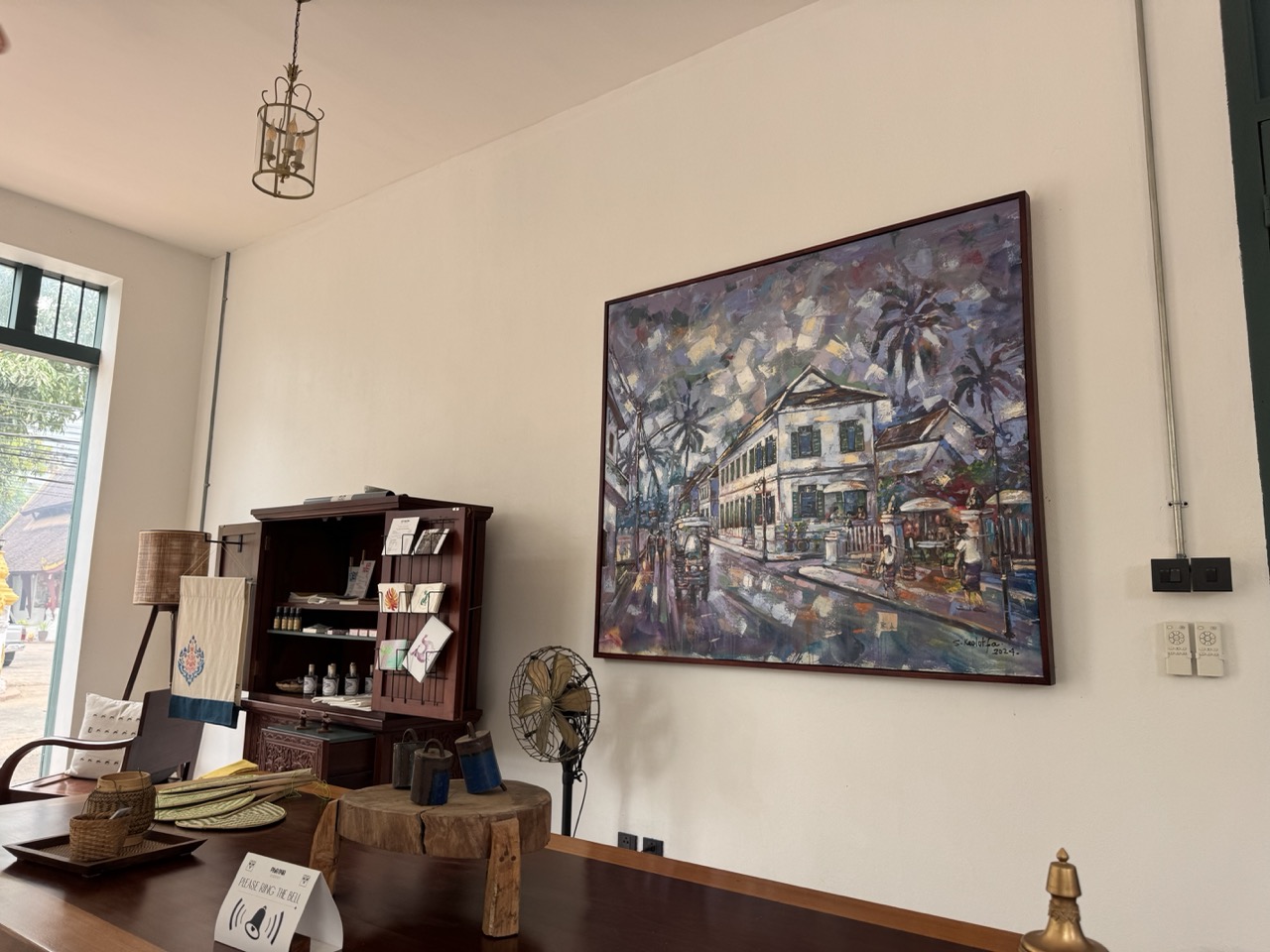
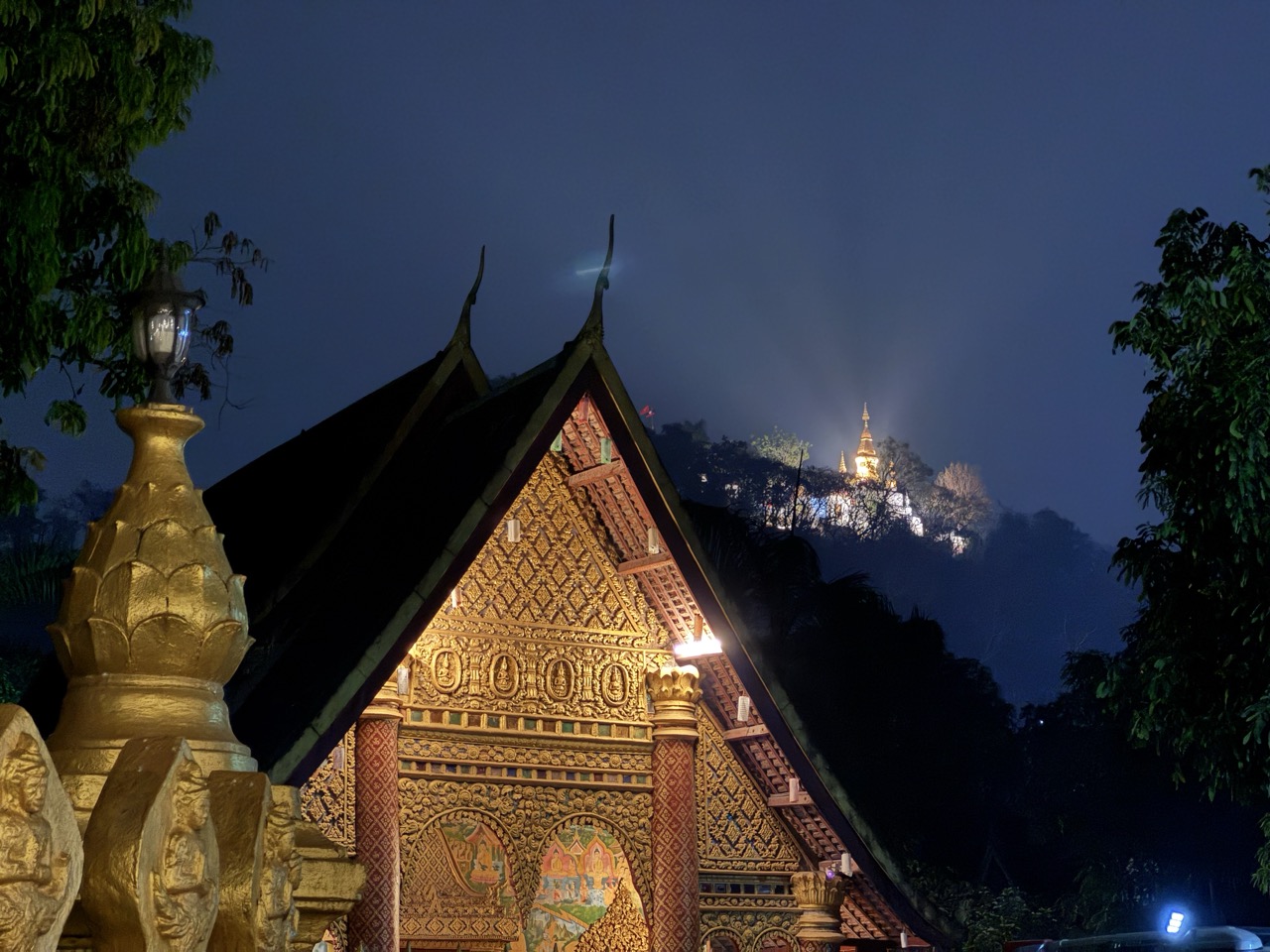
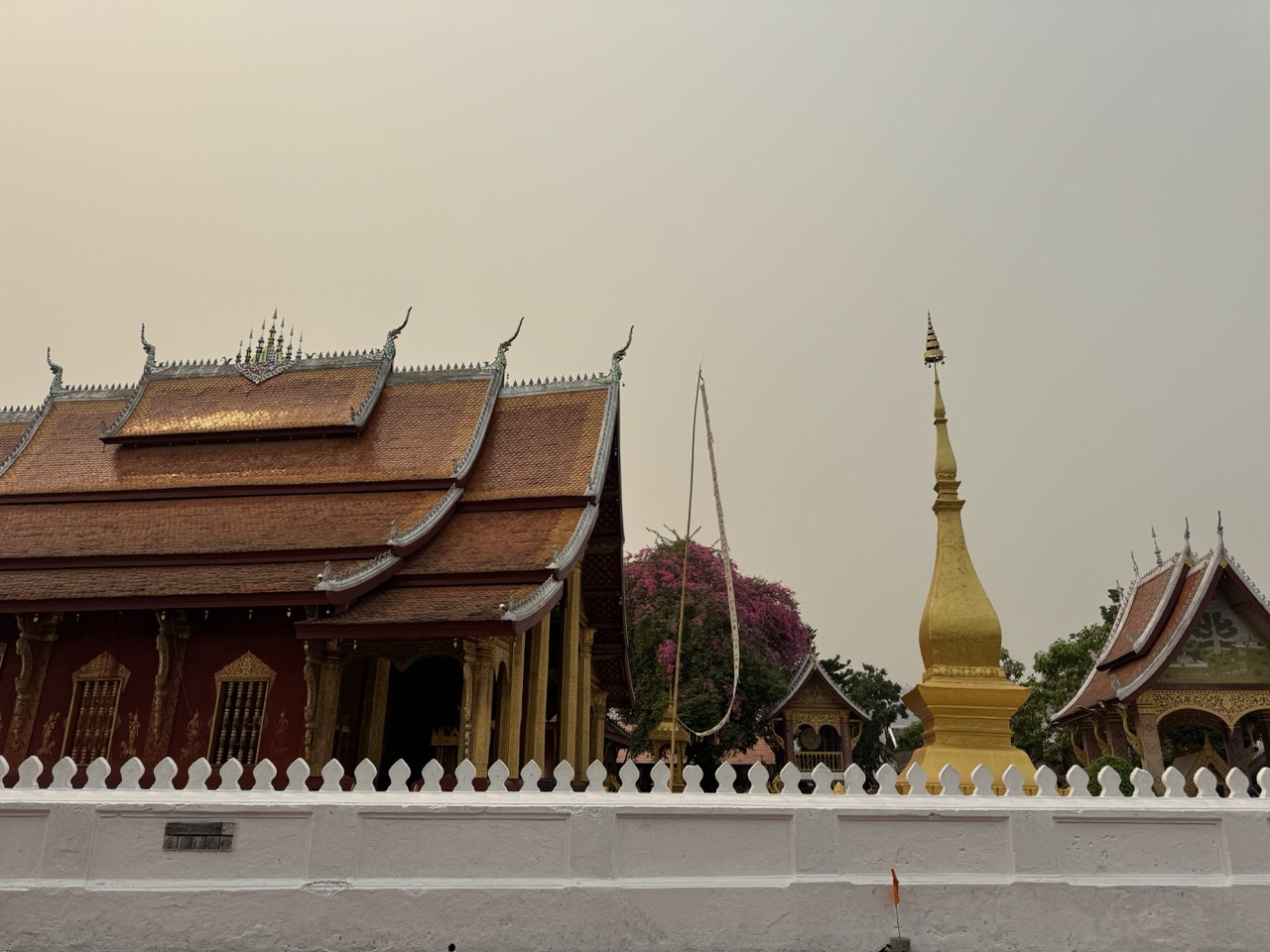
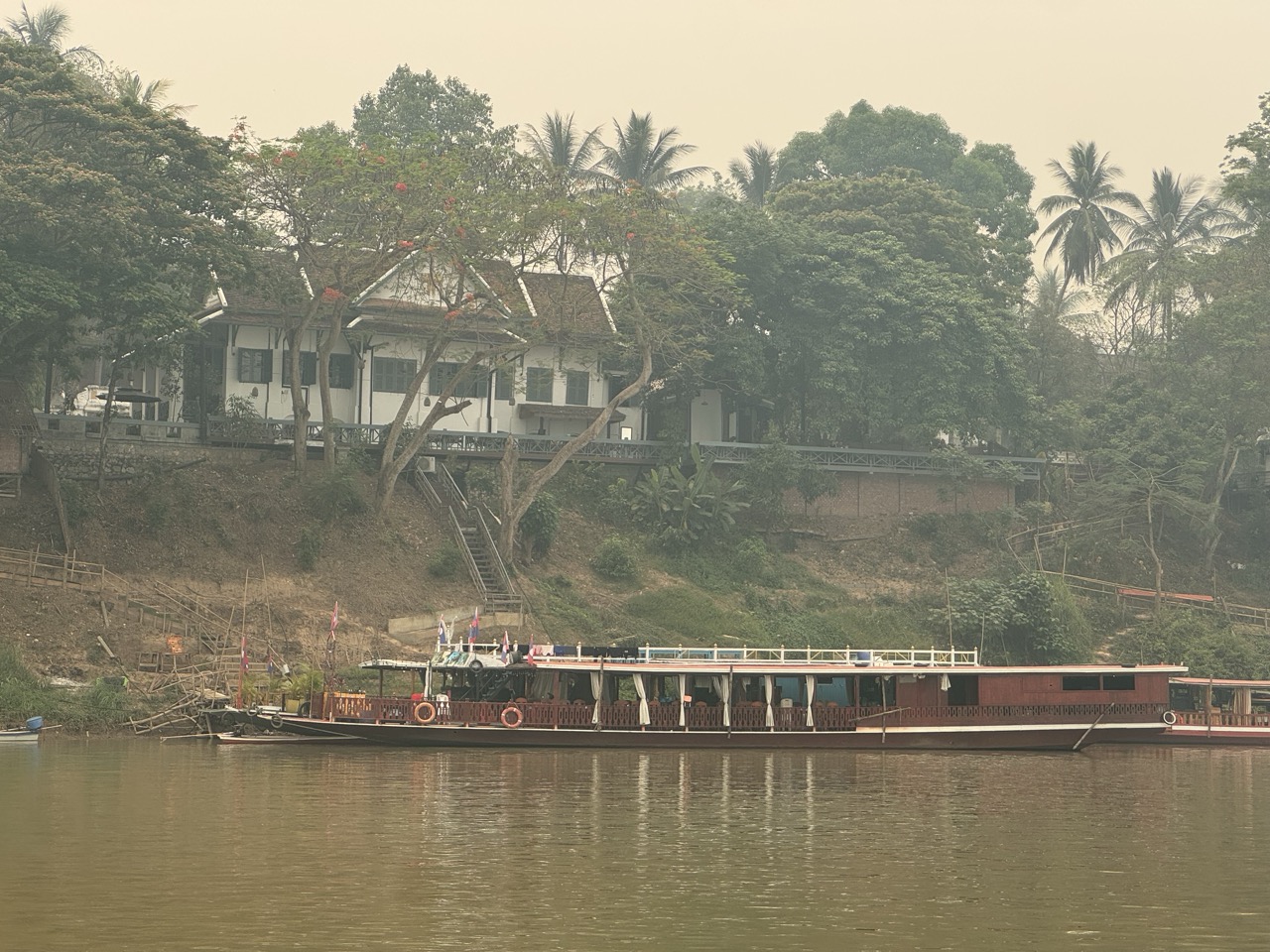
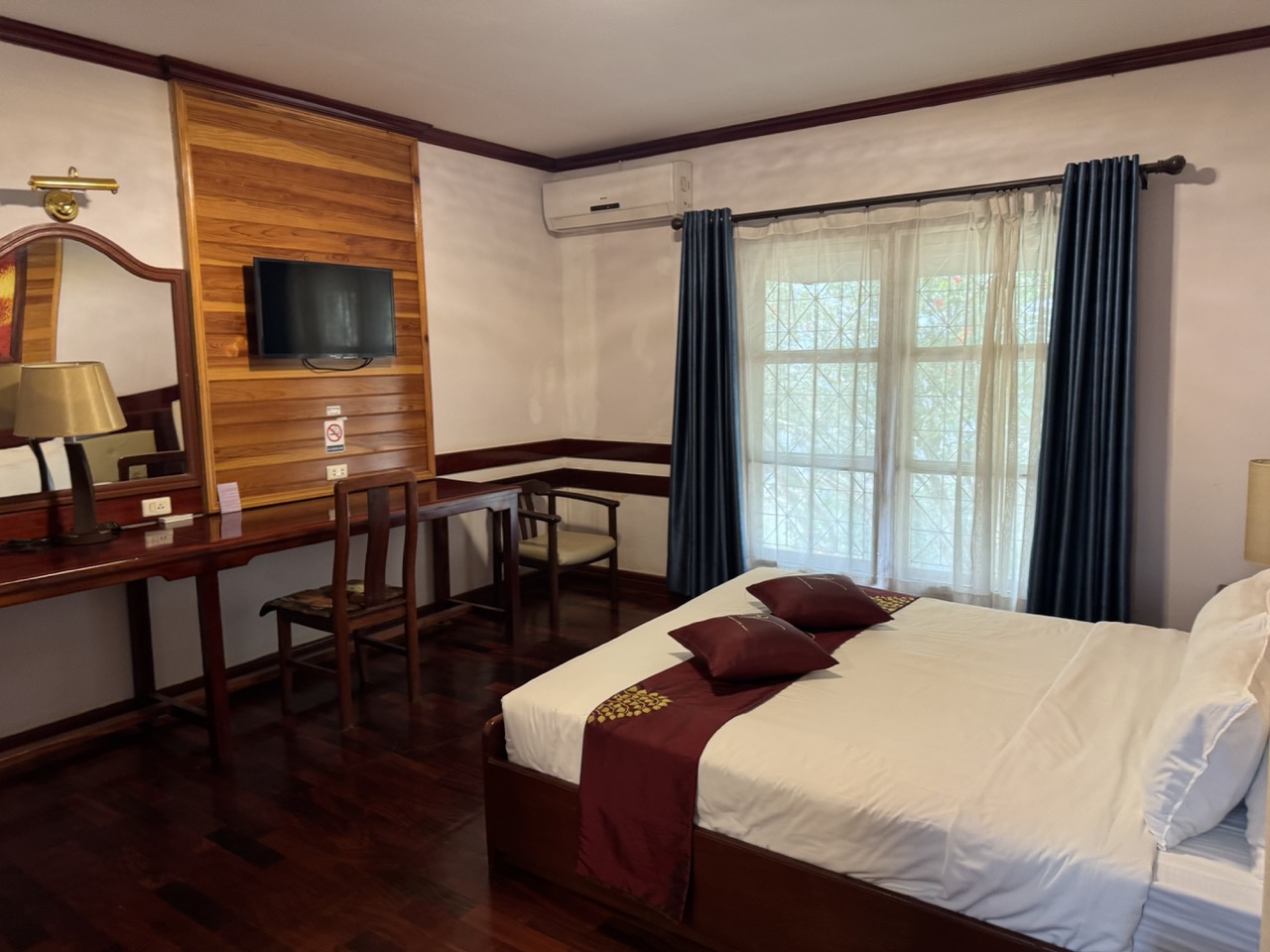
We pulled into Luang Prabang as the light went and Pi Mai was already in full swing. Streets were closed, every other person had a water gun or a bucket, and the lanterns were up in front of the wats. We got the bikes off the main streets, found Pha Nya Residence — a small heritage guesthouse on a quiet side street — and unloaded under the watchful eye of the night manager, who took one look at the bikes and asked if we'd been targeted by the water yet. Yes, several times.
Day 3 — Luang Prabang (forced rest day)
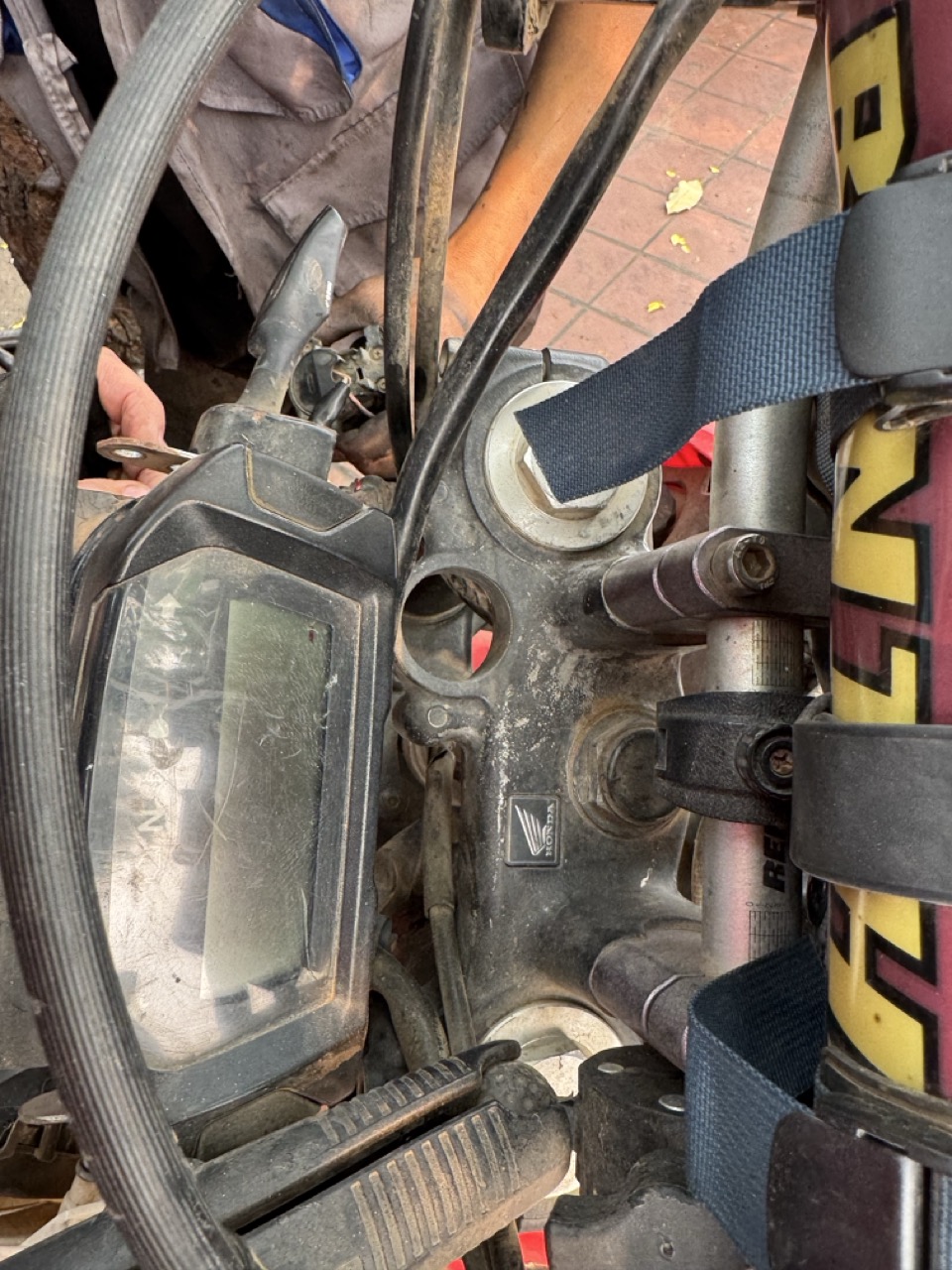
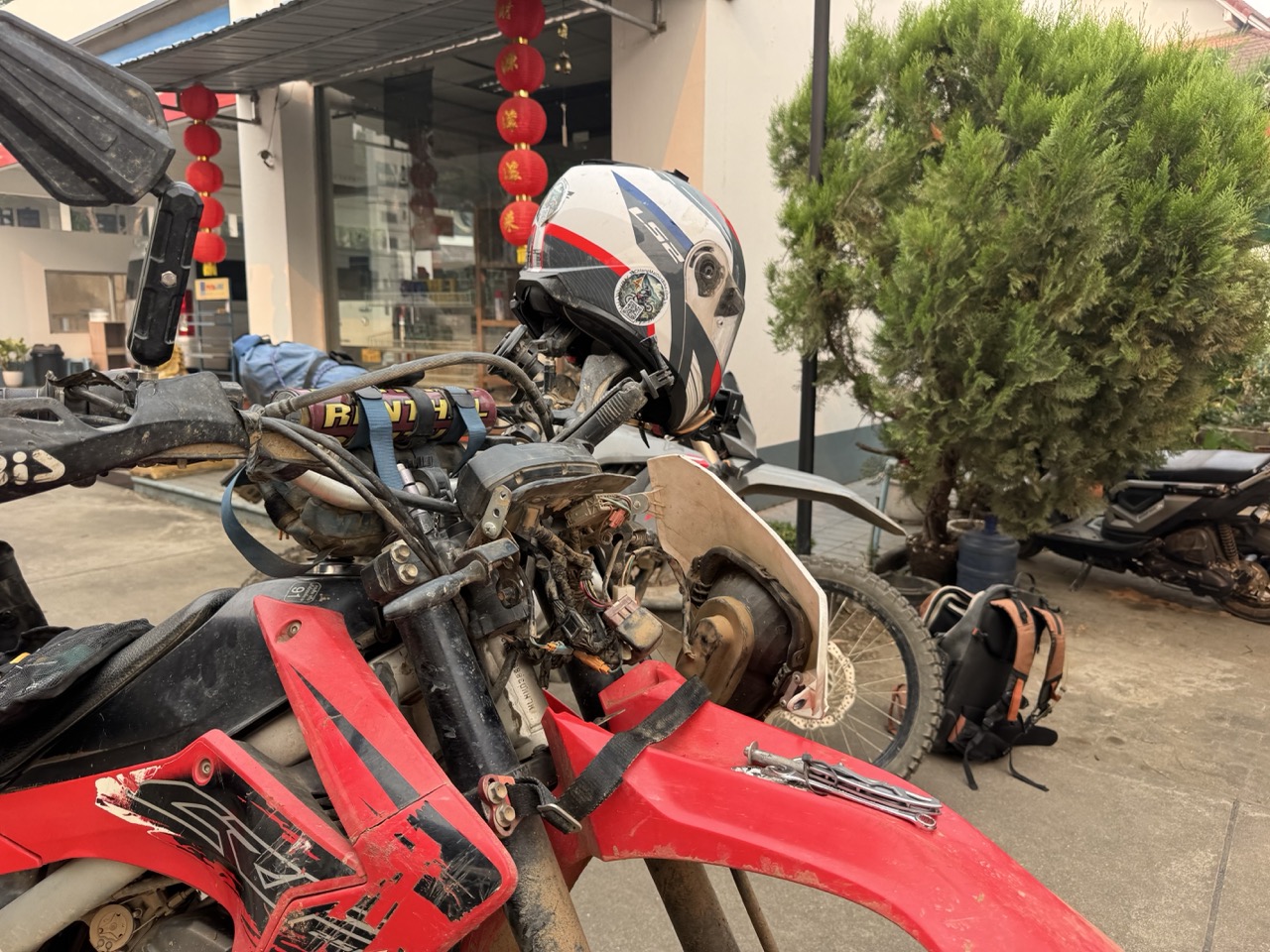
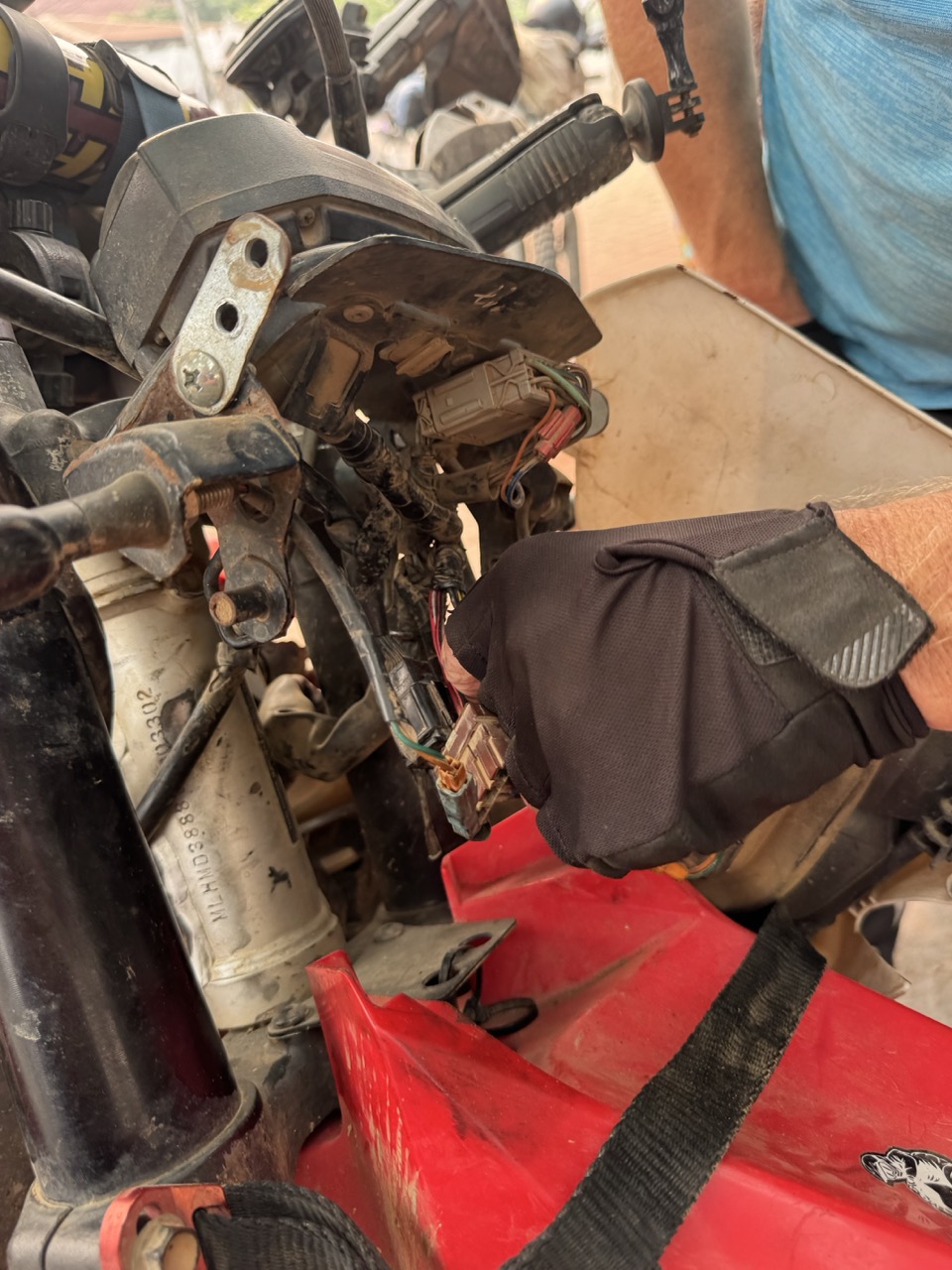
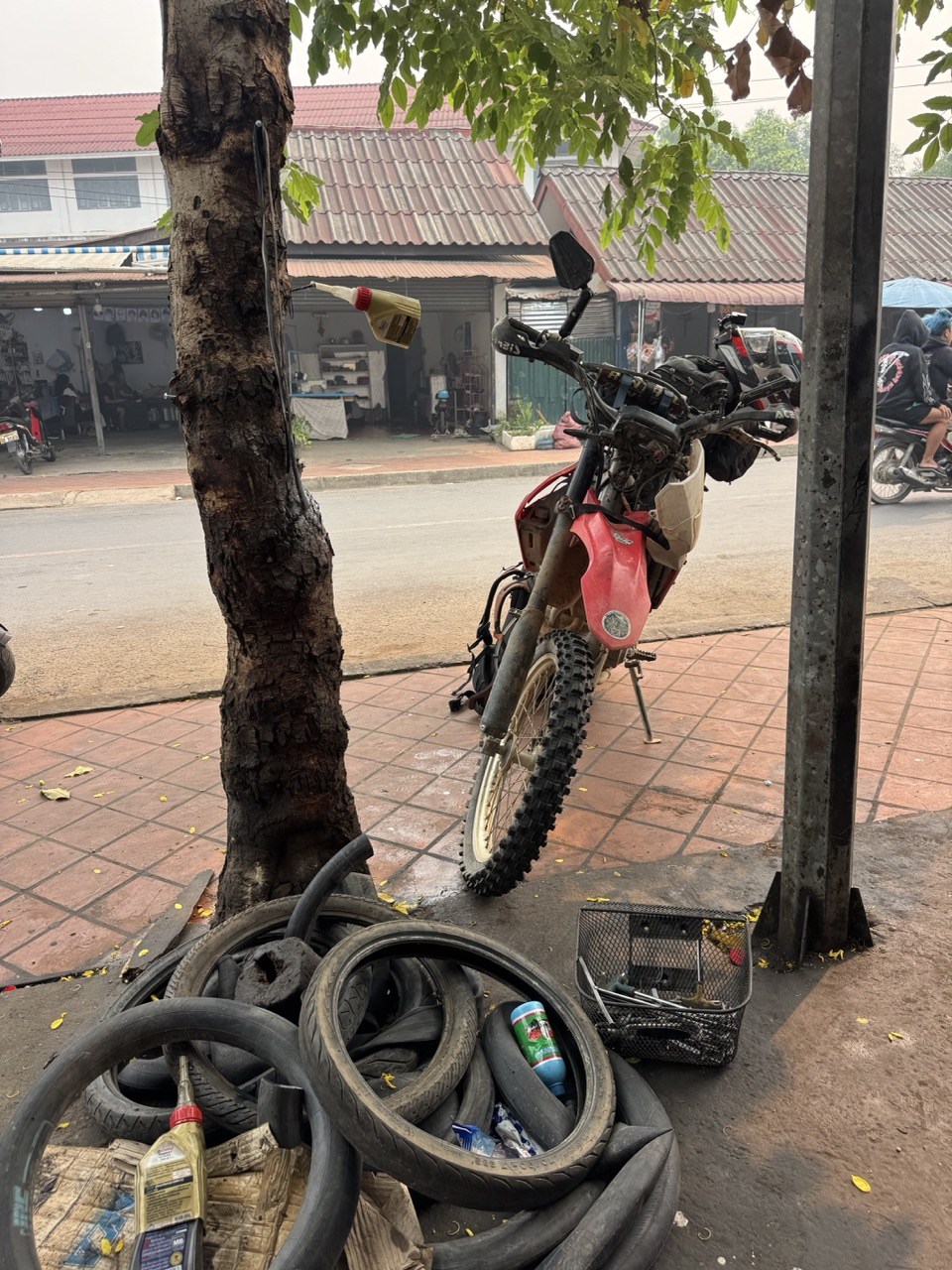
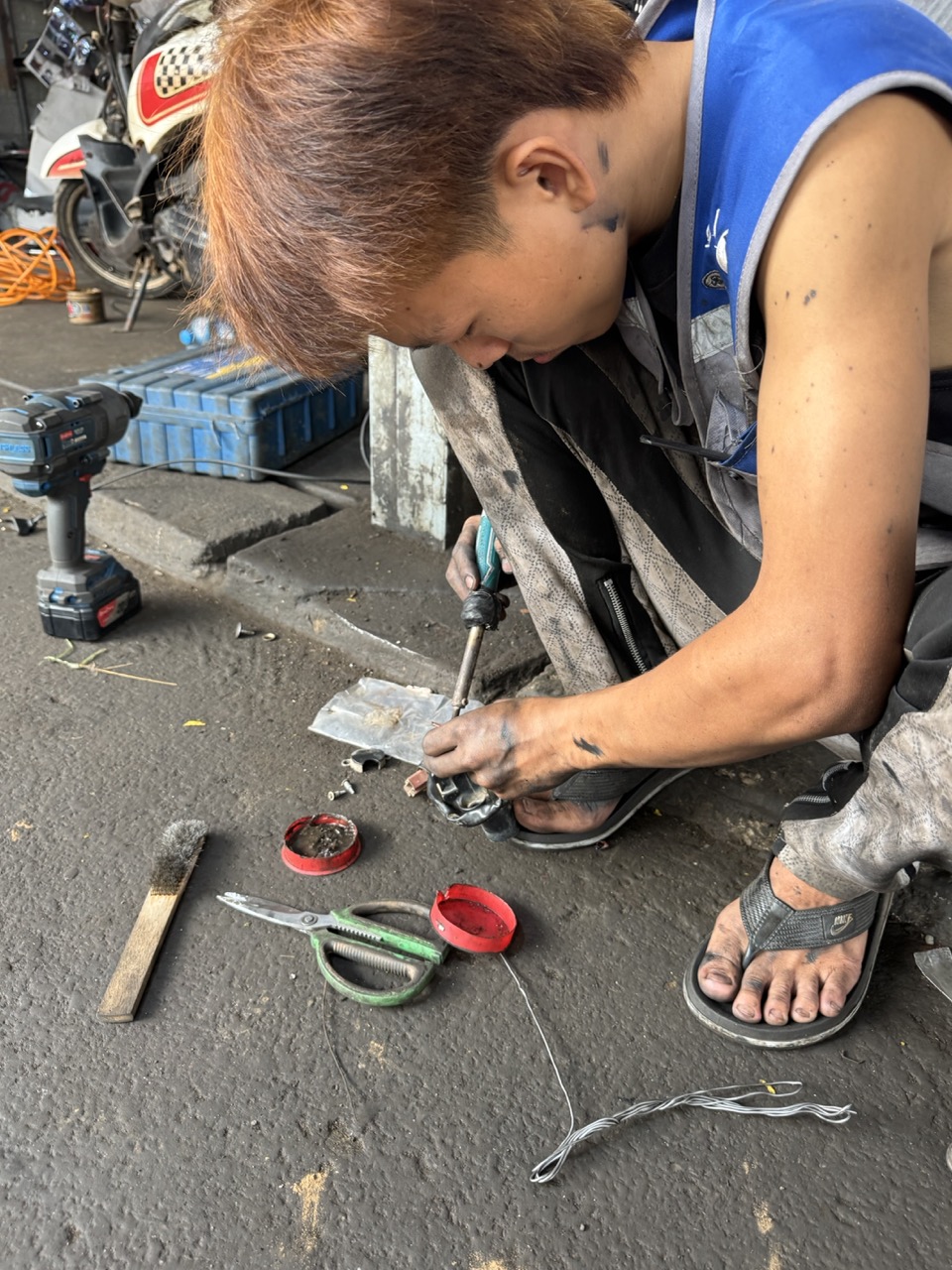
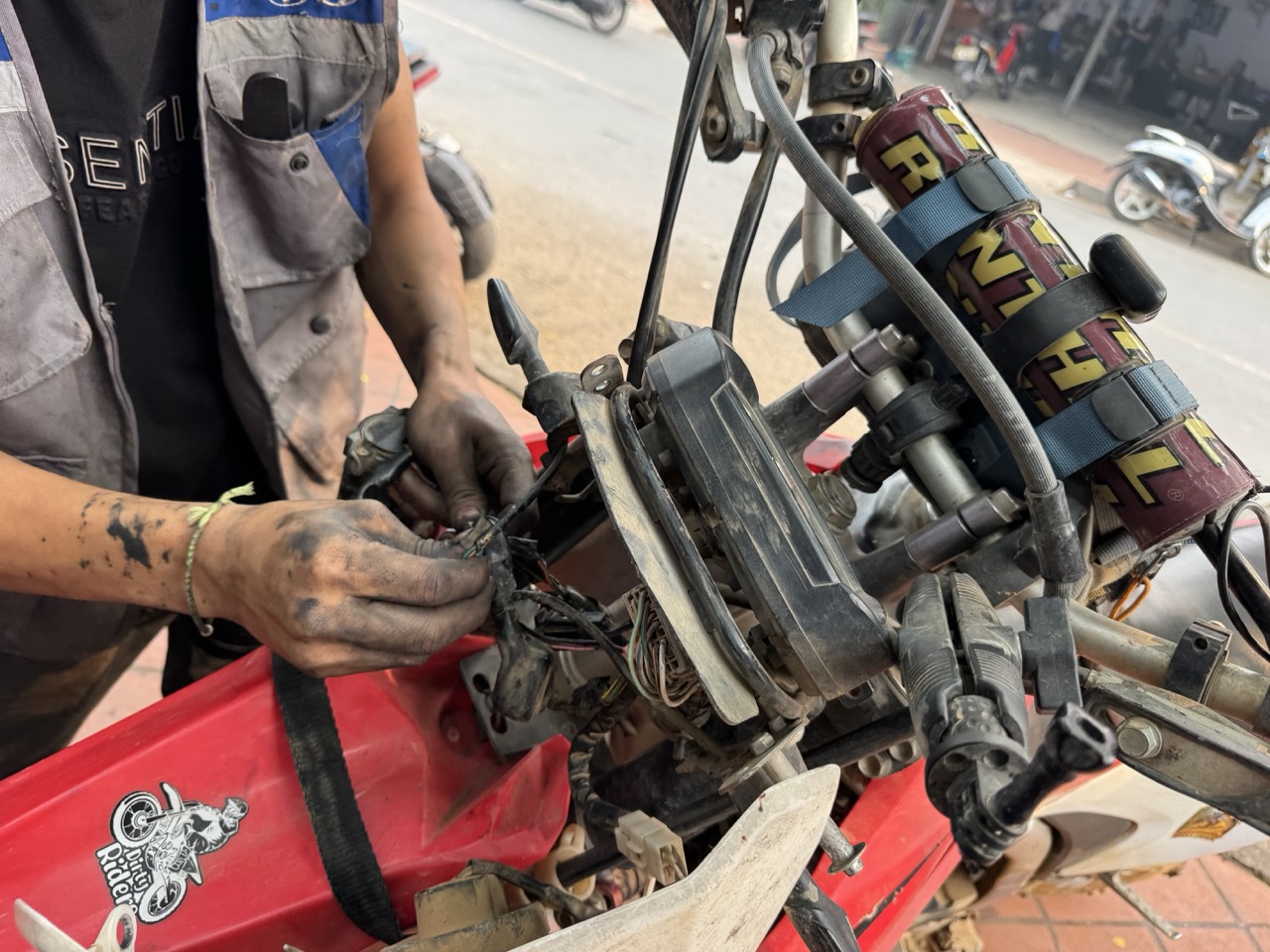
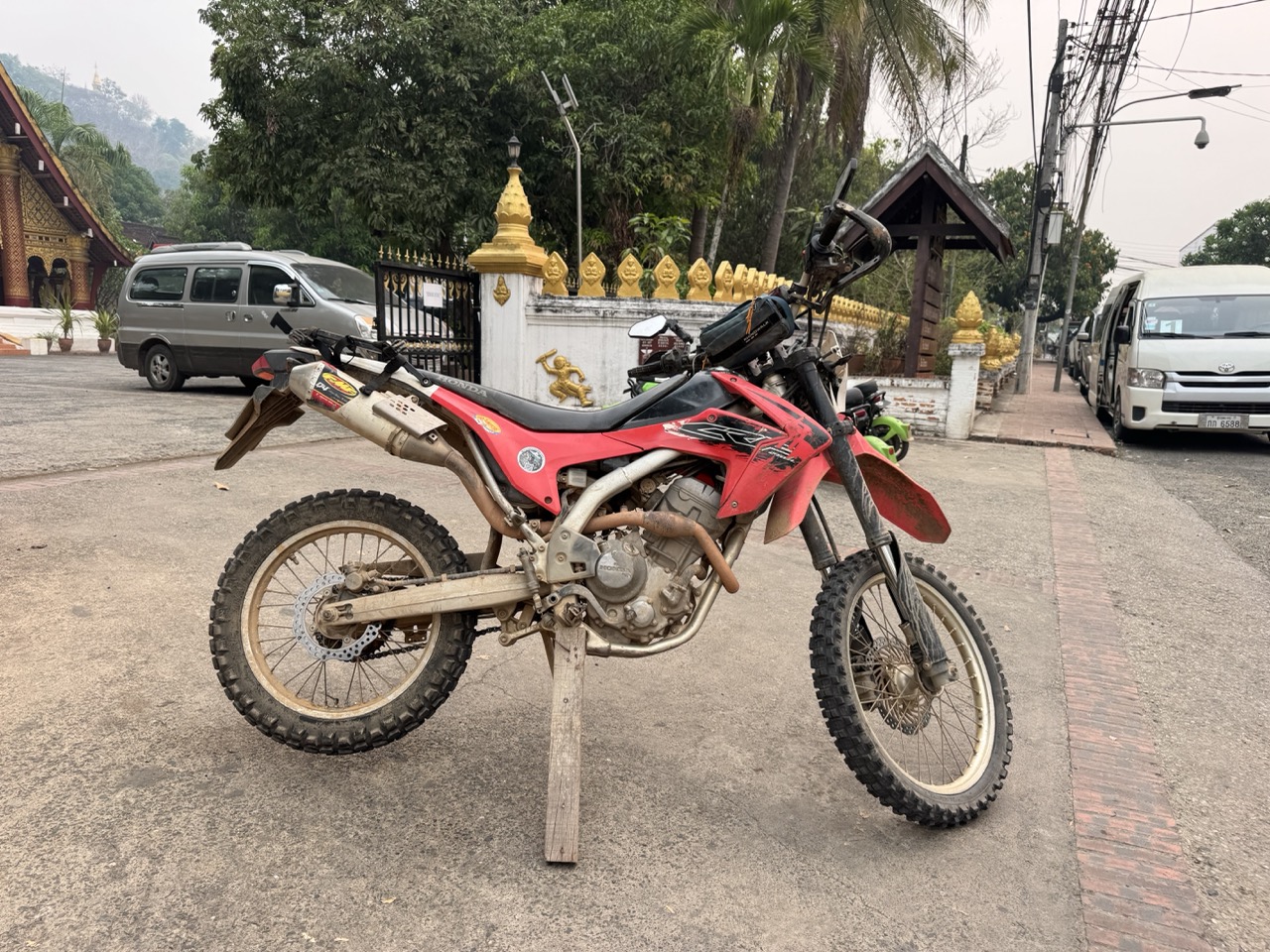
On the way into Luang Prabang the night before, one of the bikes had picked up some damage — a snapped headlight, cracked fairing, and a dashboard connector that had partly torn free. Cosmetic on the surface, but the dashboard issue meant the bike was throwing warning lights and we couldn't trust it on a long mountain day. The repair had to happen before we pushed east.
The timing turned out to be a gift. Pi Mai (Lao New Year) is a four-day festival that essentially shuts the city down anyway. Even if our bikes had been perfect, we wouldn't have wanted to ride through a Luang Prabang where every intersection had a foam party in the middle of it. So we found a mechanic, dropped the damaged bike off, and spent the day in Luang Prabang as participants rather than tourists.
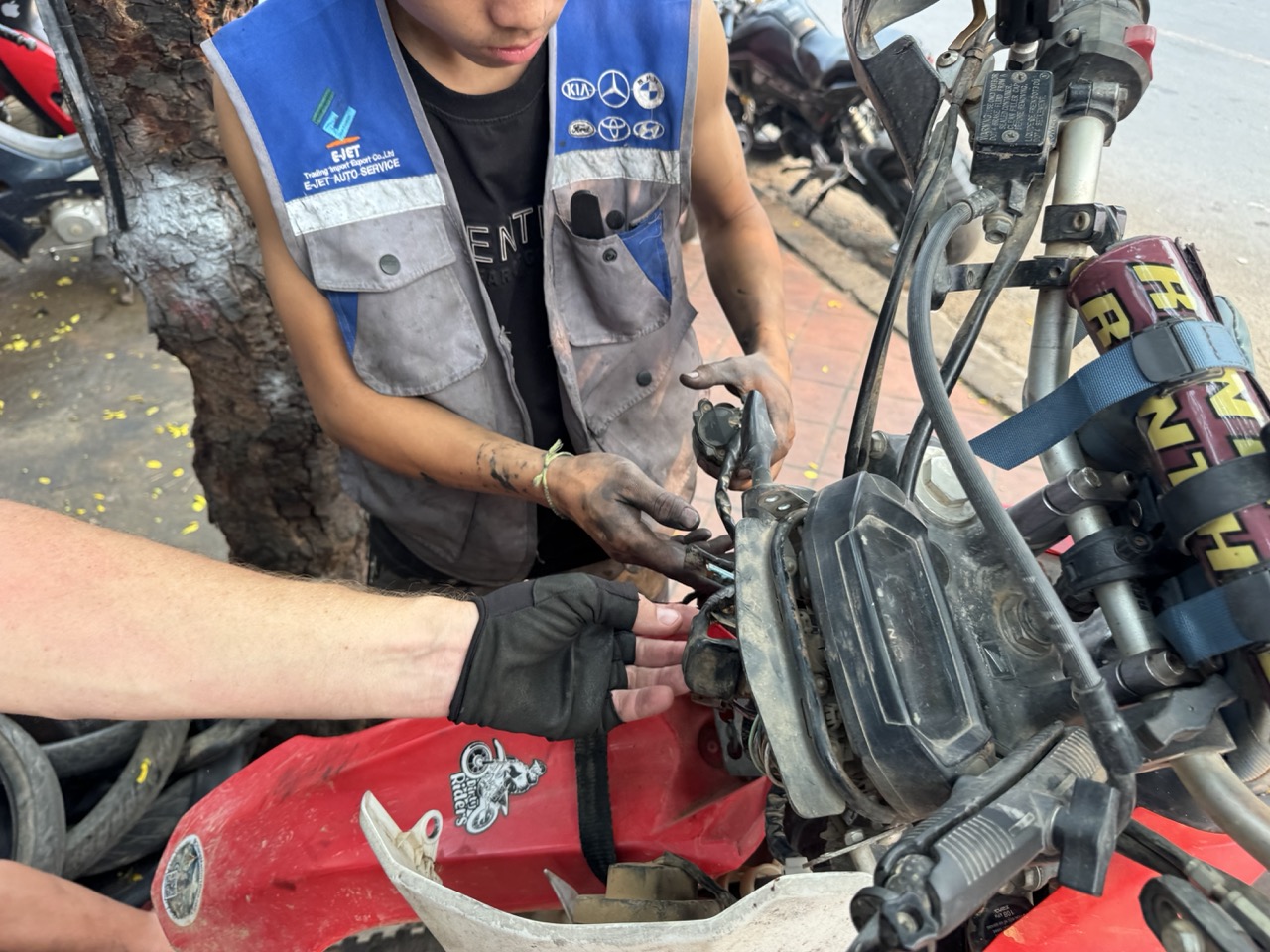
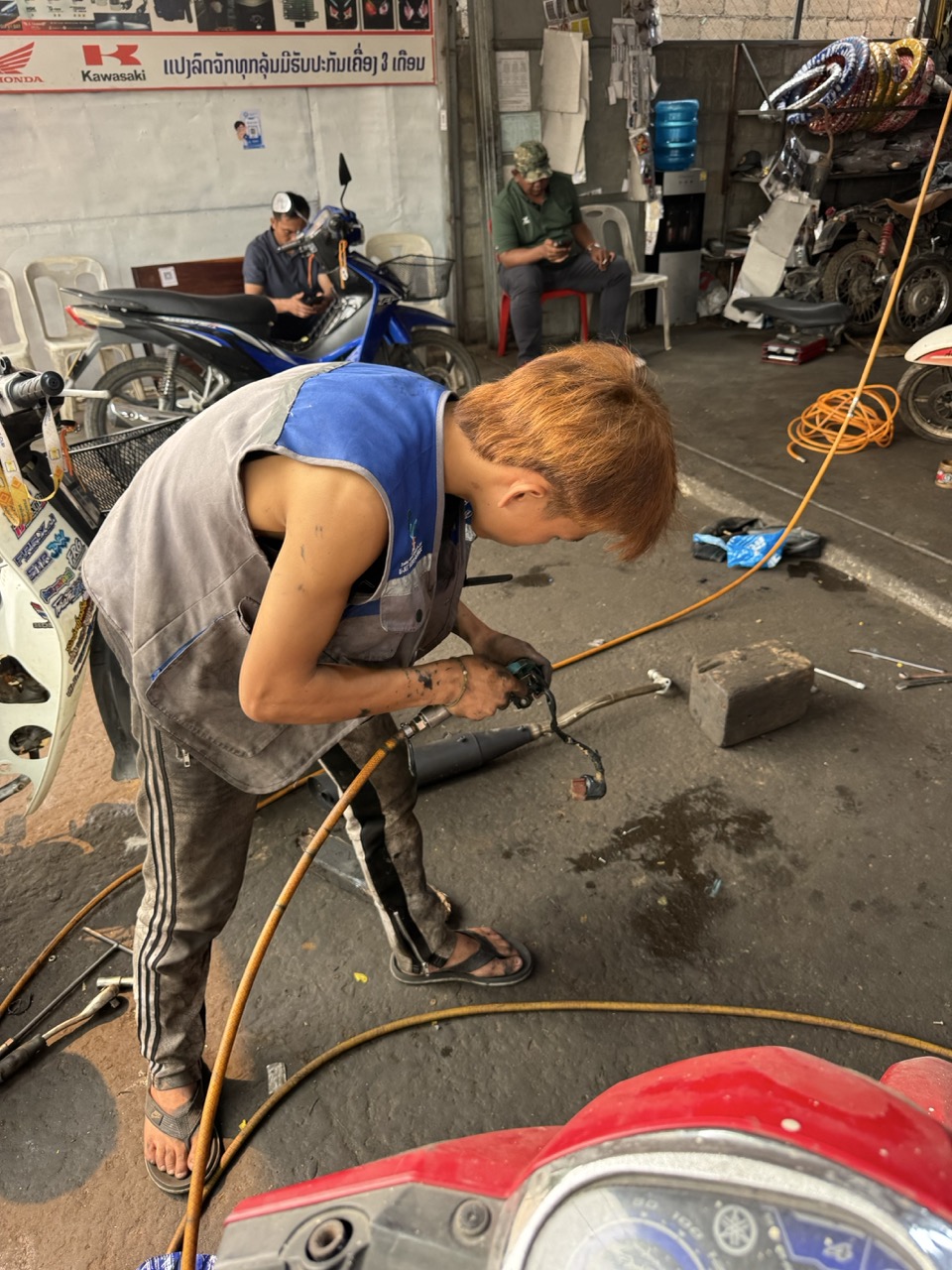
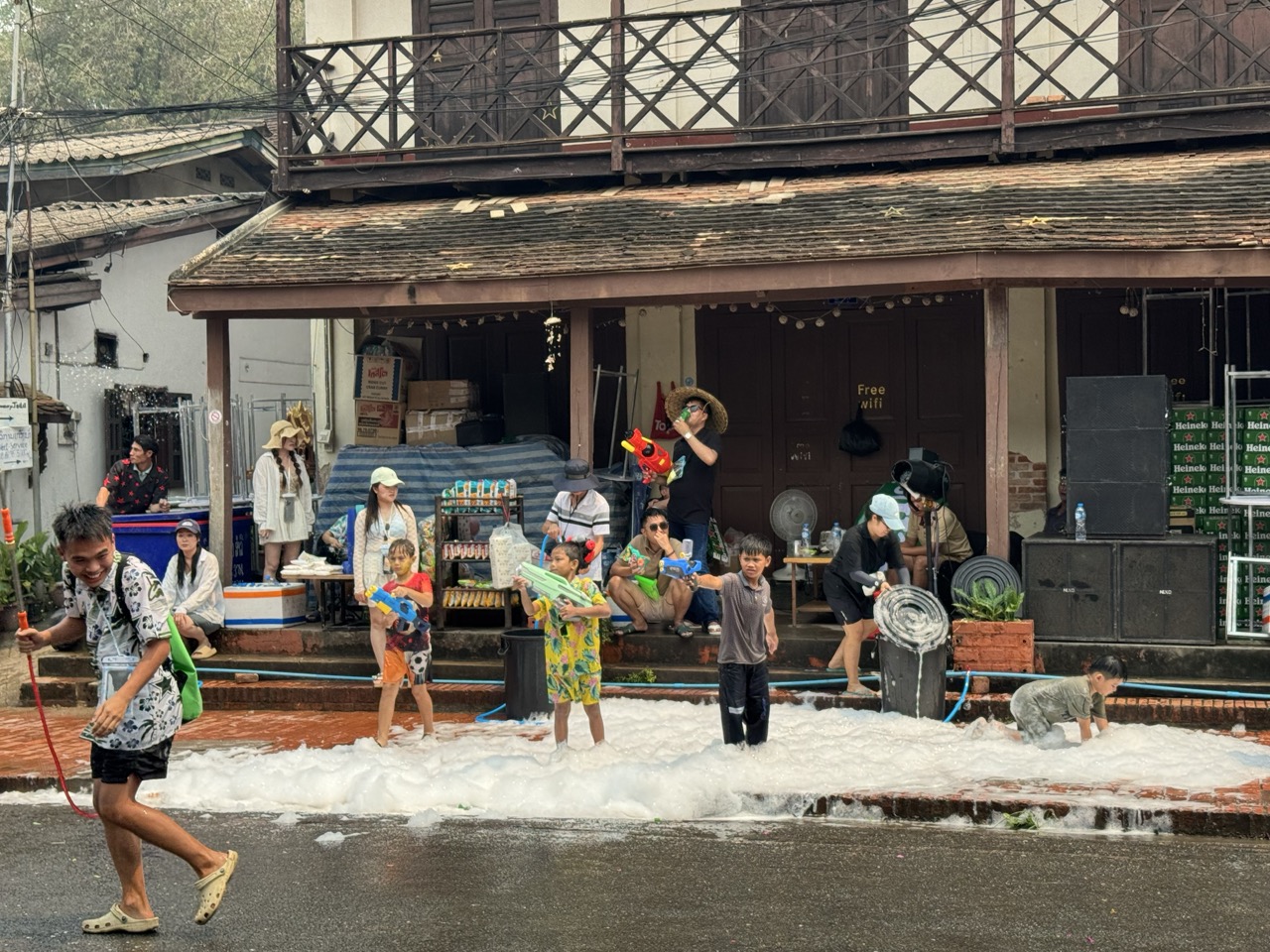
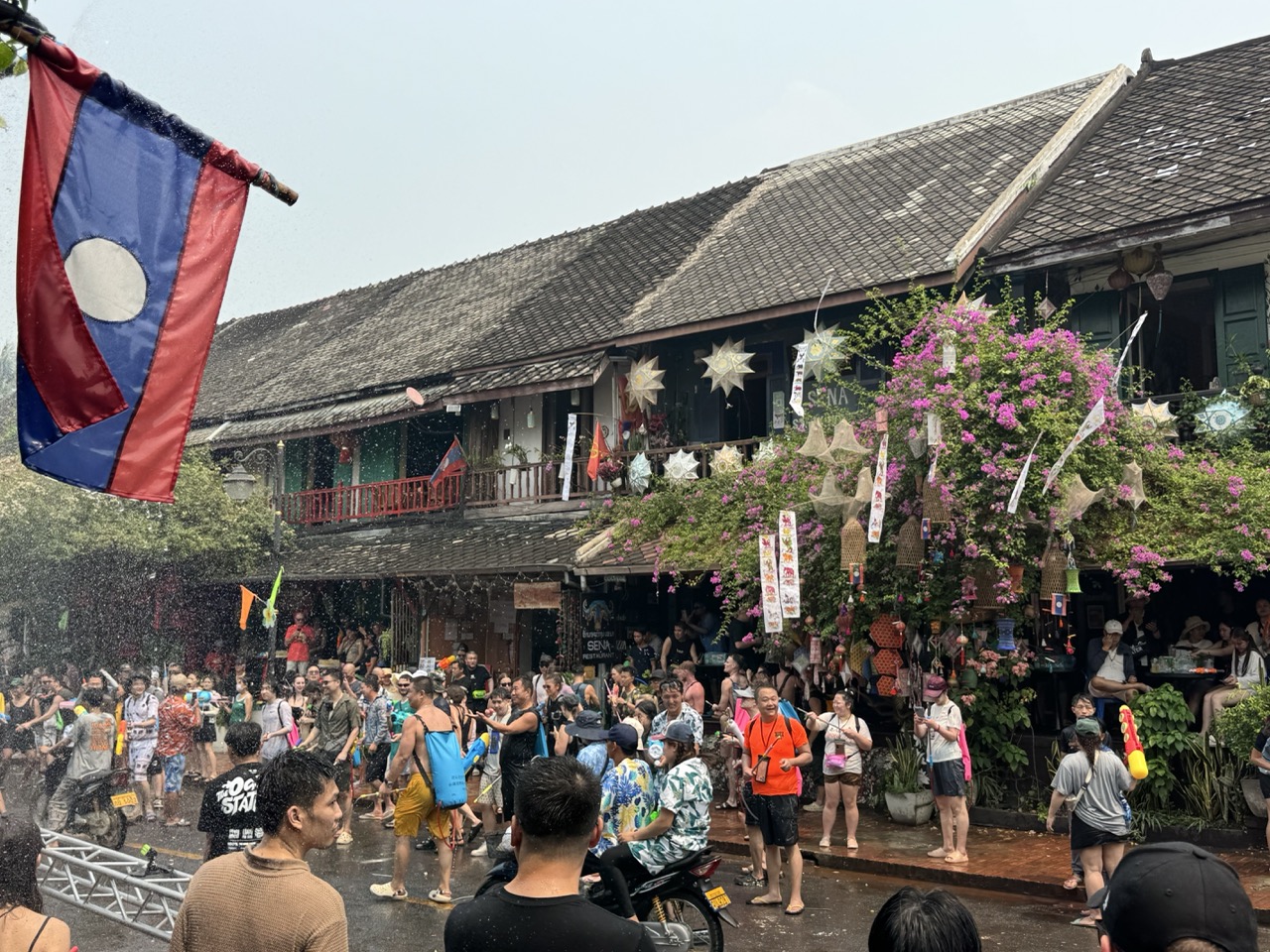
While the bike was in the shop, Luang Prabang was busy turning into a water fight. Pi Mai is the Lao version of Songkran — the entire city participates, three full days of street parties, foam, water guns, buckets and generally everyone soaking everyone else. The locals build small sand stupas in front of the wats with marigolds pressed into them, monks bless the new year, and by mid-afternoon every road in the centre is closed off. You walk through it because there is no through it.
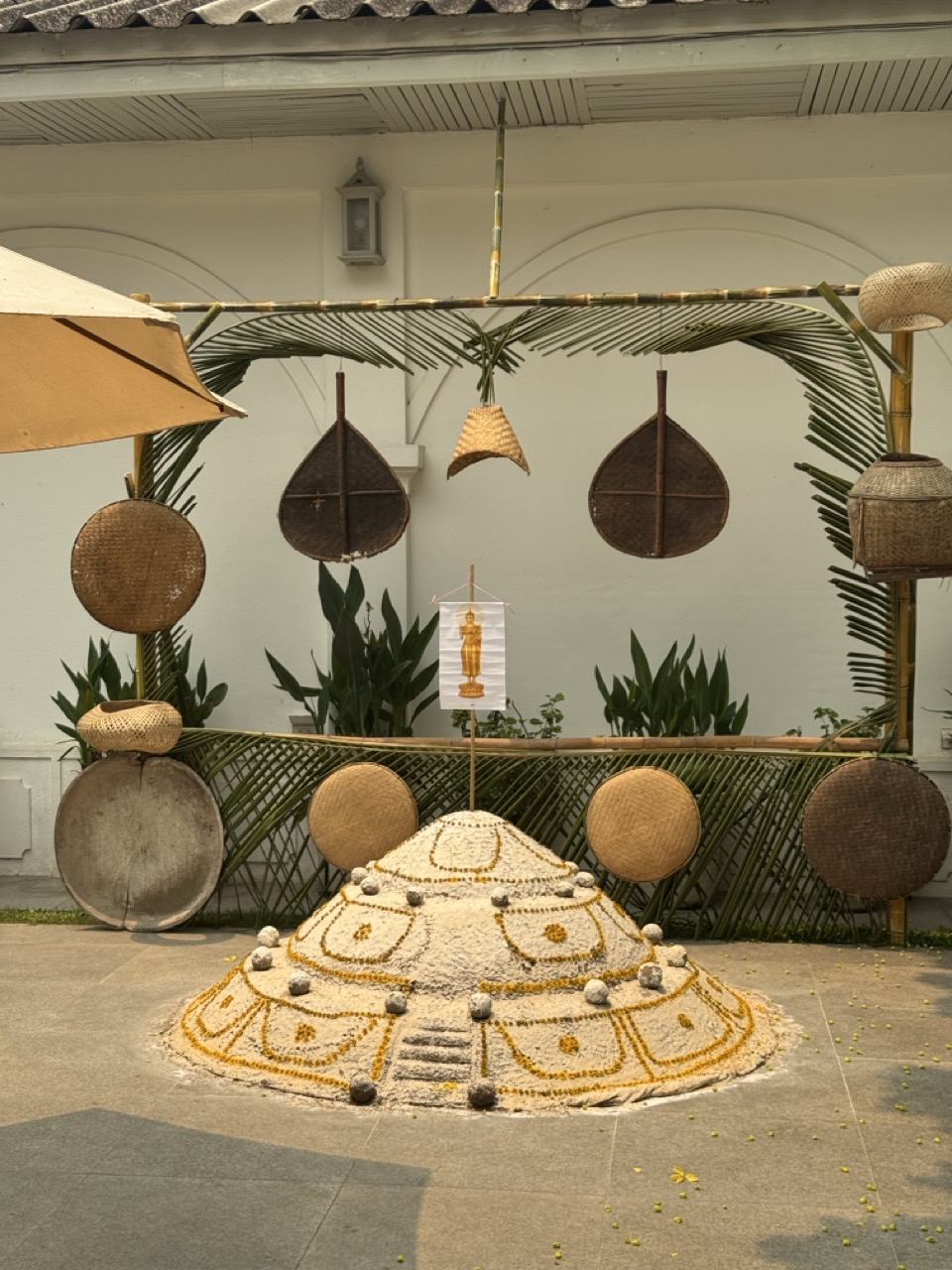
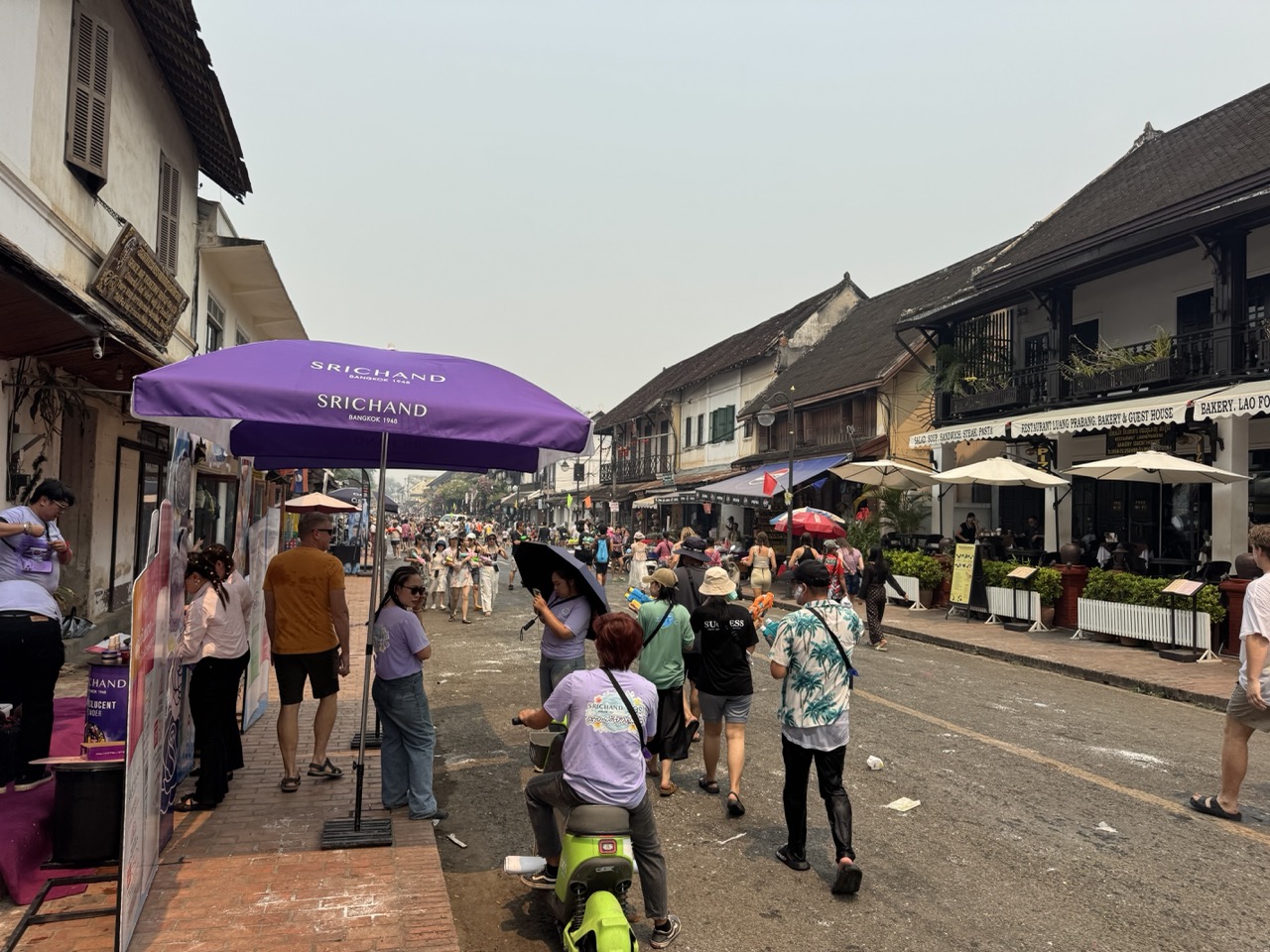
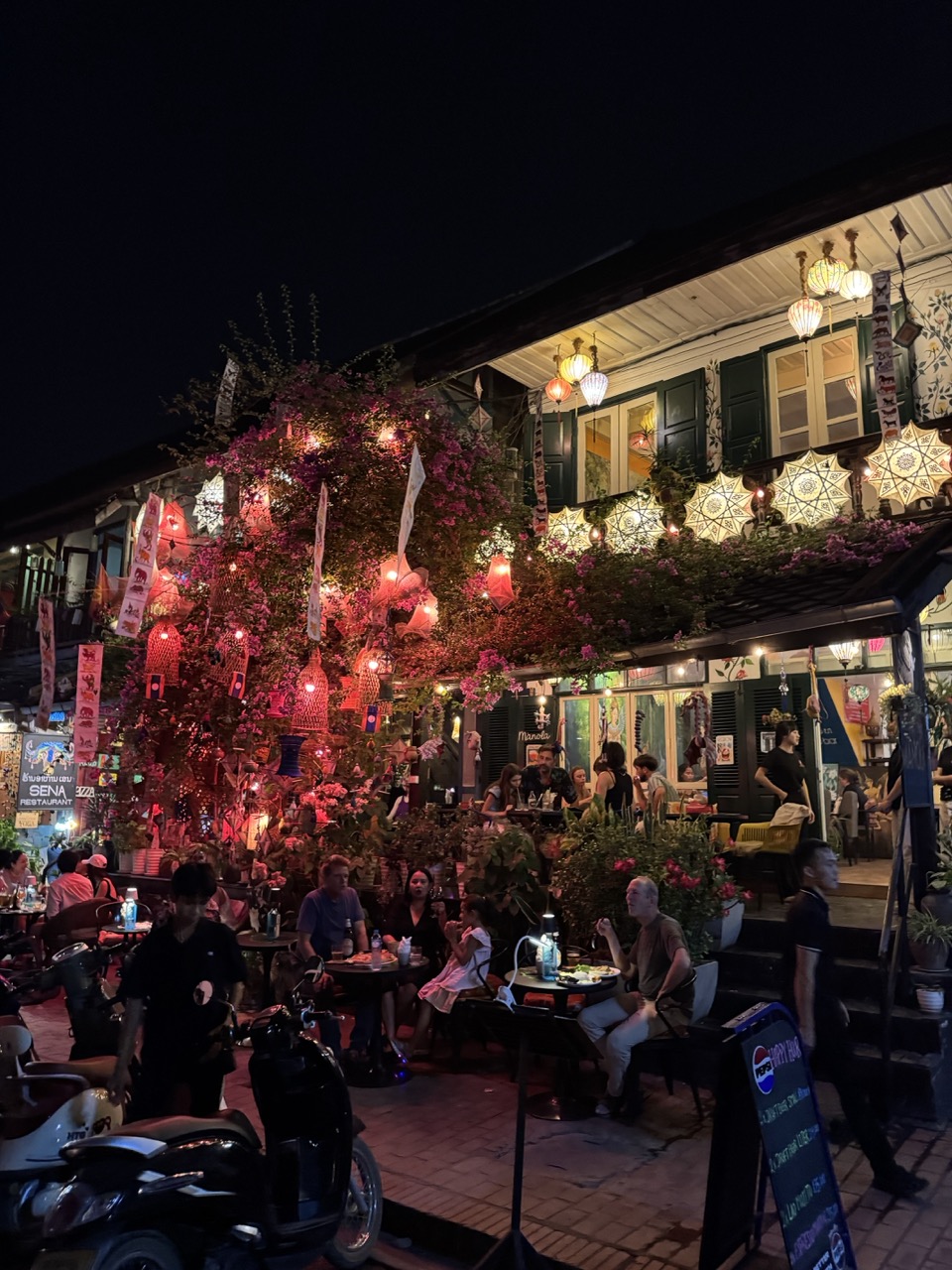
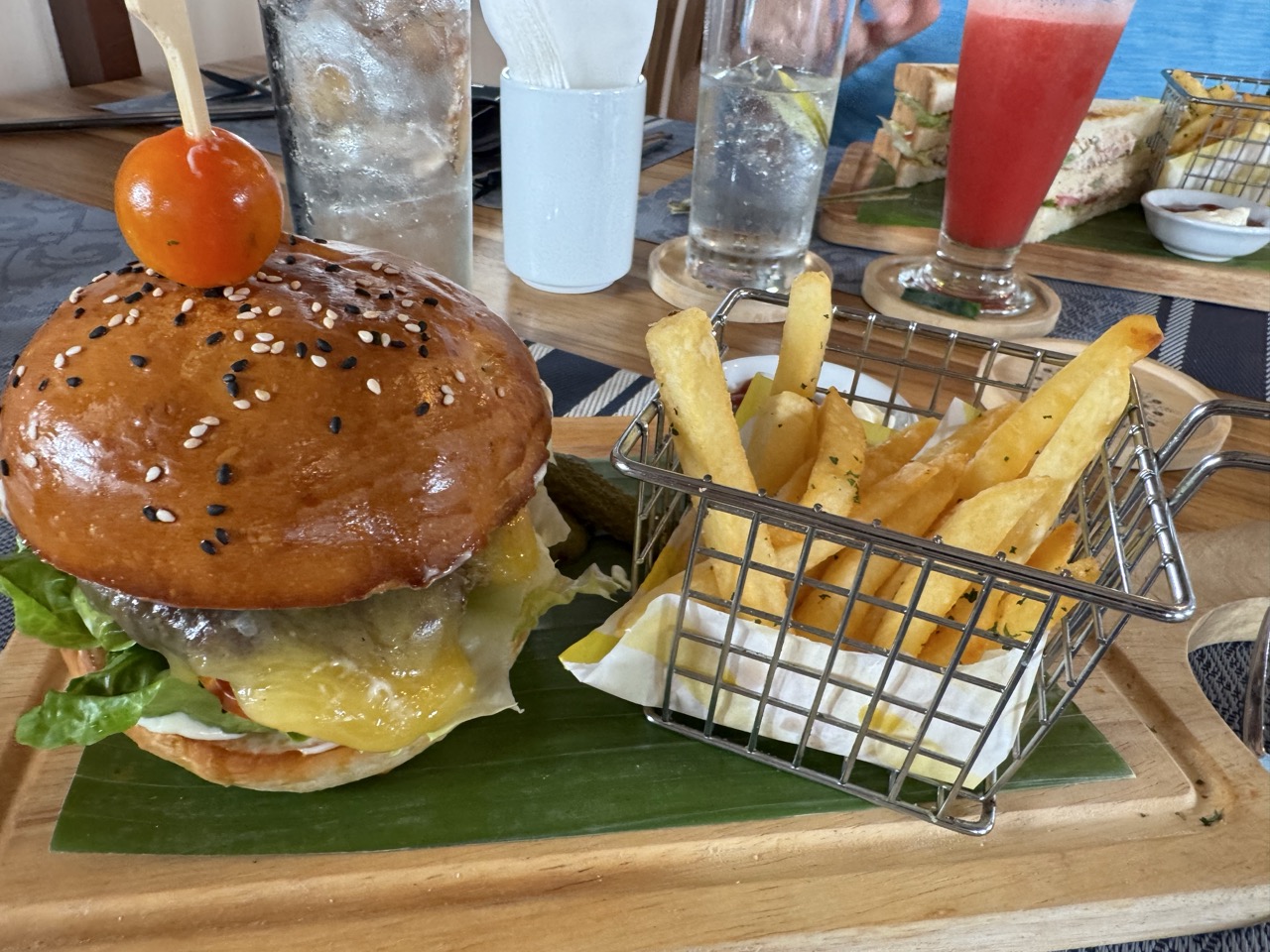
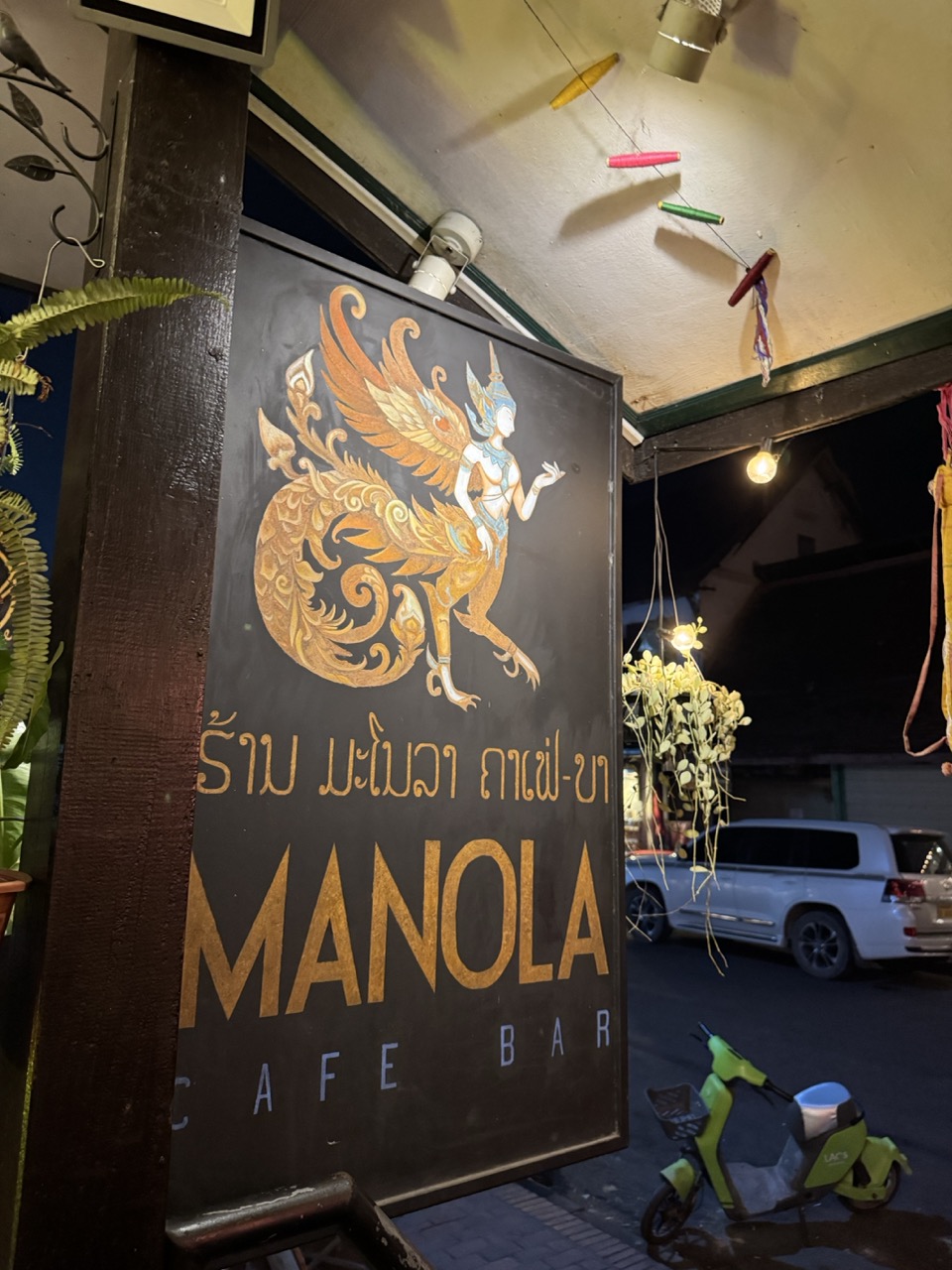
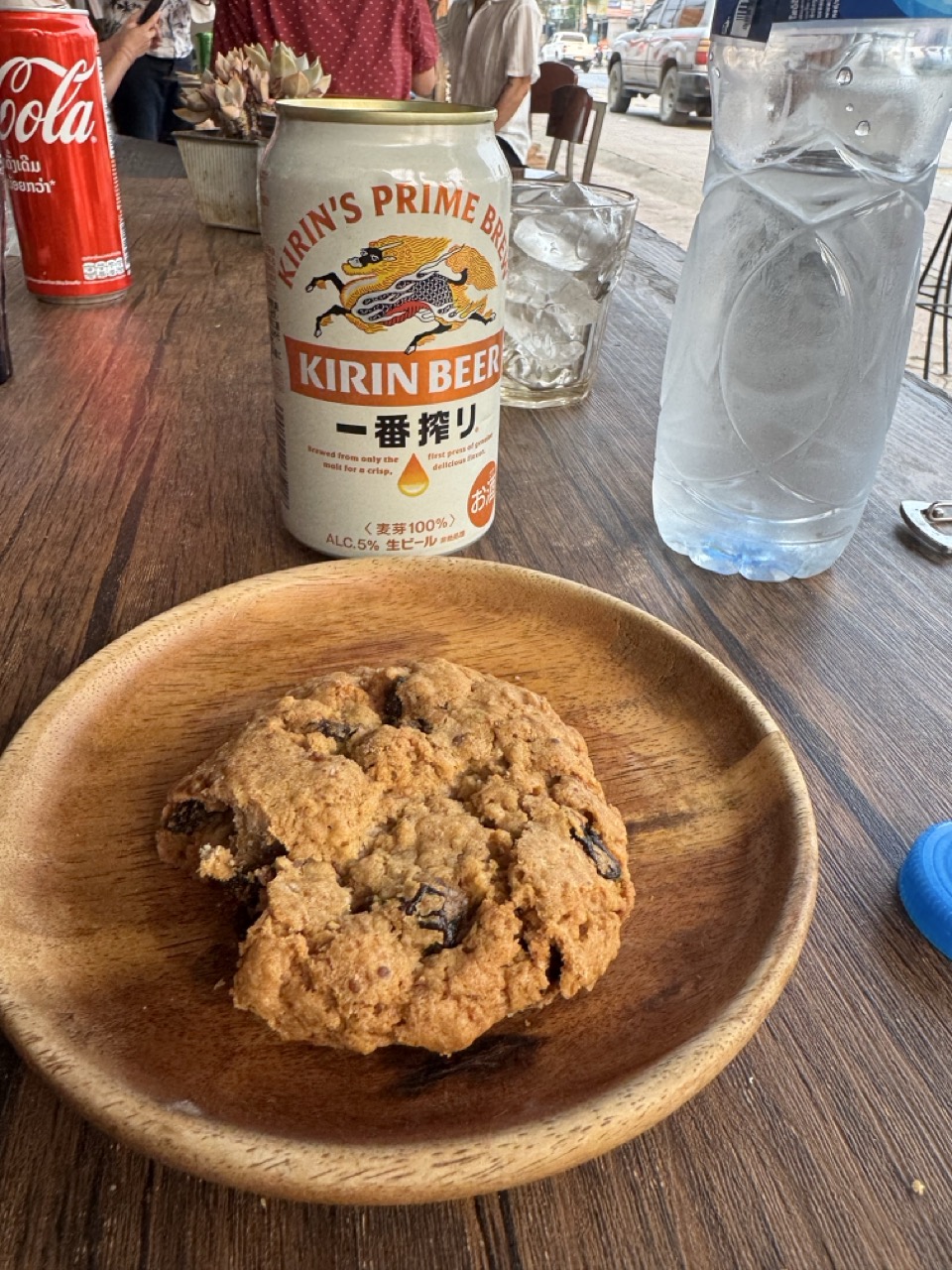
The food in Luang Prabang during Pi Mai was unexpectedly broad — most of the local Lao places were closed for the festival, so we ended up eating at the international spots that stayed open. Wood-fired Margherita pizza by the Mekong, burgers and fries, an exceptional little cafe-bar called Manola for an afternoon drink. Not authentic Lao day, but a great Luang Prabang day.

Day 4 — Luang Prabang to Phonsavan (~259 km)
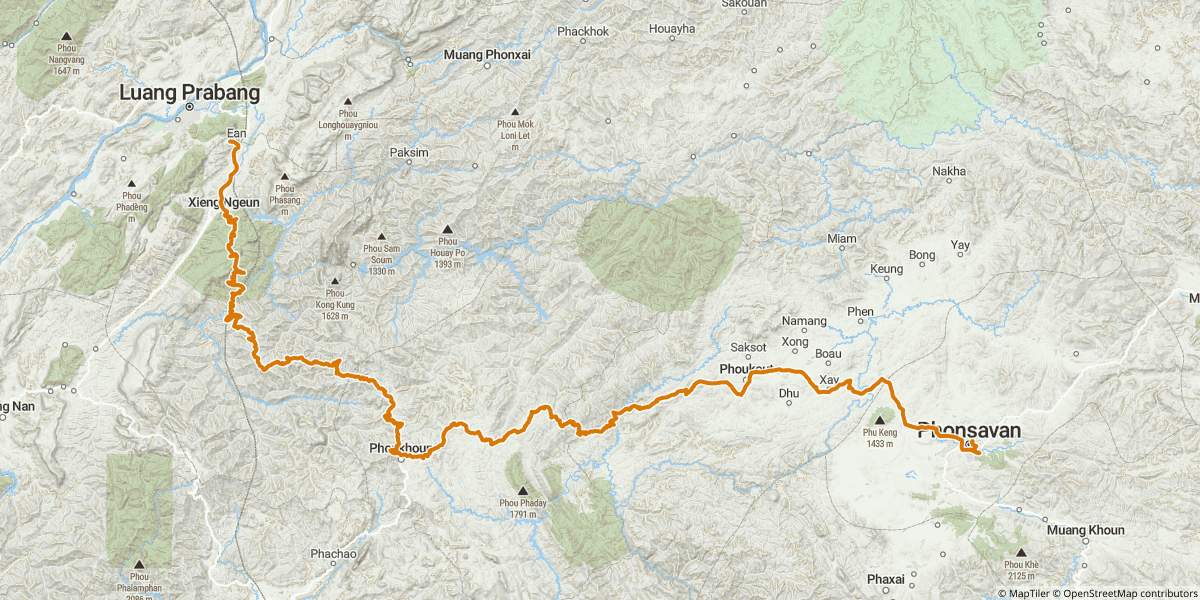
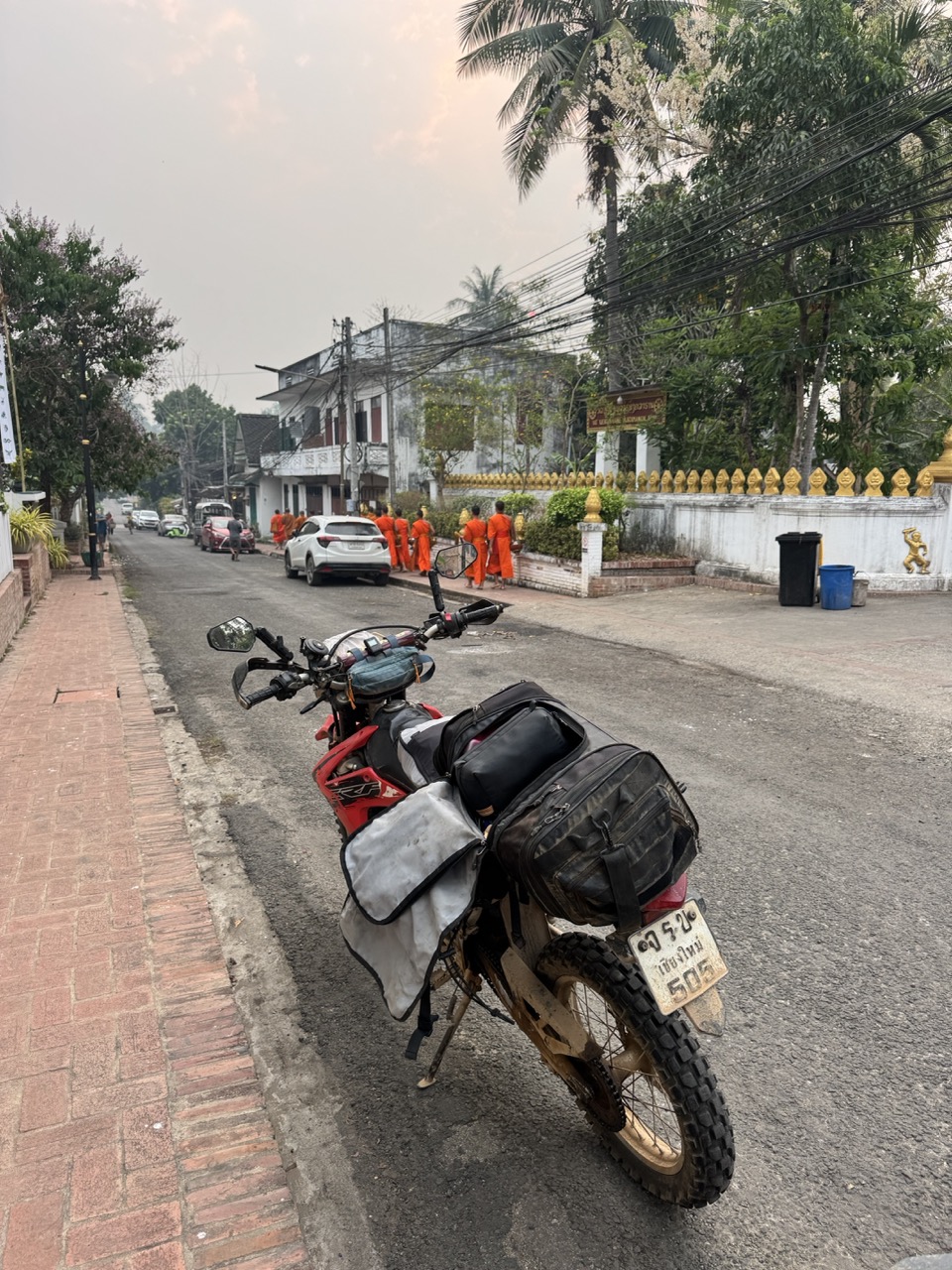
The road from Luang Prabang to Phonsavan (Route 7) is genuinely one of the great mountain rides in Southeast Asia. It climbs out of the Mekong valley, runs along ridge after ridge for hours, and finally drops onto the high plateau around Xieng Khouang where the Plain of Jars sits. Almost all sealed, but the kind of sealed where the surface is rough enough that you're still concentrating, and the corners come fast.
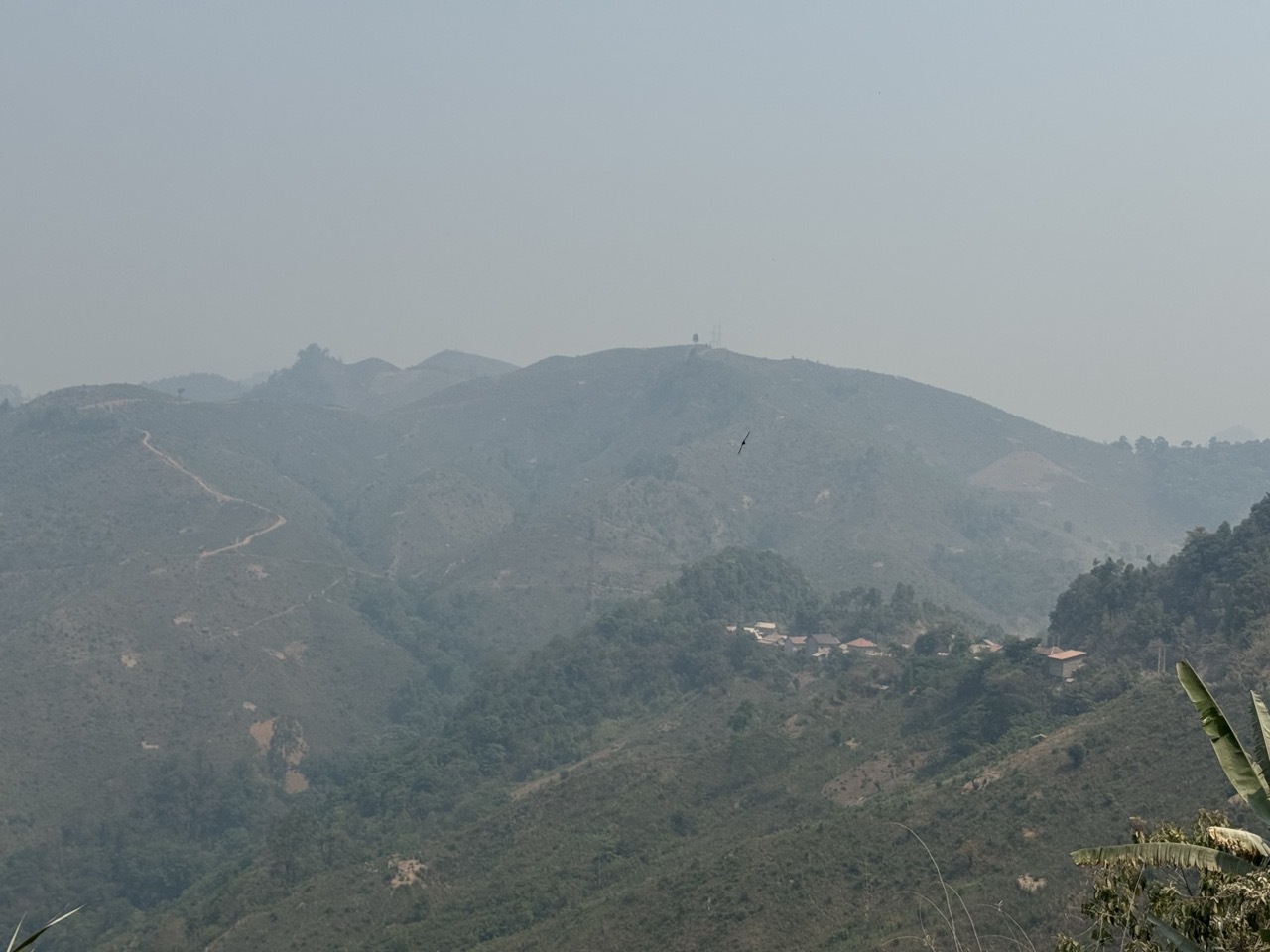
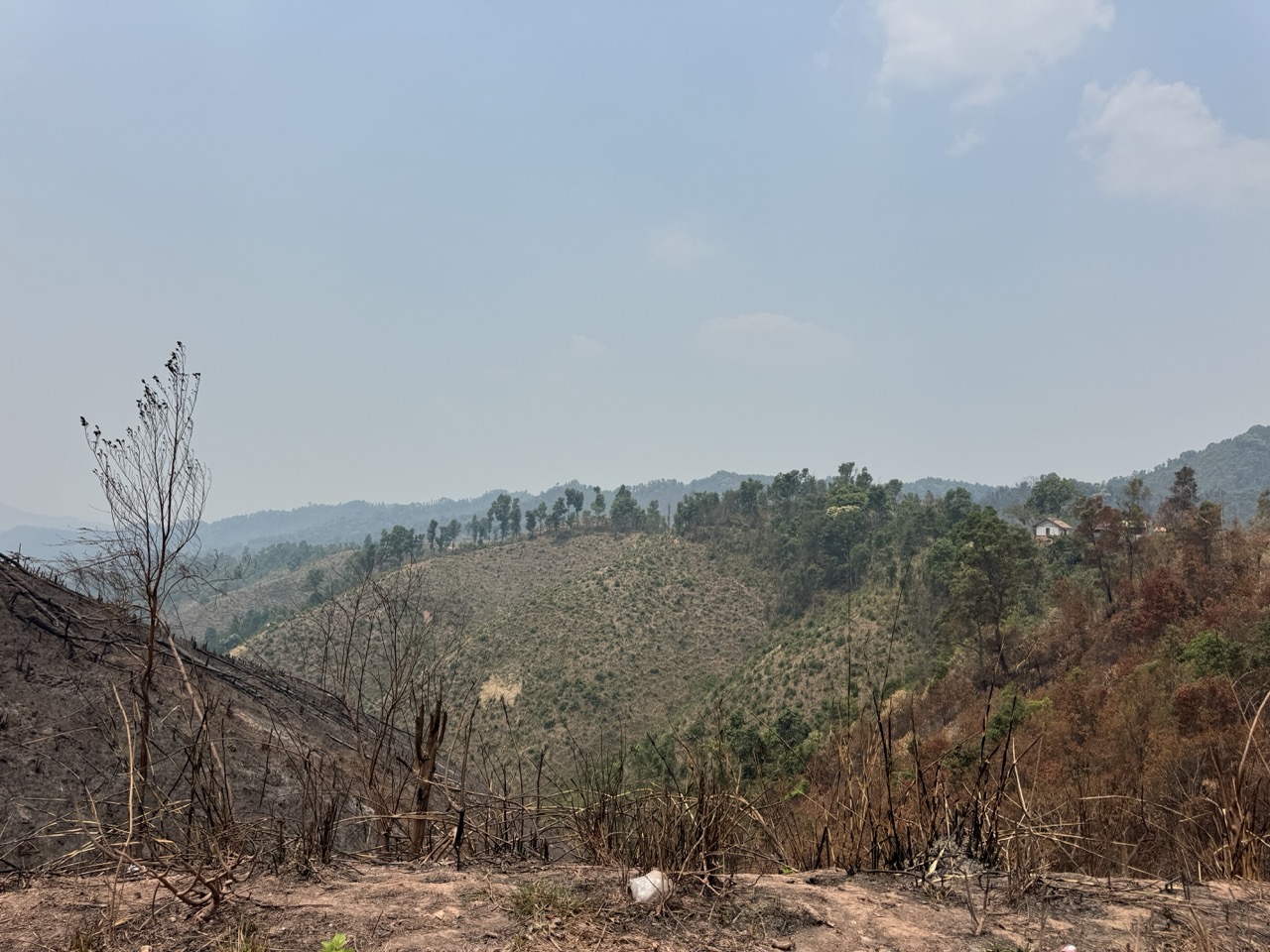
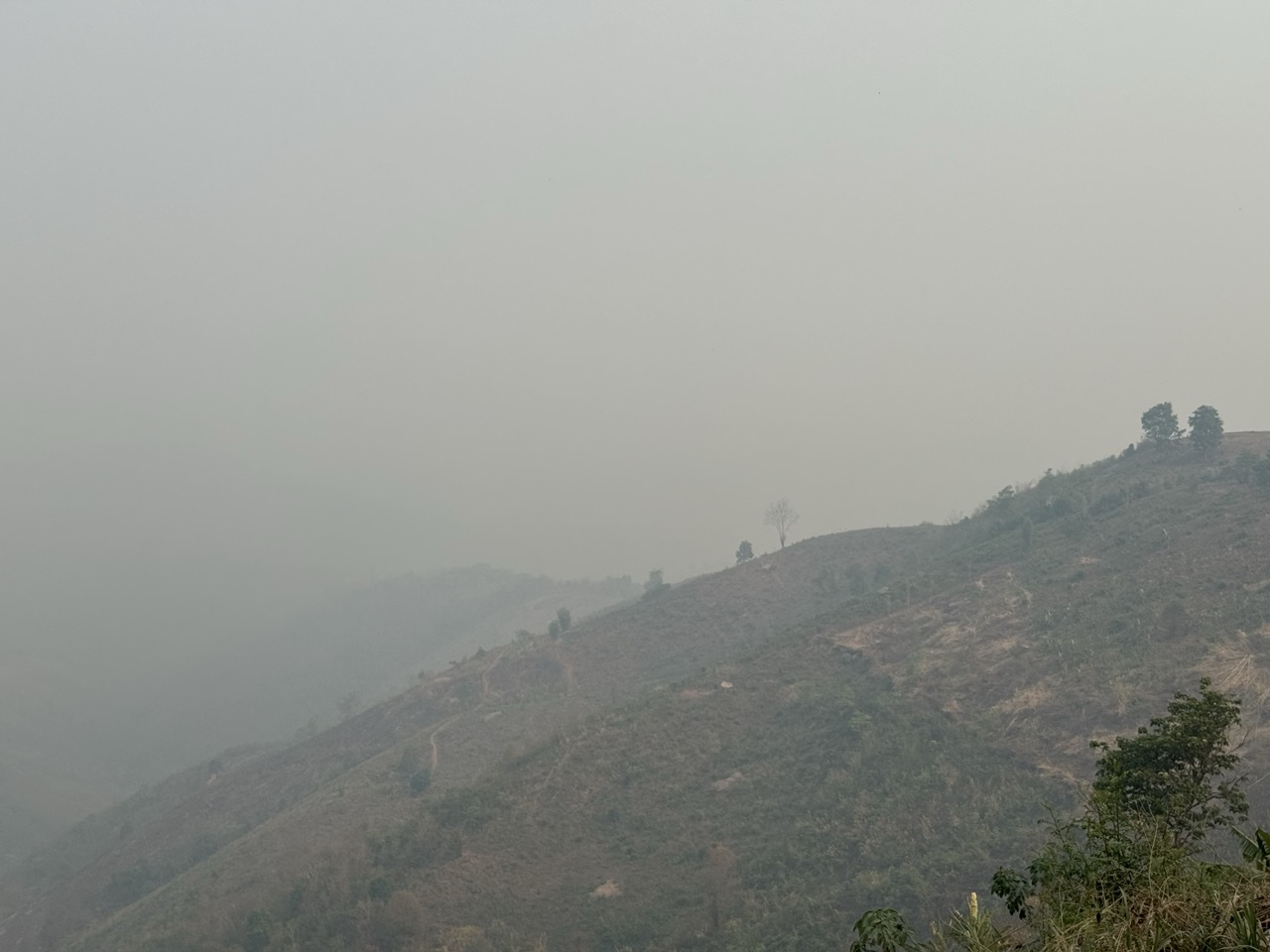
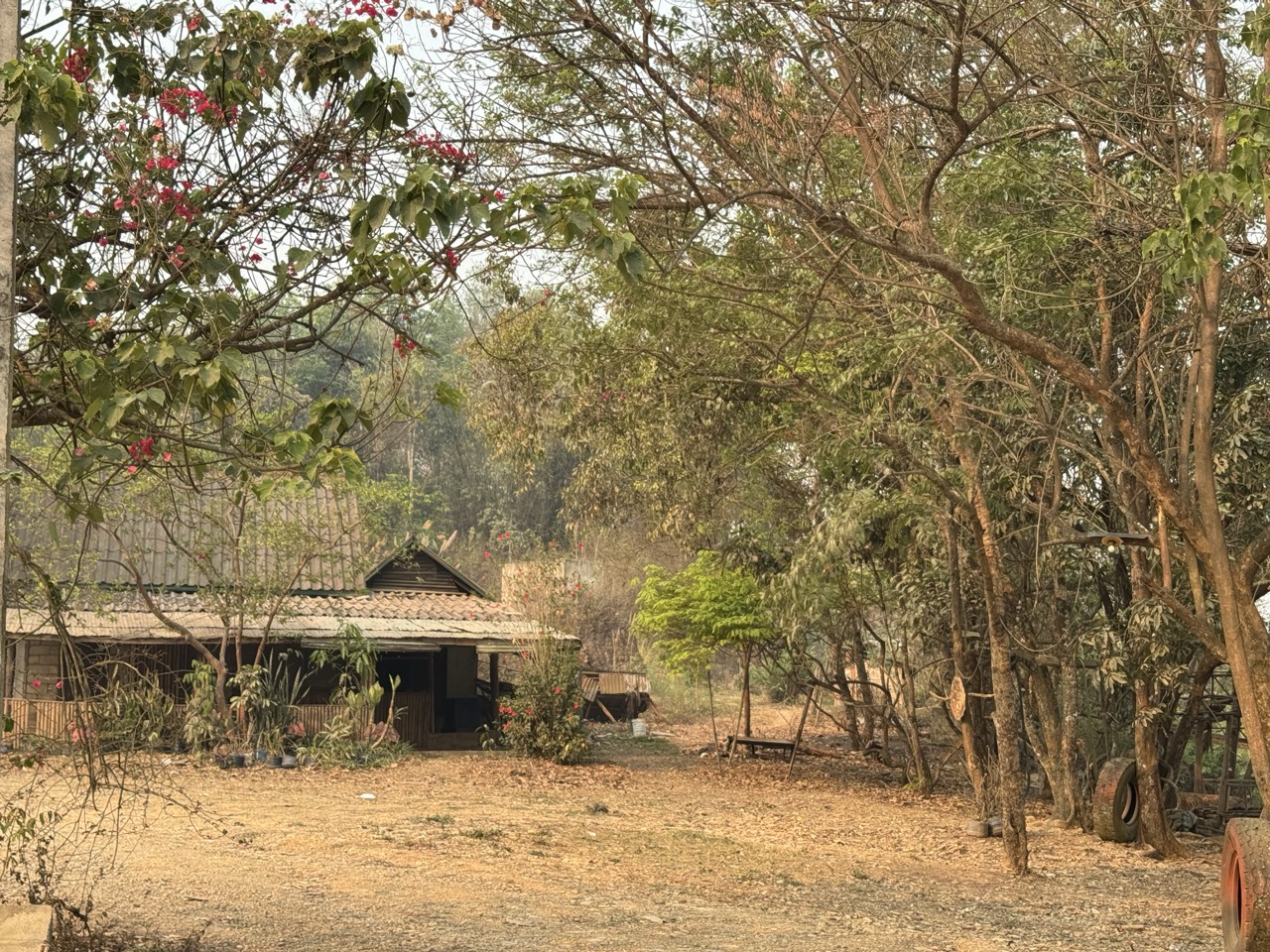
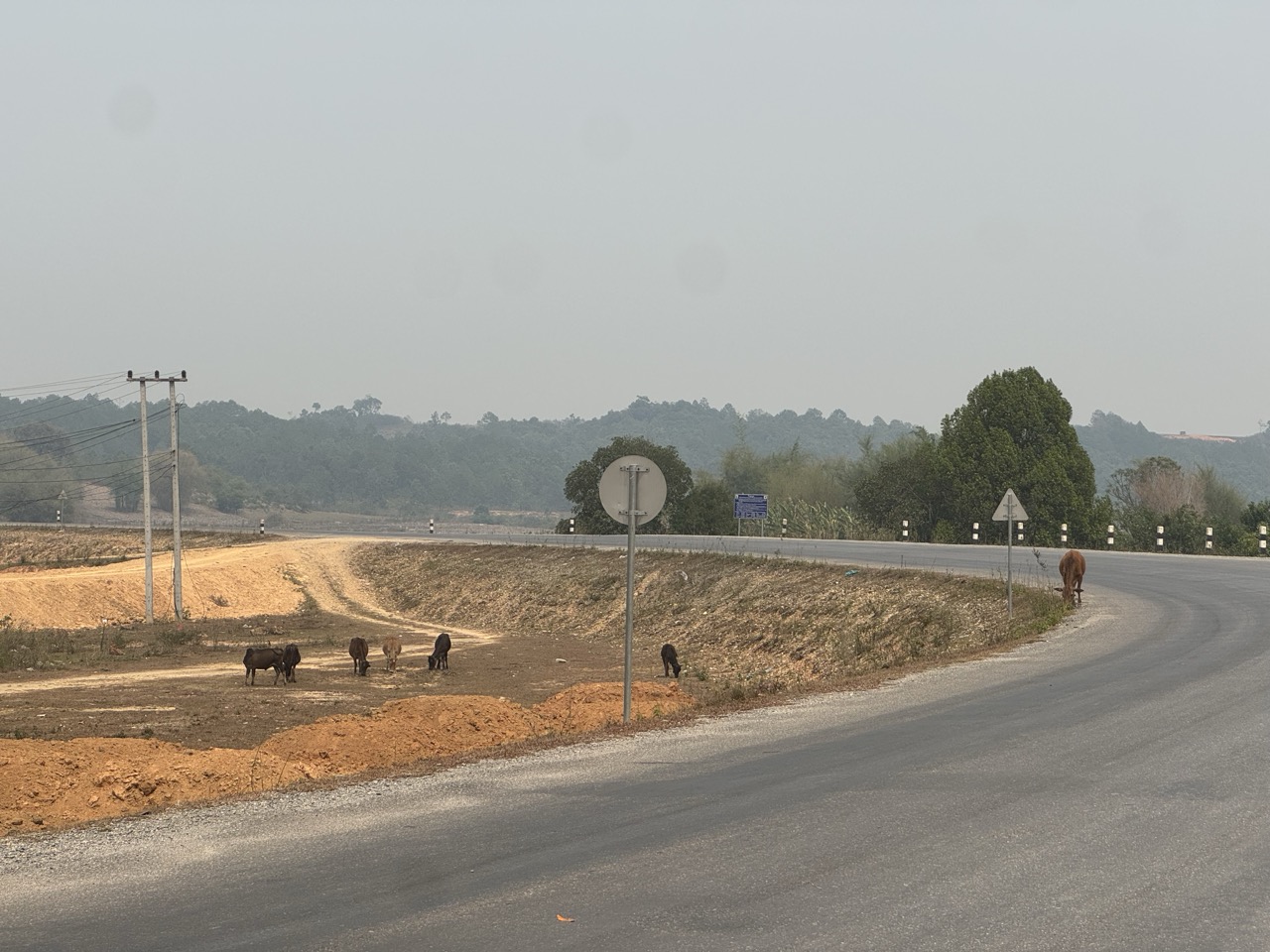
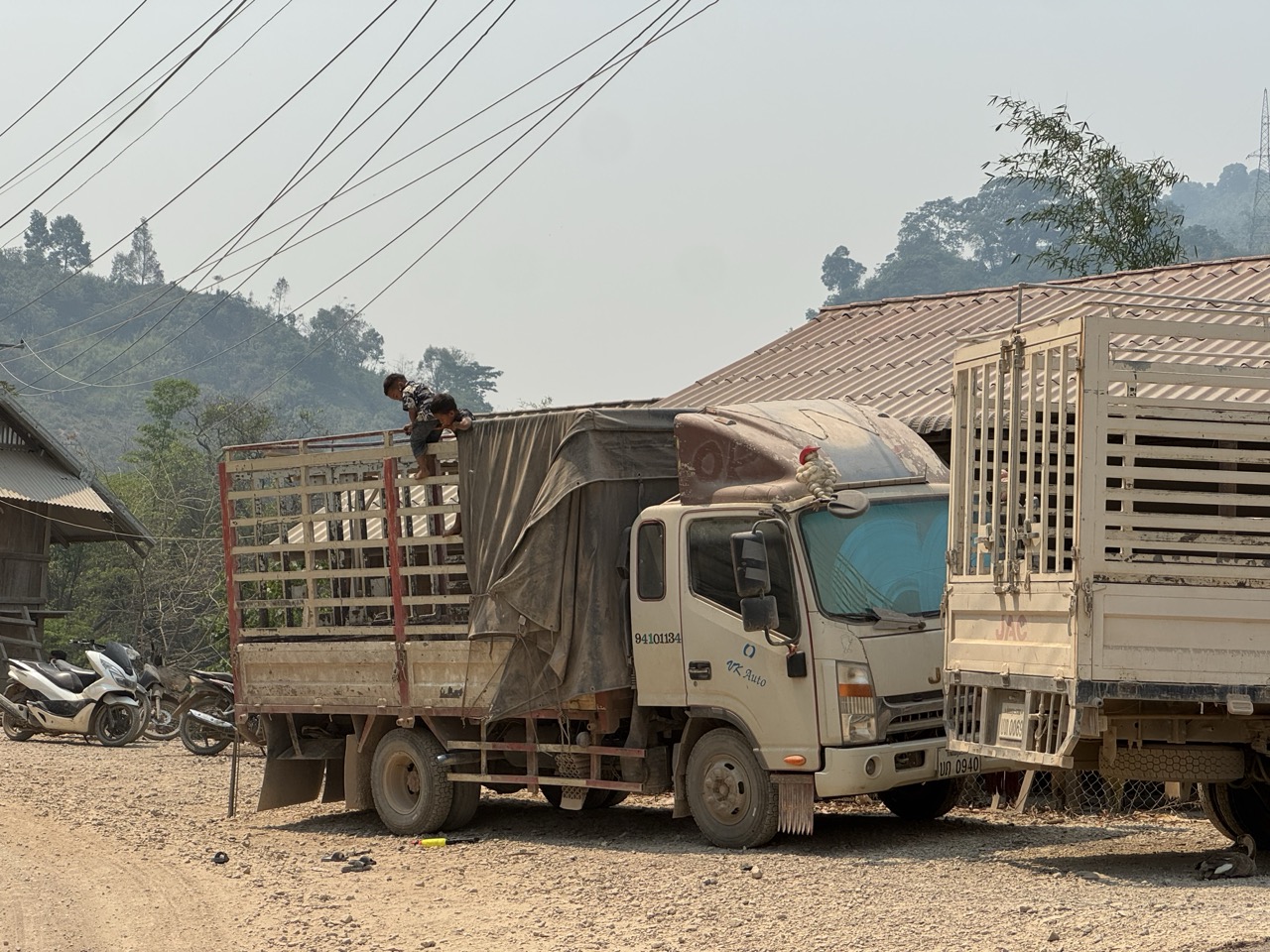
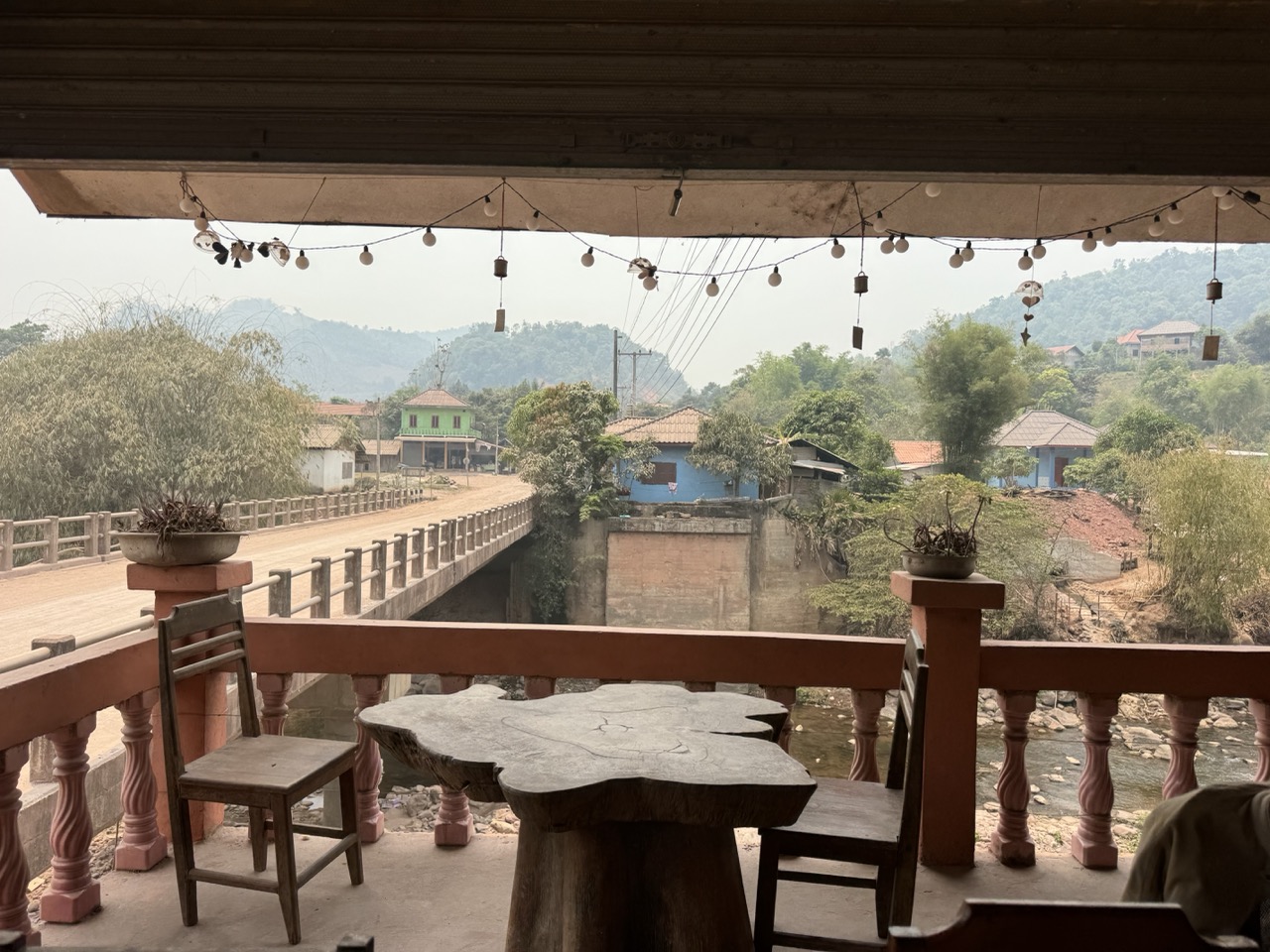
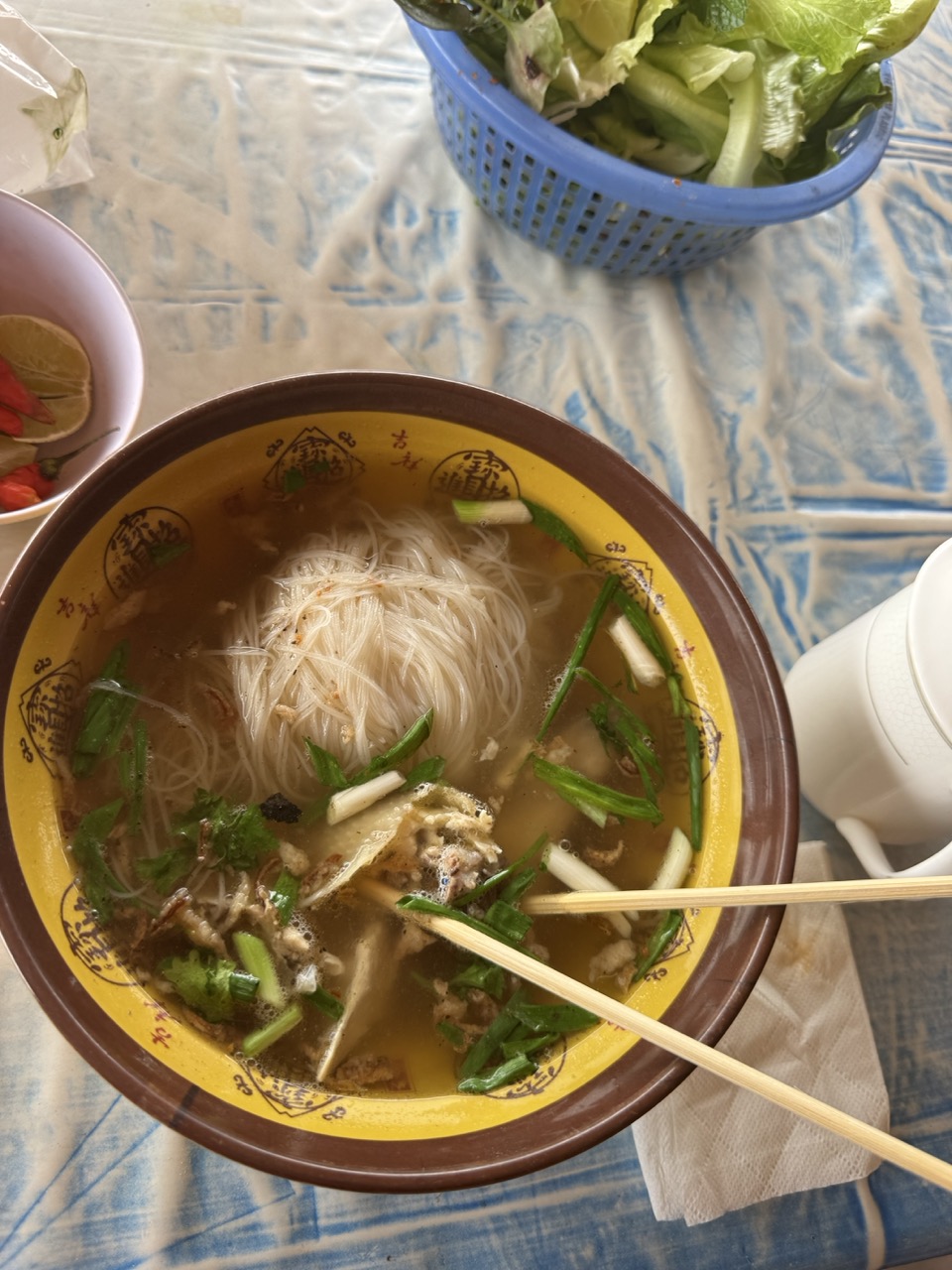
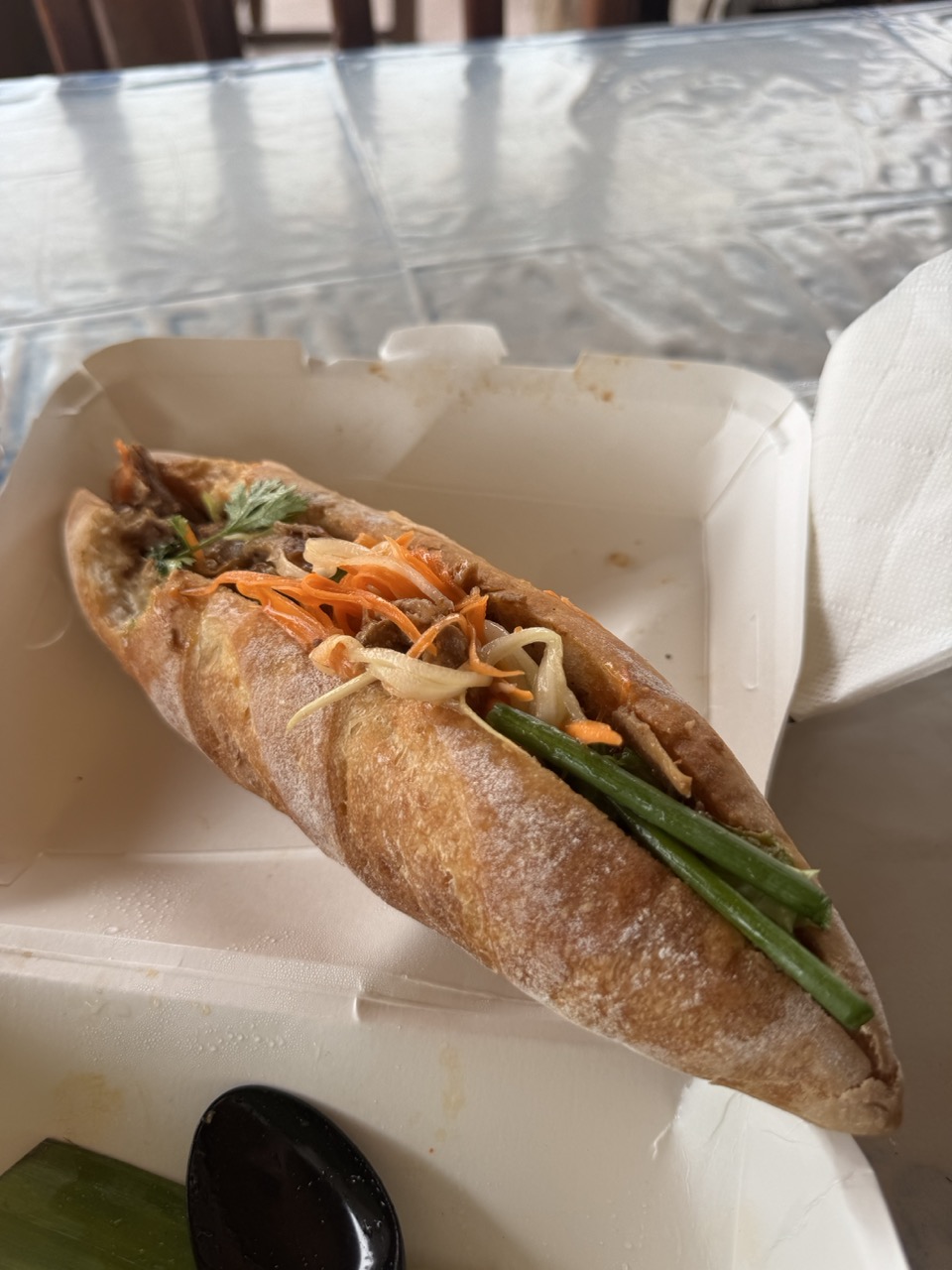
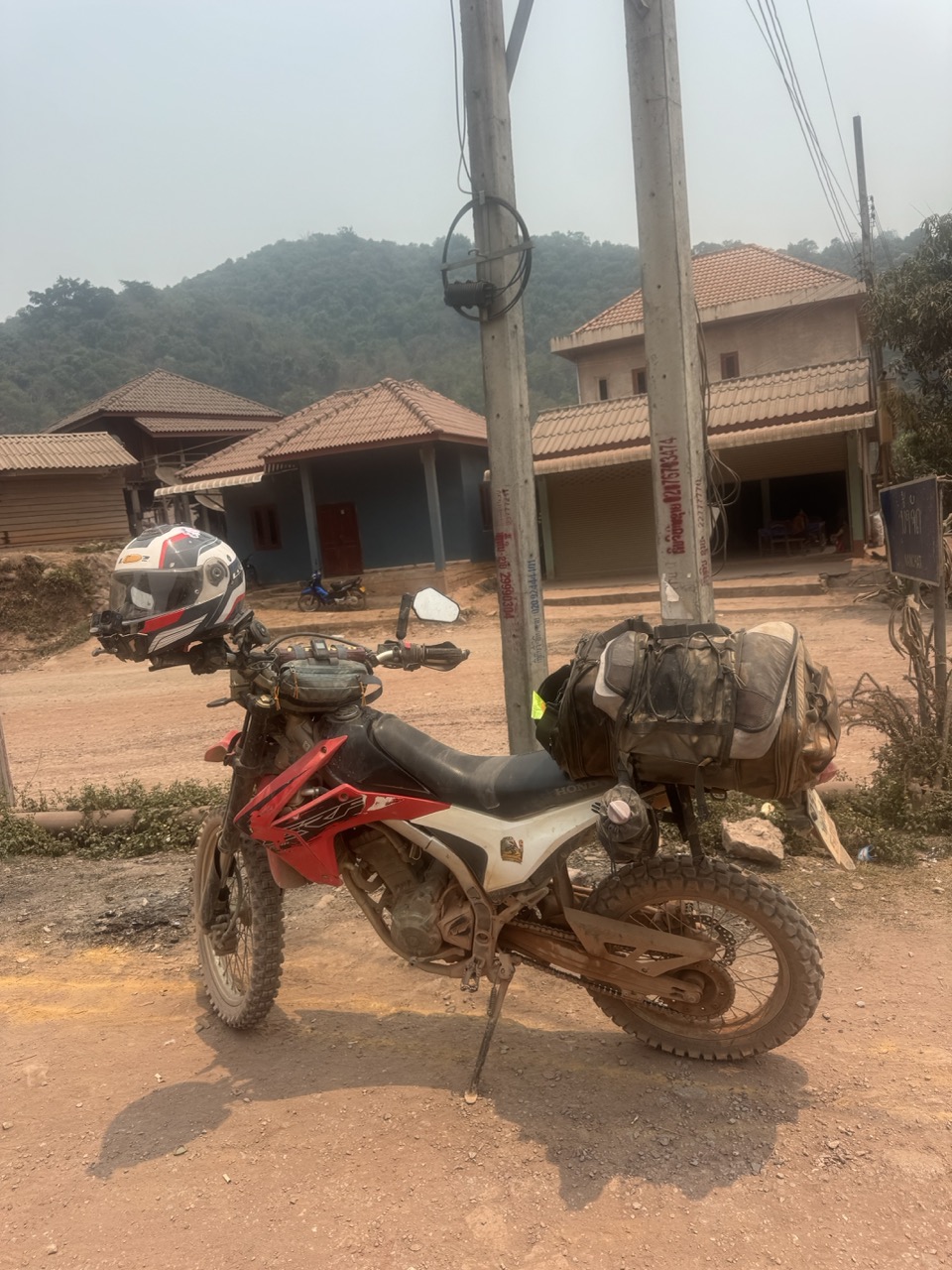
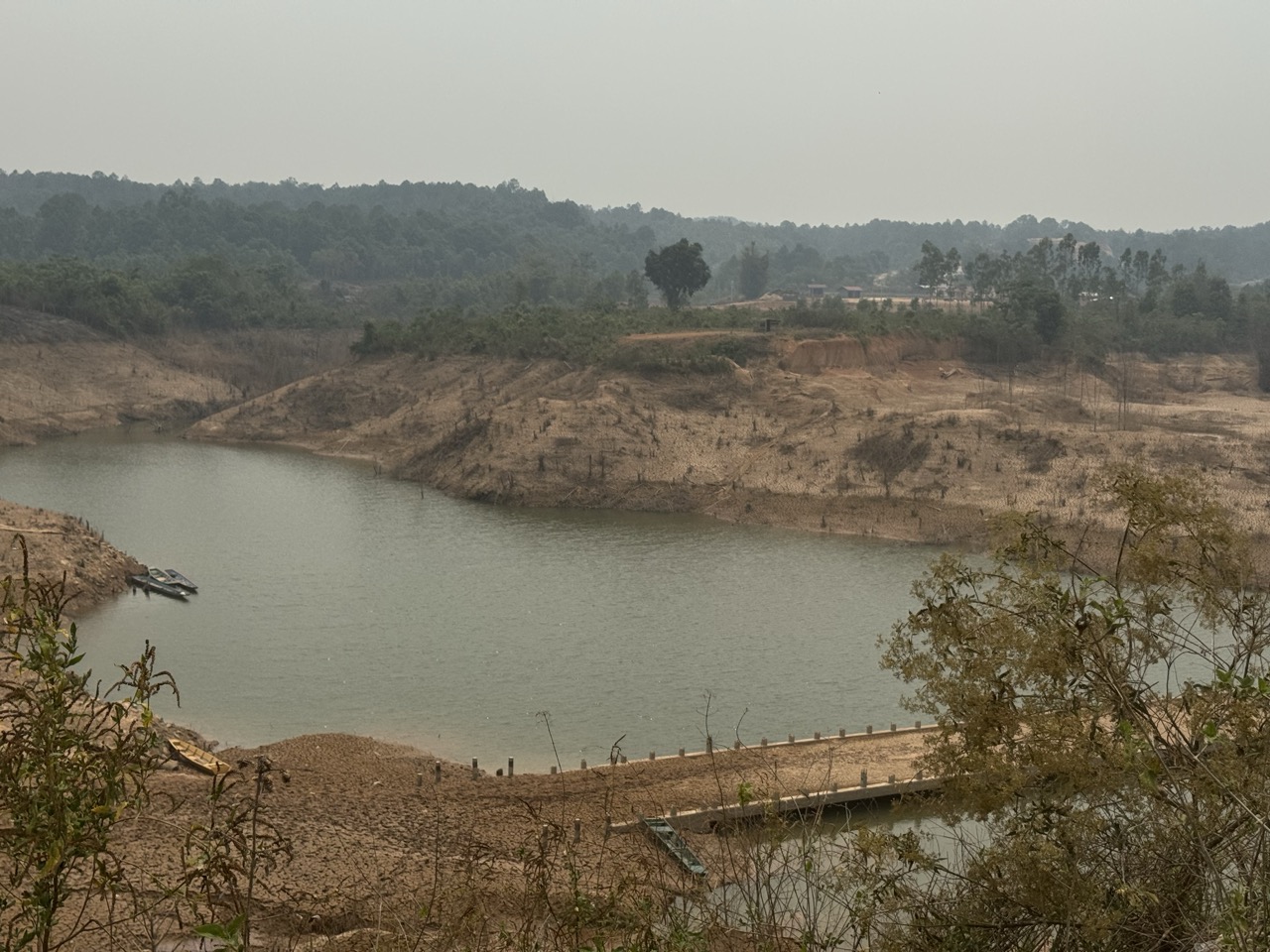
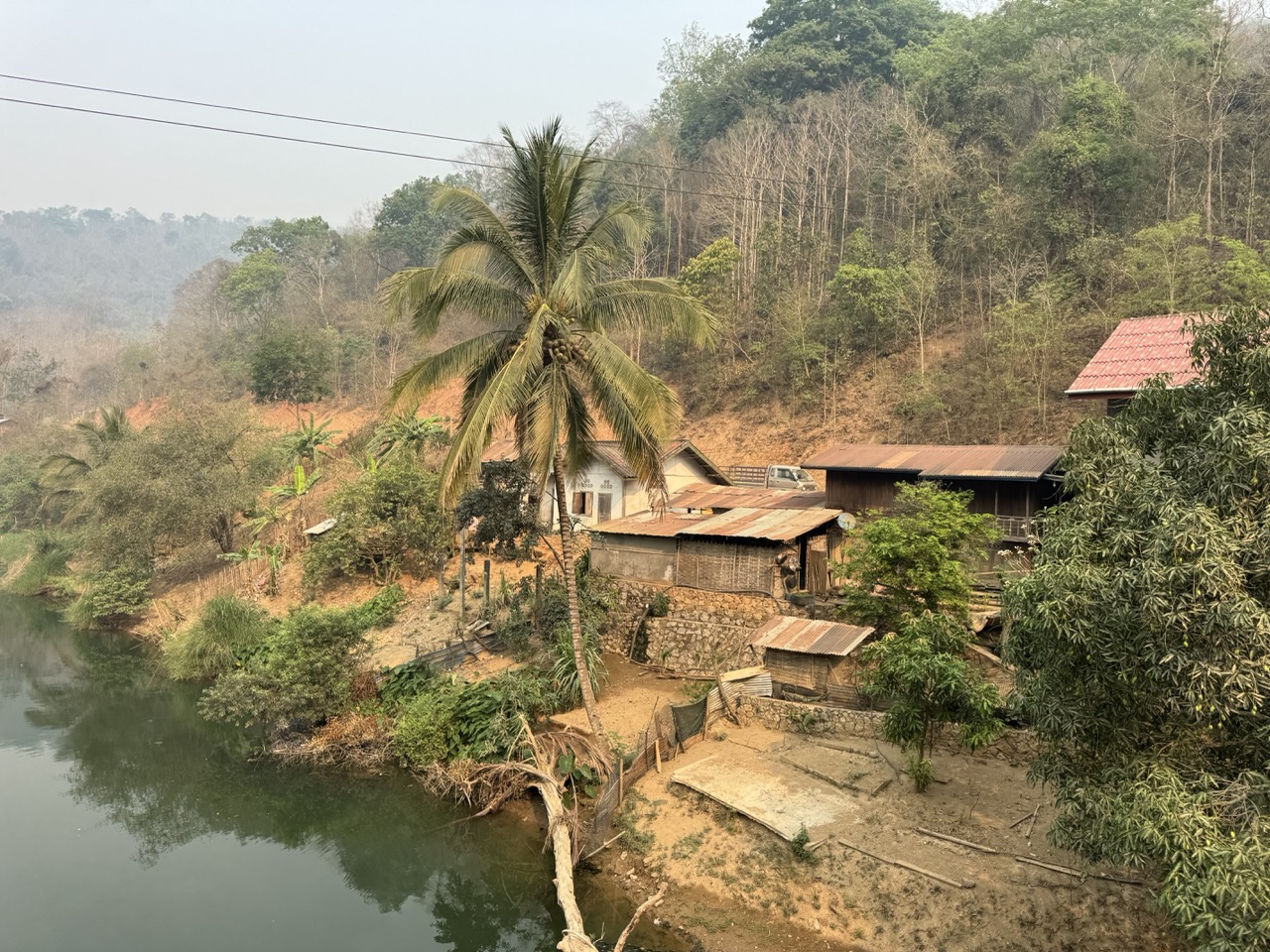
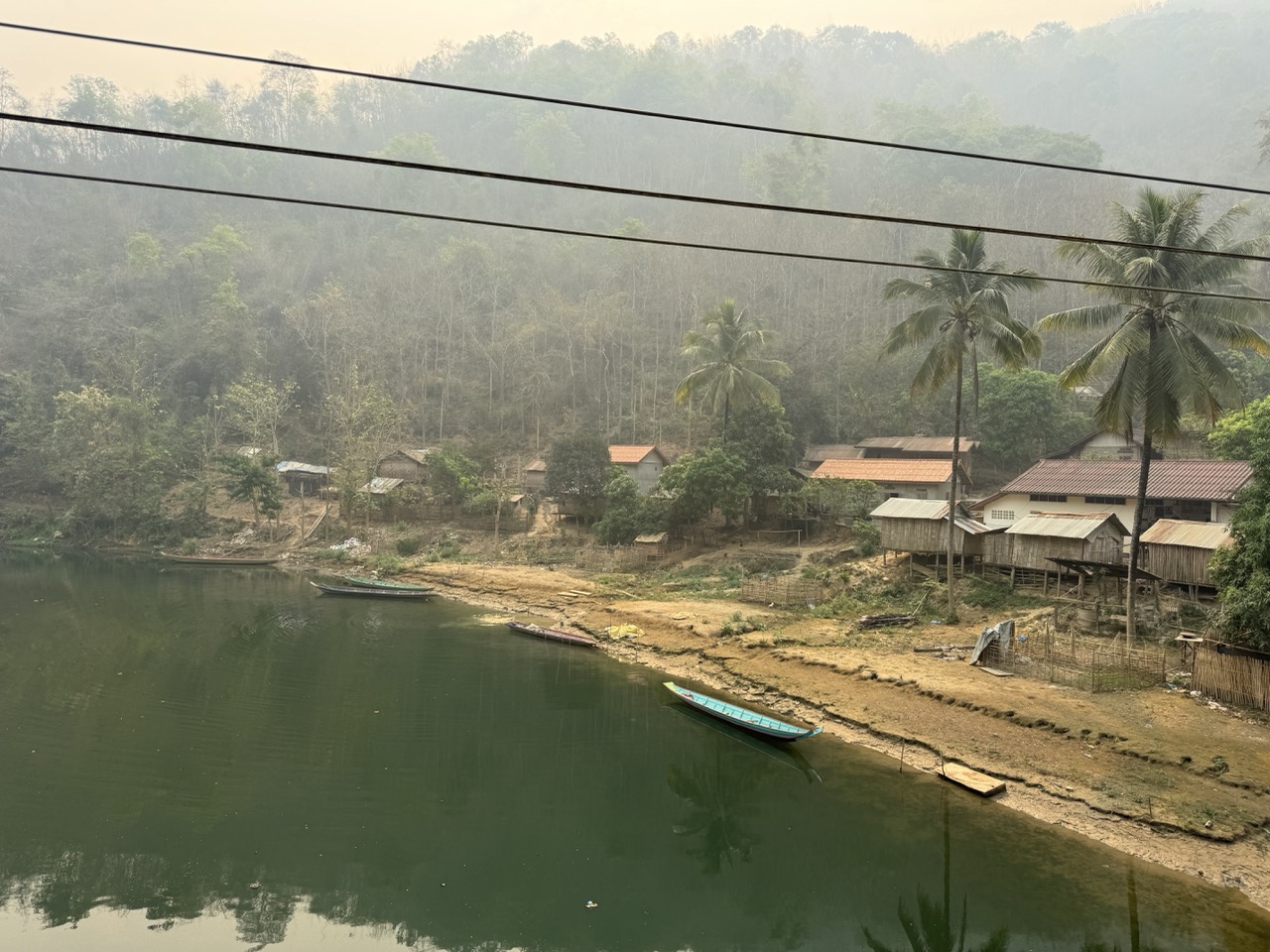
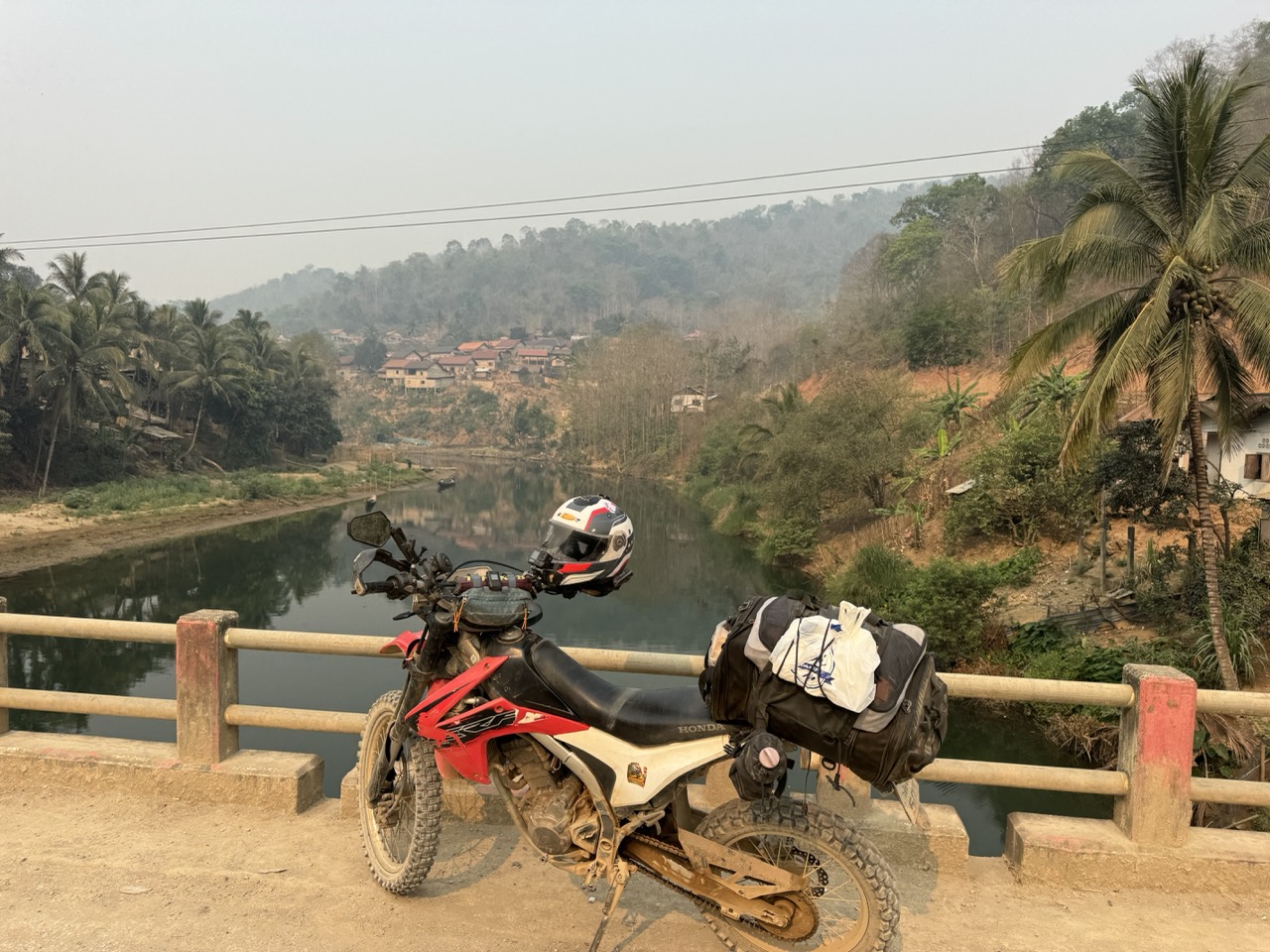
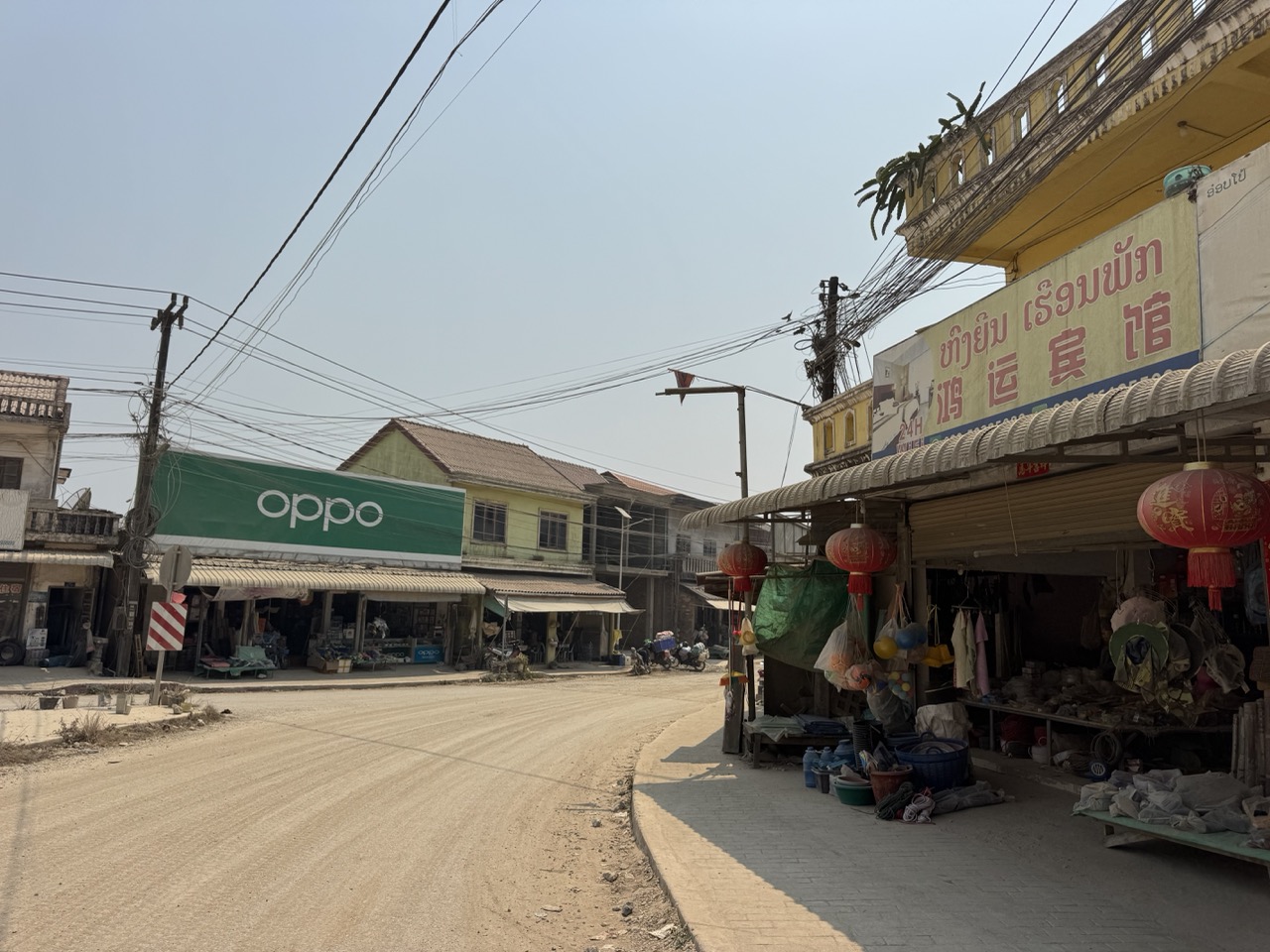
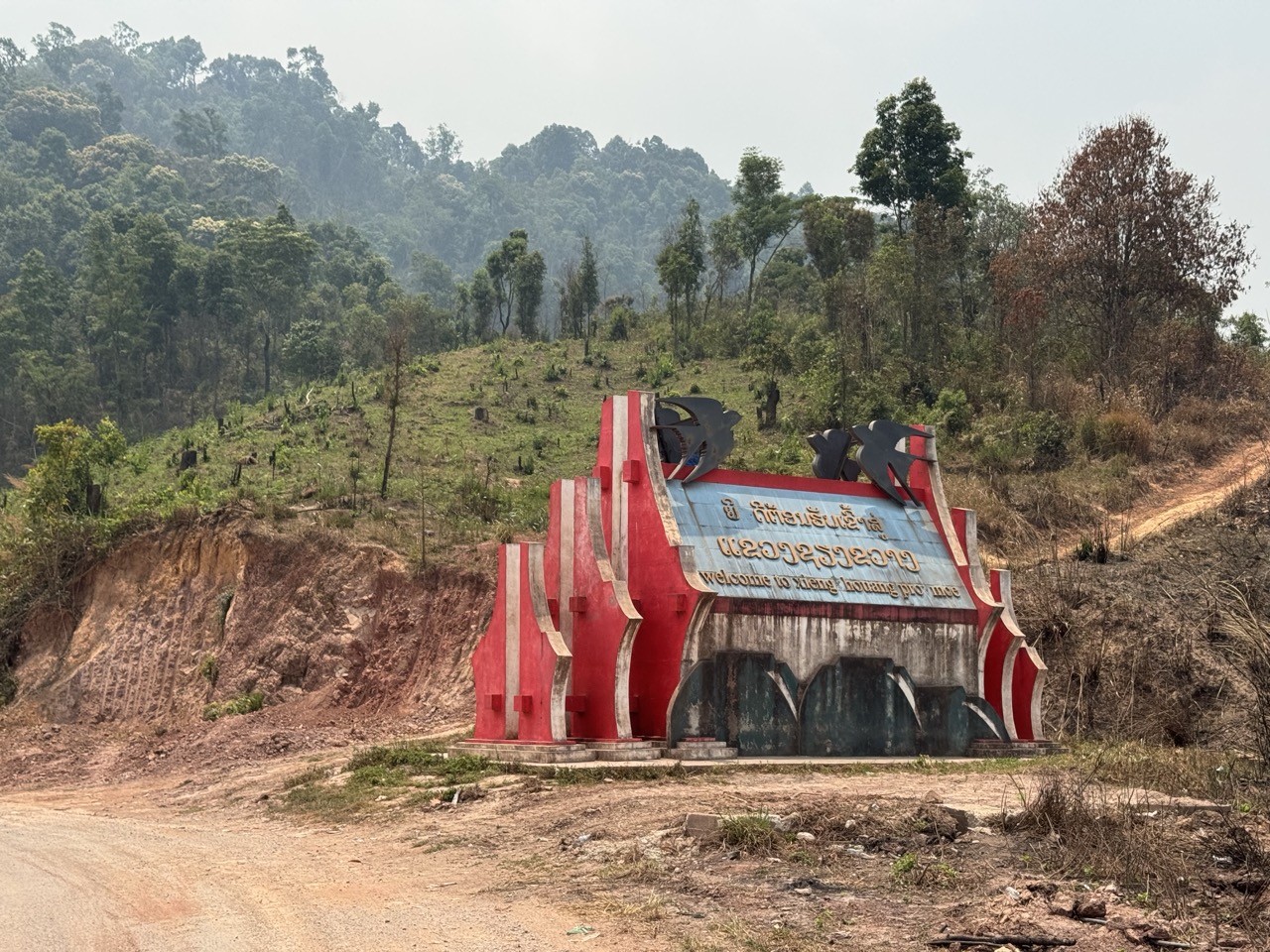
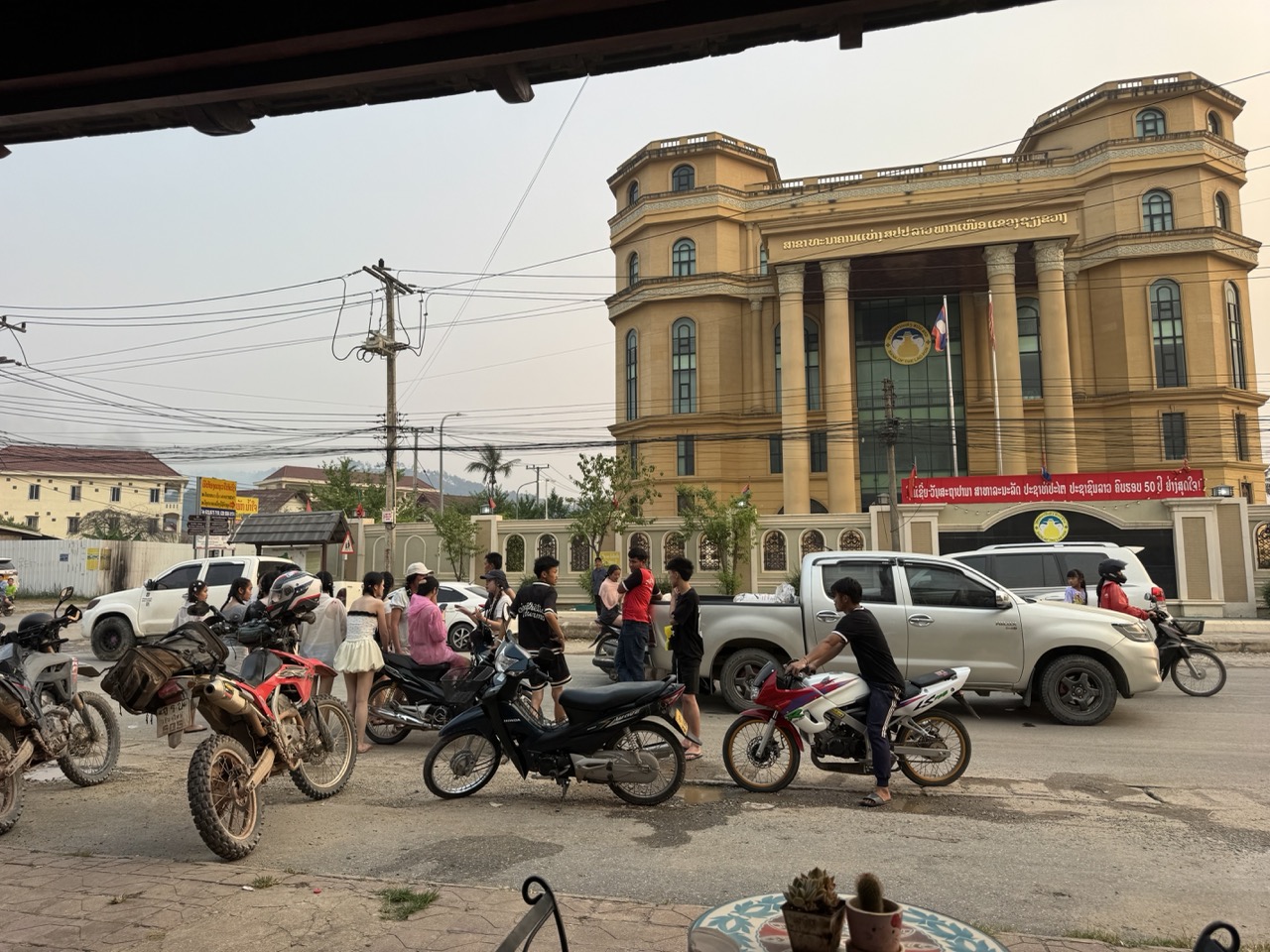
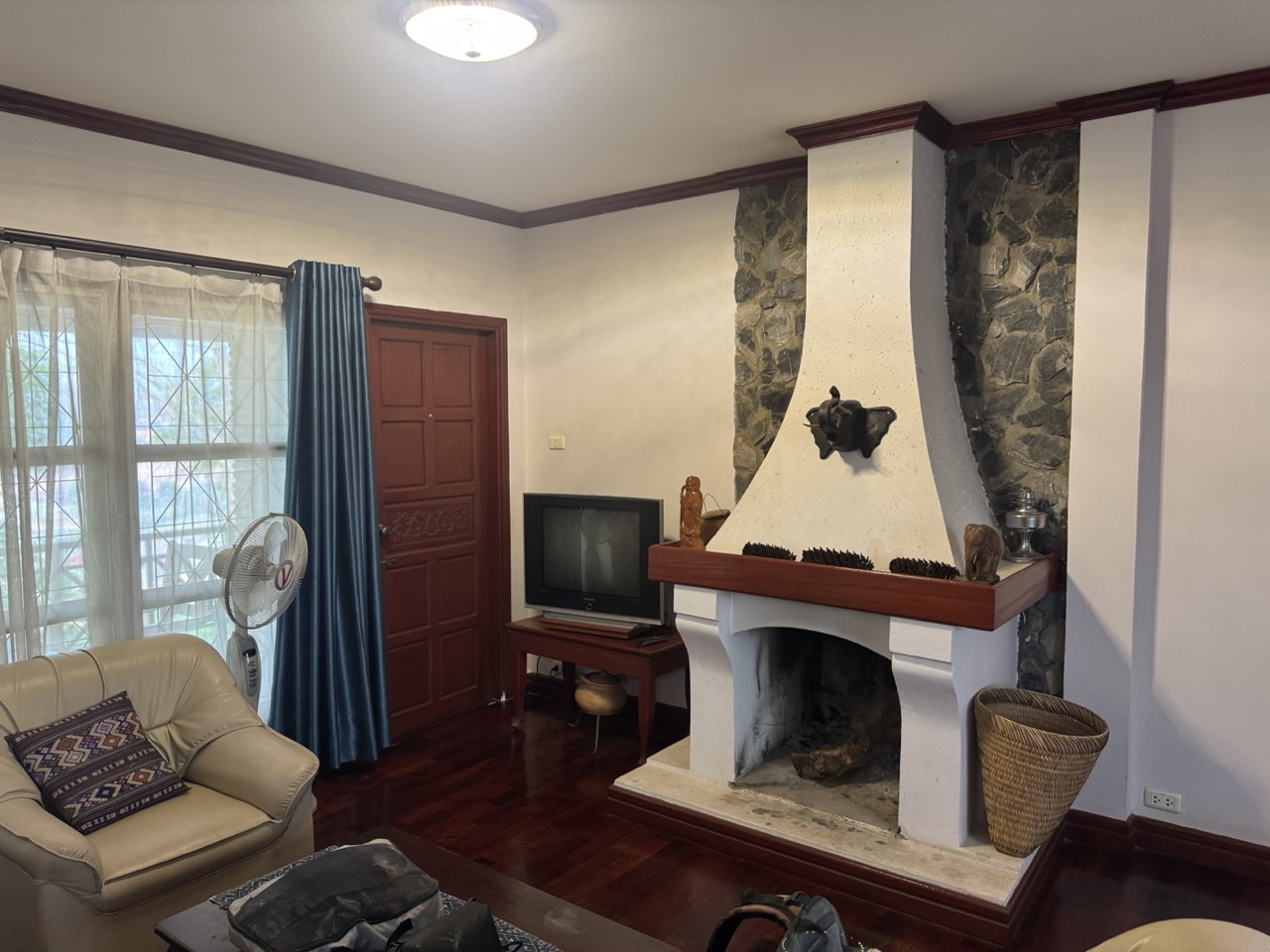
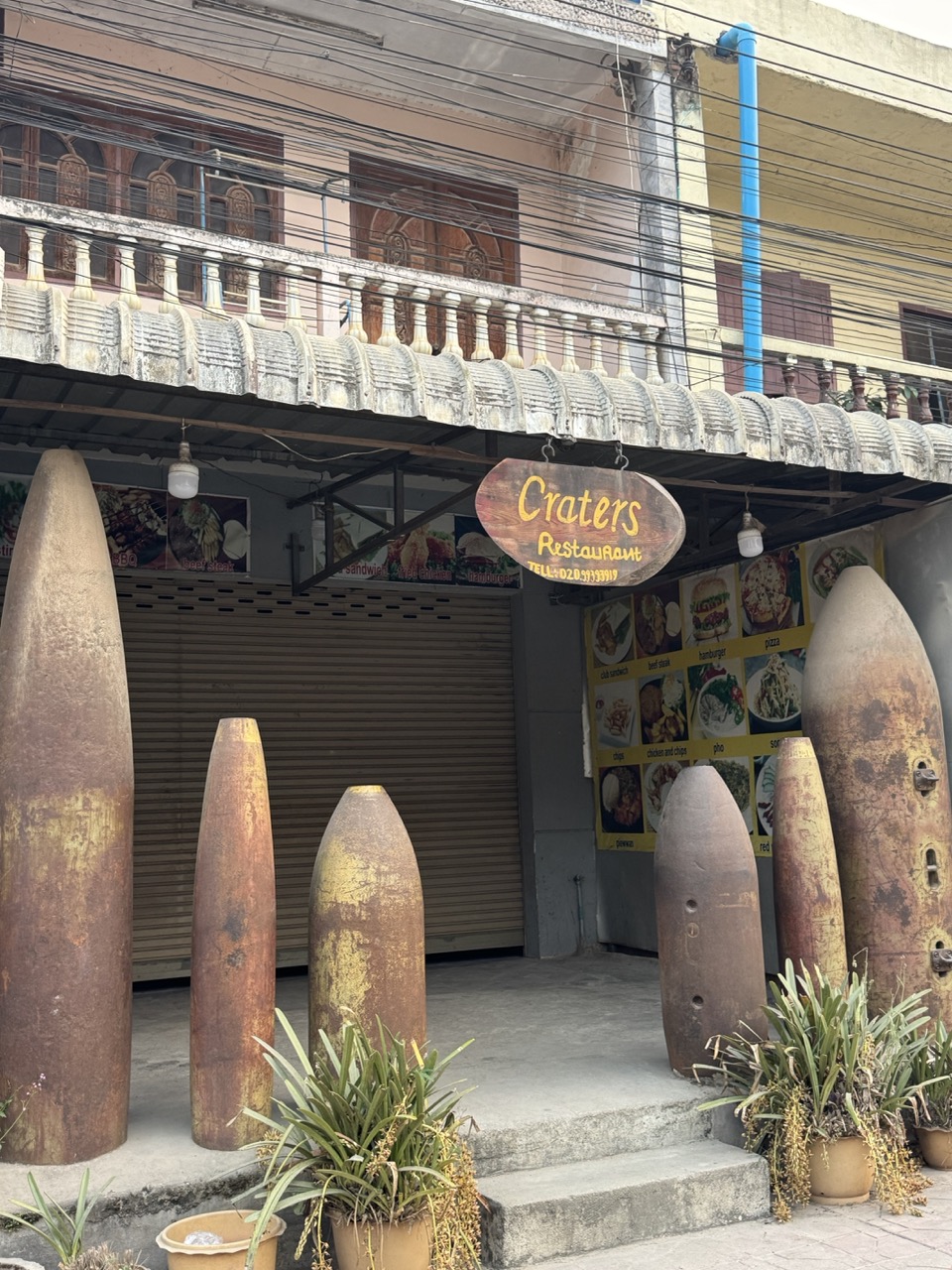
We rolled into Phonsavan in the late afternoon. Phonsavan is small — really a single main strip surrounded by suburban sprawl — and it exists today as the gateway to the Plain of Jars. Almost everything about the town's tourism revolves around the jars and the surrounding Vietnam War history. The most famous restaurant in town, Craters, has actual UXO bomb shells lined up outside as decor. The hotel we'd booked, Vansana Plain of Jars Hotel, was on the quieter side of town with a stone-fireplace lounge that got cold enough at night that we used it.
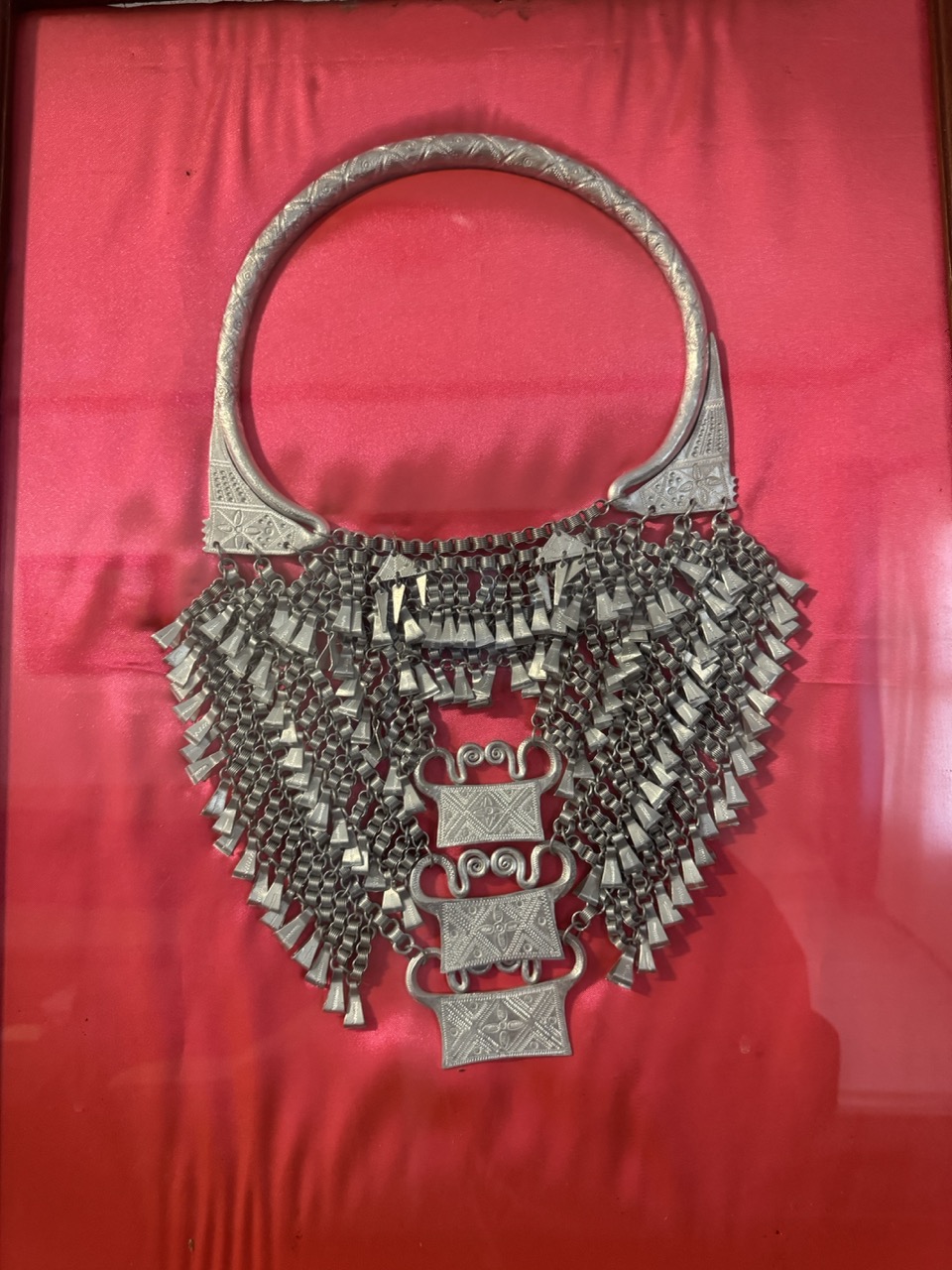

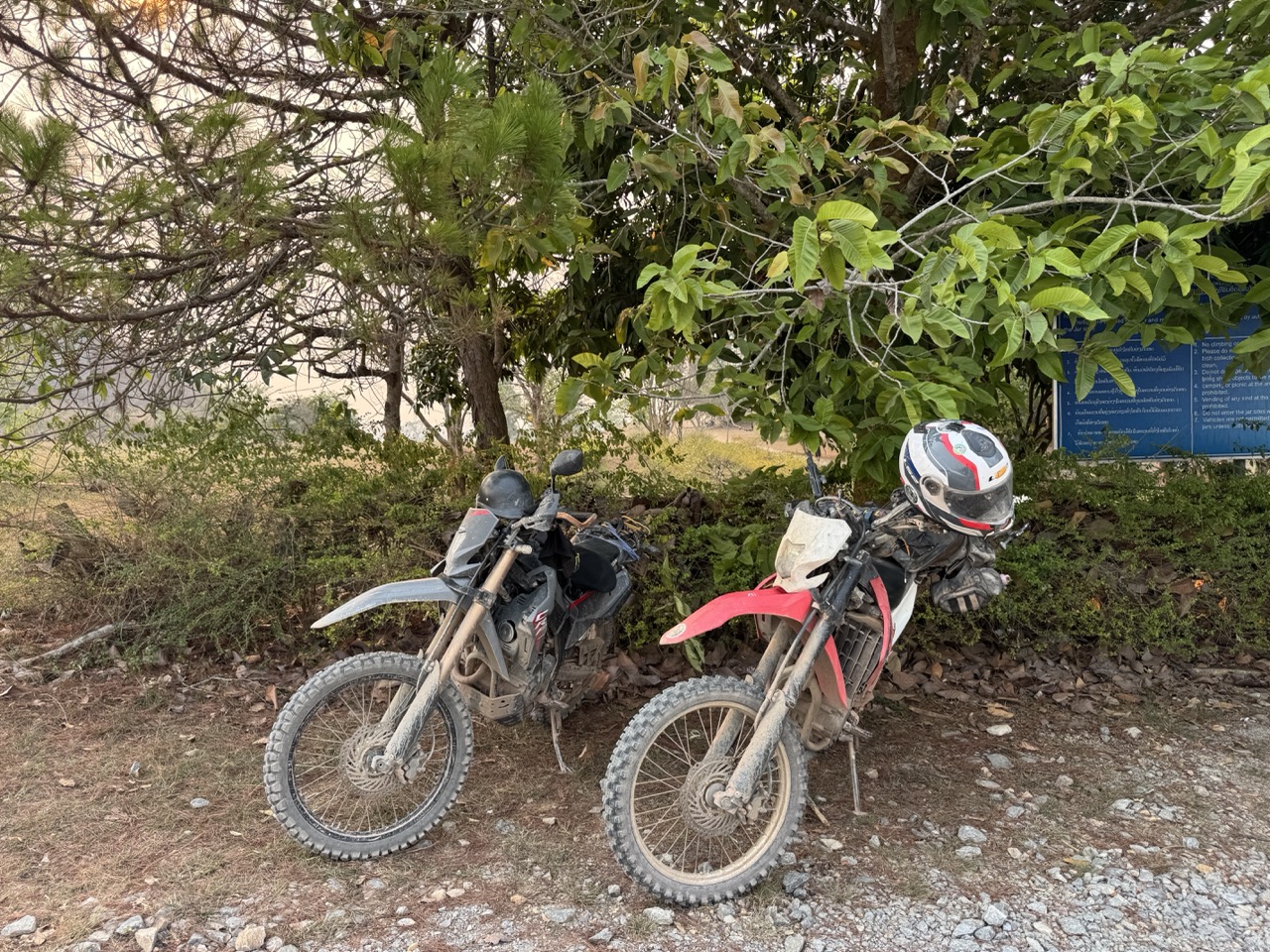
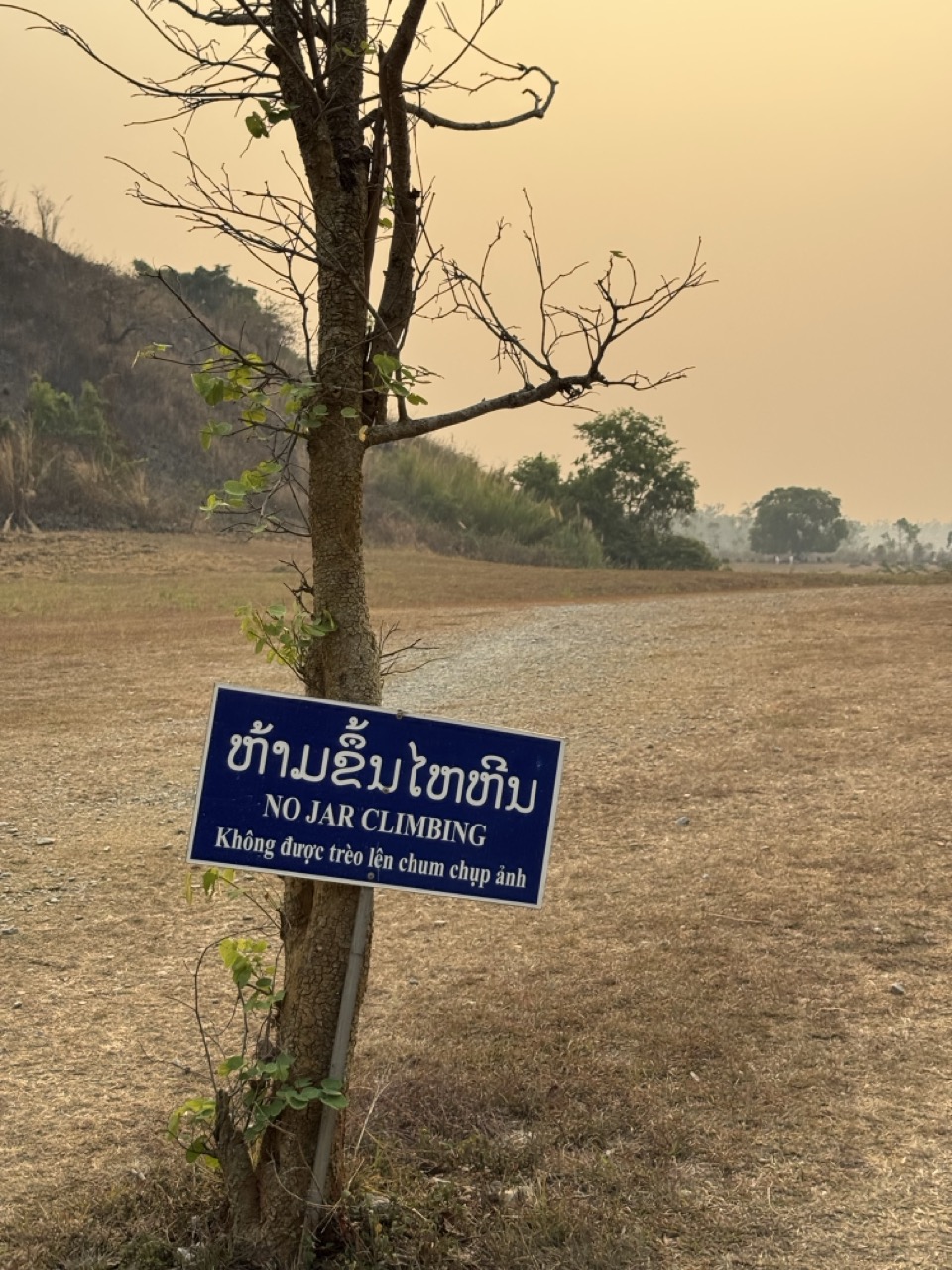
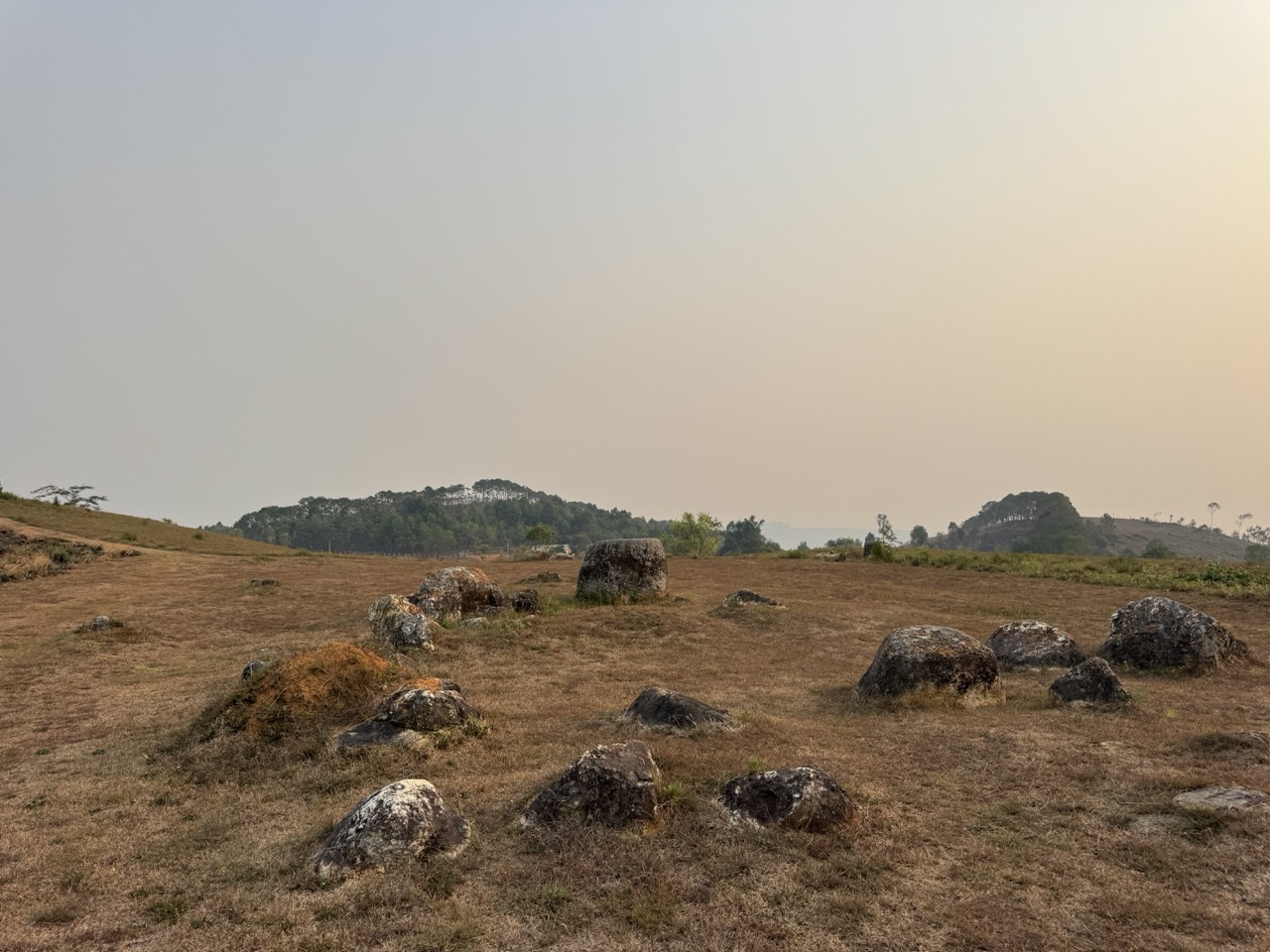
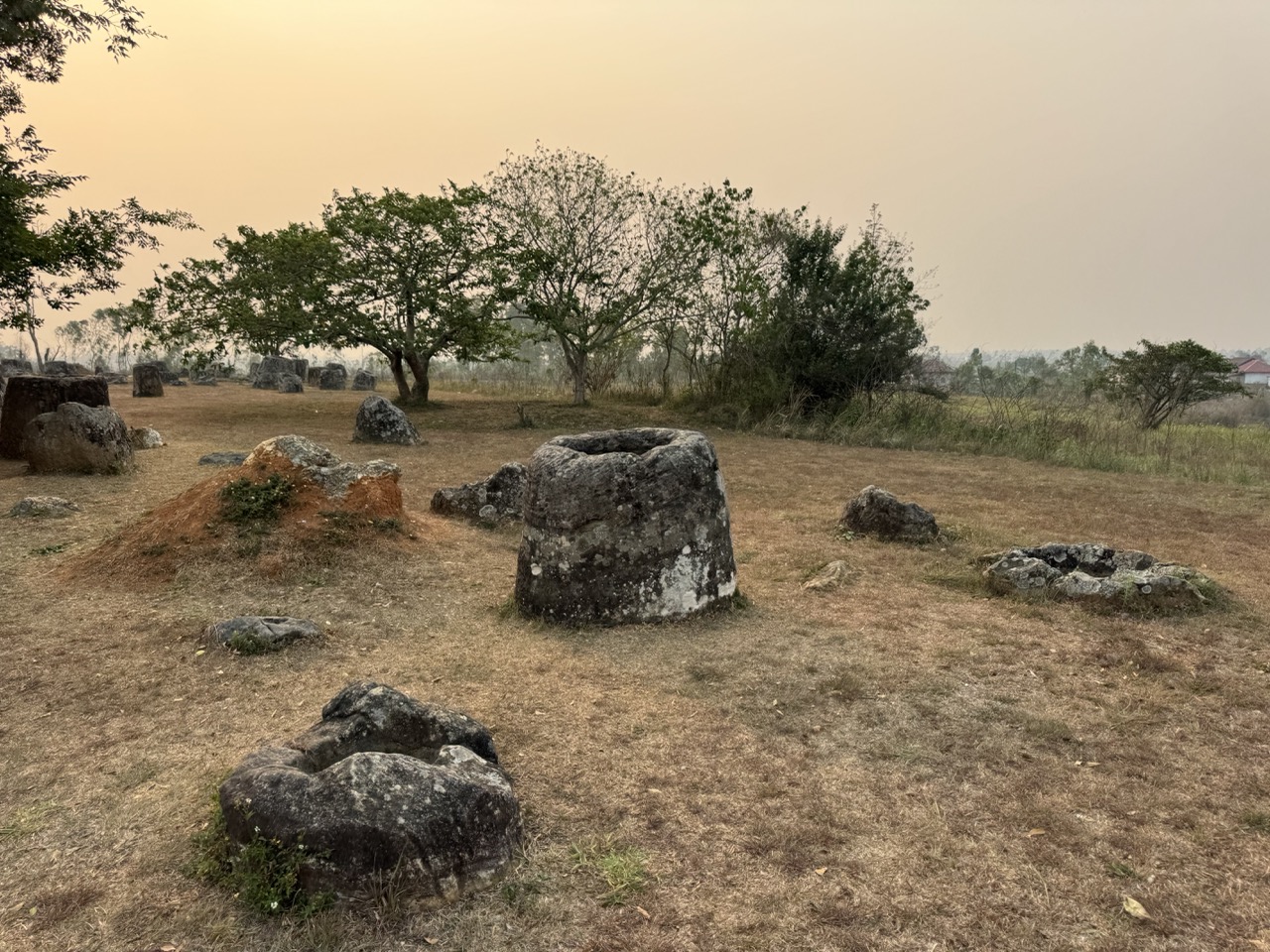
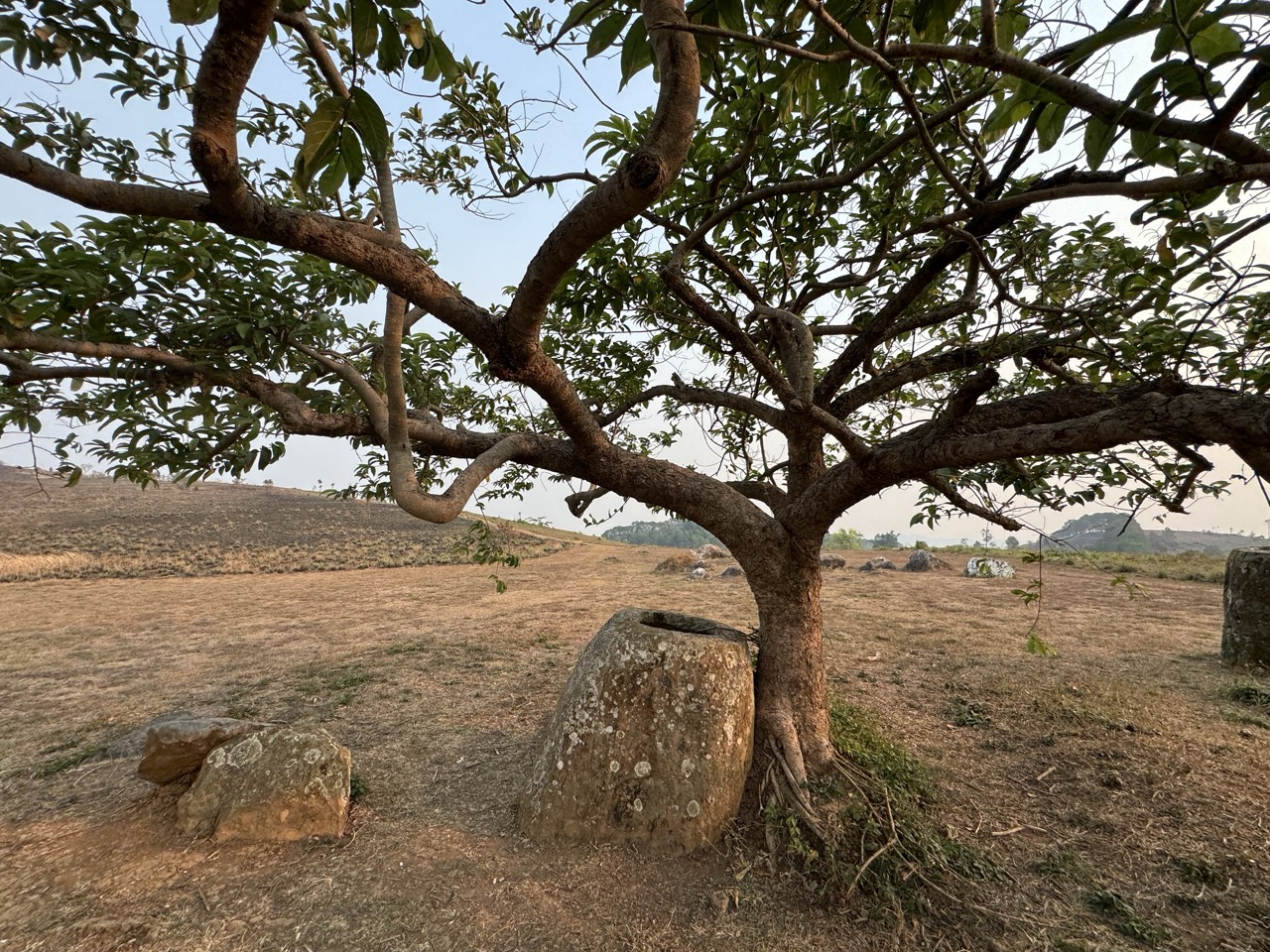
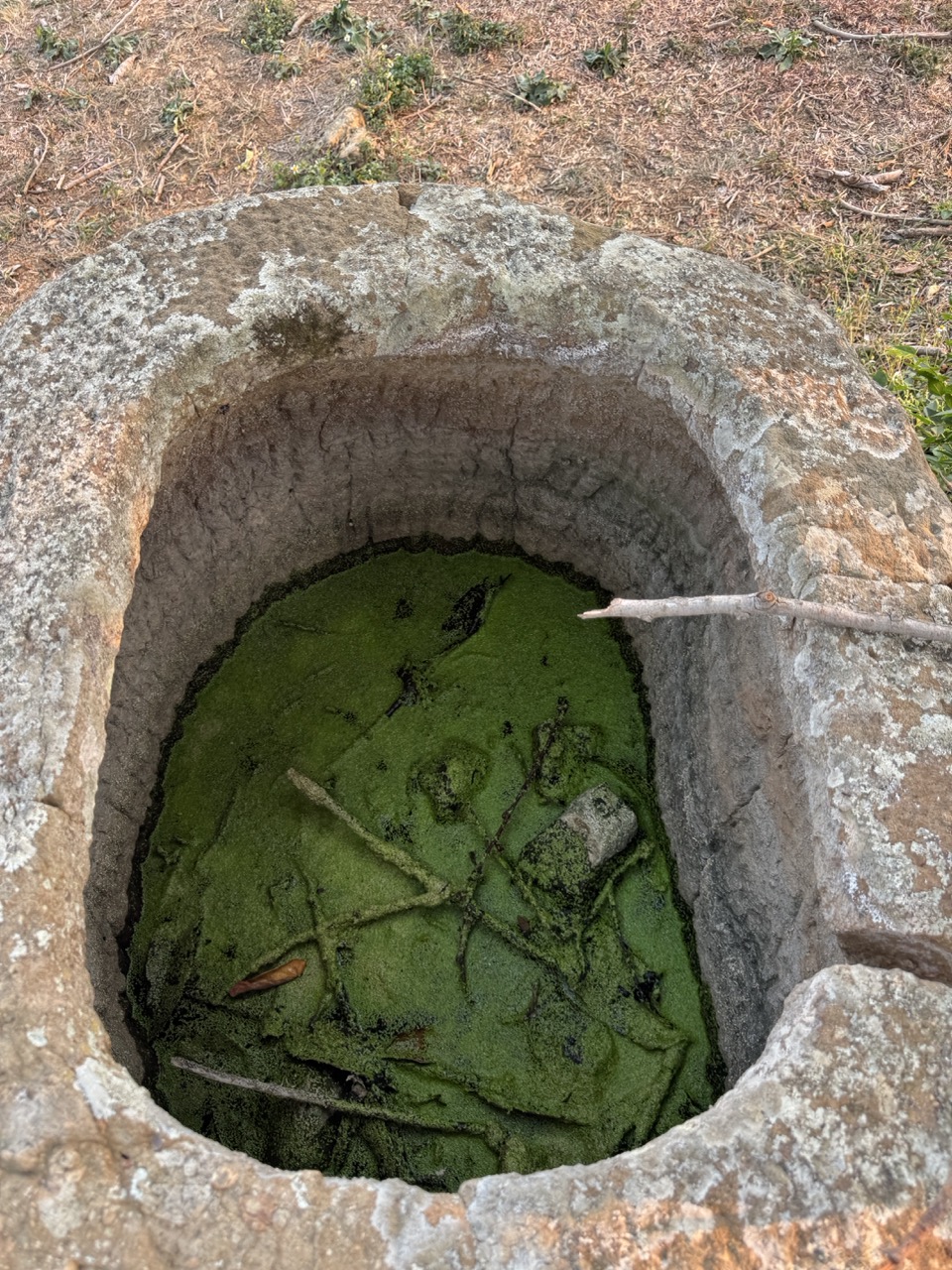
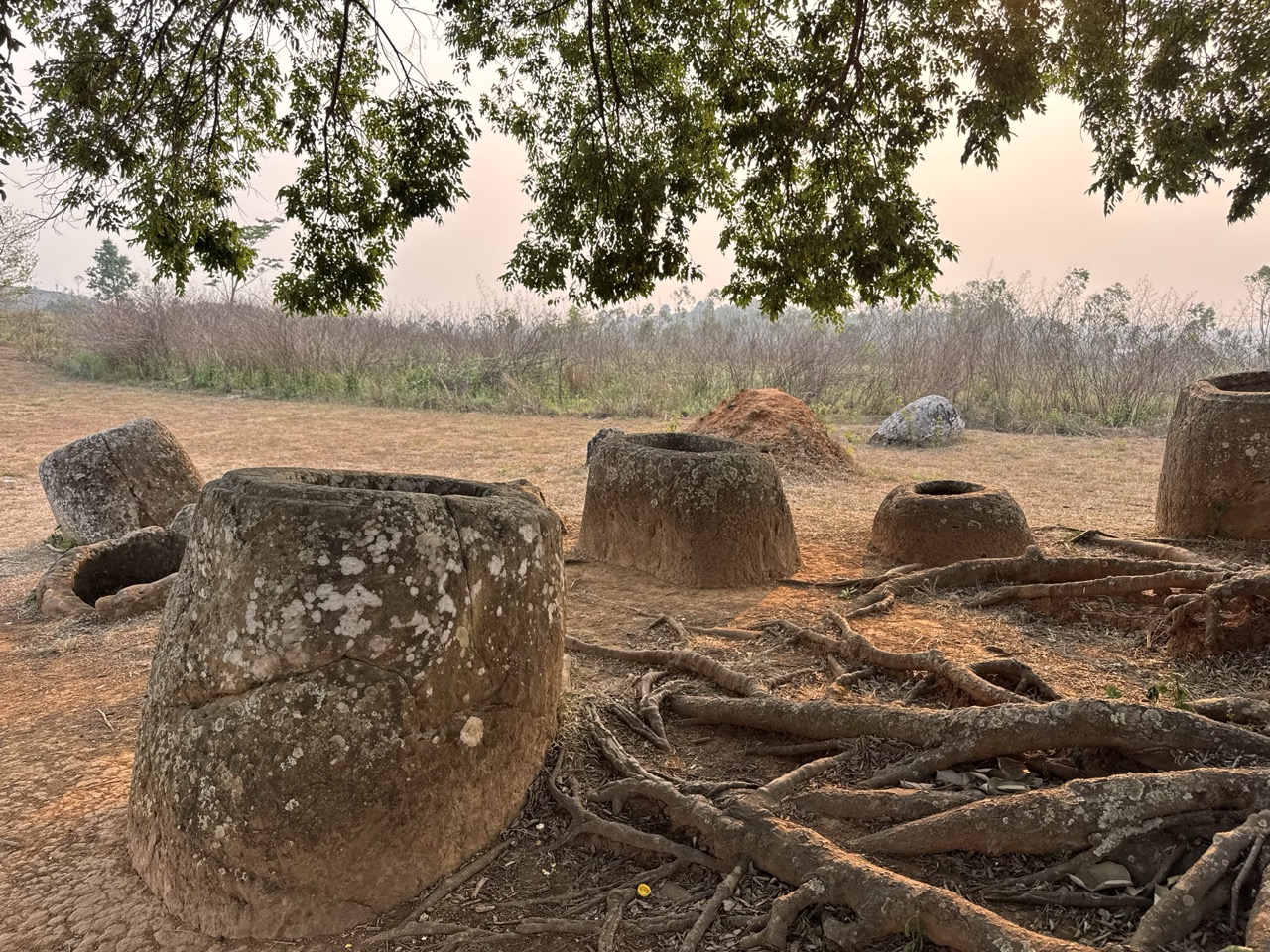
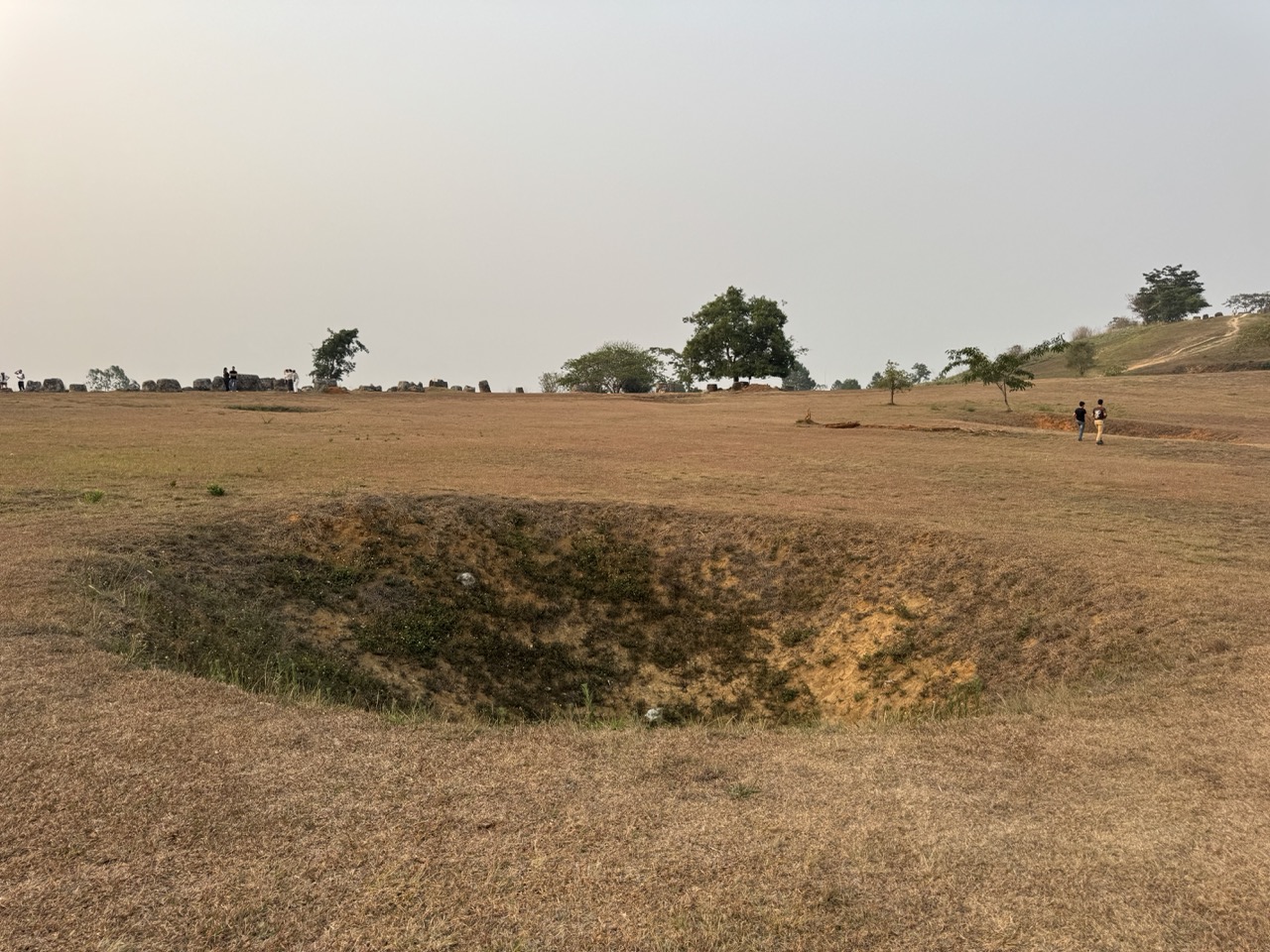
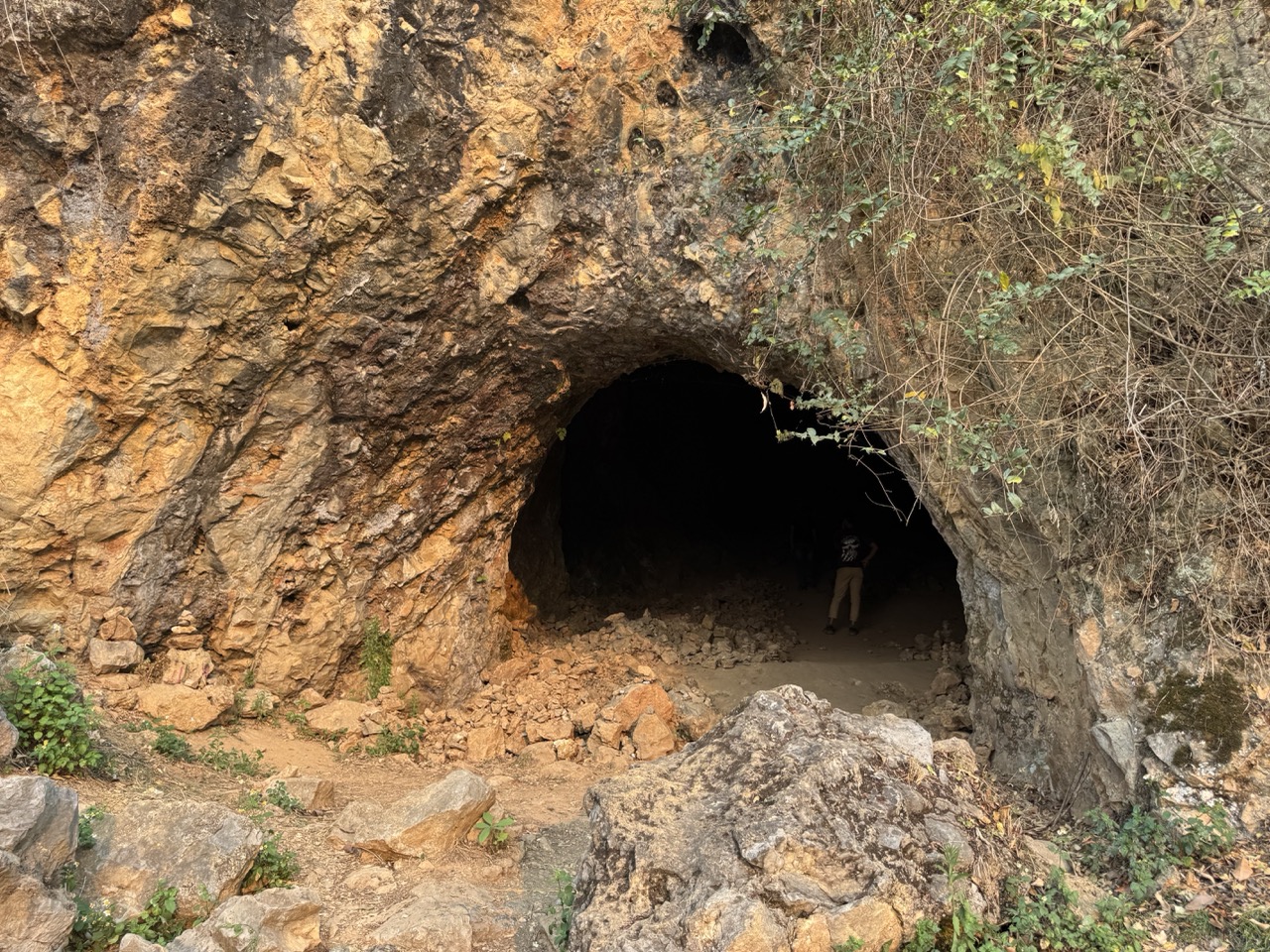
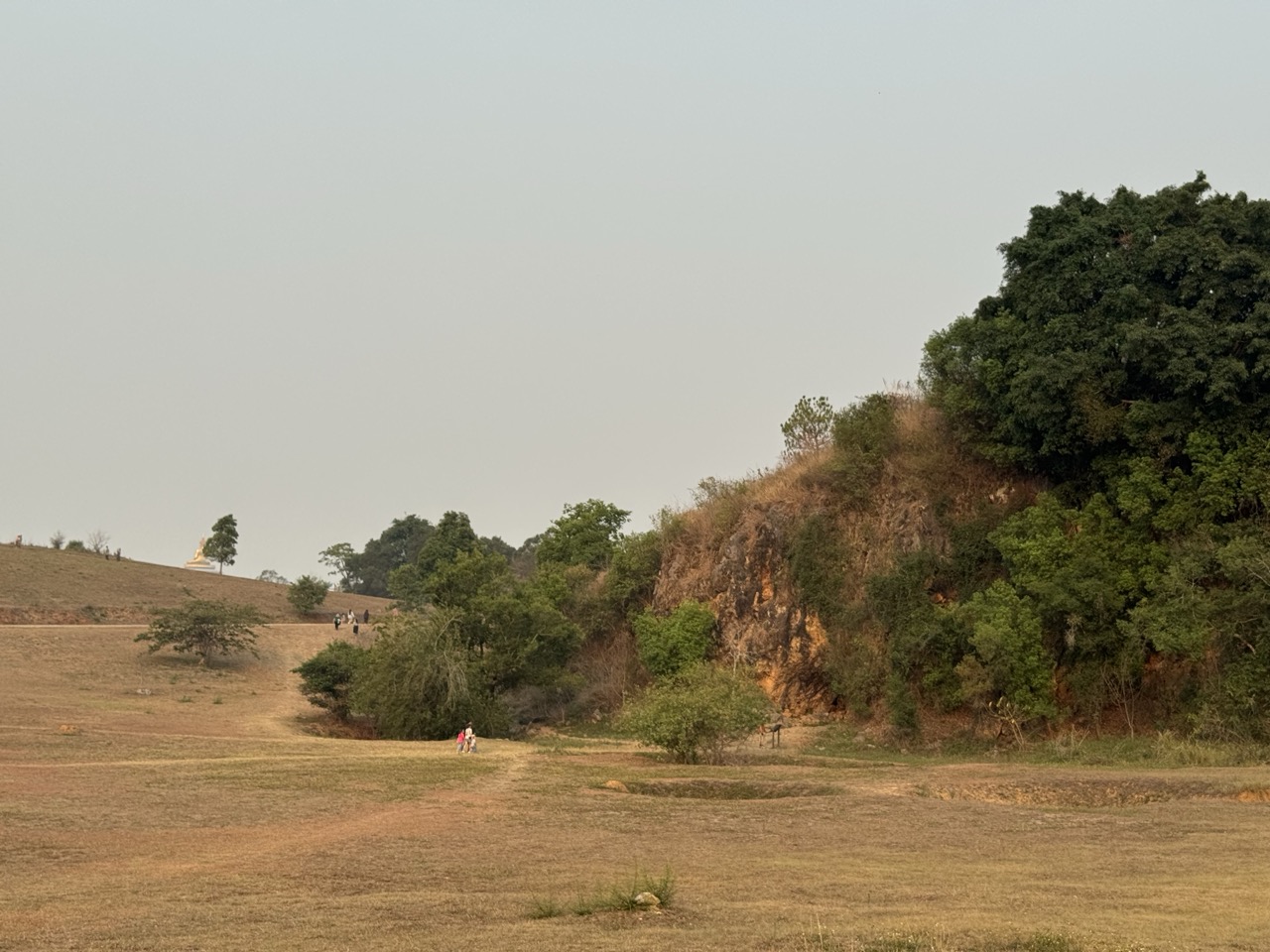
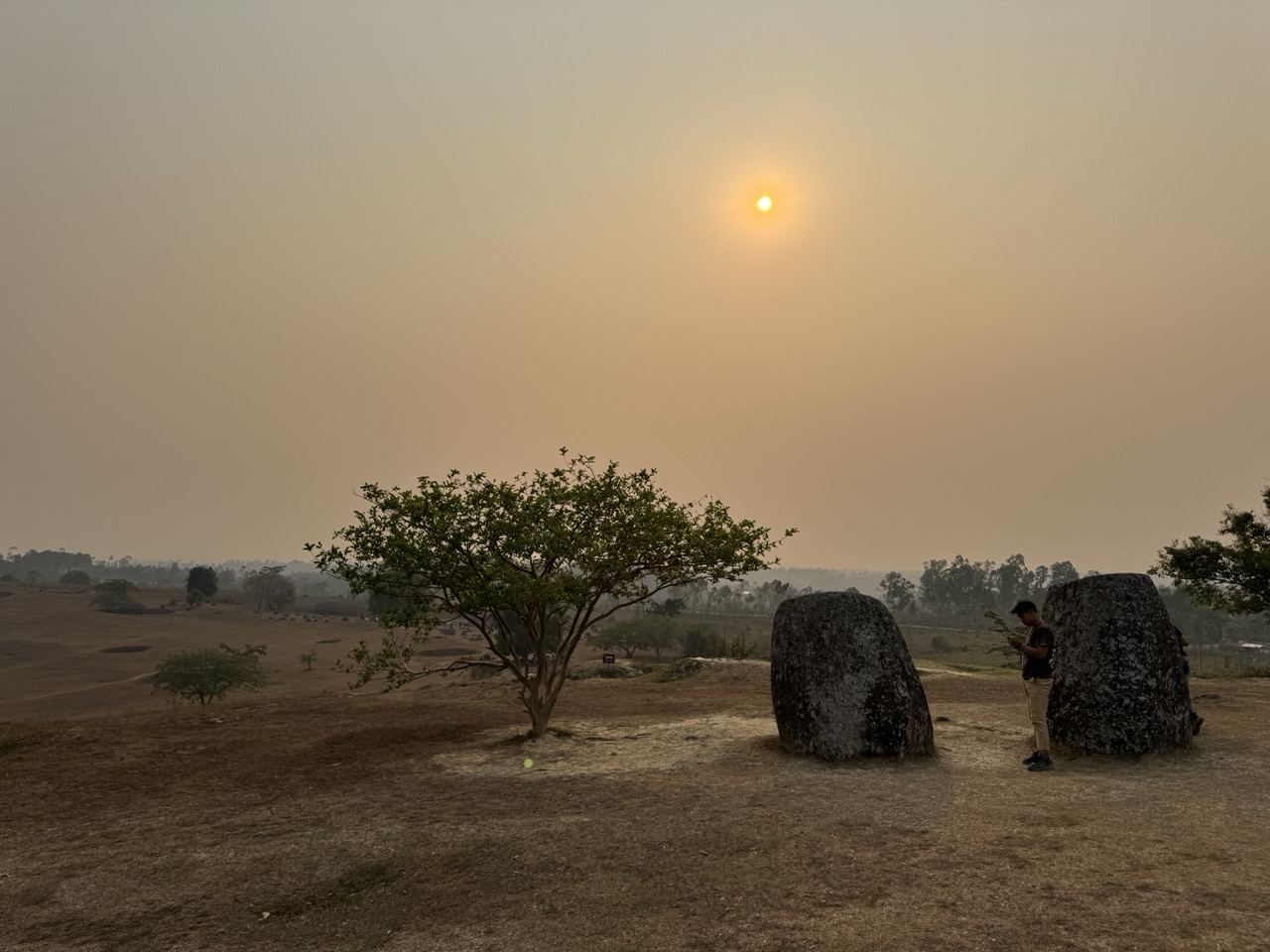
We squeezed in a sunset visit to Plain of Jars Site 1 before dark. Site 1 is the most accessible of the three main jar sites — about 10 minutes outside Phonsavan, hundreds of two-thousand-year-old stone jars scattered across an open hillside, with a Vietnam War cave at one end (used as a shelter during the bombing) and bomb craters cratered into the meadow in between. There's a sign at the entrance asking visitors not to climb the jars, which they need to keep printing for a reason.
Day 5 — Phonsavan to Vang Vieng (~292 km)
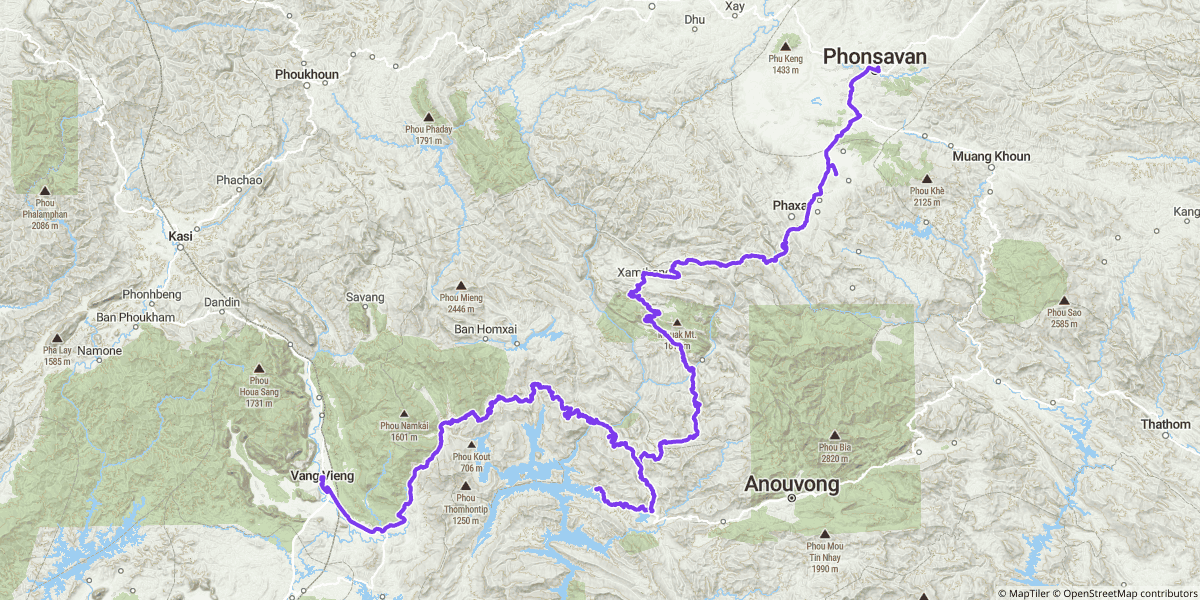
If we had to pick a single highlight day from this trip, this would be it. There's a paved option from Phonsavan down to Vang Vieng — the long way around via Route 13. We didn't take it. Instead we took the dirt-and-gravel mountain route that drops south through ex-Lima Sites and Hmong country — old CIA airstrips from the Secret War era, now just gravel expanses in the middle of nowhere — and climbs over a ridgeline before descending into the karst valleys north of Vang Vieng. ~290 km, almost all of it on dirt or rough sealed.
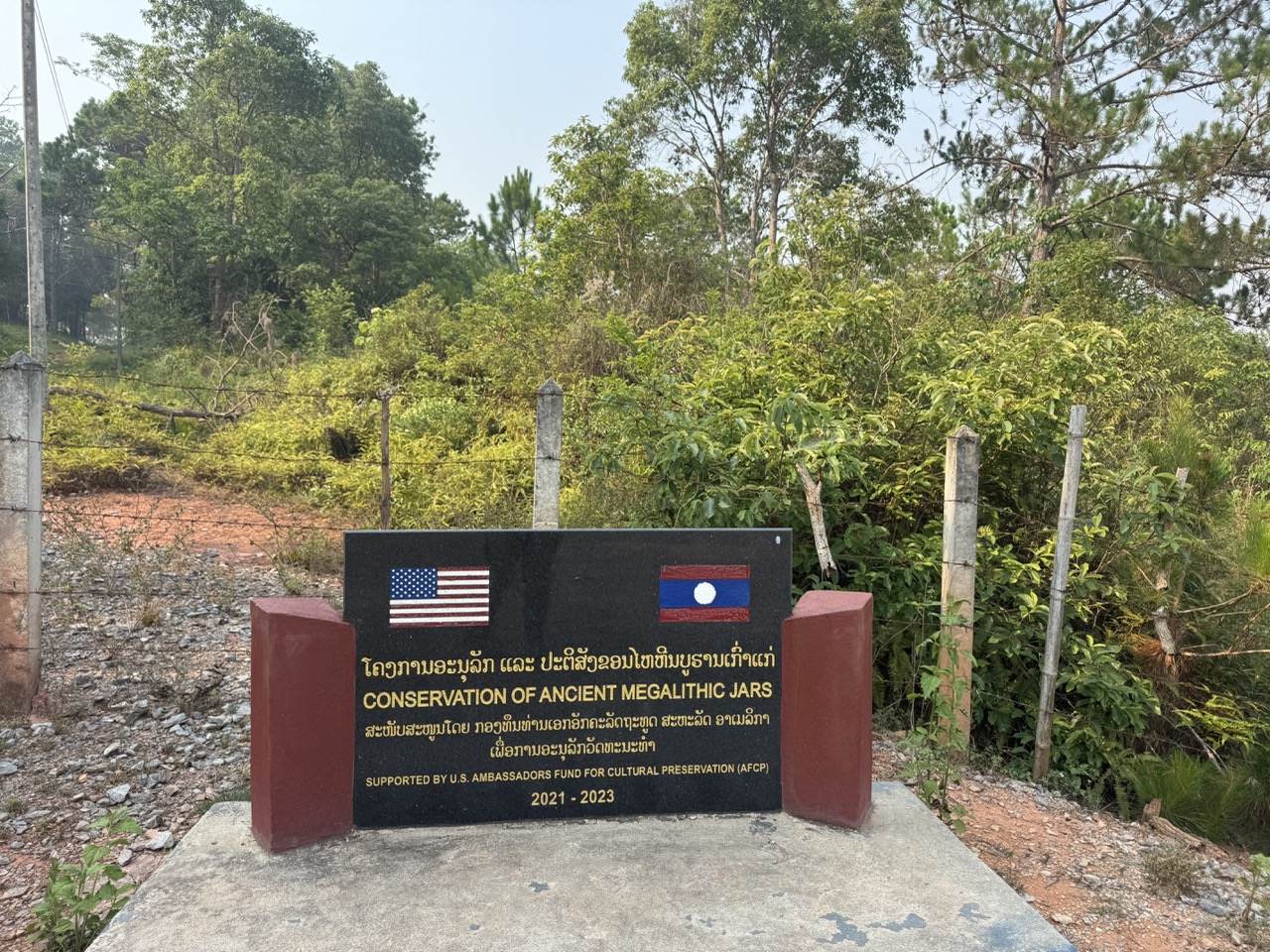
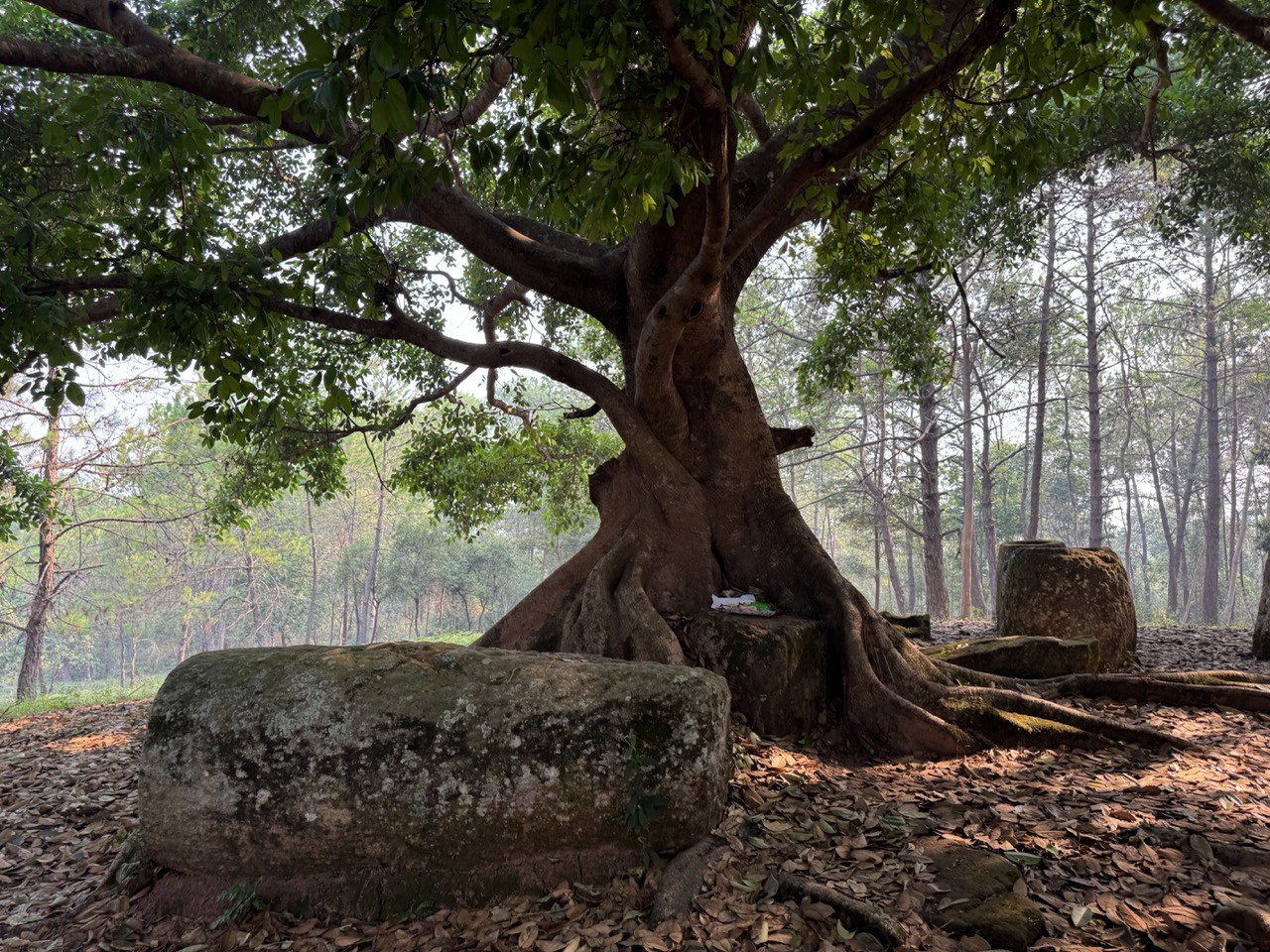
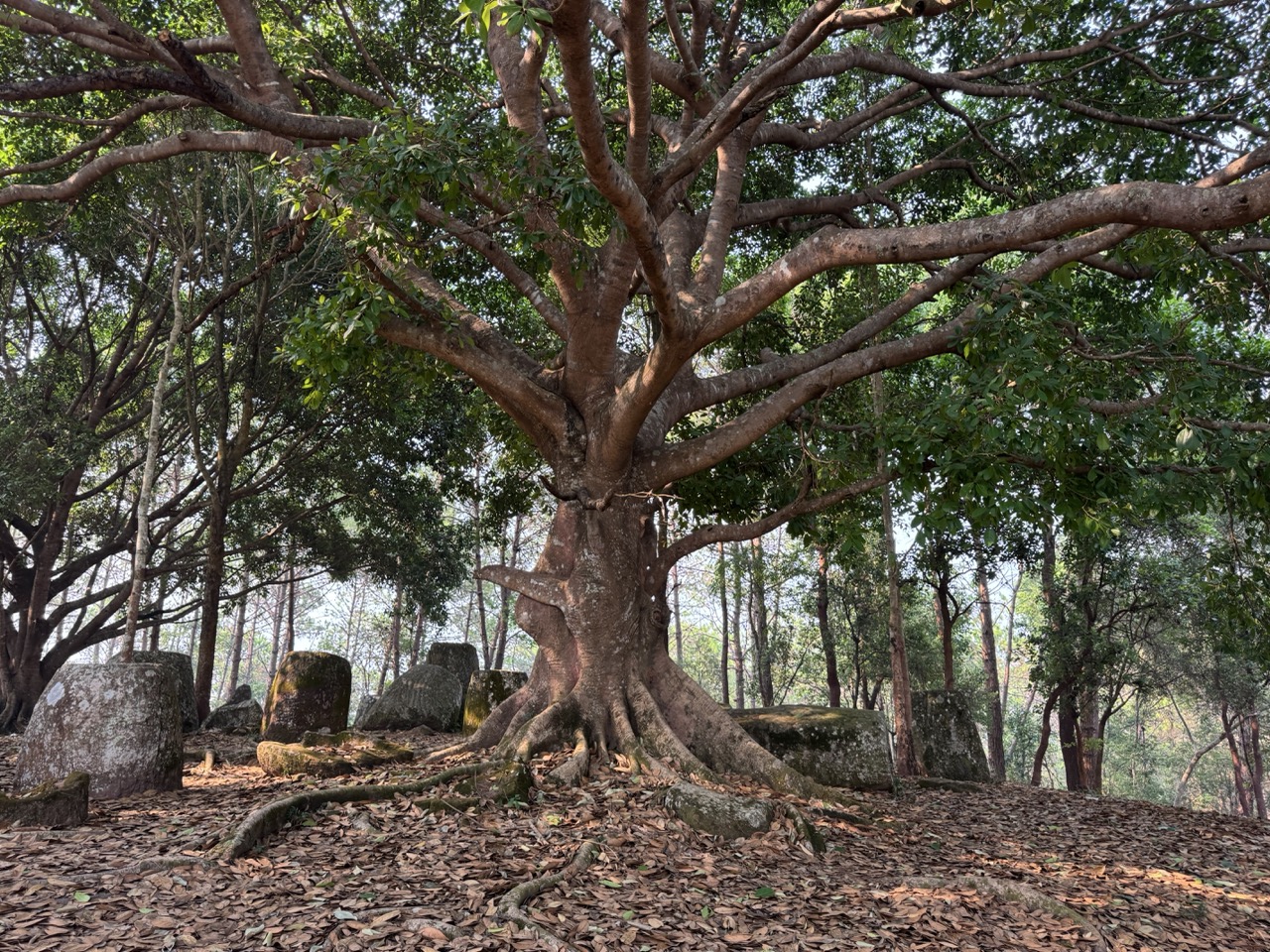
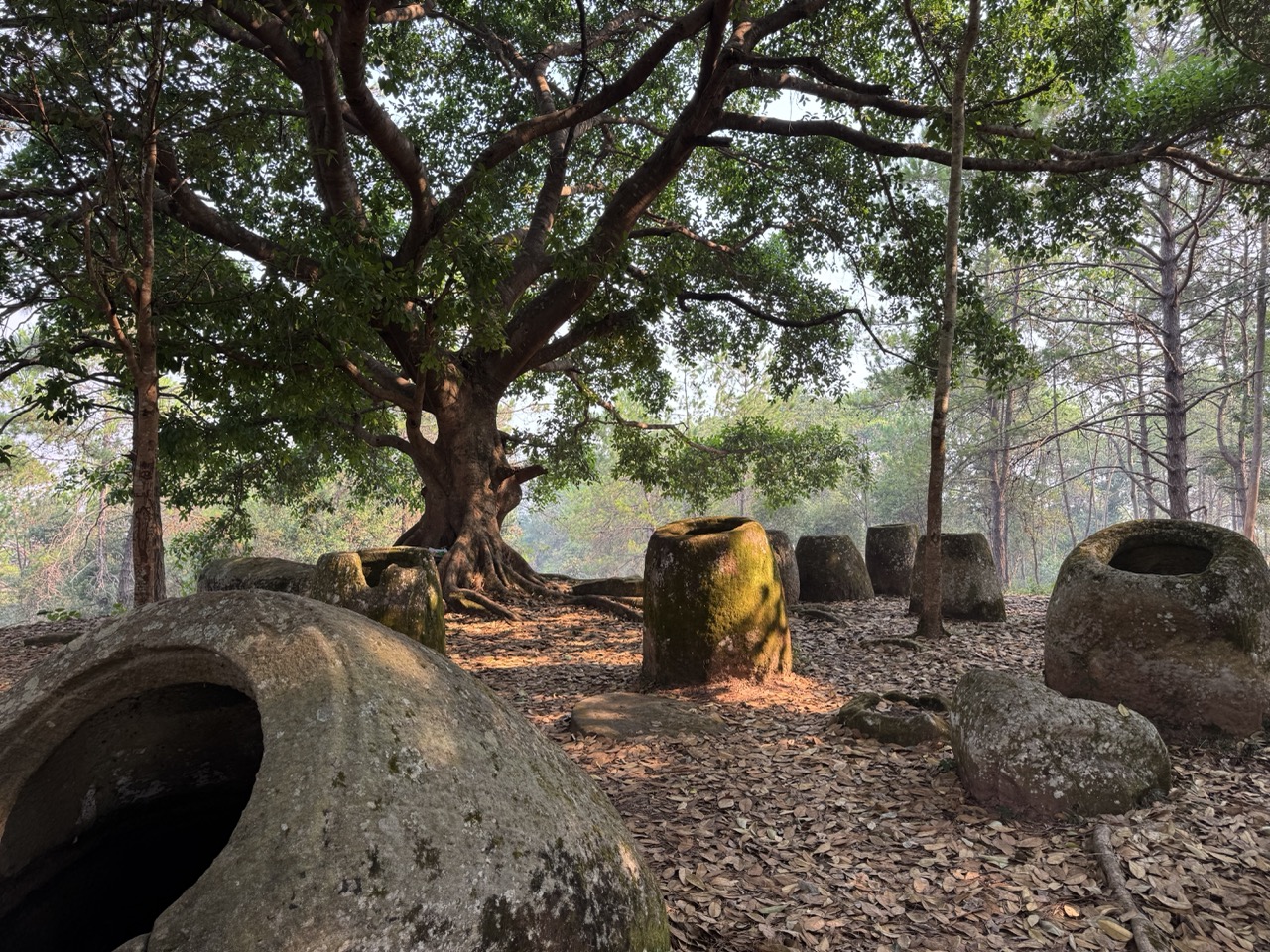
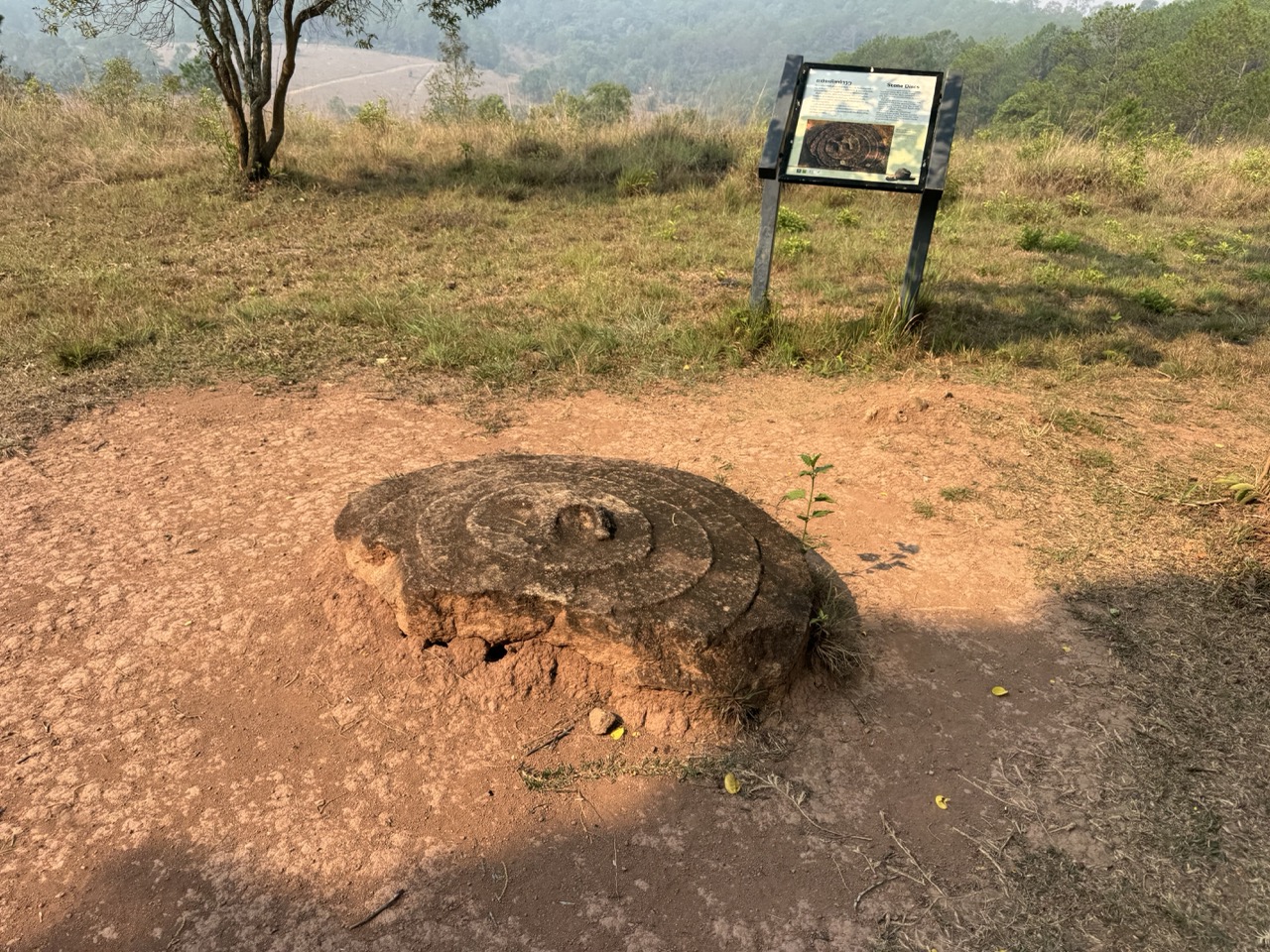
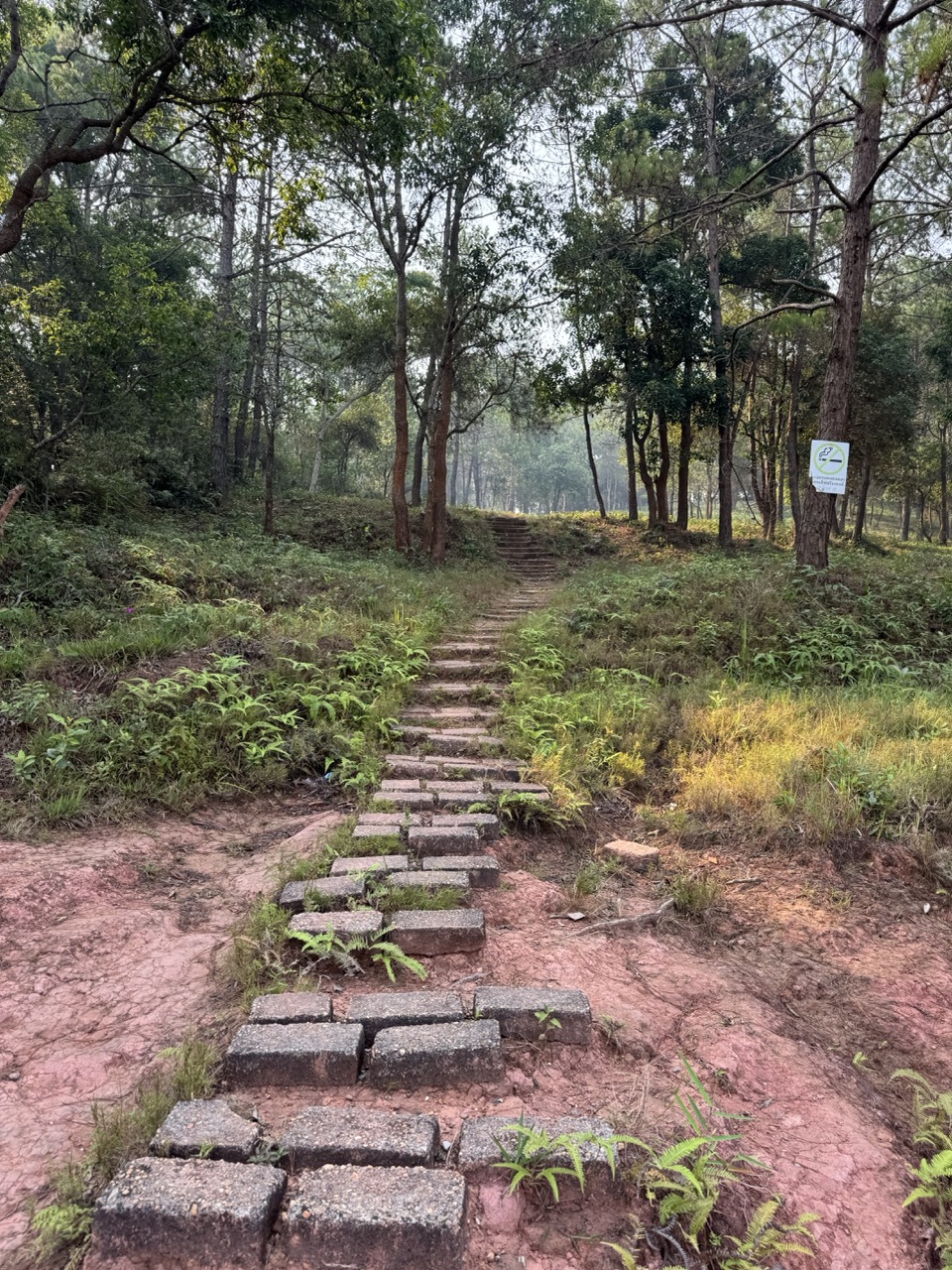
We swung past Plain of Jars Site 2 on the way out — smaller, quieter, more atmospheric than Site 1. Site 2 sits in a pine forest with a huge old banyan rooted right in among the jars. There's a conservation plaque from the time the US helped clear ordnance from the site for visitor access — small US flags stuck in the ground around it.
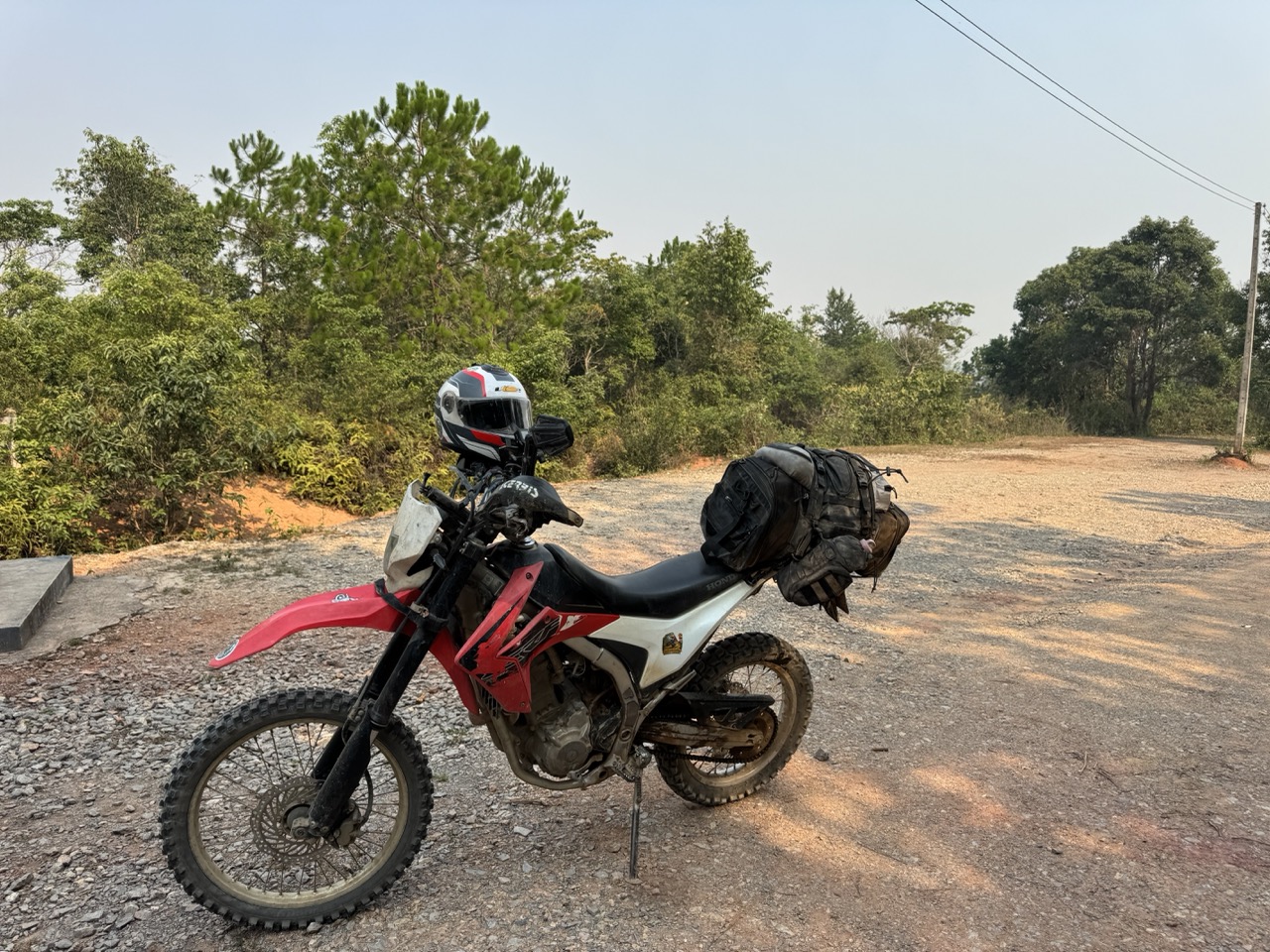
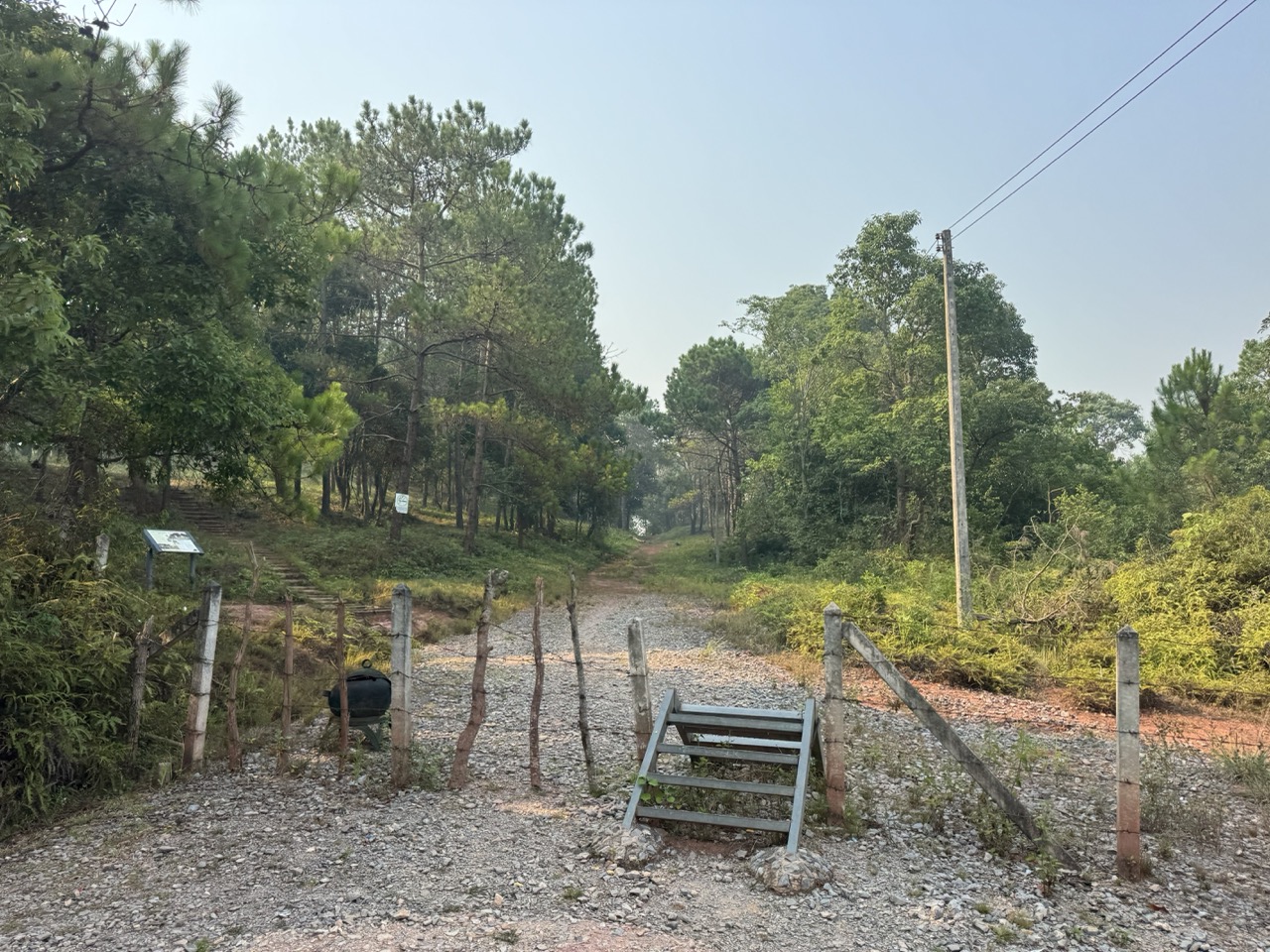
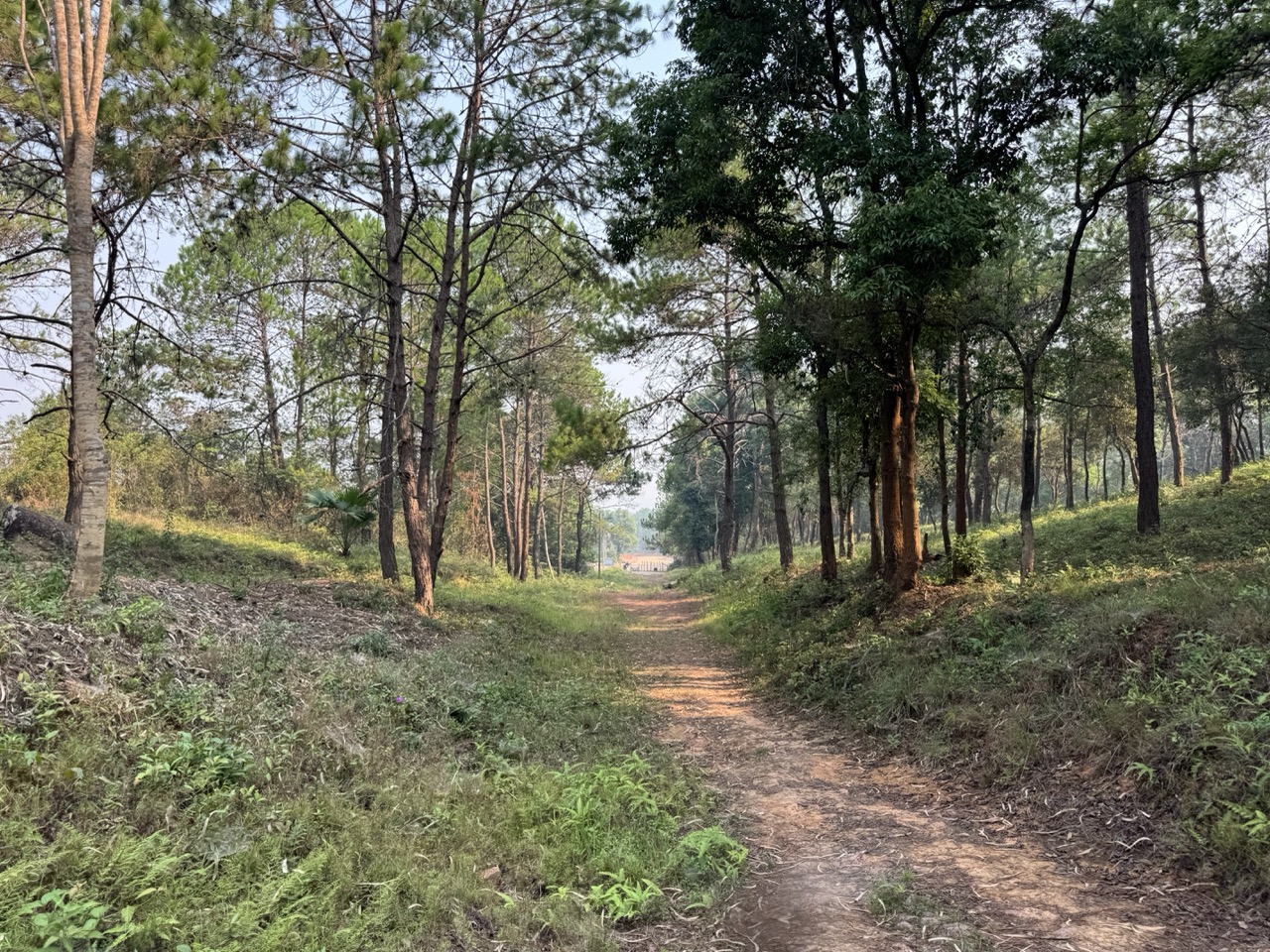
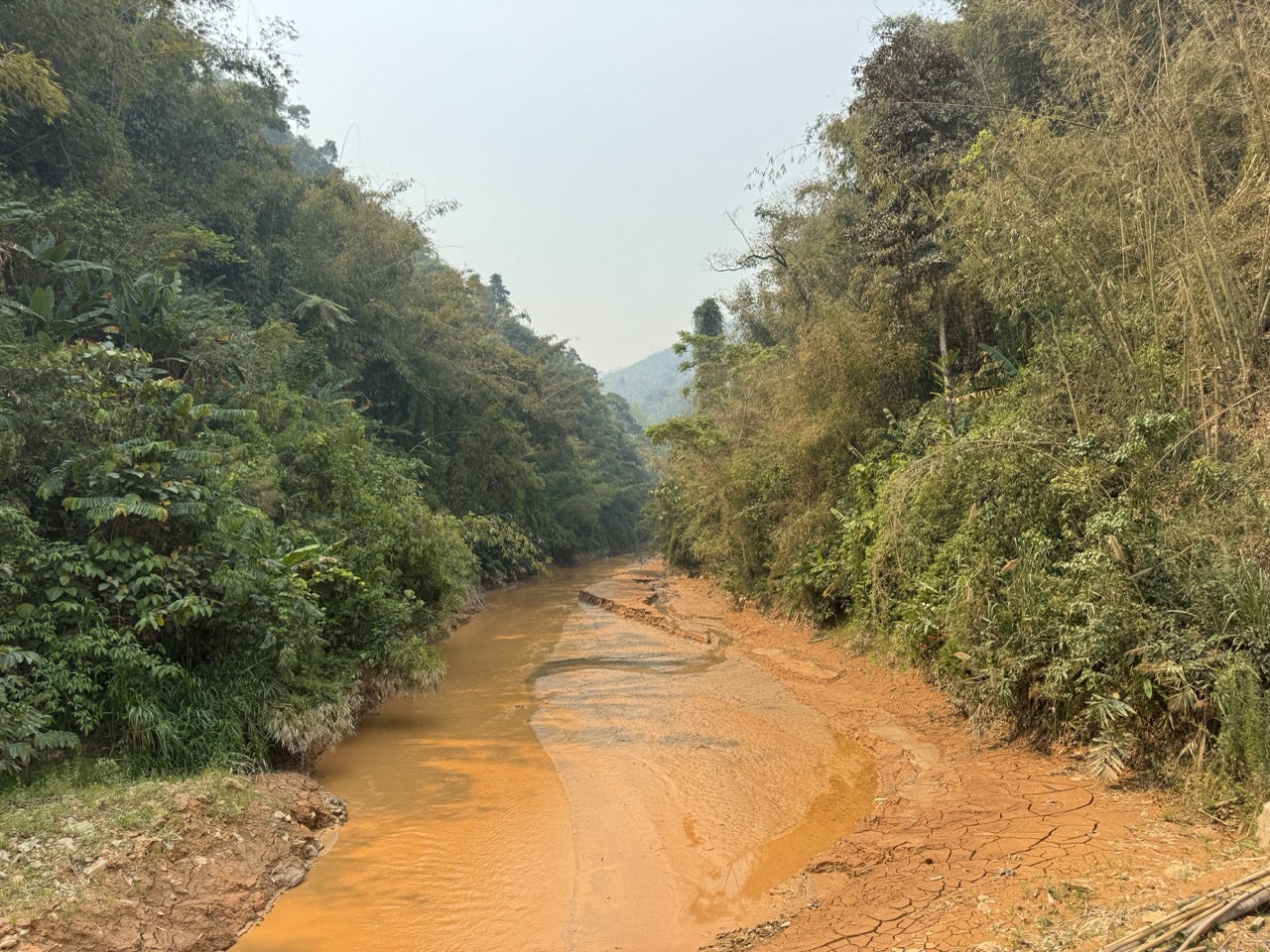
From Site 2 the route turns south onto the dirt. The transition is almost immediate — within fifteen kilometres of leaving the sealed road outside Phonsavan you're on red dirt mountain tracks, switchbacks down deforested hillsides, narrow cuts through ridgelines. This is the part of the trip you'd remember from a hundred metres.
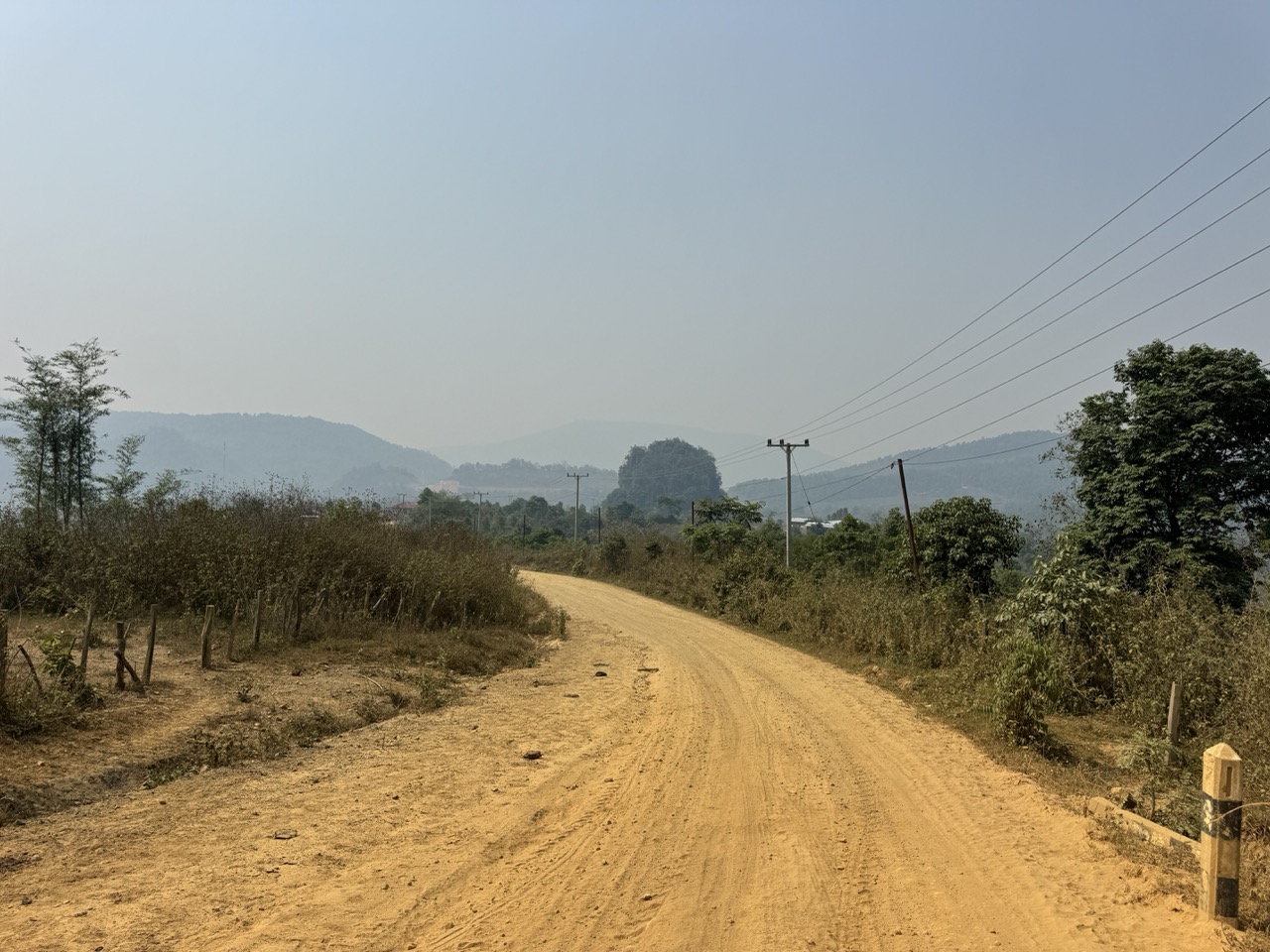
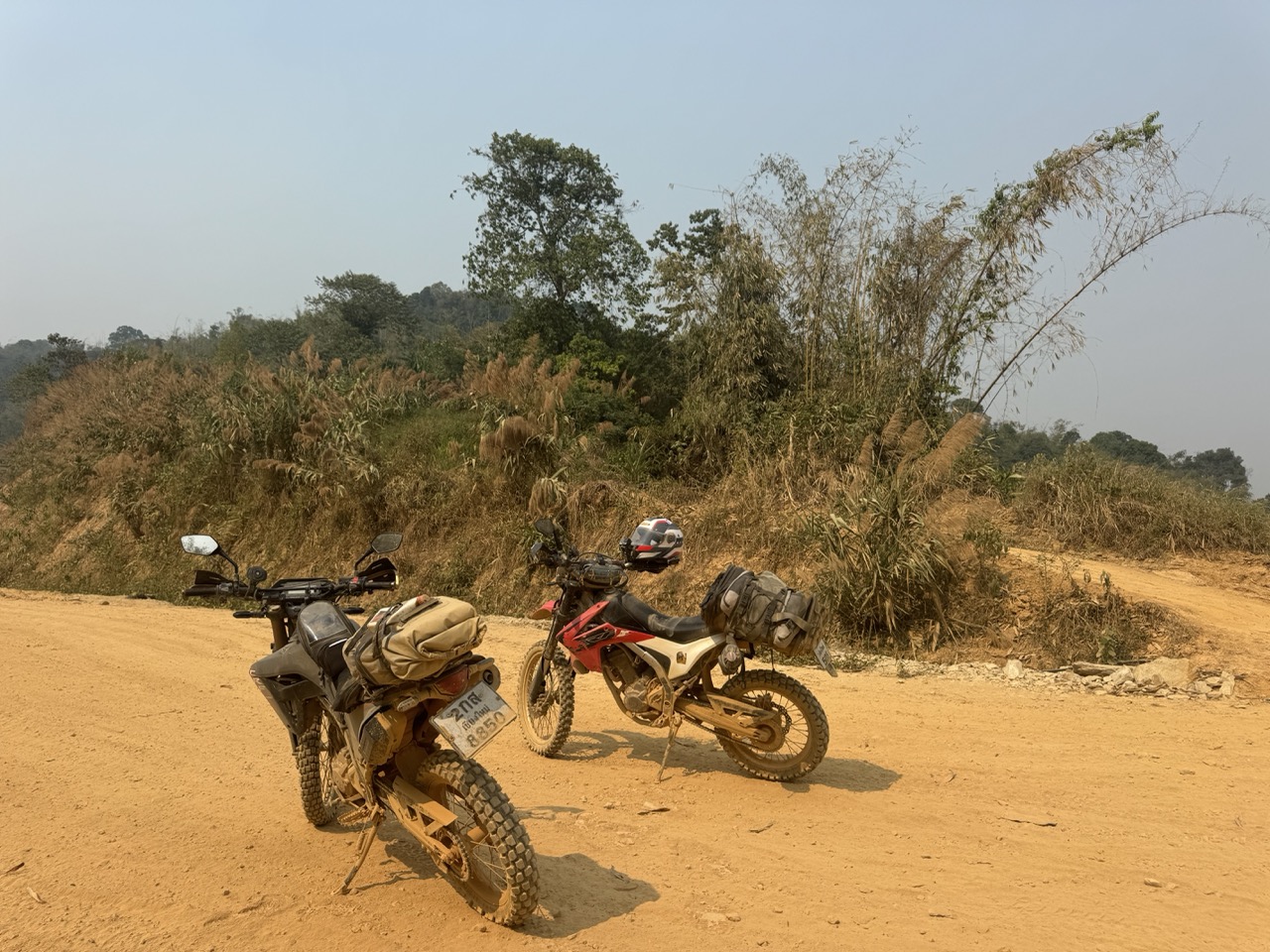
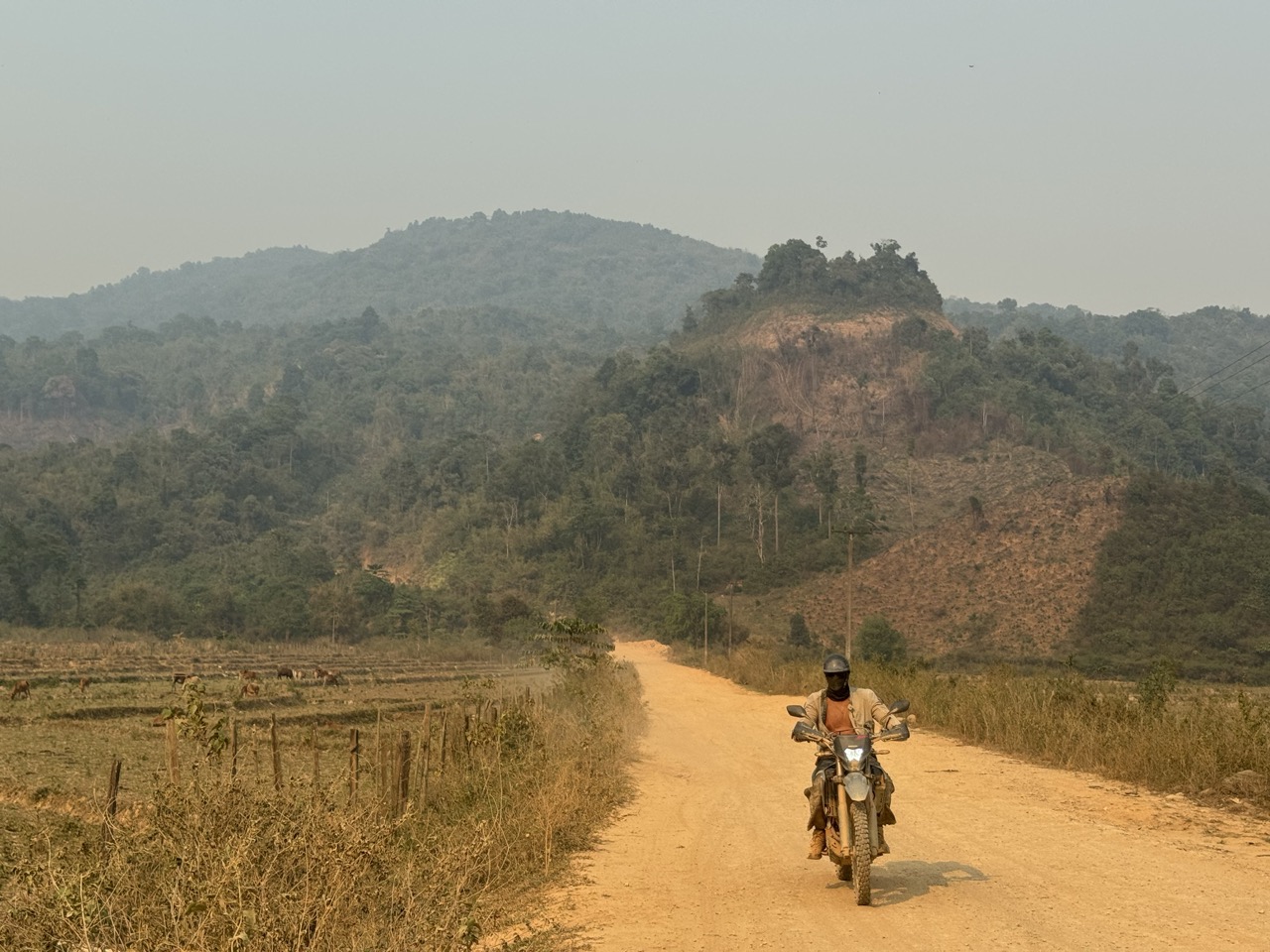
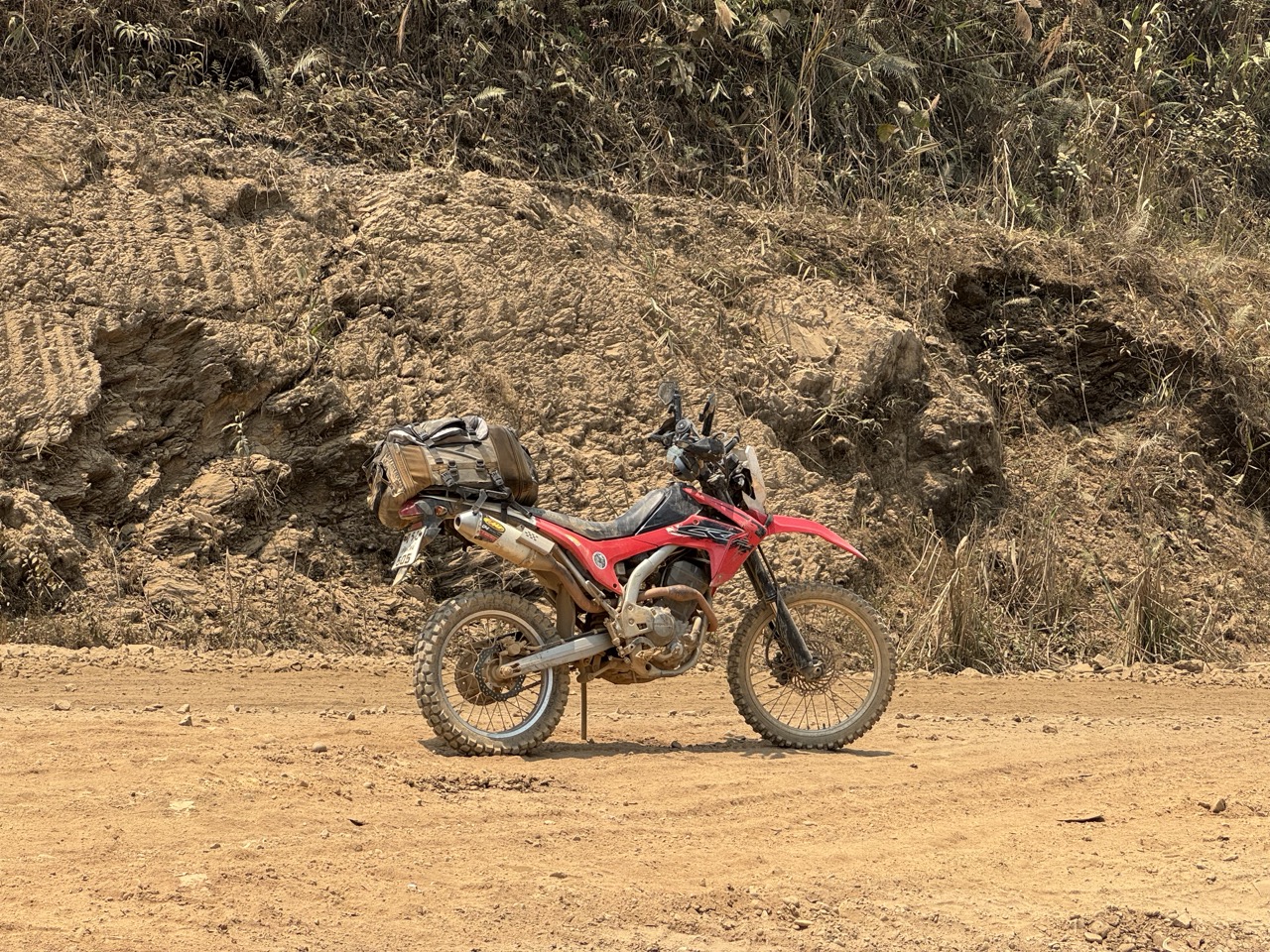
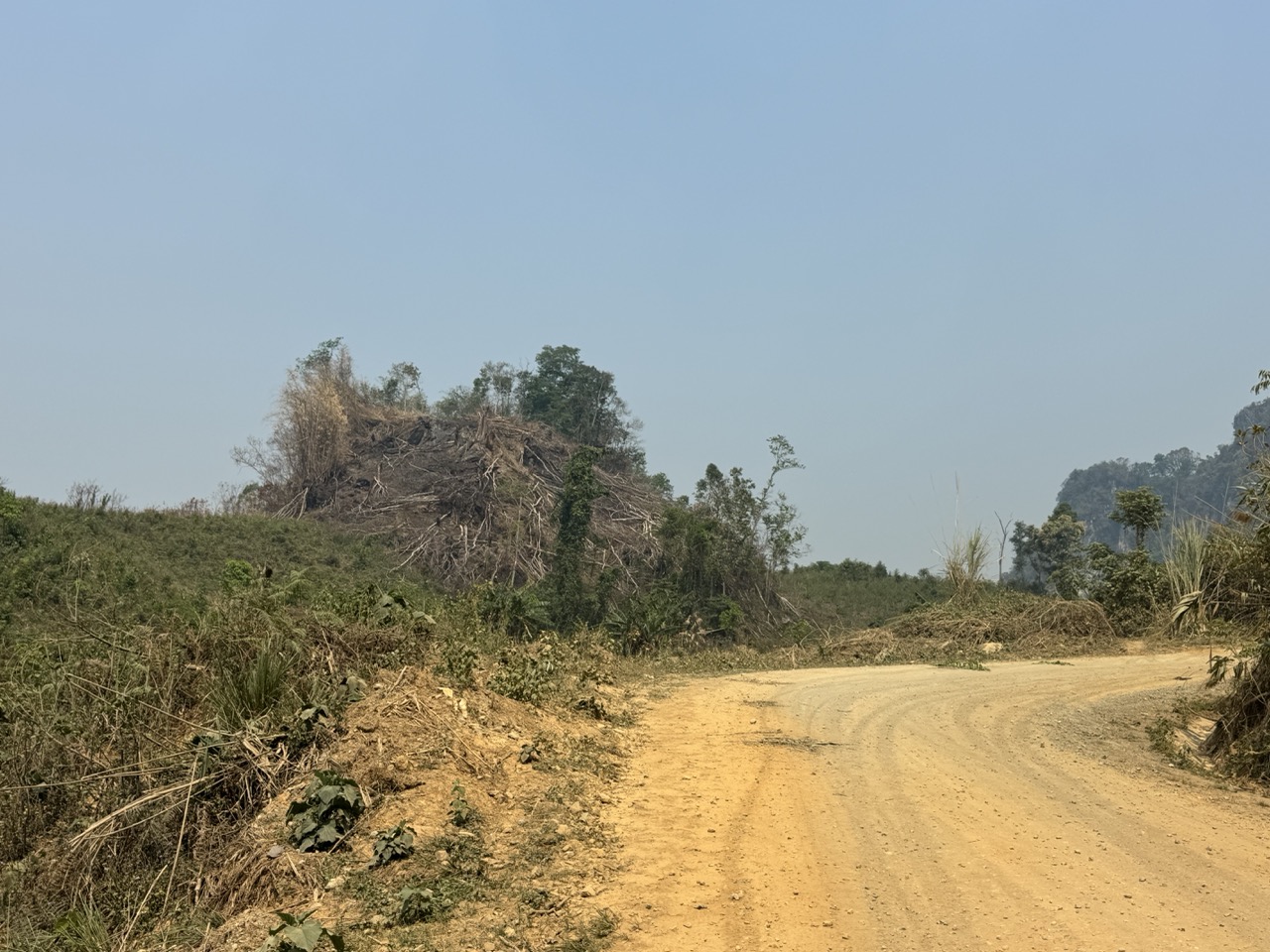
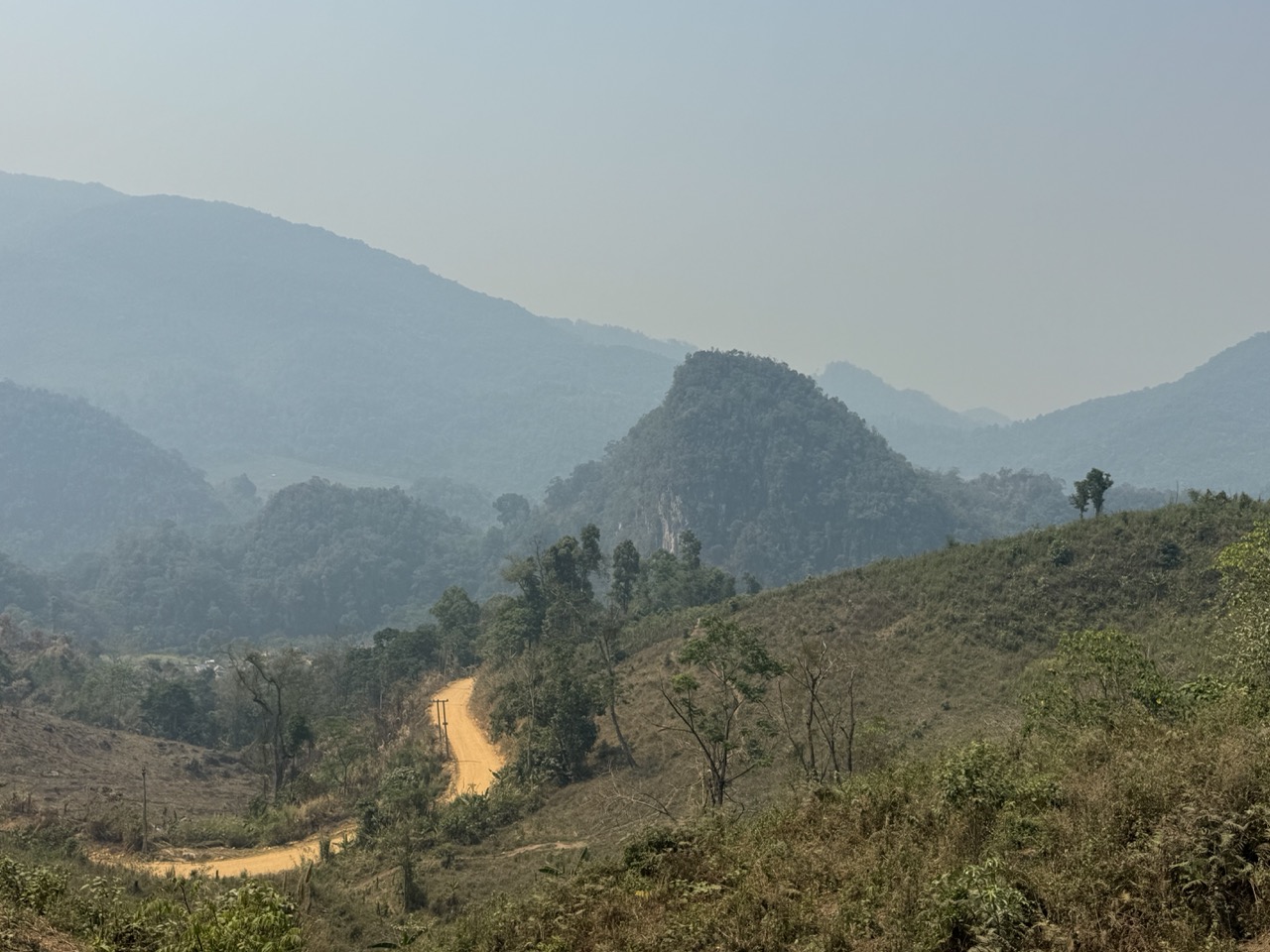
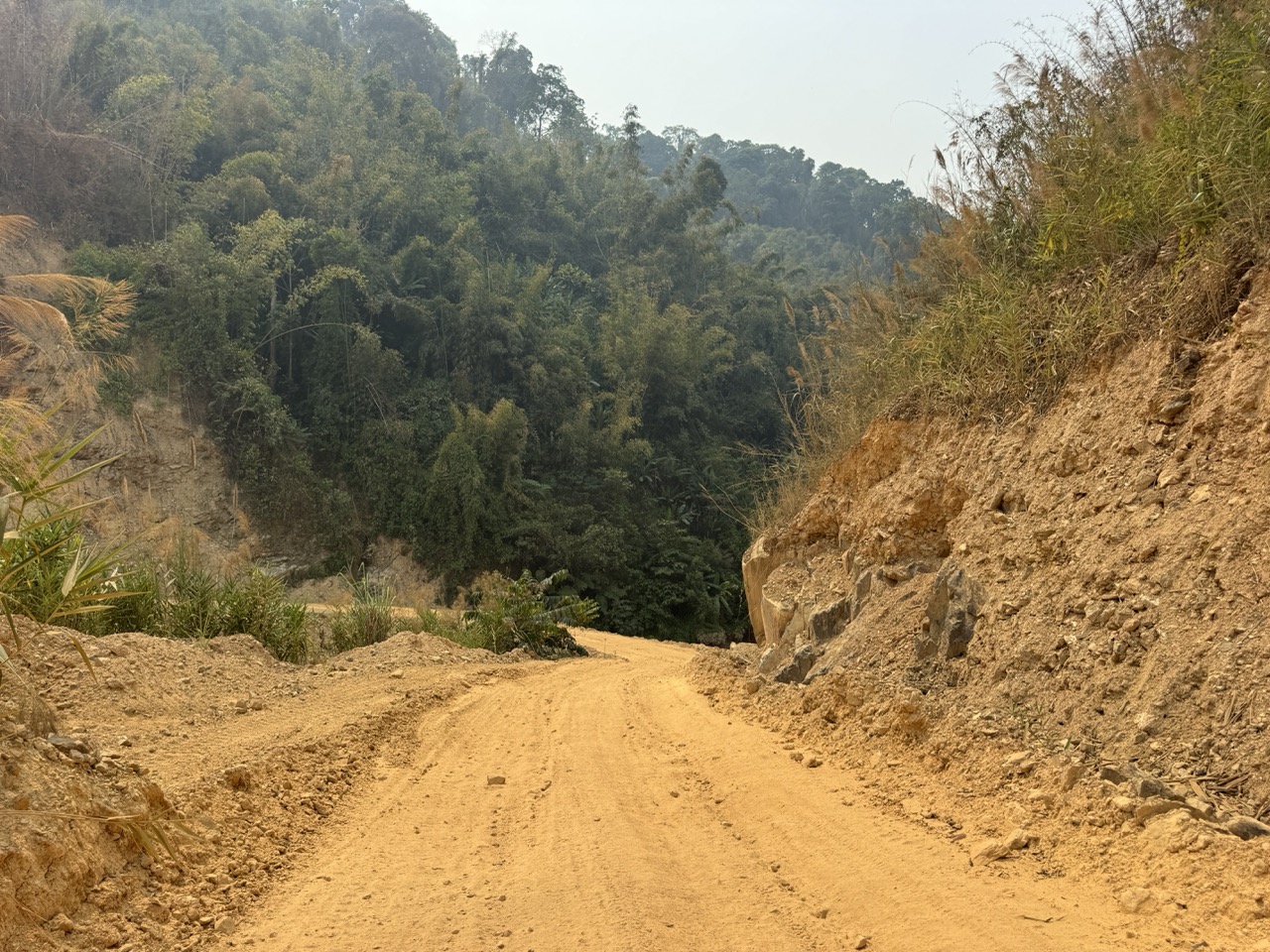
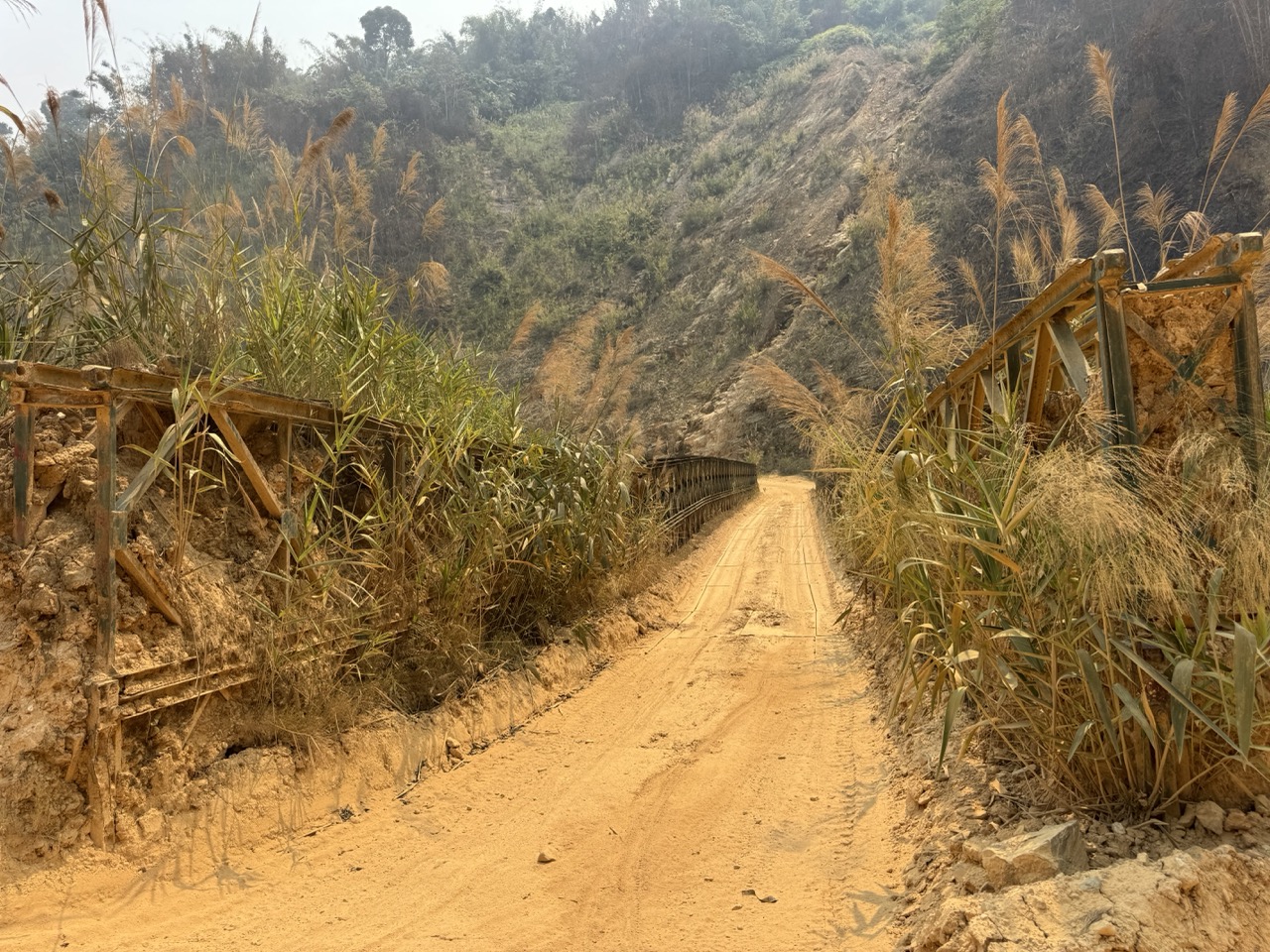
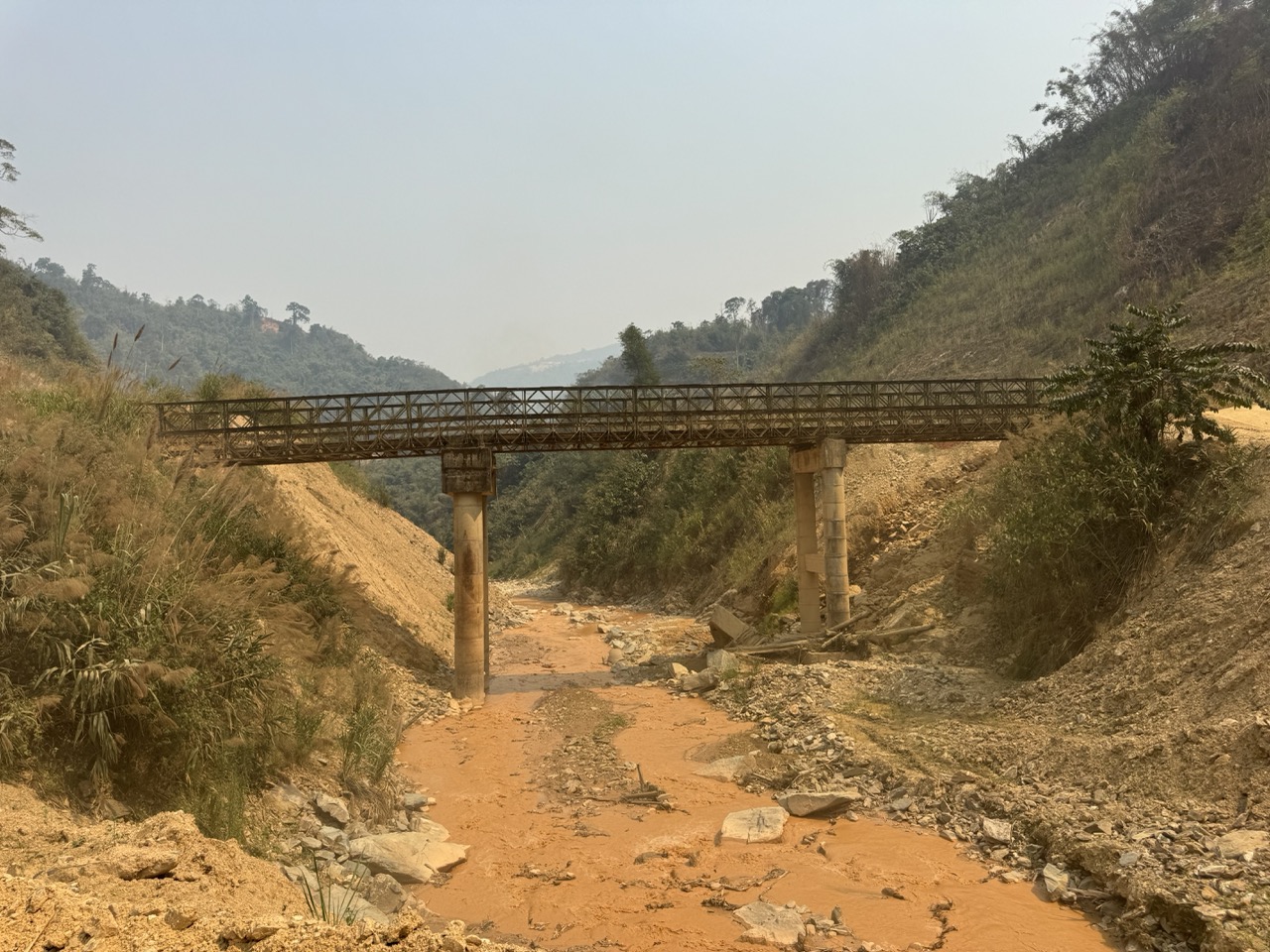
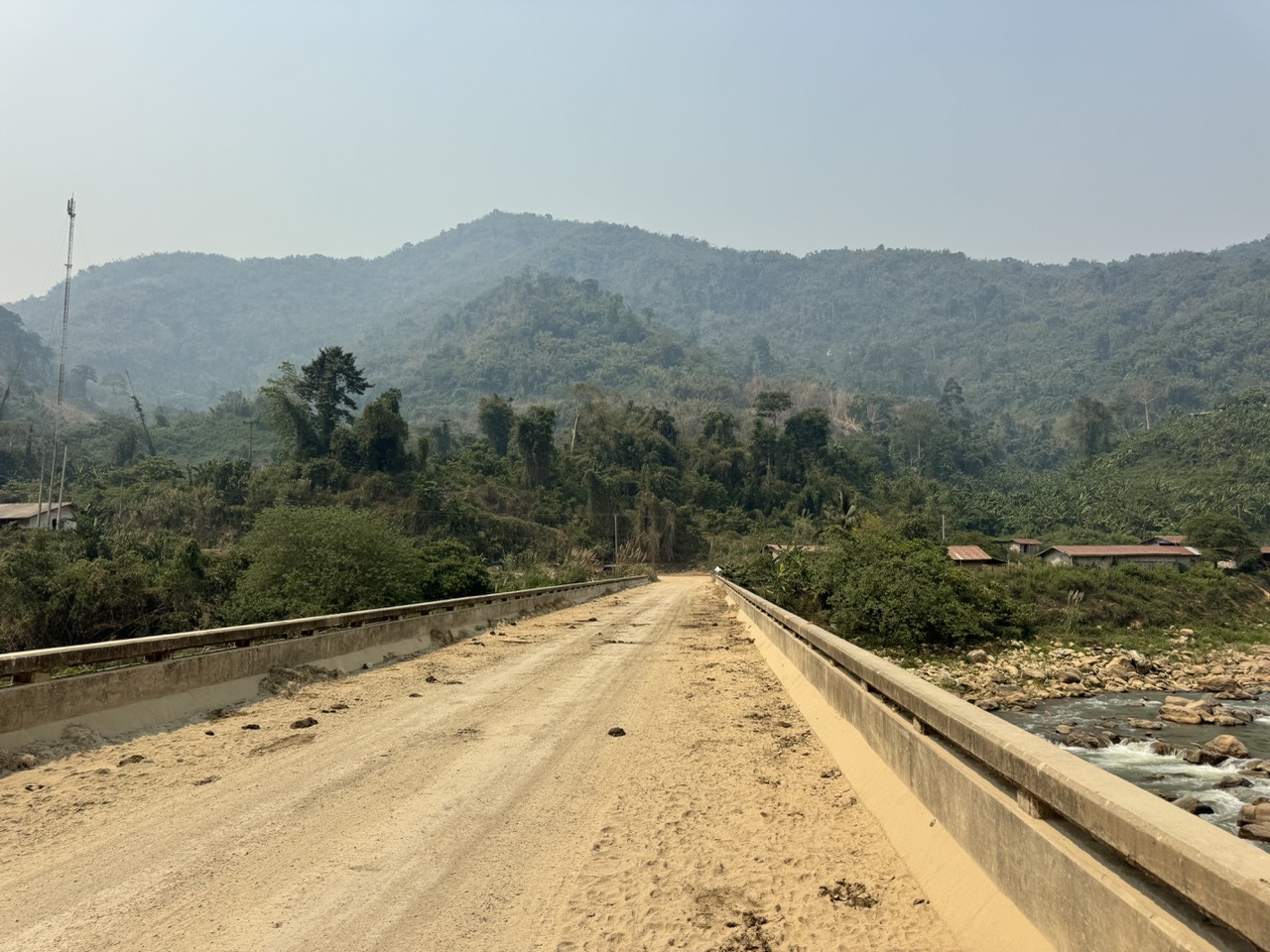
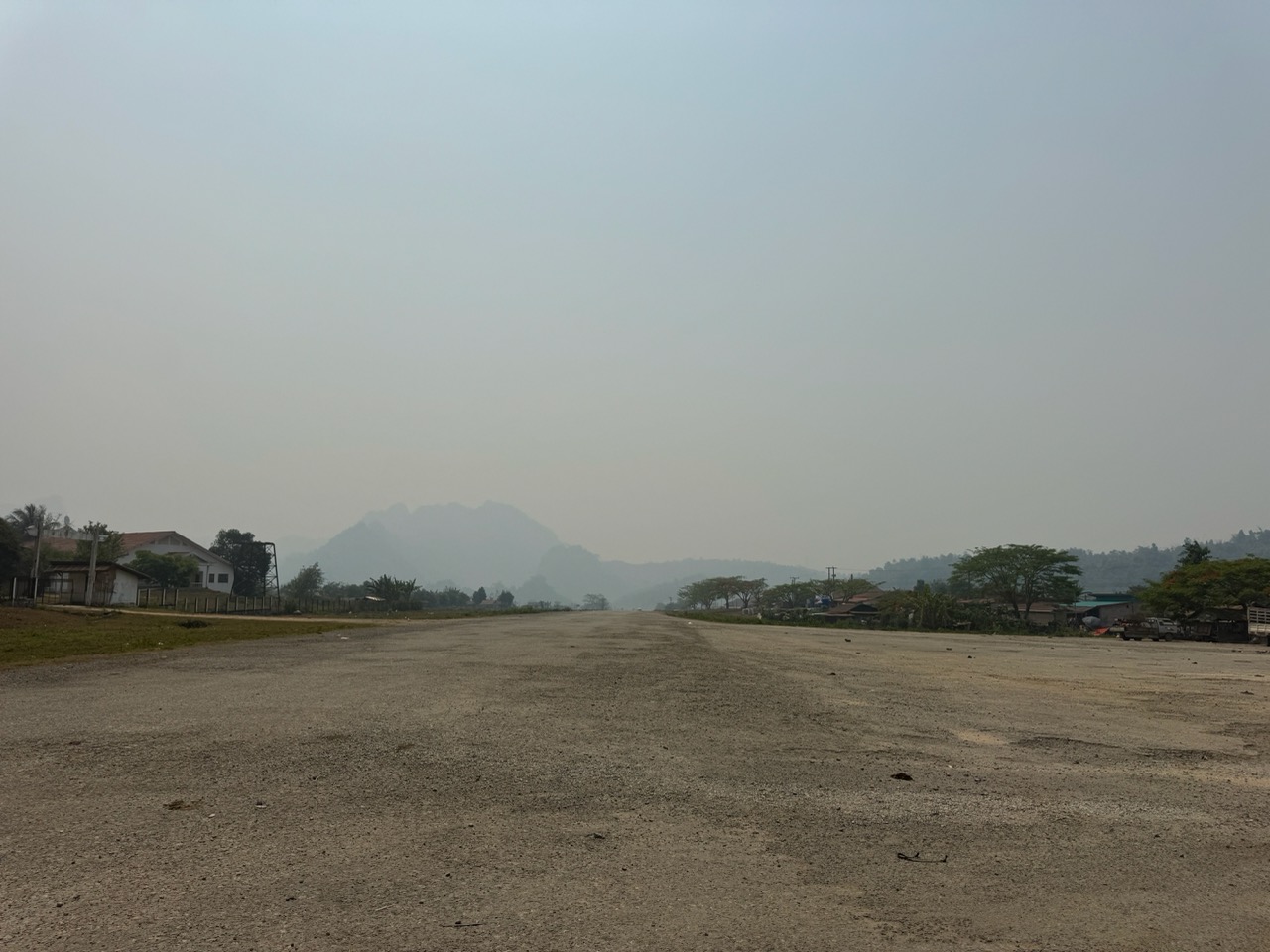
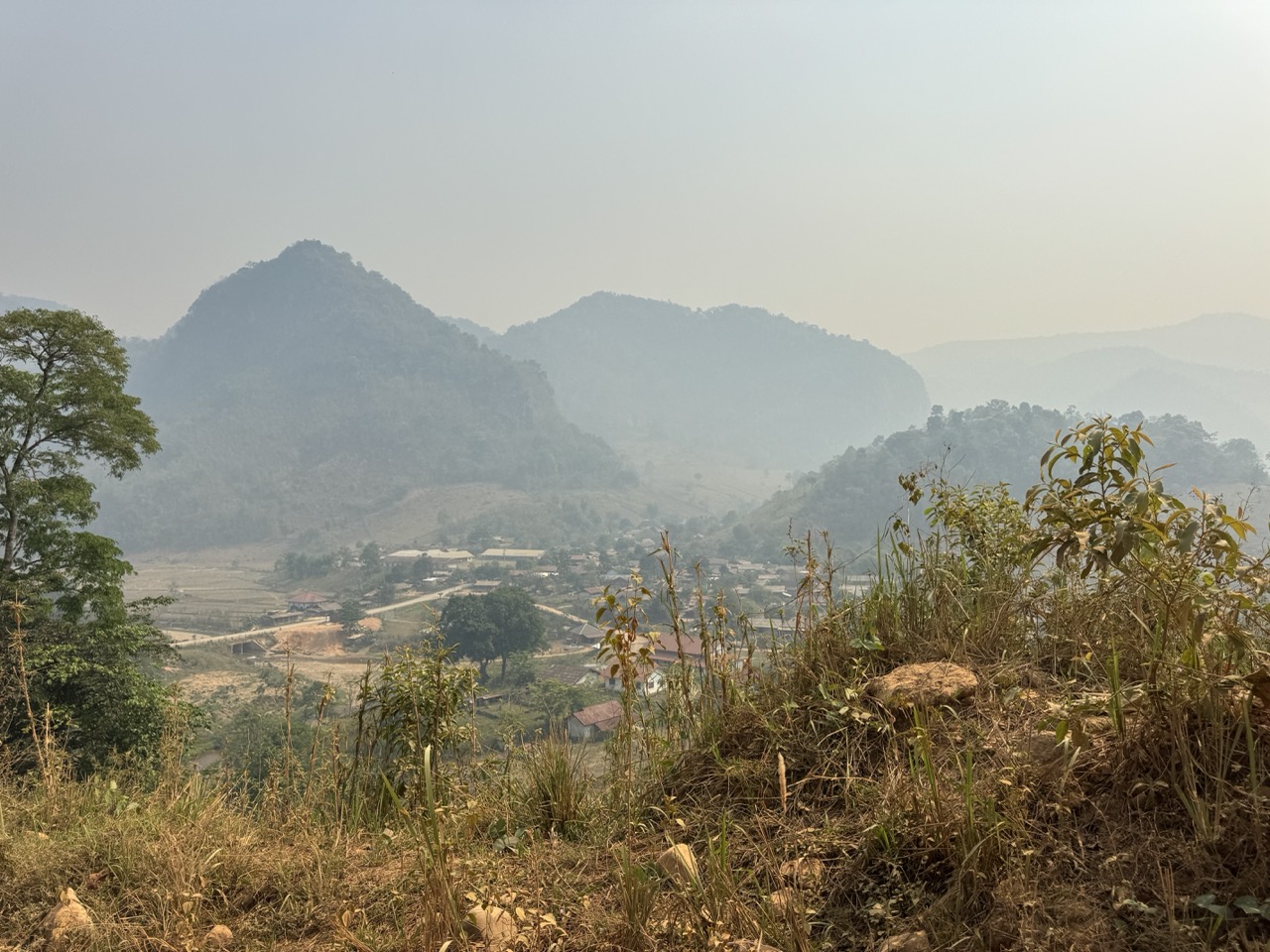
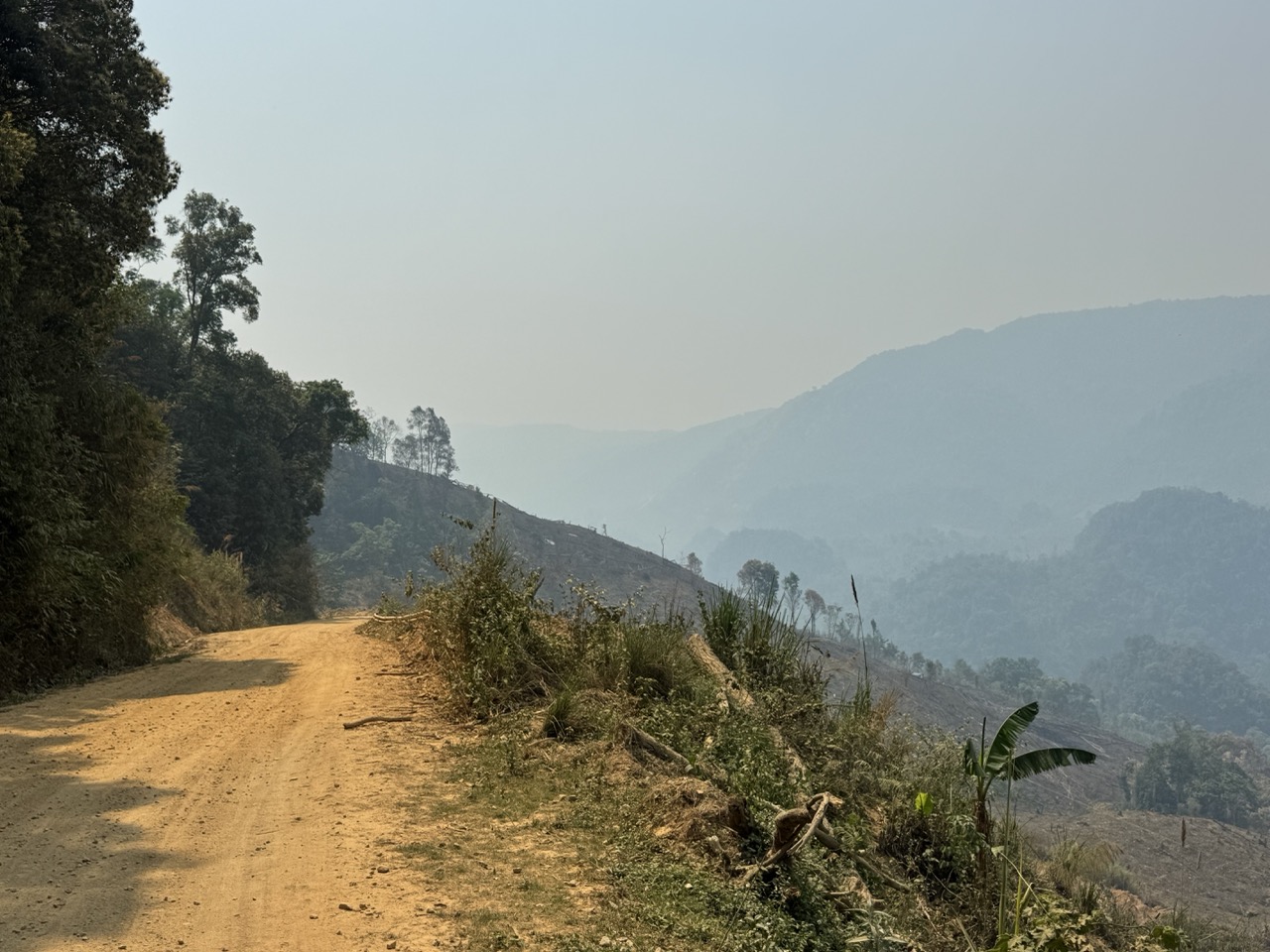
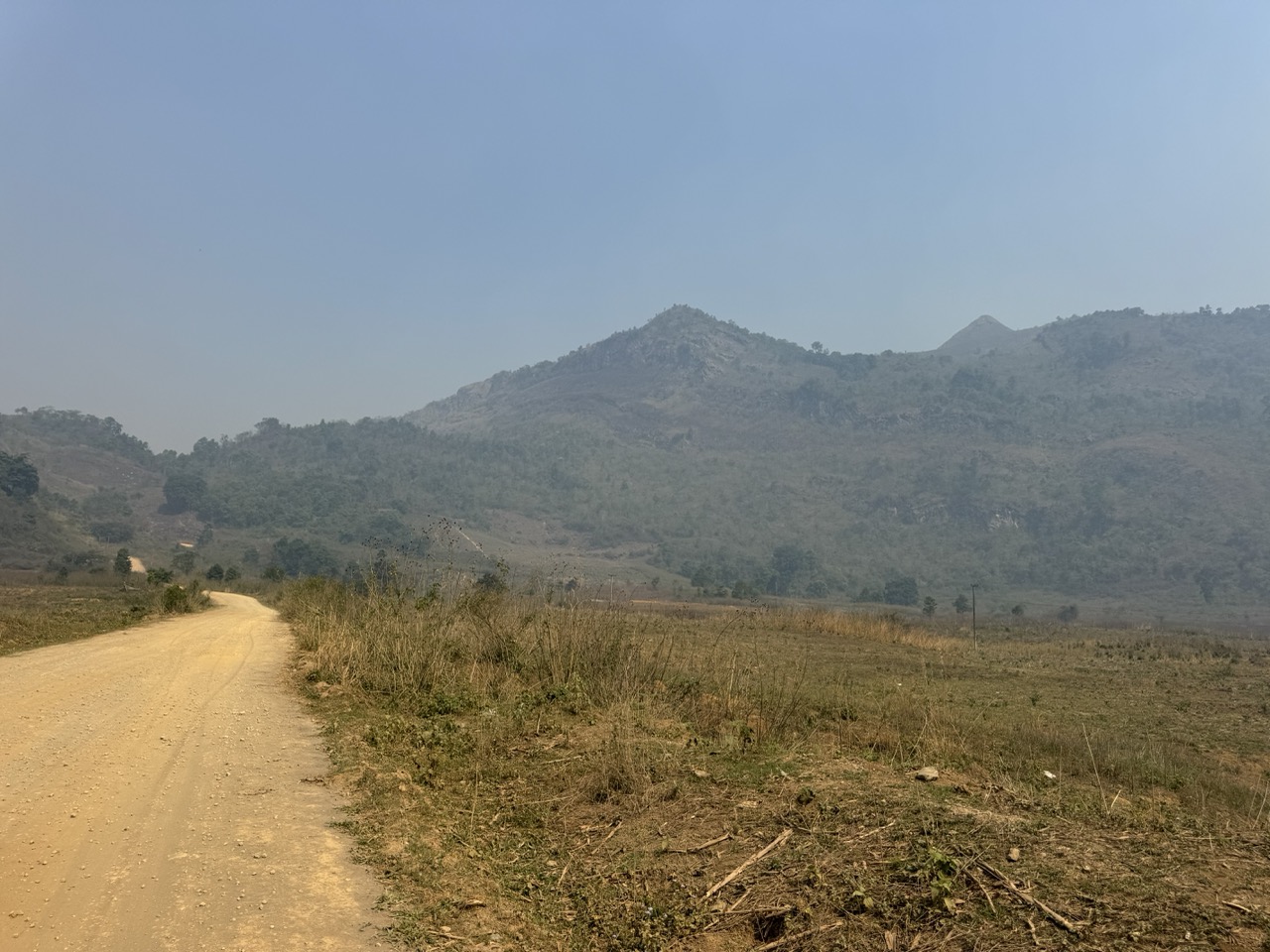
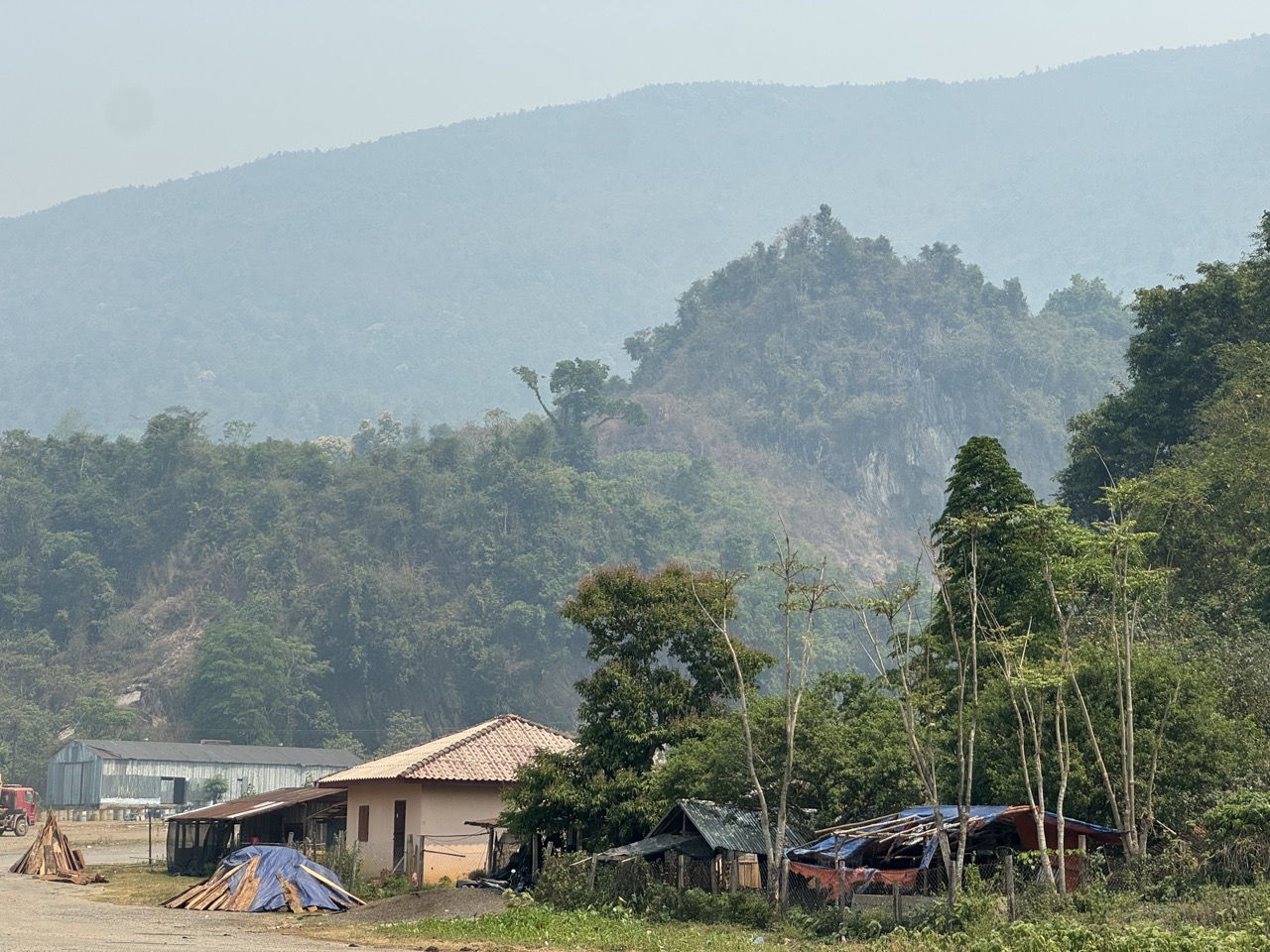
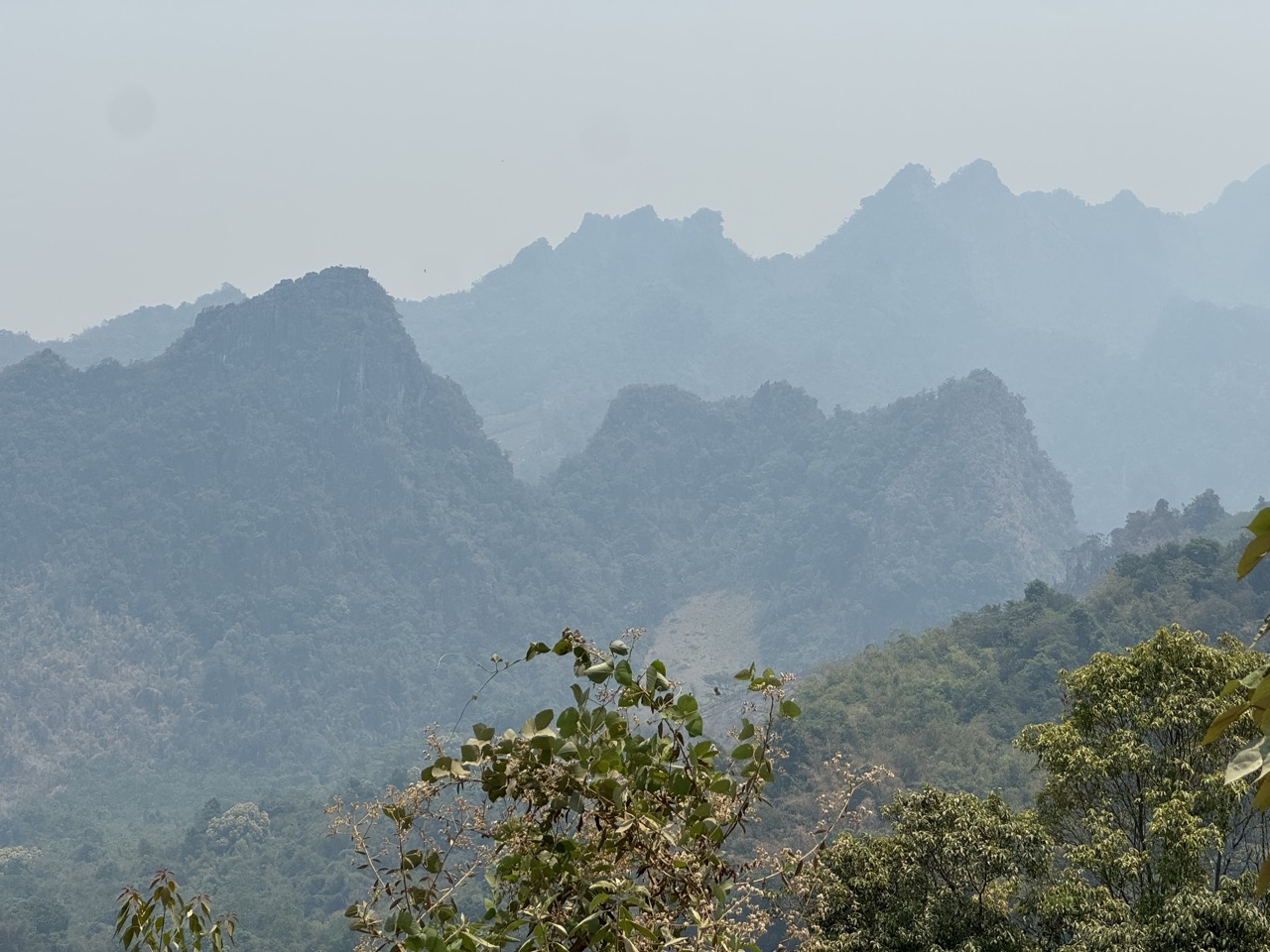
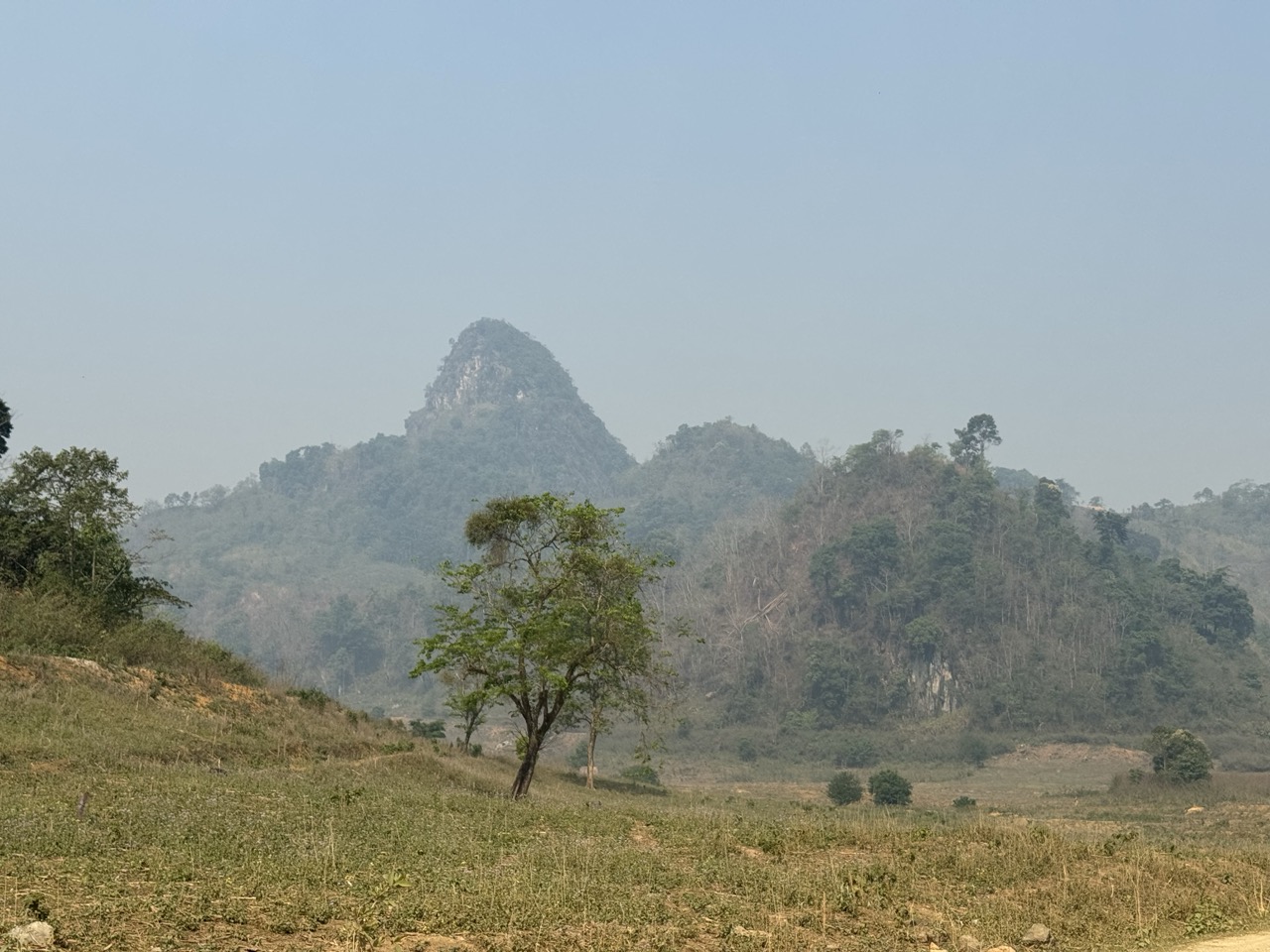
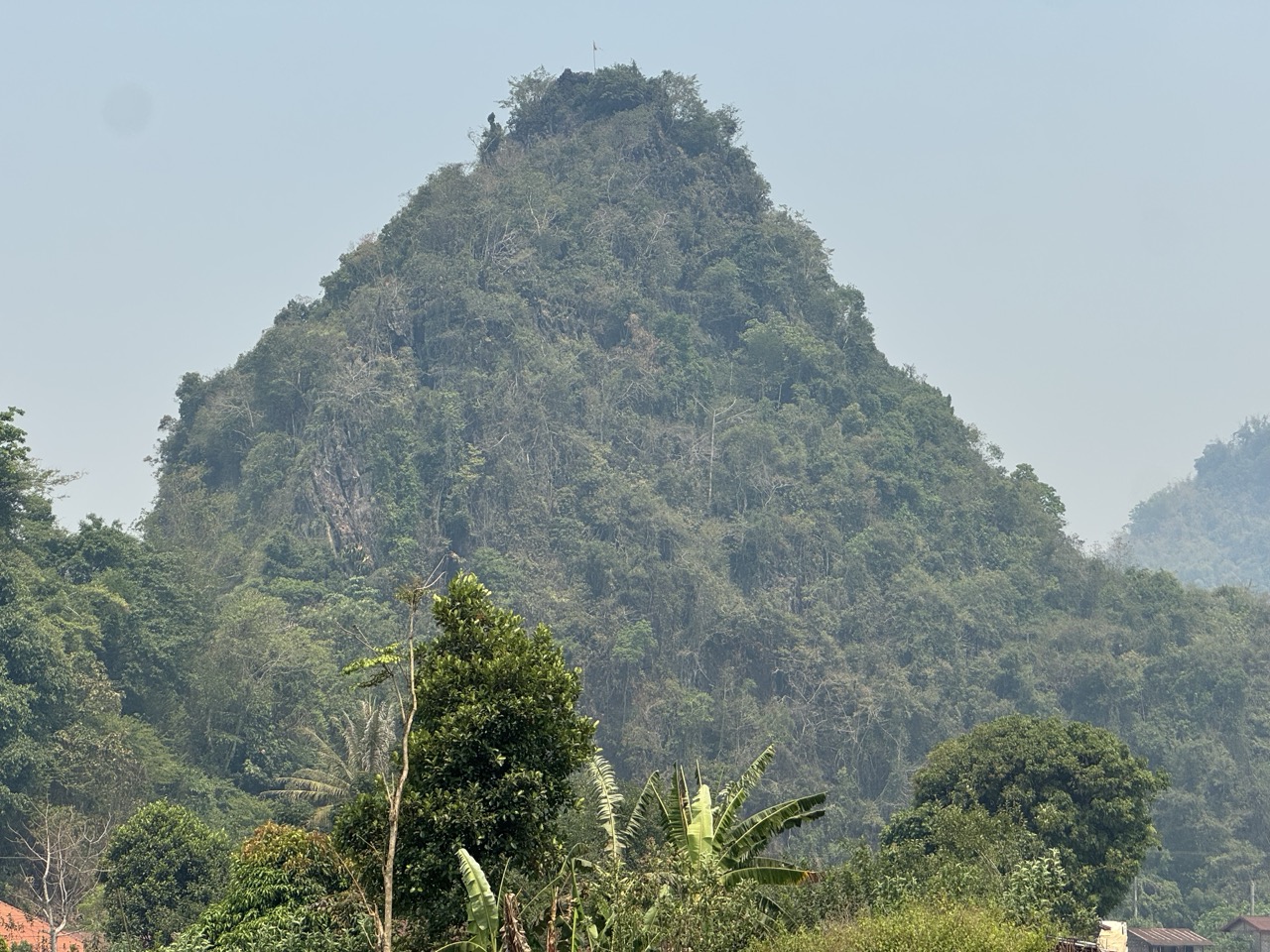
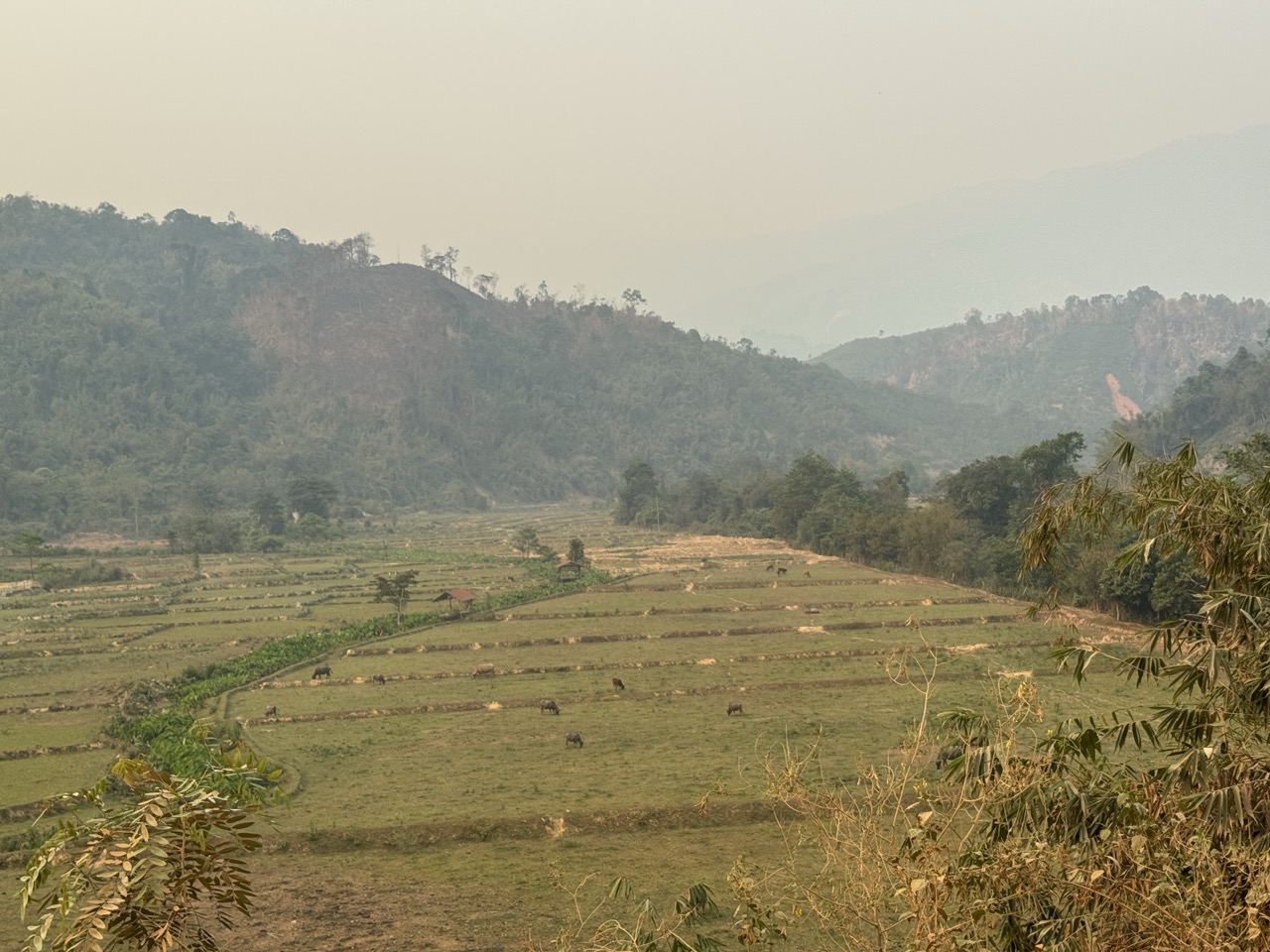
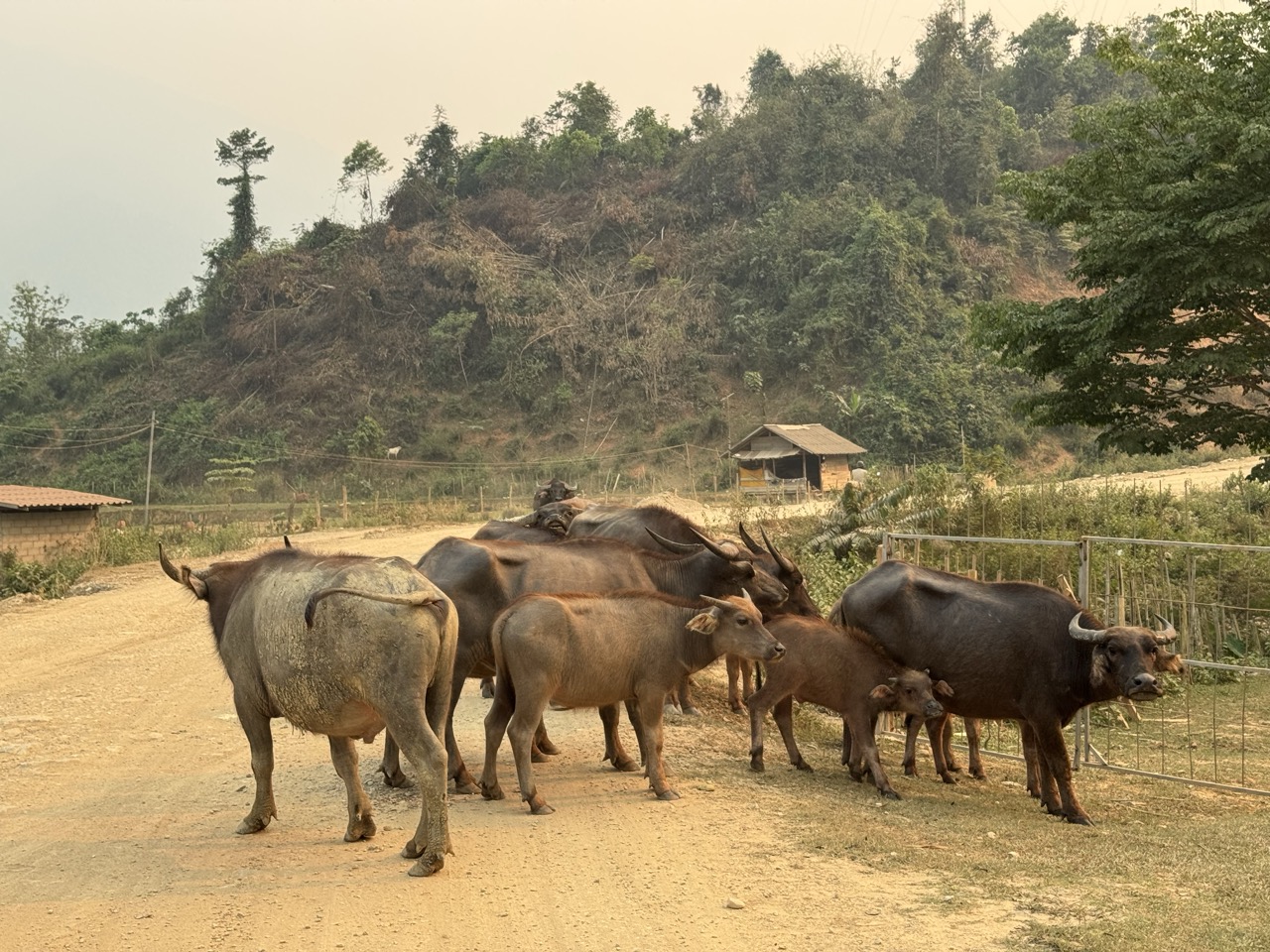
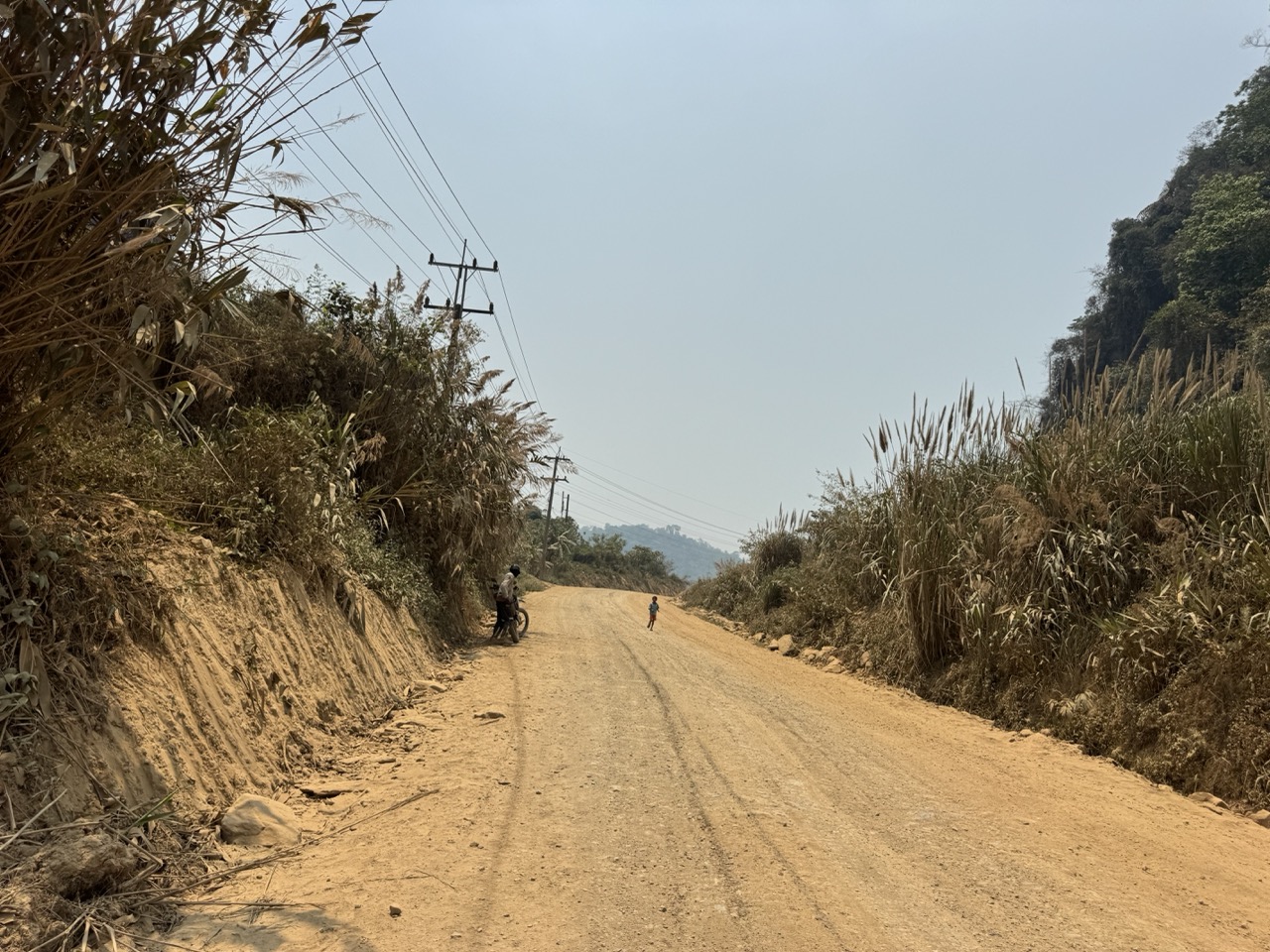
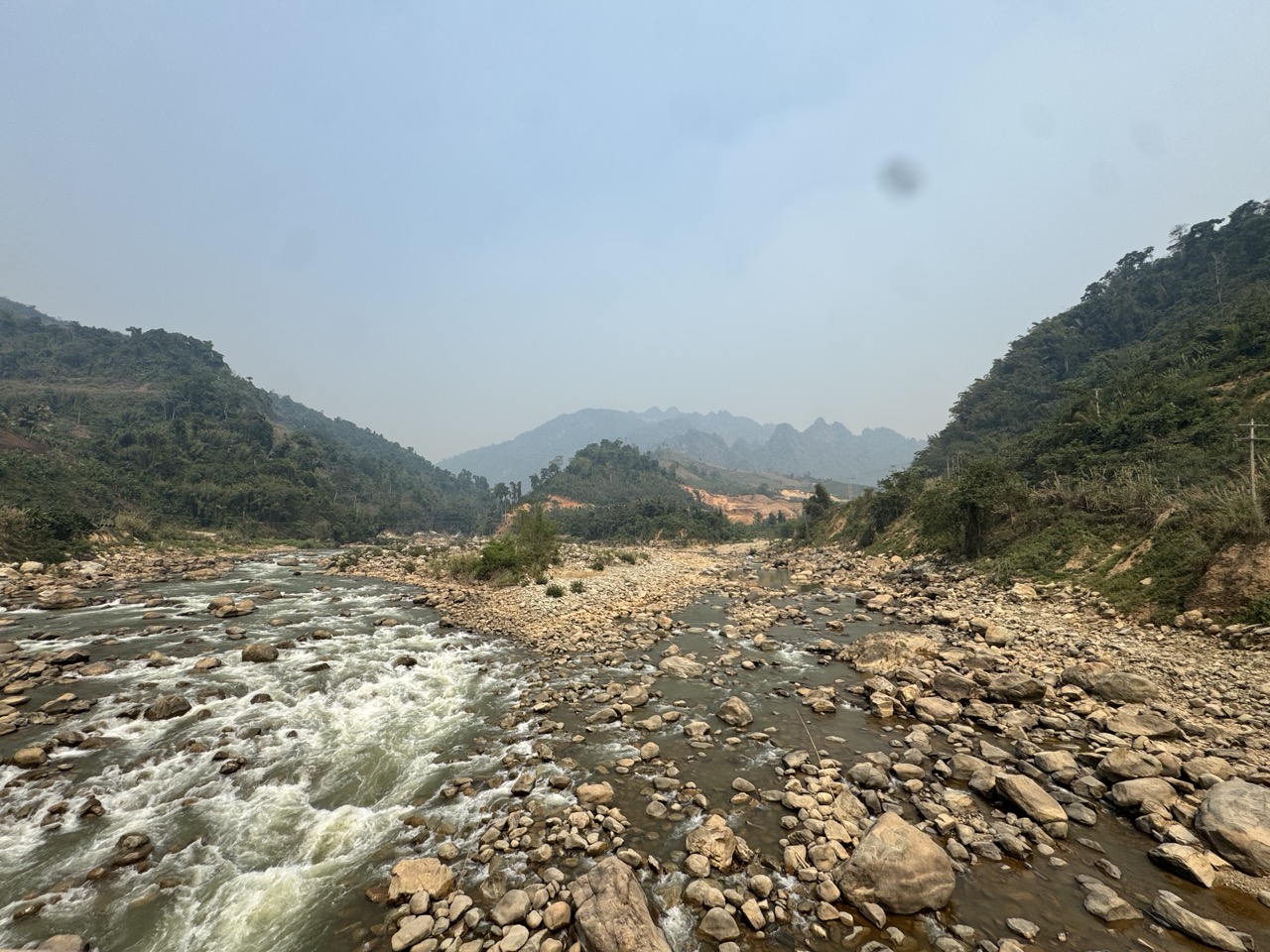
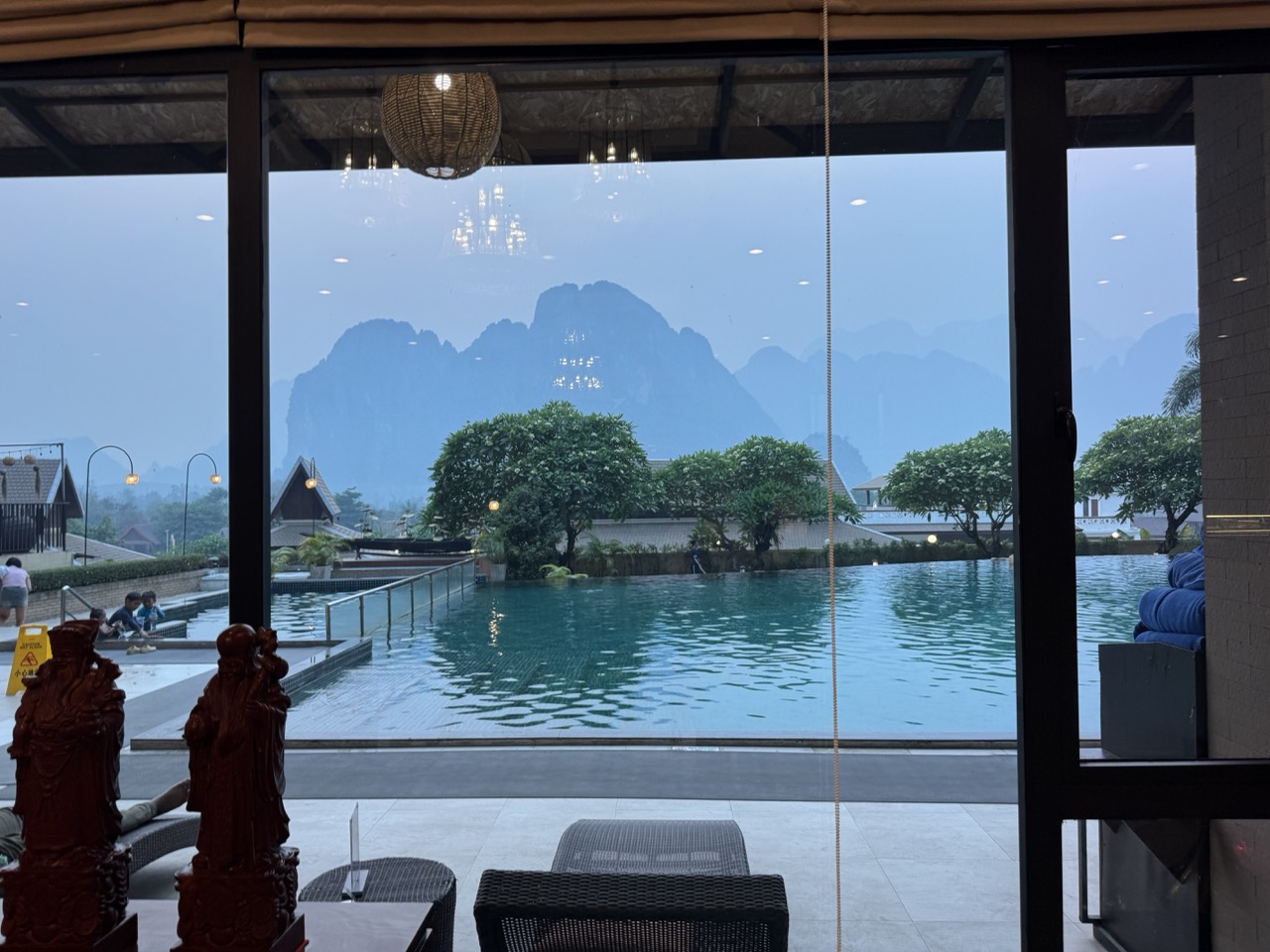
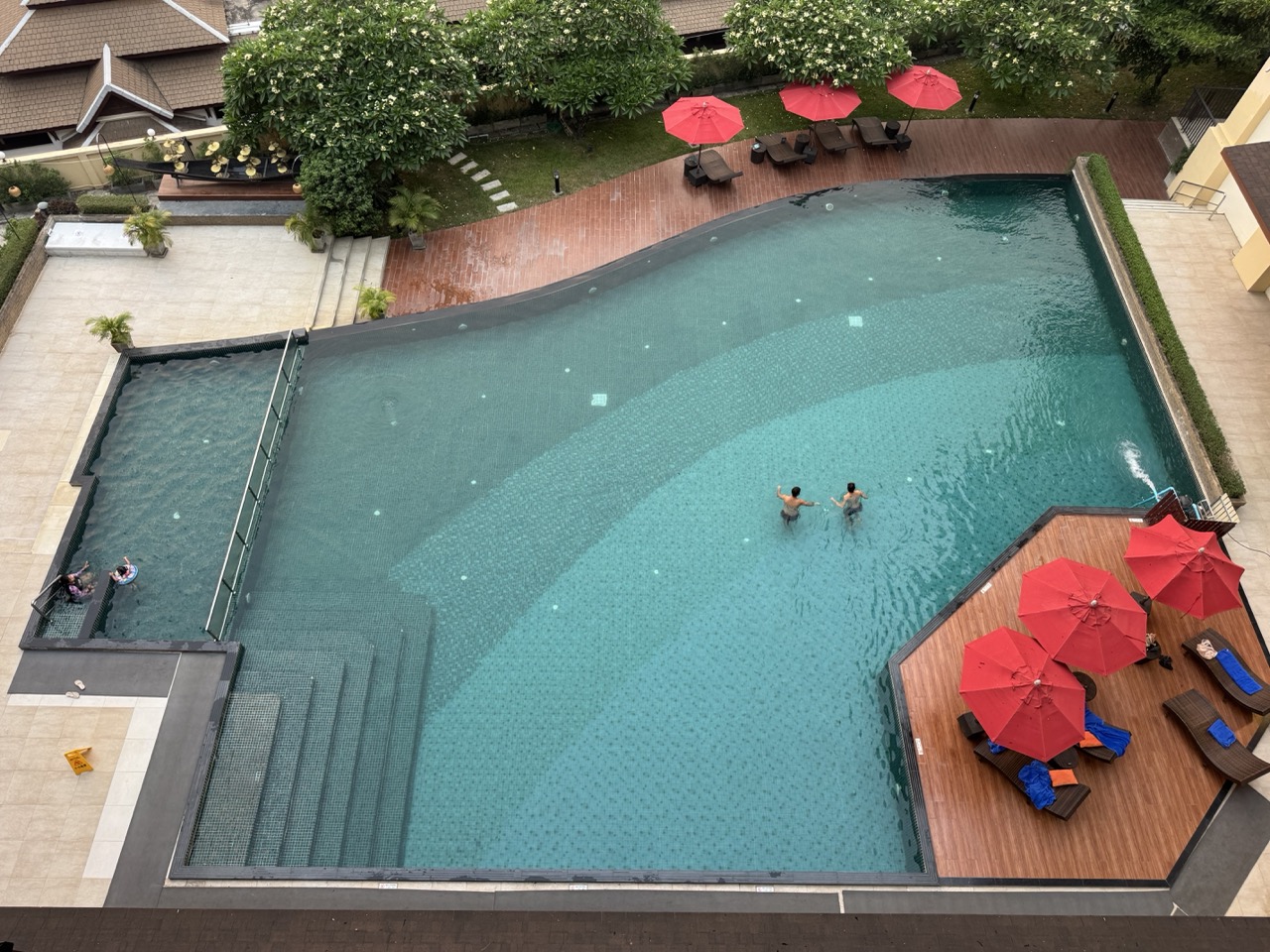
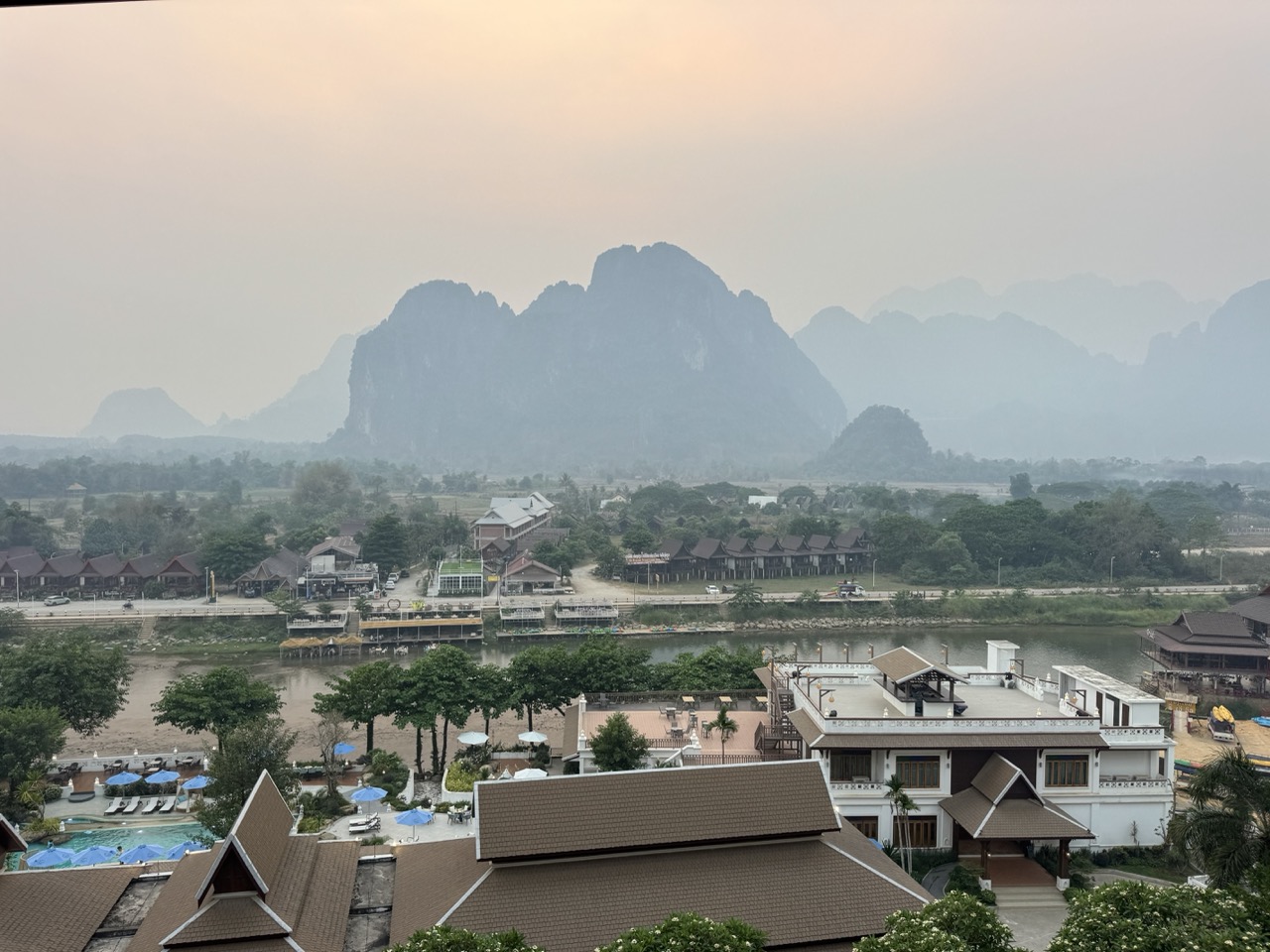
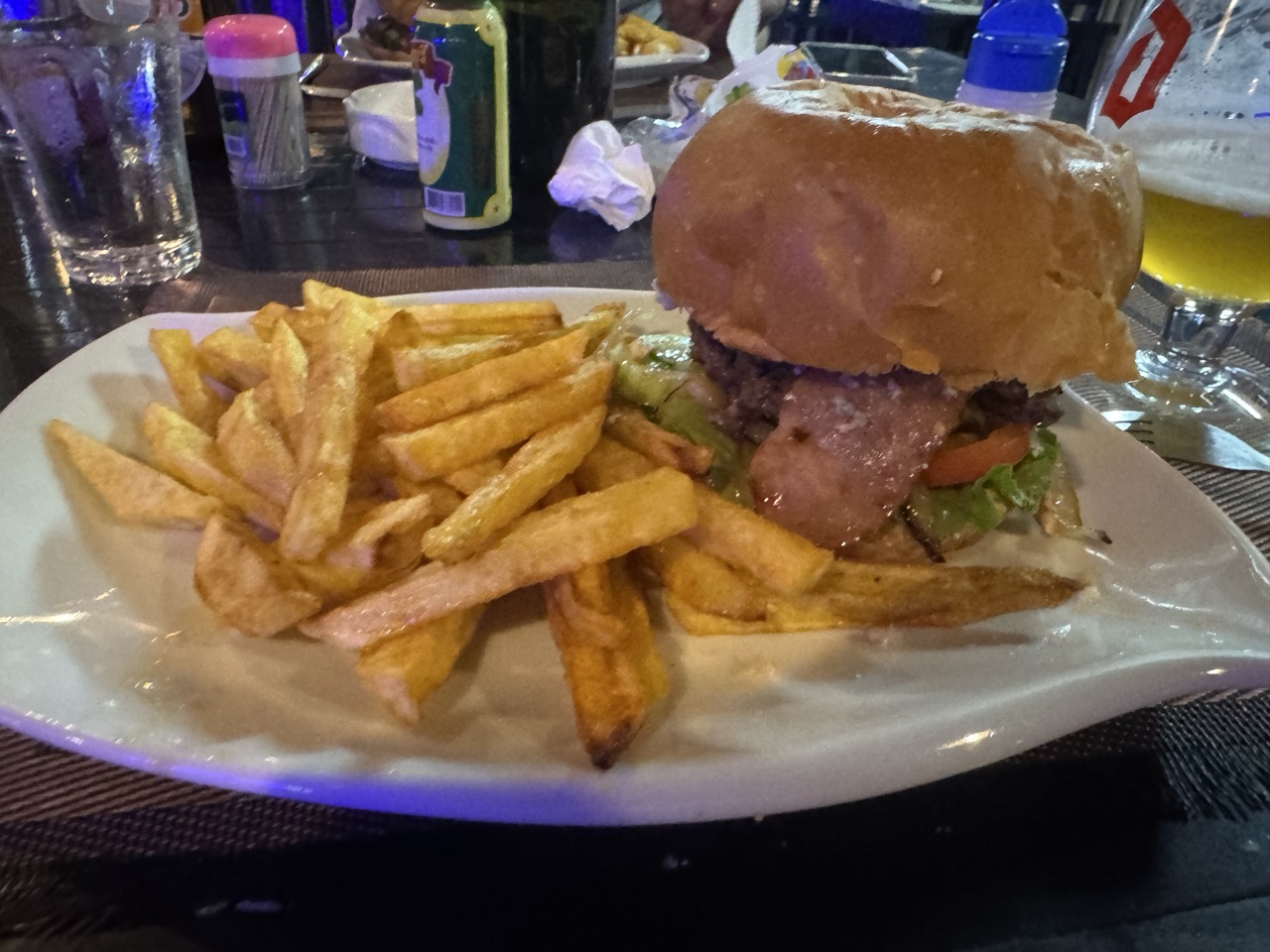
We rolled into Vang Vieng late afternoon, dust-coated, and checked into the Amari Vang Vieng on the riverside. The Amari is the kind of place you absolutely want at the end of a day like this — pool overlooking the Nam Song River, karst-peak sunsets out the lobby windows, hot showers and a burger menu. Vang Vieng itself has changed massively in the last few years — the wild tubing-and-bars era is largely gone — but the karst landscape and the river are still extraordinary.
Day 6 — Vang Vieng to Vientiane (~153 km)
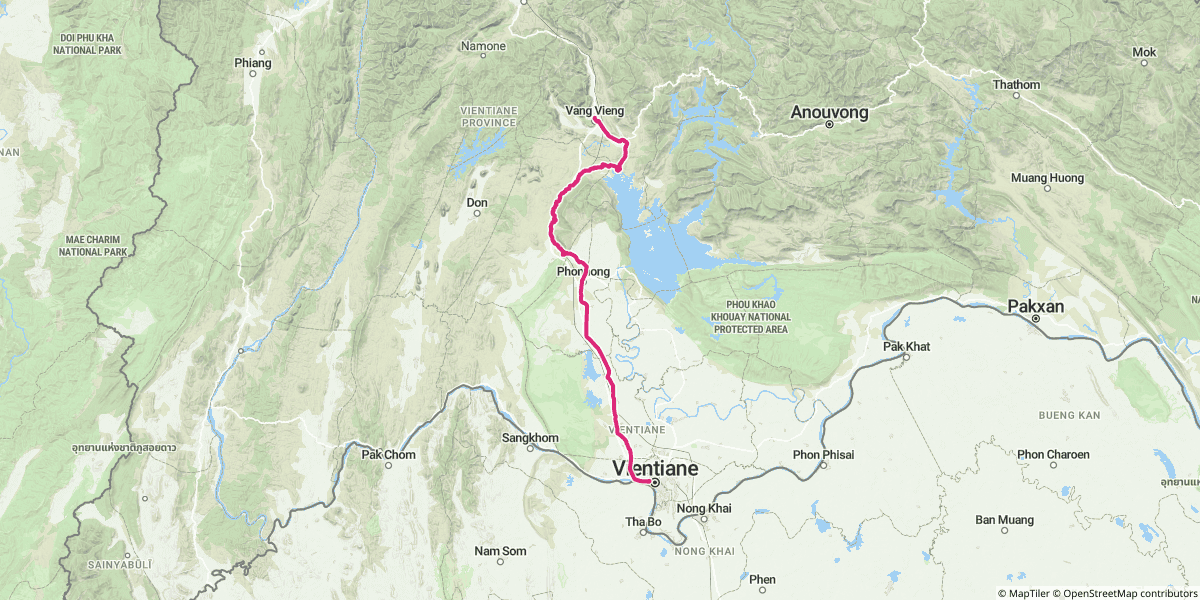
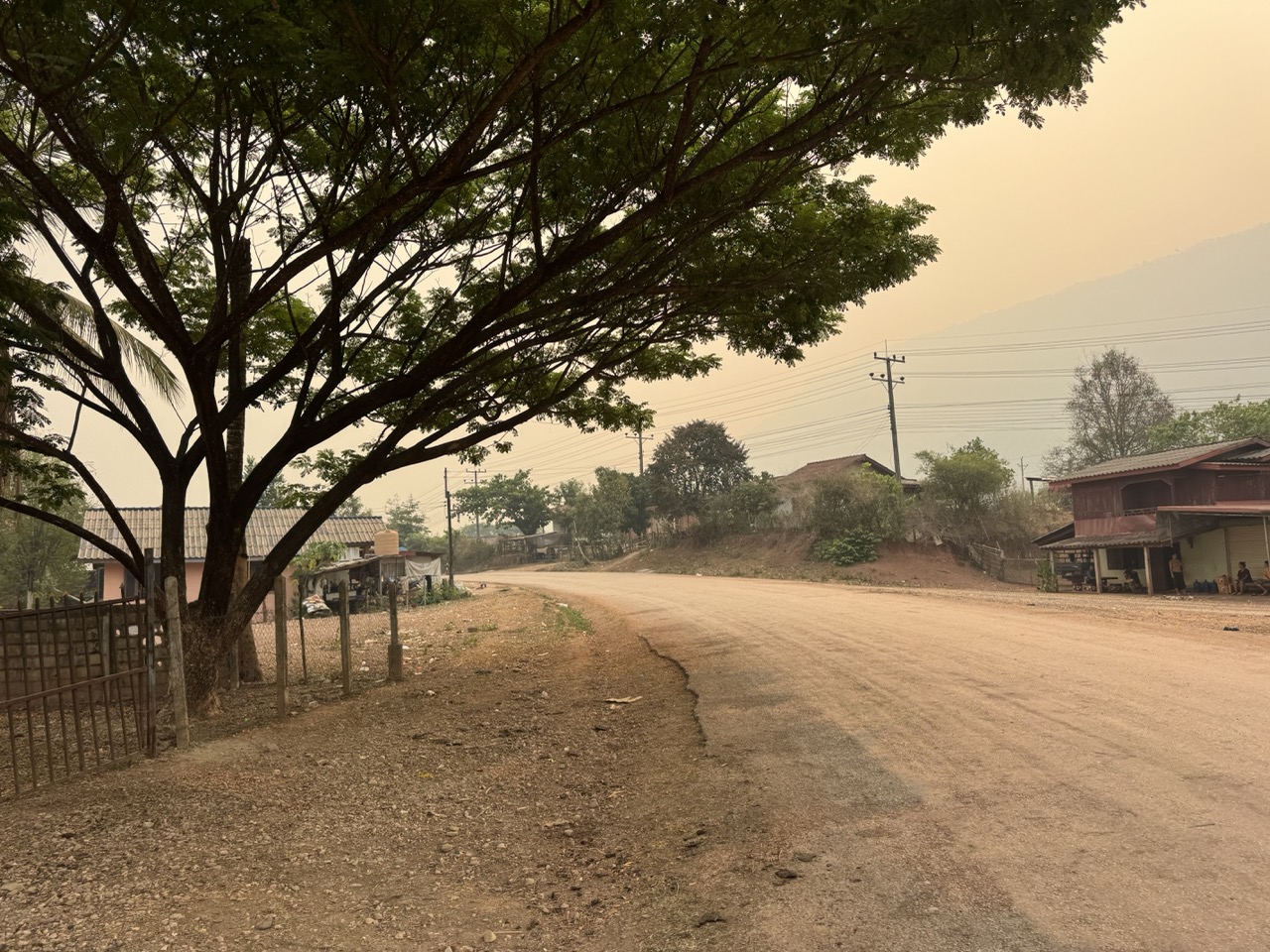
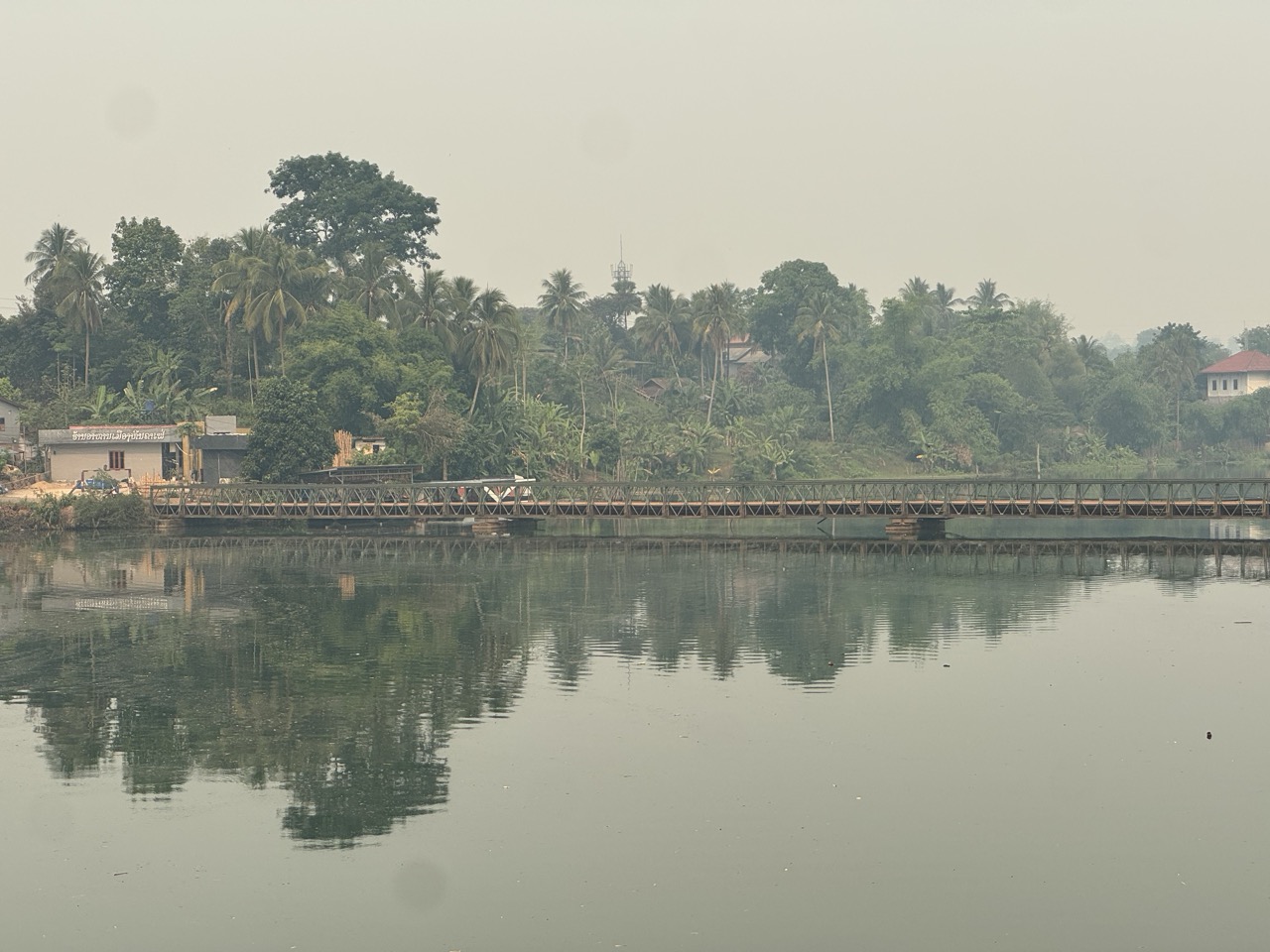
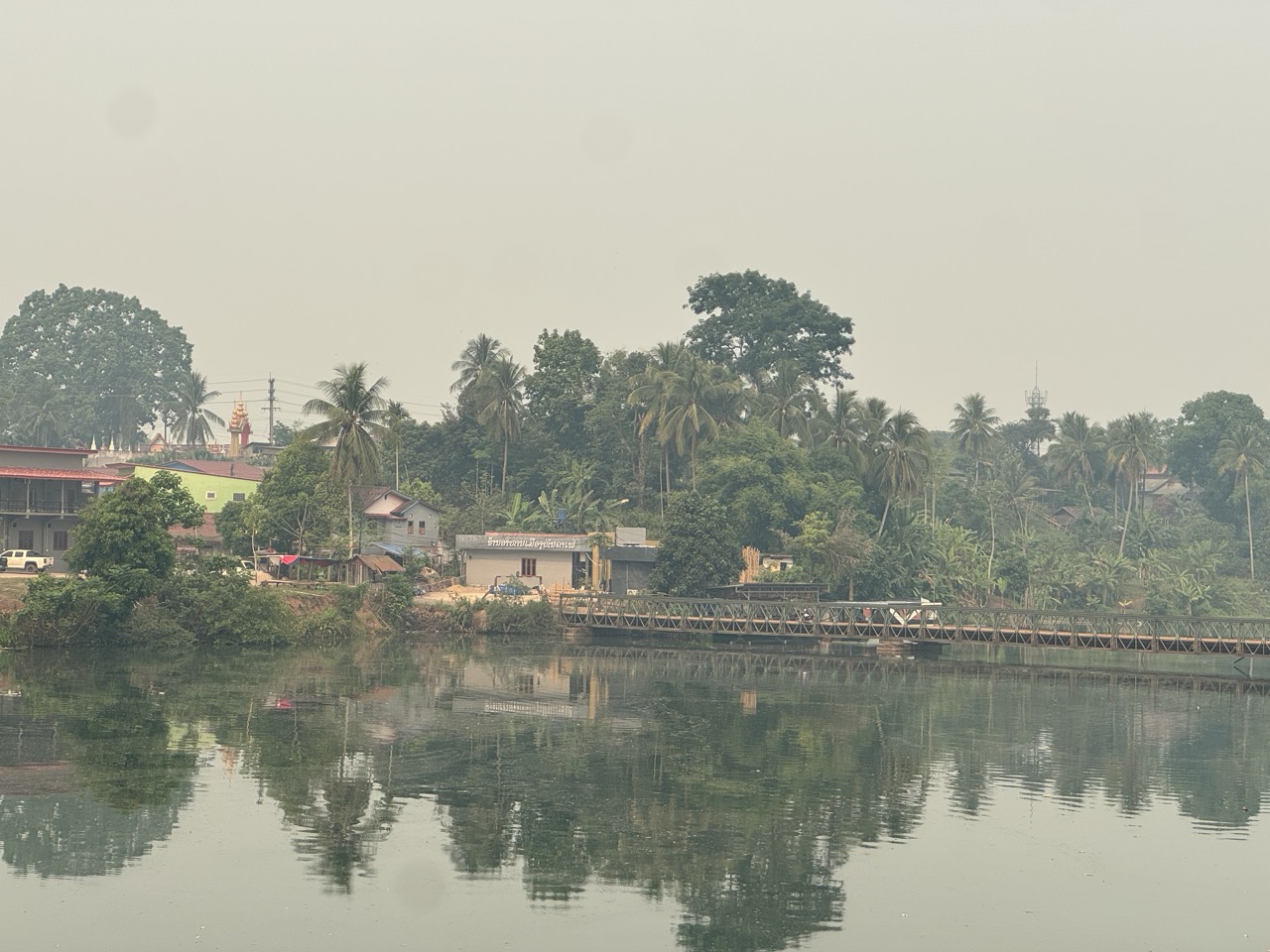
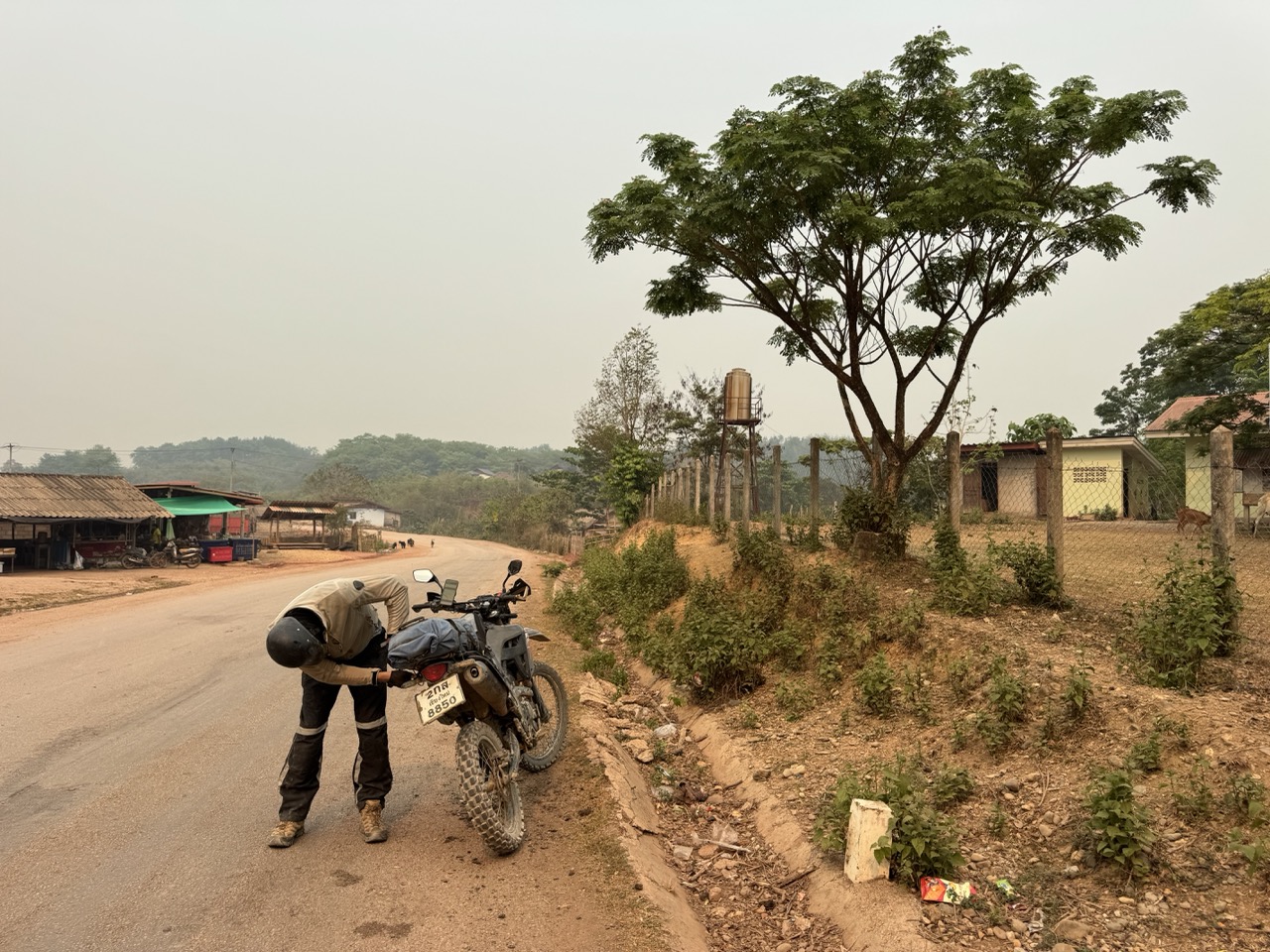
The shortest day of the trip and a deliberate breather. The road south to Vientiane on Route 13 is sealed, fast, and uneventful by Lao standards. We stopped at a few small villages, crossed a couple of Bailey bridges, and were in Vientiane by mid-afternoon.
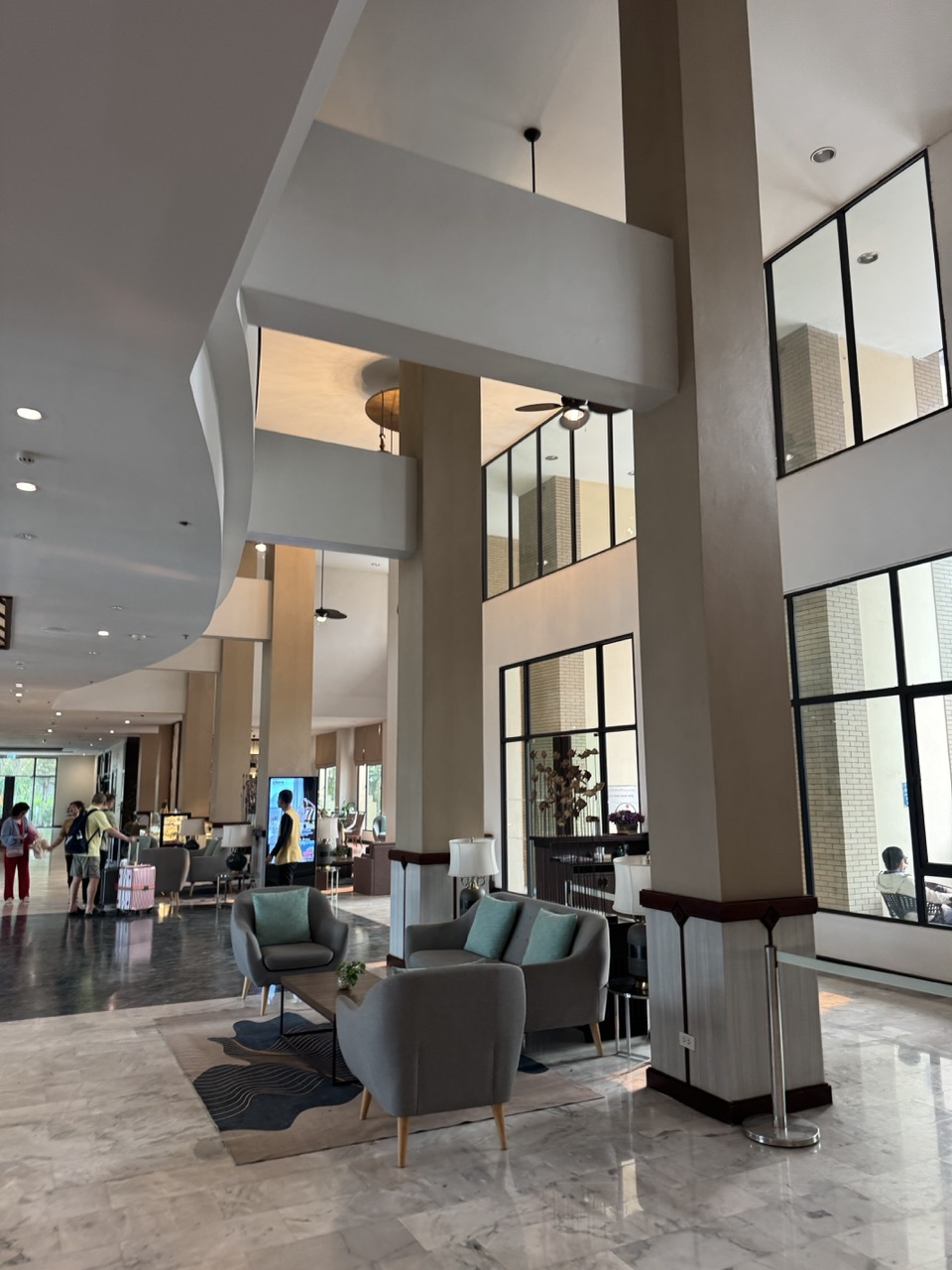
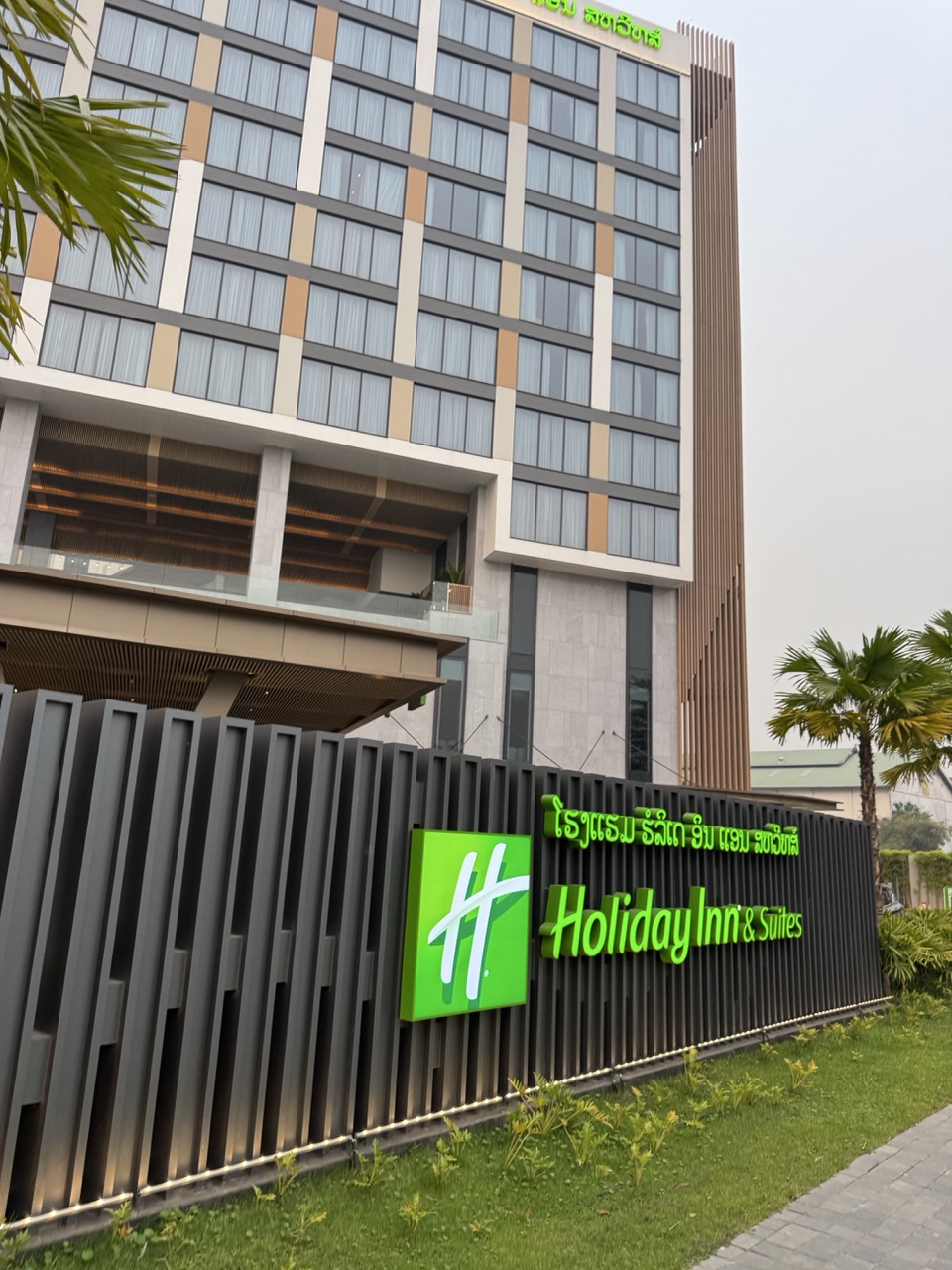
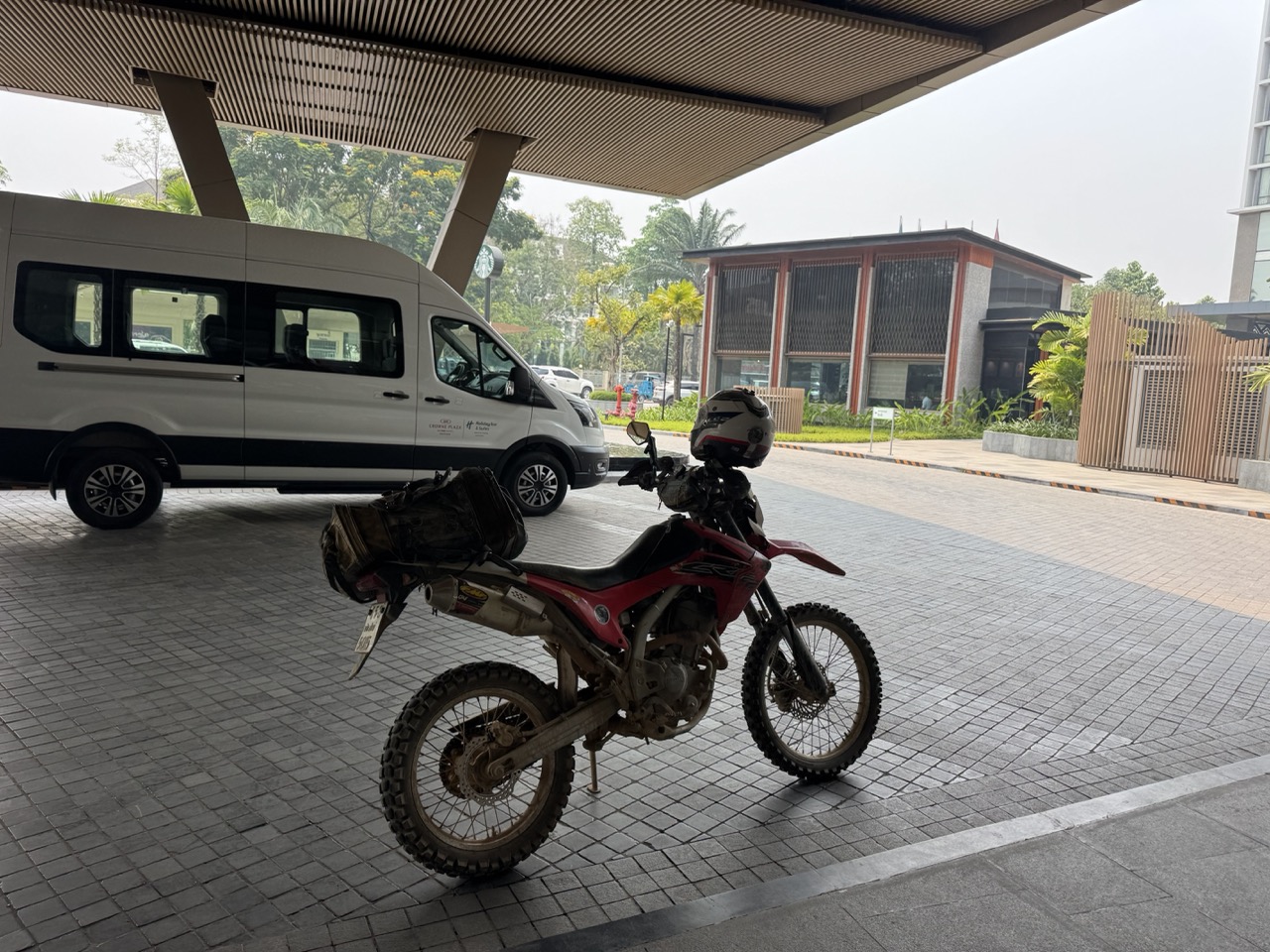
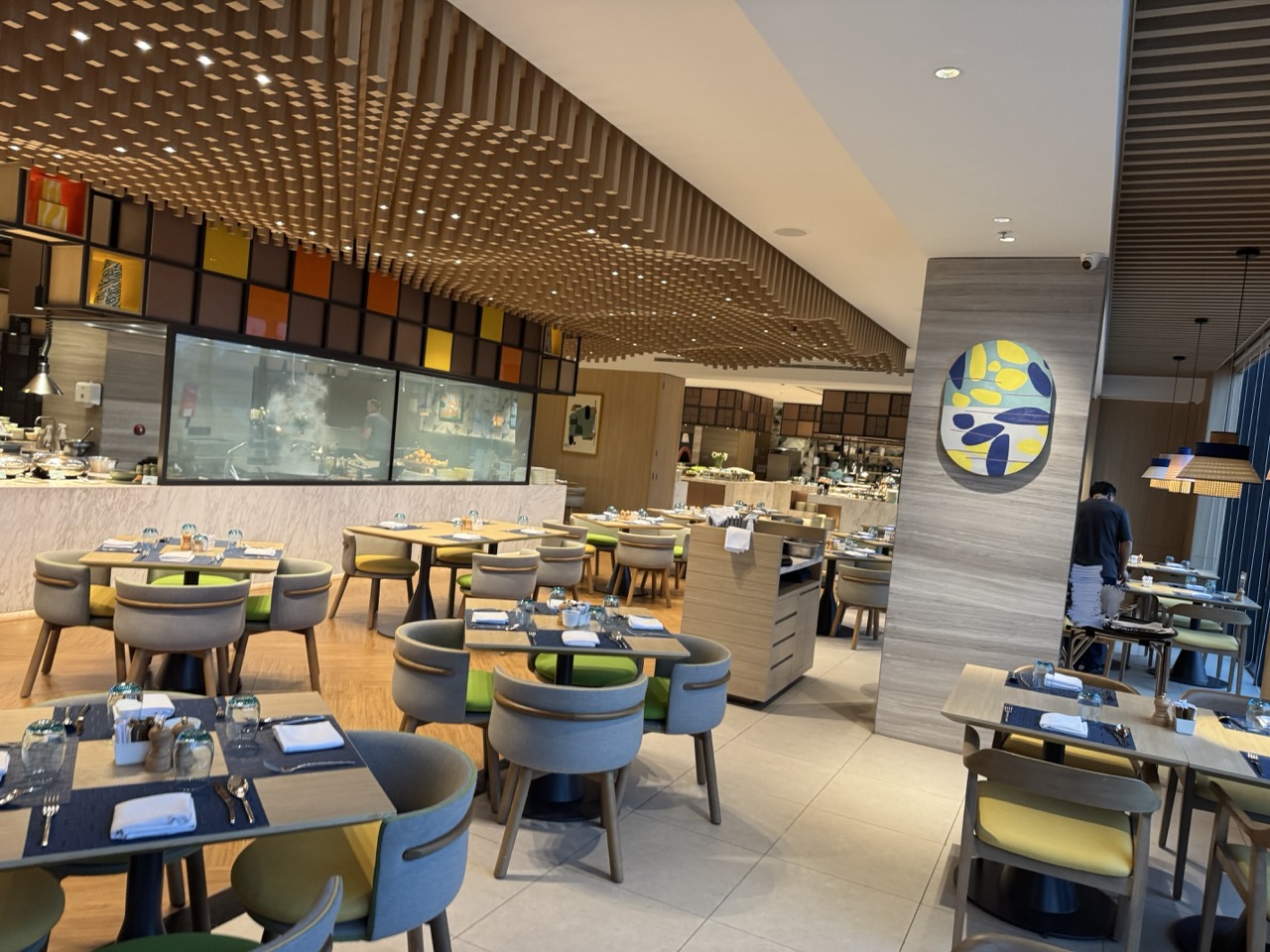
Vientiane is the calmest capital city we've been to in Southeast Asia — wide, low-rise, French colonial bones, the Mekong on its southern edge. We checked into the Holiday Inn for the night because we knew Day 7 was going to be a long, early day and we wanted secure parking, a working desk to plan the morning's border run, and a buffet breakfast to get us out the door fast.
Day 7 — Vientiane to Chiang Mai via Phu Doo (~577 km)
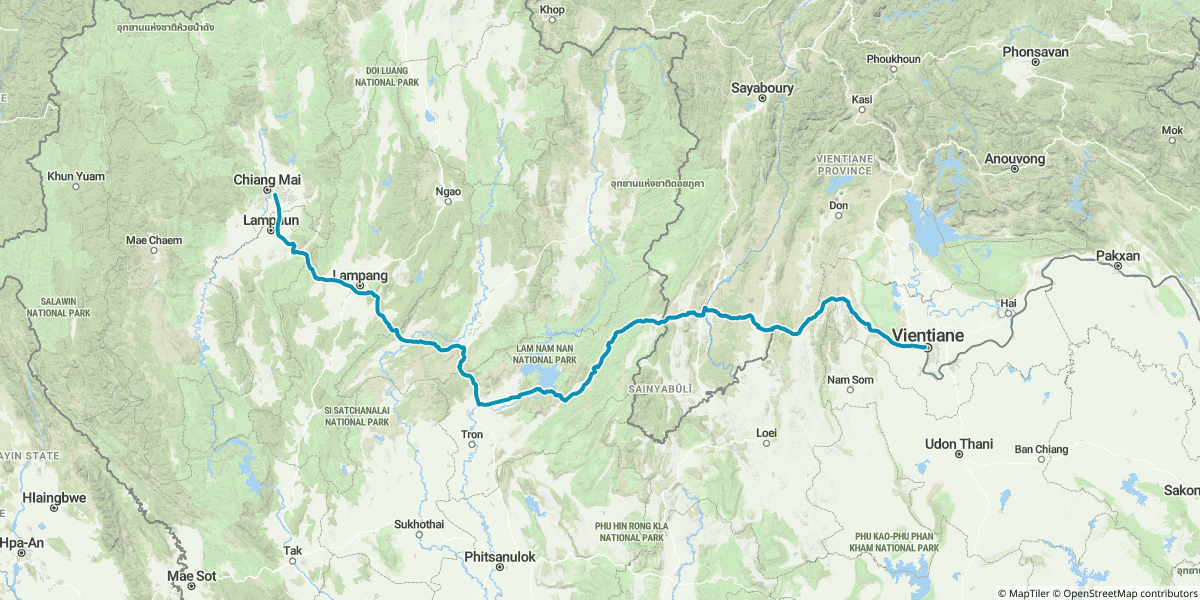
The closing leg. ~577 km from Vientiane back to Chiang Mai including the Phu Doo border crossing — the largest single day of the trip on the GPS, but mostly fast sealed road and mostly familiar terrain on the Thai side. We started before dawn out of the Holiday Inn lobby with the buffet breakfast packed into our tank bags.
From Vientiane we headed northwest toward the Phu Doo crossing. This was the standout practical lesson of the trip: Phu Doo is far easier and faster than the obvious Friendship Bridge / Nong Khai option. Almost no traffic, friendly staff, the whole crossing took about thirty minutes total including the Lao exit and Thai entry. If you're planning this loop in either direction, design your route around finishing or starting at Phu Doo.
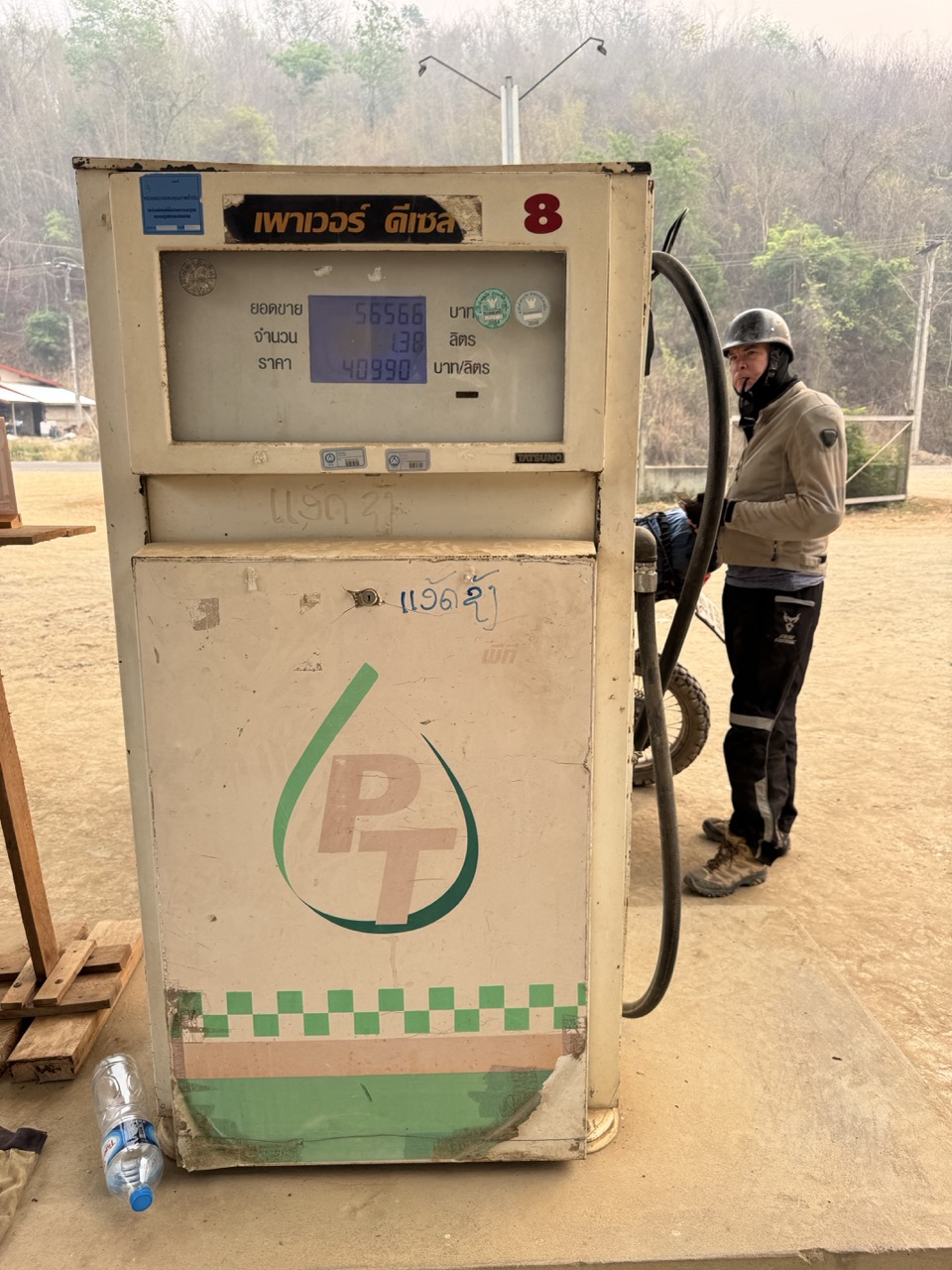
By dinnertime we were back at the shop in Chiang Mai. ~1,715 km on the trip clocks, two new front fairings to remember, and the long mental afterimage of empty dirt roads through karst country in the morning light.
If You're Thinking About Doing This
A few things we'd actually want to know before doing it again:
- ·Bike: a CRF250L or CRF300L is the right call. Anything bigger is too much on the Phonsavan → Vang Vieng dirt sections, anything smaller will leave you fatigued on the Day 7 transit.
- ·Tyres: dual-sport tread minimum. We rode dry the whole way, which is normal for April. In the wet season the same dirt sections become a different proposition.
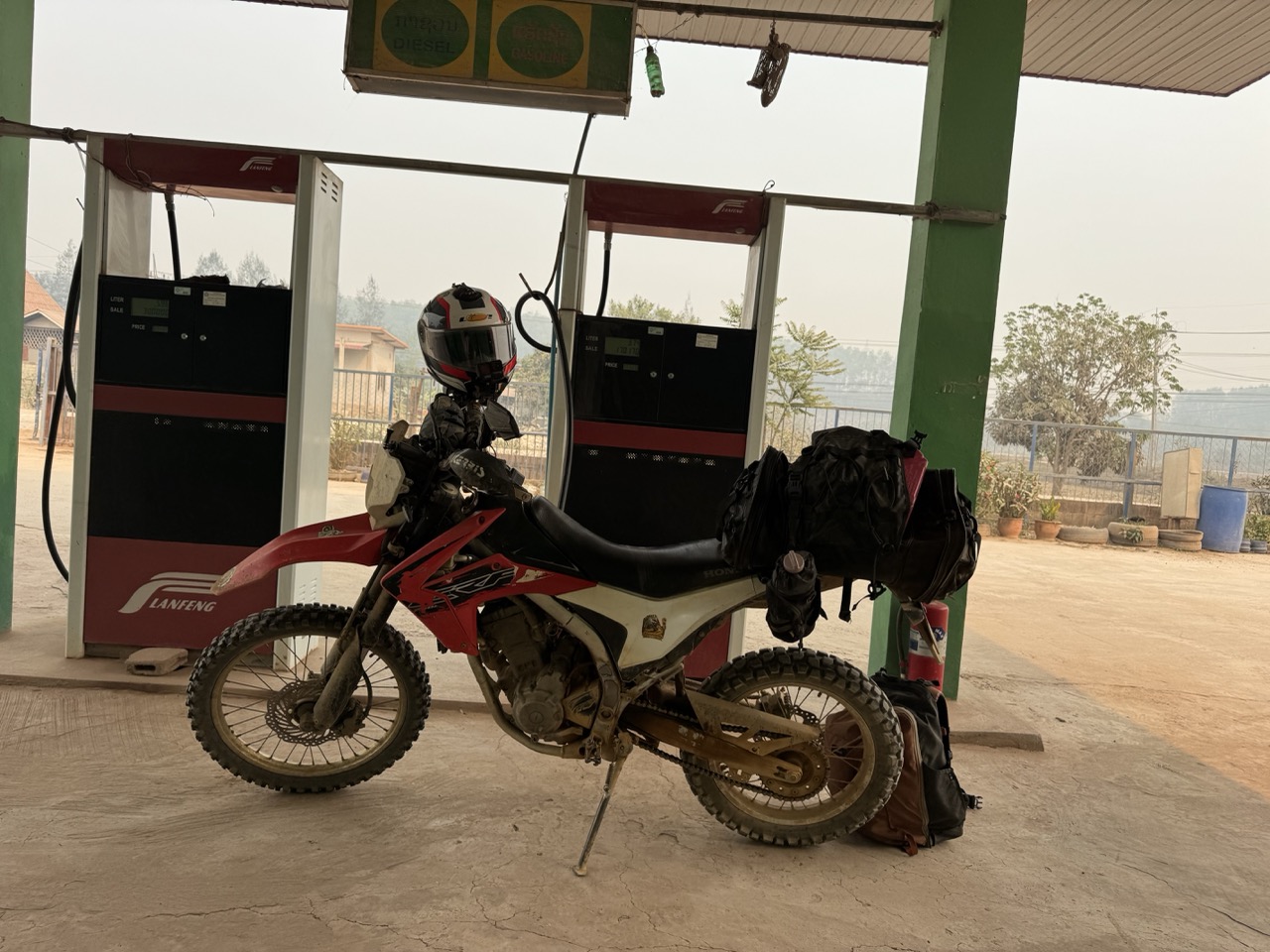
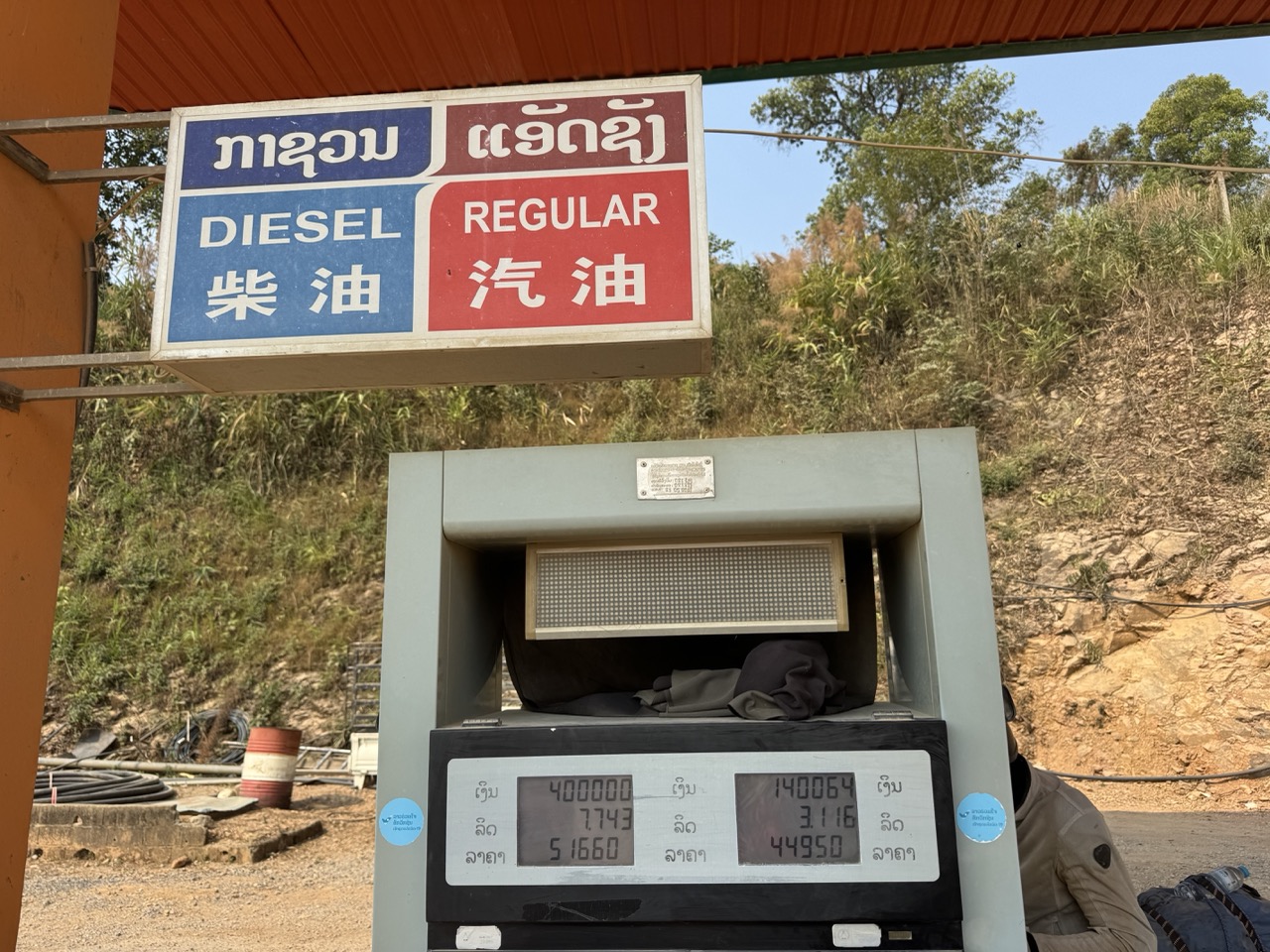
- ·Fuel: top up at every Lan Feng / state fuel station you see in Laos. The gaps between stations on the smaller routes are real, especially the Phonsavan → Vang Vieng leg.
- ·Cash: USD or Thai baht to exchange at the borders, plus enough Lao kip on hand for the smaller villages where cards aren't a concept yet. ATMs exist in Pak Beng, Luang Prabang, Phonsavan, Vang Vieng and Vientiane — basically nowhere in between.
- ·Border paperwork: read the Riders Corner guide before you go. Do not show up at the Lao border without your bike's green book and a clear plan for the temporary import paperwork.
- ·Borders we'd recommend: in at Chiang Khong, out at Phu Doo. Phu Doo in particular is worth optimising your last day around.
- ·Pi Mai: if you're riding in mid-April, expect to lose a day in Luang Prabang to the festival even if your bike is fine. Plan for it as part of the trip rather than fighting it.
- ·Maps: download offline Maps.me / Gaia for Laos in advance. Mobile coverage is spotty in Oudomxay, Xieng Khouang, and the Vang Vieng dirt section.
- ·Pace: 7 days is realistic with a rest day. Without one — and without the forced repair stop — you'd be tight on the eastern half.
- ·Season: November to February is the textbook window. We rode in April for scheduling reasons; the trade-off was haze and slash-and-burn smoke versus the trails being completely dry.
Northern Laos by dirt bike is the kind of trip that resets your sense of scale. You ride through villages where almost nothing has changed in fifty years, past airfields nobody talks about that still flatten out the landscape from sixty years ago, on roads where the only other vehicles are a sawmill truck and a buffalo herd. If you have the bike, the time, and the willingness to spend a day in a Luang Prabang mechanic shop when the universe insists, do it.
Border-crossing reference (read this first): Crossing Into Laos by Motorcycle — riderscorner.net/guides/crossing-into-laos-by-motorcycle. The full paperwork walkthrough we won't reproduce here. Enter at Chiang Khong; exit at Phu Doo.