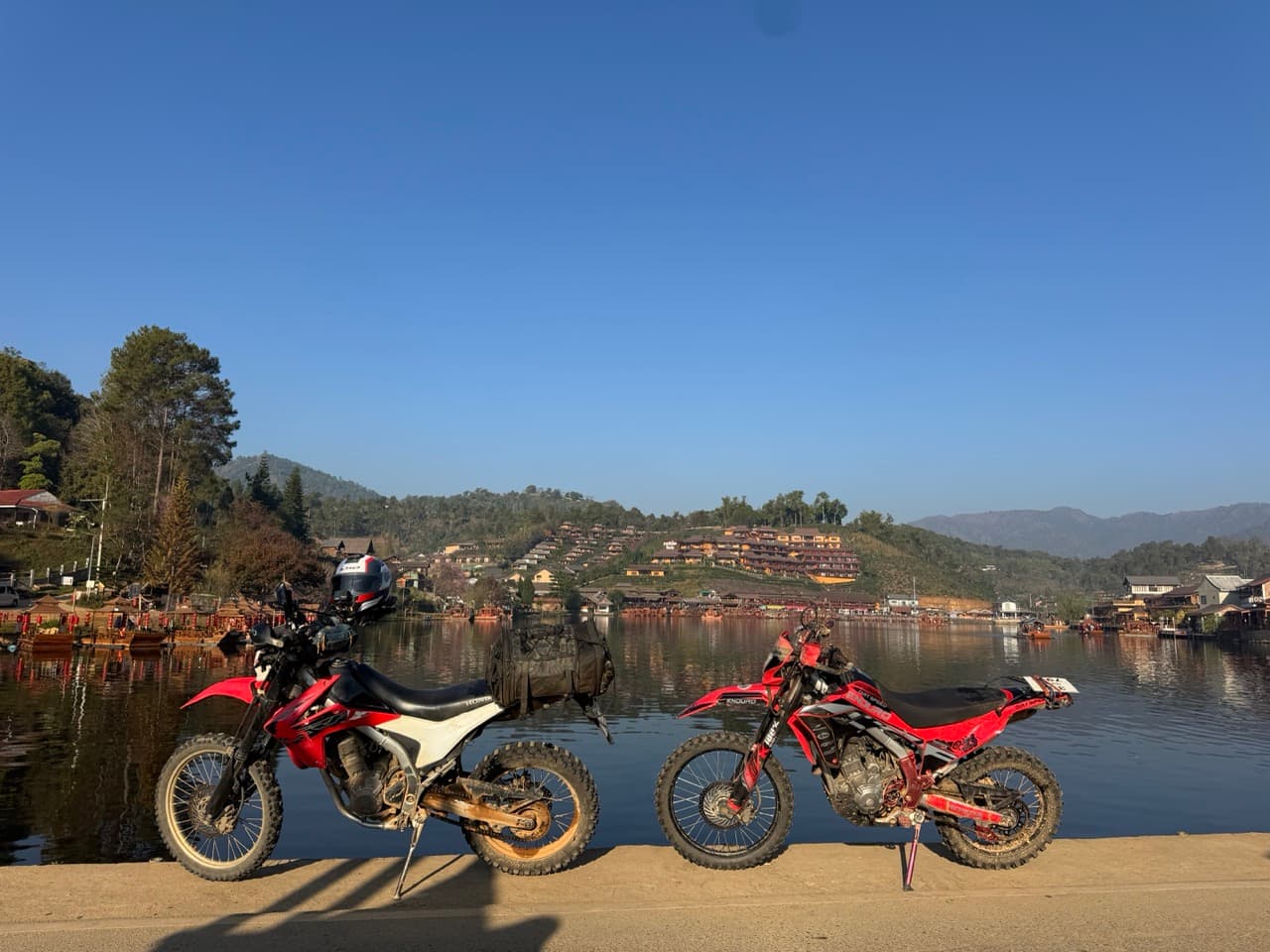
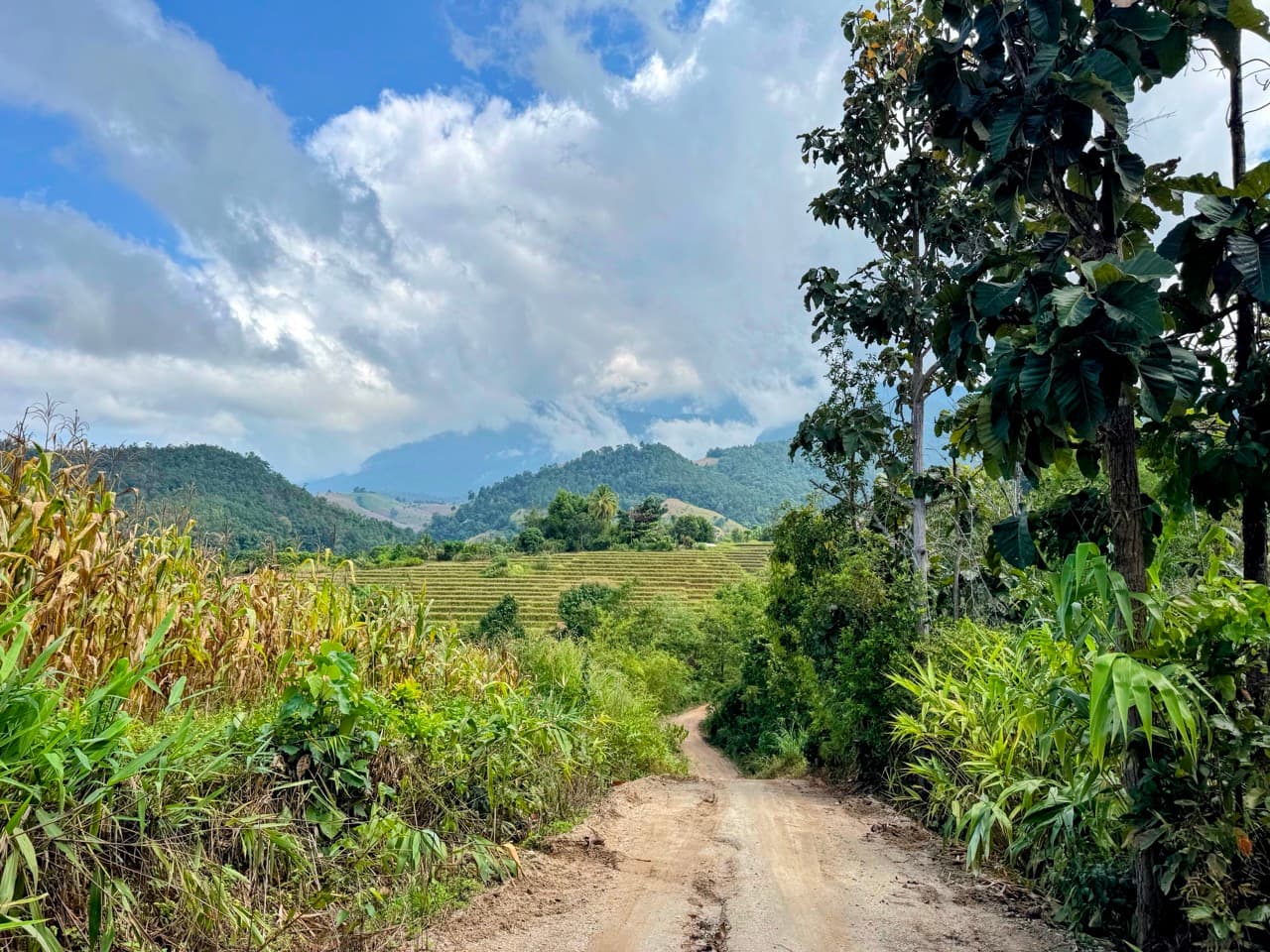
Three of us pointed north out of Chiang Mai on a soft September morning — two CRF300L Rallys and a CRF250L, knobbies fresh, mist already on the visors before we’d cleared the city. The plan: ride up through the Mae Taeng highlands to the Hmong village of Baan San Pak Kia, drop over the back, and finish somewhere on the far side of Doi Luang Chiang Dao if the weather held.
Bring a small folding saw. If you ride the green season in Northern Thailand, the smartest thing you can carry isn’t a tyre plug kit or a satellite messenger — it’s a saw. You’ll see why a few paragraphs in.
| Quick Facts | |
|---|---|
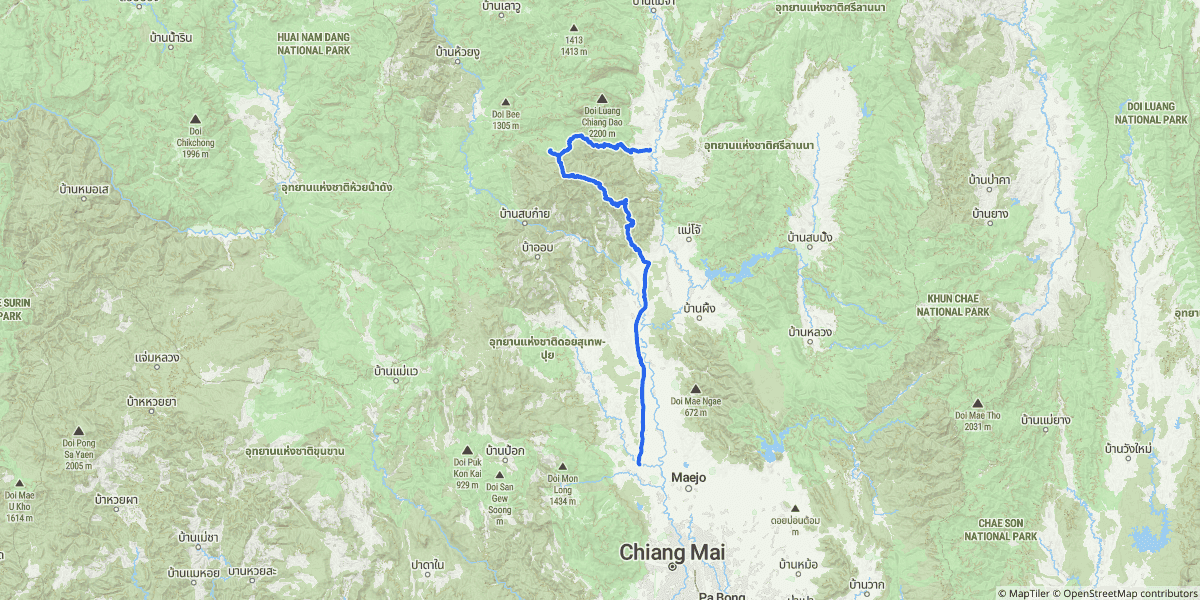
| Distance | ~89 km (mixed dirt + rutted singletrack + light tarmac) |
| Start | Northern outskirts of Chiang Mai |
| Finish | Chiang Dao (GPX); lunch at Hug Mueang Khong, ~1 hr west |
| Riders | 3 — 2× CRF300L Rally + 1× CRF250L |
| Season | Green / rainy (Jun–Oct) |
| Surface | Tea-estate forest road → wet red-clay rutted singletrack, fallen-tree obstacles |
| Time | All day — plan 7 hours with stops and weather |
Out of Chiang Mai and Up to Raming Tea Estate
The first hour is the easiest hour. Tarmac out of the city, climb into the Mae Taeng valley, the air cooling about two degrees for every hundred metres of elevation. The Raming Tea Estate — the historic one, founded by William Bain — is the gateway from sealed road to dirt. You know you’re close when a Mahabodhi-style chedi appears in the trees above the road.
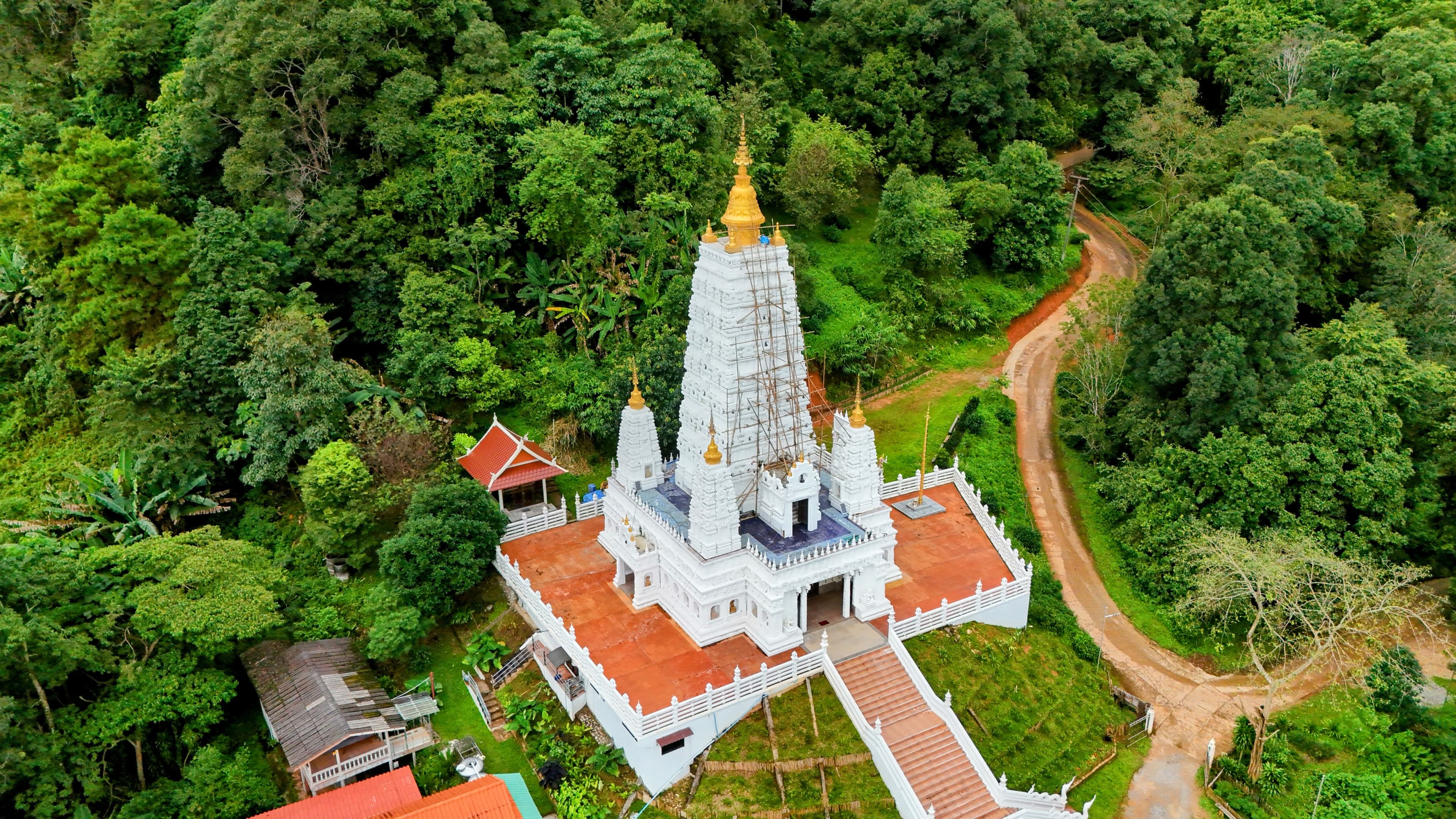
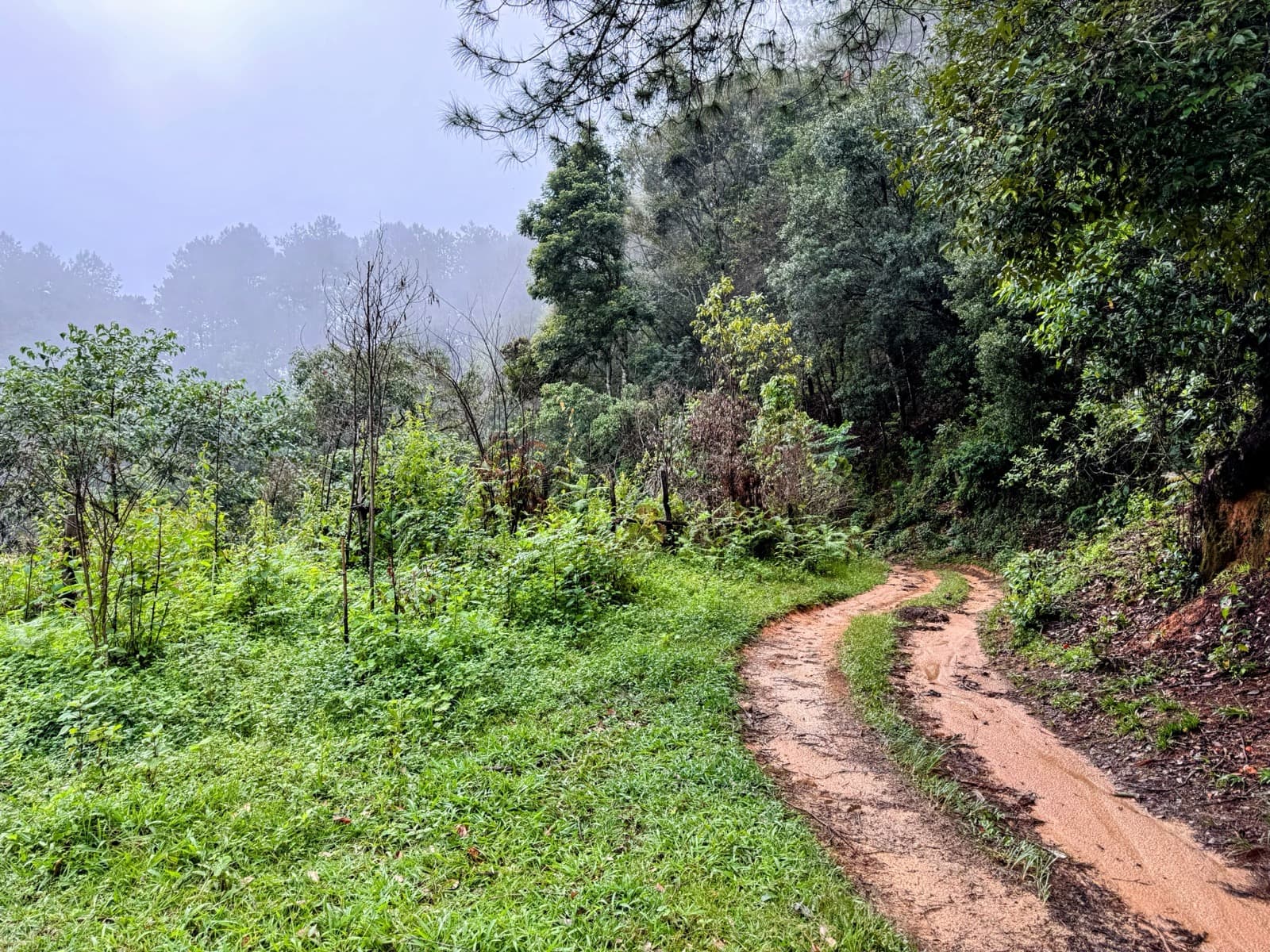
If you’ve only ridden Northern Thailand in the cool months, this is a different country. There’s the green-season case for showing up between June and October: the forest is alive, the rivers are loud, and you have the trails to yourself because most riders are waiting for November.
The Turn-off for Baan San Pak Kia: Where the Trail Gets Fun
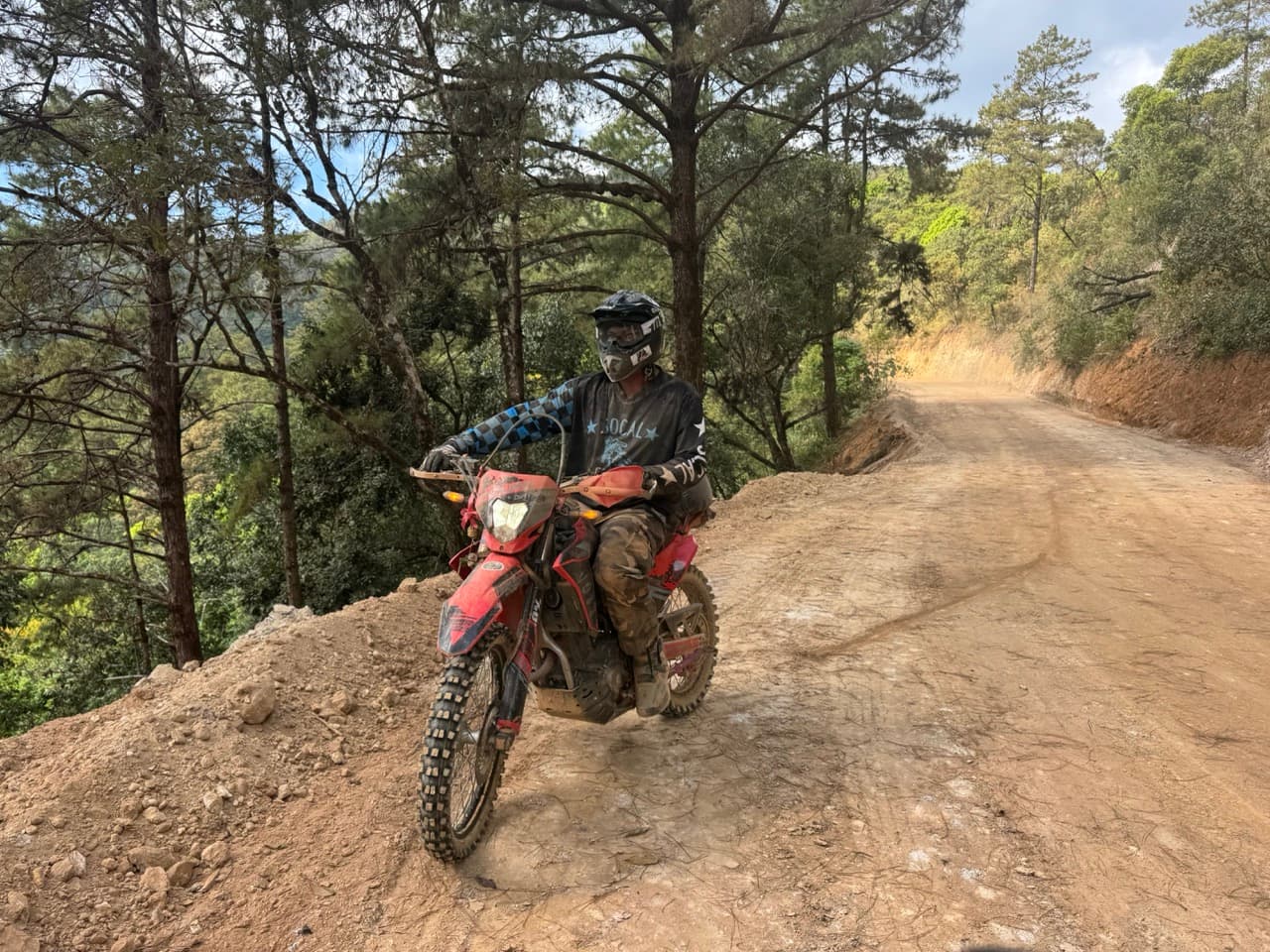
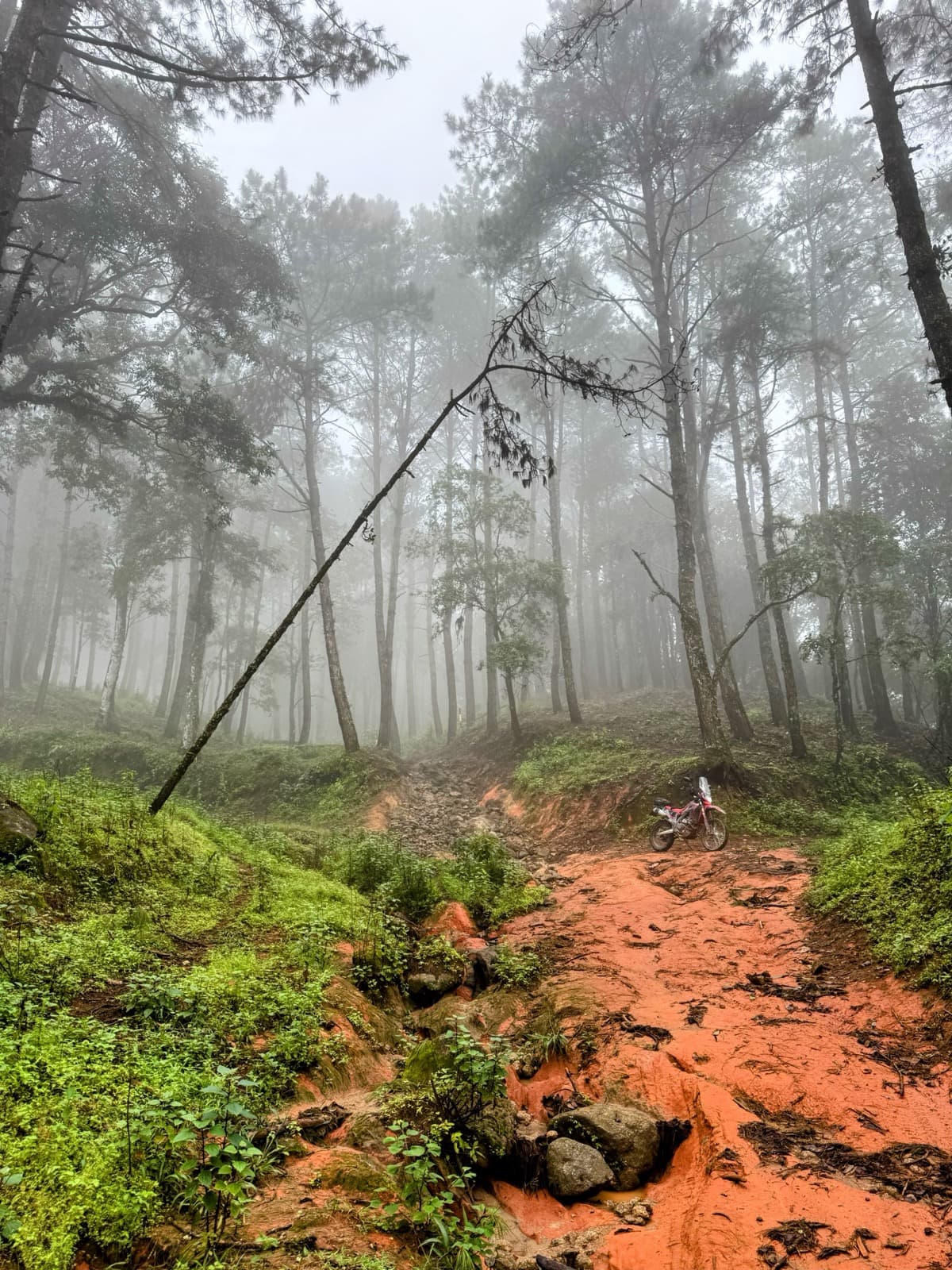
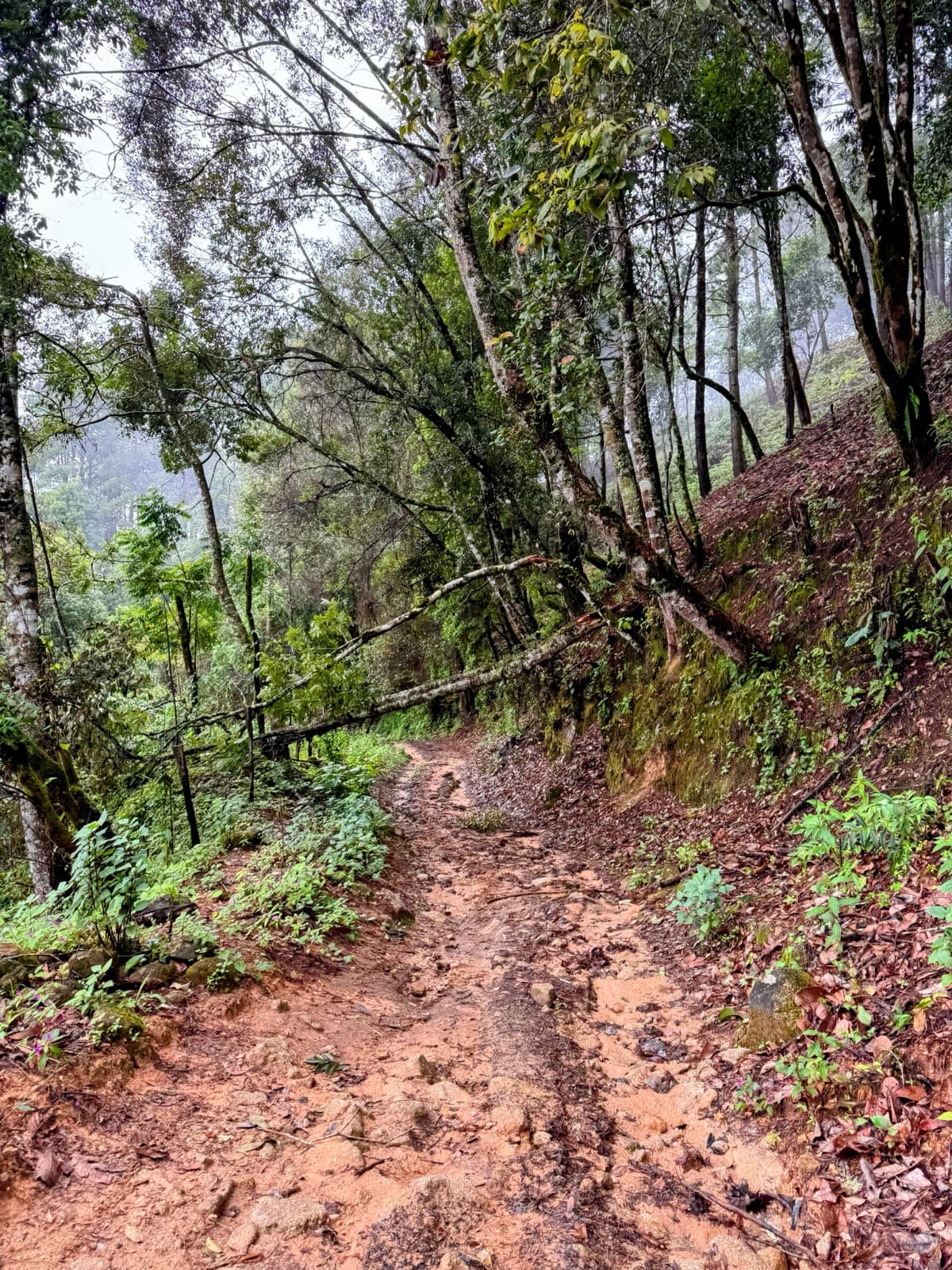
Somewhere past the tea estate the road forks. Stay straight and you get more of the same — easy, graded, pleasant. Take the left and the day changes. The track narrows, the gradient steepens, the clay turns red and slick, and within five minutes you’re standing on the pegs choosing between two ruts that both look bad.
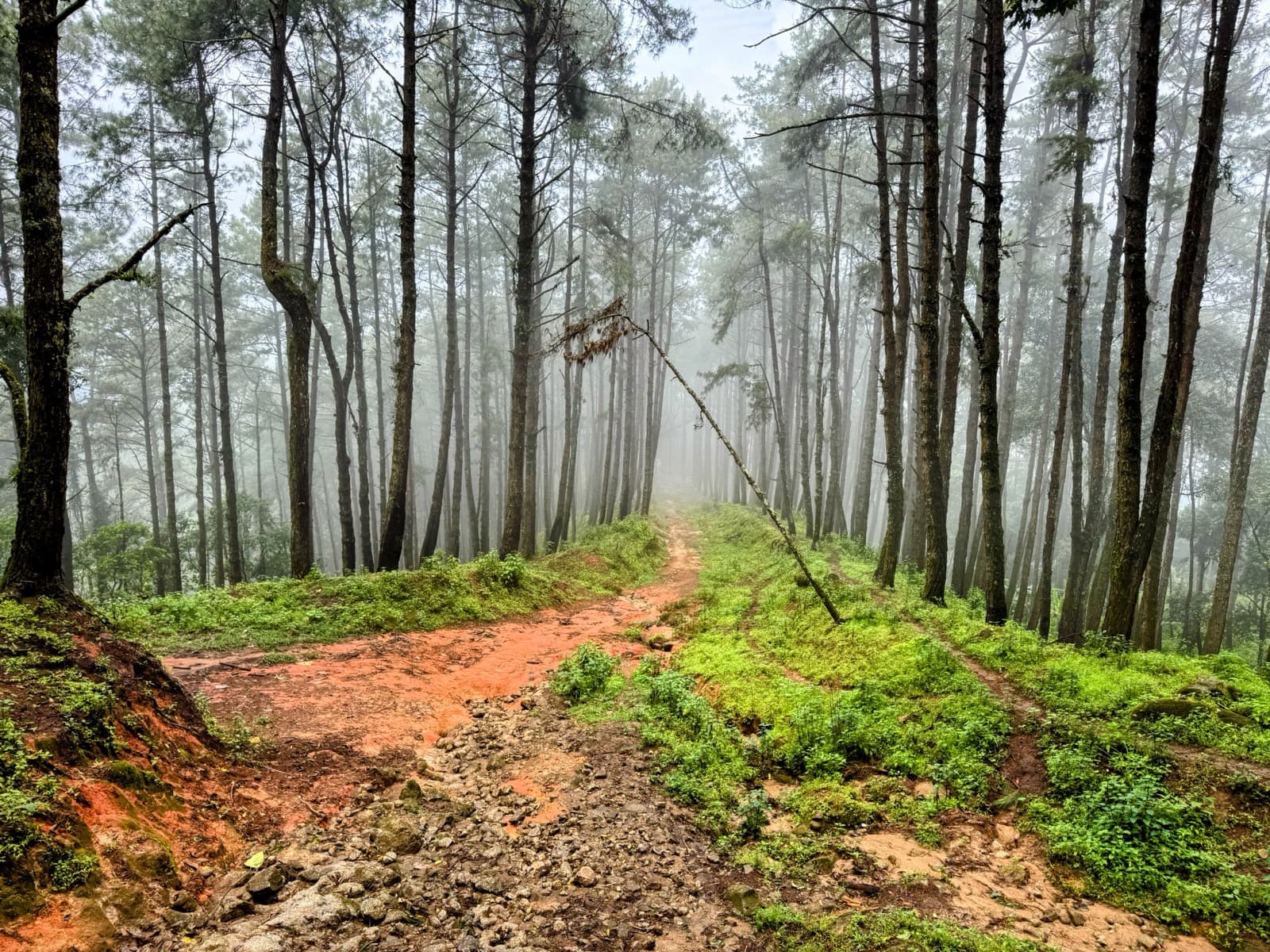
The Saws Come Out: Two Fallen Trees and a Team Effort
The first fallen tree was a soft problem. A trunk across the trail, wide enough to be inconvenient, with just enough clearance underneath that we could push the bikes through one at a time — riders ducking, panniers scraping bark. Two minutes. Move on.
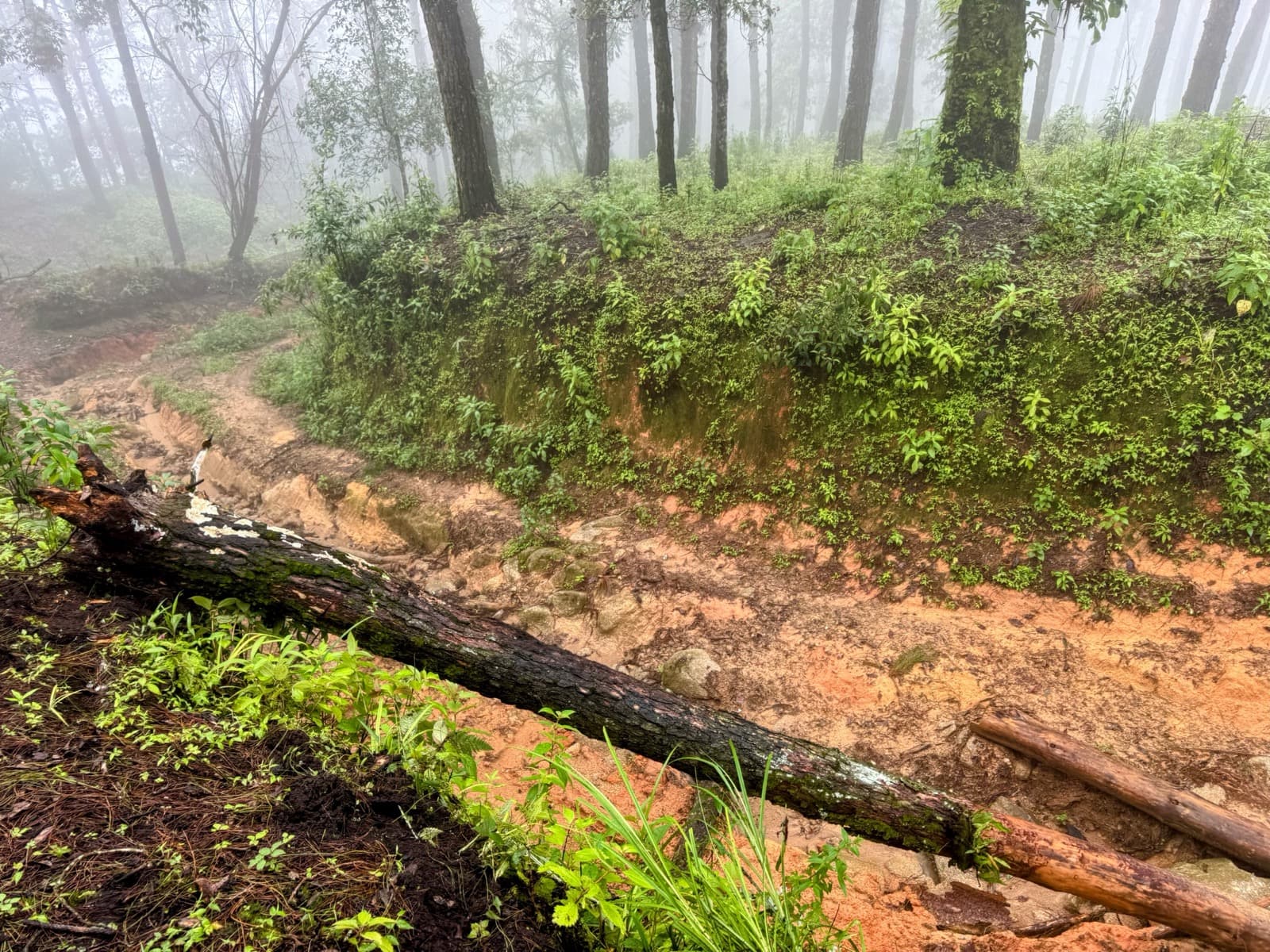
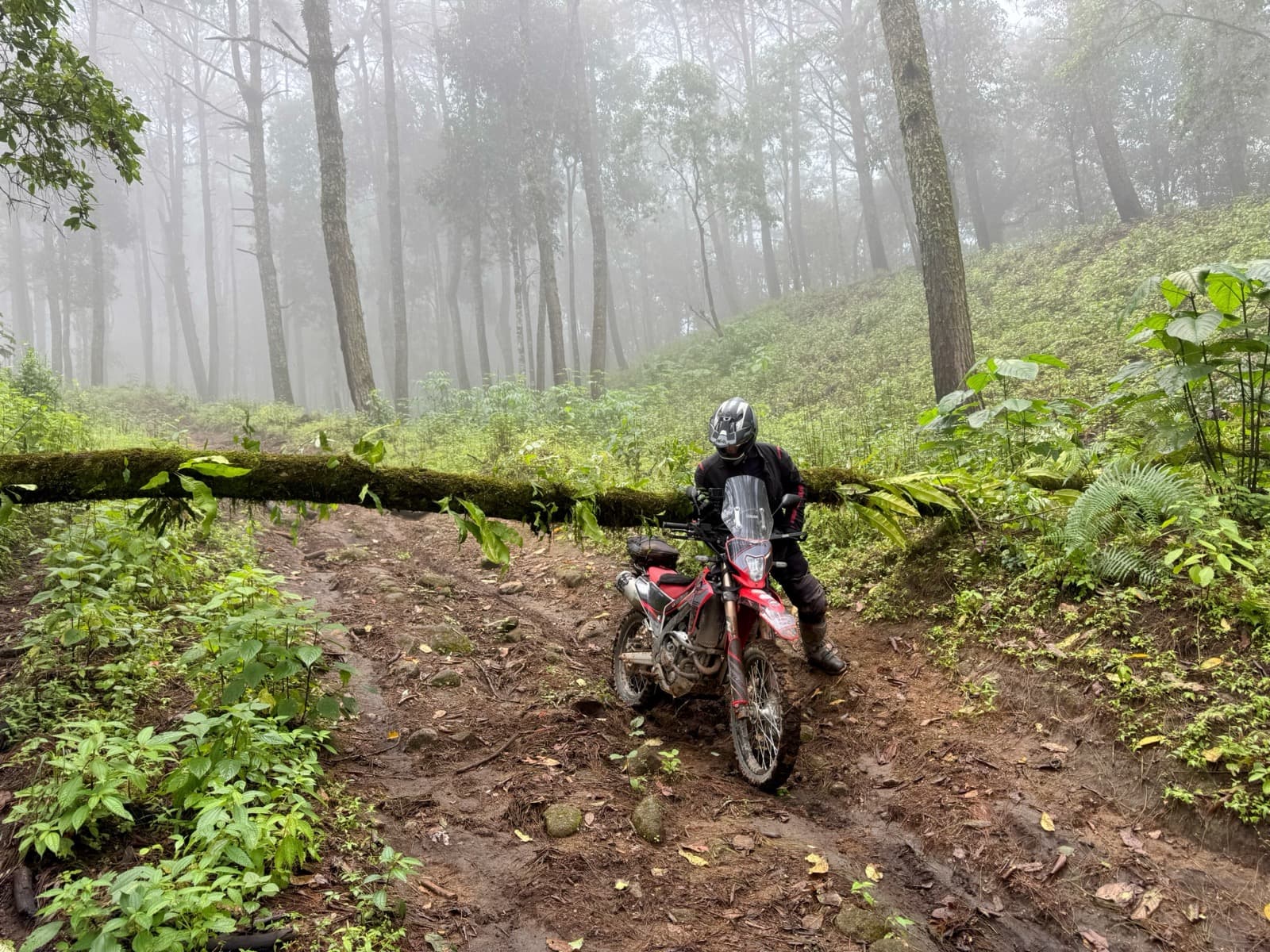
The second one was a different story. No gap. Bigger trunk. The kind of obstacle that, without the right tool, is a turnaround. Out came the folding saw we always carry in the rainy season, and the three of us took turns: one sawing, one bracing the trunk, one dragging cut sections off the trail. Maybe ten minutes from arrival to bikes through. We’d argue about who was the strongest sawyer if it weren’t obvious.
Two trees in one day on one trail isn’t unusual in September. The wind comes through hard ahead of the afternoon storms, the soil is saturated, and tall hardwoods occasionally lose. If you ride this country in the green season and you don’t carry a saw, you are budgeting for U-turns.
Baan San Pak Kia, the Doi Luang Massif, and Lunch on the Other Side
We topped out at Baan San Pak Kia — a Hmong village perched high enough that you’re inside the cloud half the time. The viewpoint, when the weather cooperates, looks out across ridge after ridge of pine. We didn’t get the long view today; we got mist and two bikes on a ridge.
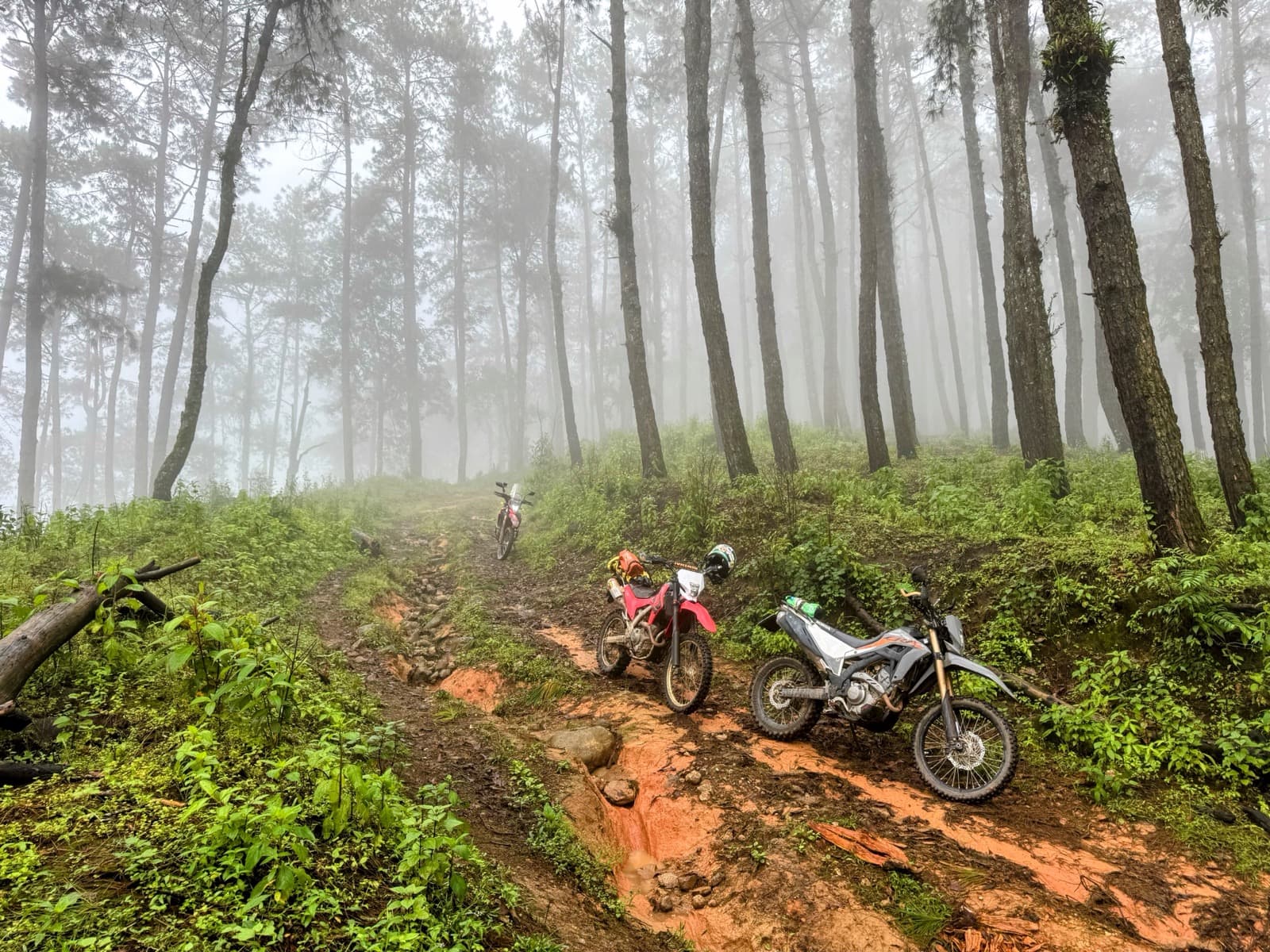
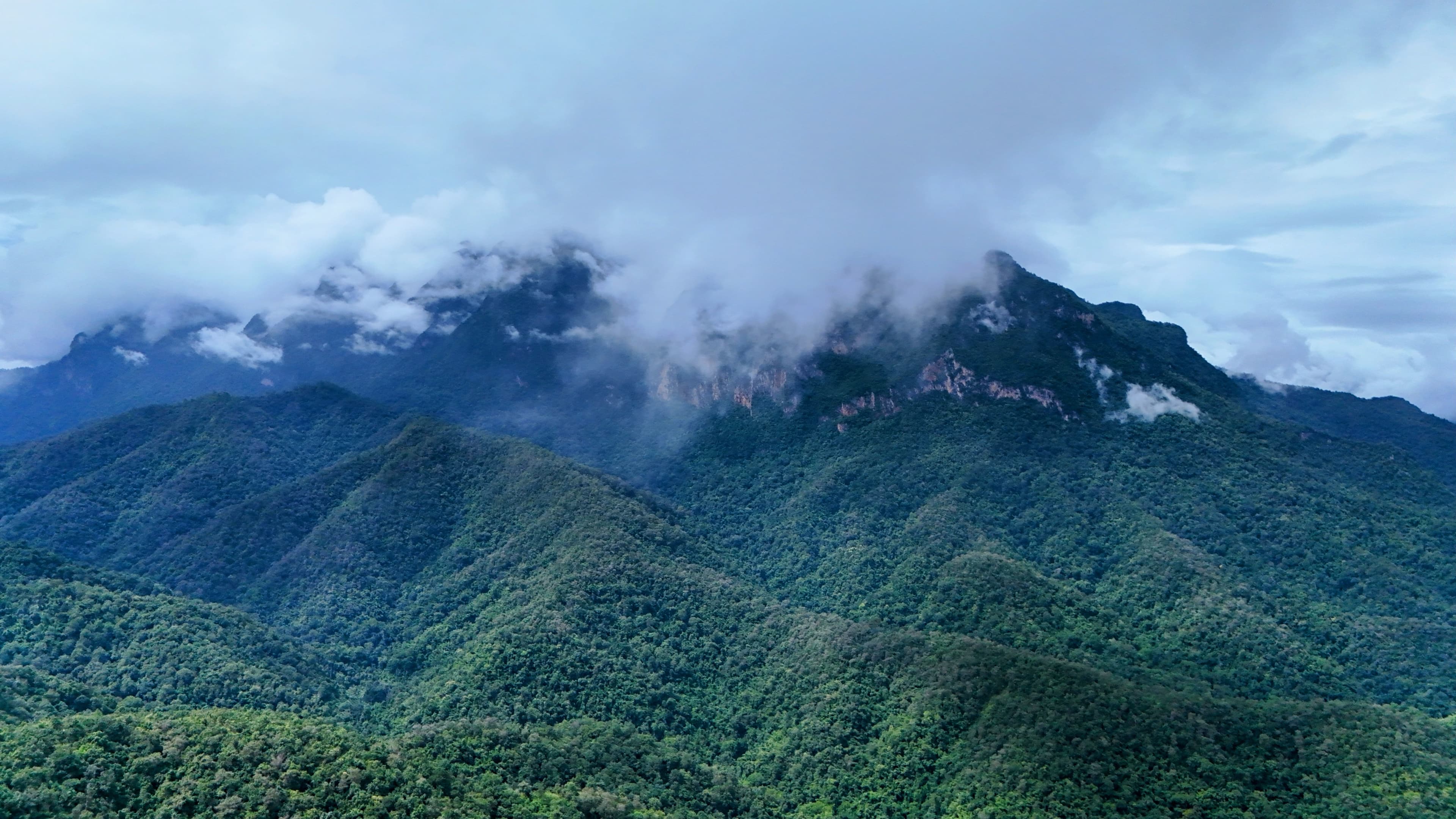
From there it’s a steady drop east toward Chiang Dao. Halfway down, the cloud lifted long enough to show the headline act: the limestone massif of Doi Luang Chiang Dao, Thailand’s third-highest mountain, rising out of the cloud like its own weather system. This is what you came to see, and the rainy season is exactly when it looks like this.
Lunch wasn’t in Chiang Dao town. We pushed another hour west, around the back of the massif, to Mueang Khong — a quieter valley with a treehouse café called Hug Mueang Khong built over a small stream. Worth the extra ride. Big plates, cold drinks, the sound of the water under the floor.
If you want a longer trip out of Chiang Mai, more multi-day rides from Chiang Mai head west to Mae Hong Son province. If you want the cool-season alternative — same kind of day-ride shape, totally different weather — we have one from December.
If You’re Thinking About Doing This
- ·Bike: any 250+ enduro is fine. The technical sections want knobby tyres in the rainy season; dual-sport rubber is a fight on red clay.
- ·Carry a folding saw. Small, light, the difference between turning around and finishing the day. The most useful thing we packed.
- ·Fuel: top up before the Raming Tea Estate turn-off — reliable pumps thin out fast after Mae Taeng.
- ·Water and snacks: carry your own; nothing reliable until Chiang Dao.
- ·Tyres: knobby tread is mandatory in the rainy season for the red-clay sections.
- ·Pace: allow 7 hours with photo stops; weather can turn fast at altitude.
- ·Weather: start early. Afternoon storms in September are routine.
Eighty-nine kilometres, three riders, two fallen trees, one ridge of cloud, and lunch in a treehouse. A good Chiang Mai day in the green season.
FAQ
- Can I really ride from Chiang Mai to Chiang Dao on a dirt bike in the rainy season?
- Yes — September is one of the most rewarding months to do this route. The forest is at its greenest and most riders are home waiting for cool season. Plan for slick red clay, falling trees on the trail, and afternoon storms. Carry a folding saw.
- How fit do I need to be for an 89 km dirt-bike day to Chiang Dao?
- The tarmac sections out of Chiang Mai are easy. The dirt to Baan San Pak Kia is moderately technical with steep, rutted singletrack. Anyone comfortable on a 300 cc enduro in mixed off-road conditions can do it — plan for about seven hours including stops.
- What gear should I bring for the technical sections?
- Knobby tyres in rainy season are mandatory — the red clay does not forgive dual-sport tread. A small folding saw, a rain shell, basic tyre repair, and water/snacks. The trail has no shops between Mae Taeng and Chiang Dao.
- What is Baan San Pak Kia known for?
- Baan San Pak Kia is a Hmong highland village in the Doi Luang Chiang Dao foothills, accessed by a rutted singletrack climb. The viewpoint above the village looks out across ridge after ridge of pine when the weather cooperates.
Want the turn-by-turn? The same dirt section in reverse direction — Mueang Khong → San Pak Khia — is on our routes page. Useful as a turn-by-turn reference either way you ride it.